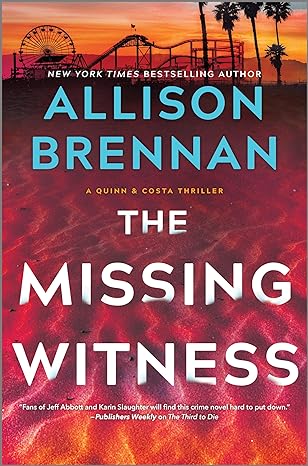
My parking garage off Fifth was nearly a mile from where I worked at city hall. I could have paid twice as much to park two blocks from my building and avoid the rows of homeless people: the worn tents, the used needles, the stinking garbage, the aura of hopelessness and distrust that filled a corner park and bled down the streets.
I was listening to my favorite podcast, LA with A&I. Amy and Ian started the podcast two years ago to talk about computer gaming, technology, entertainment and Los Angeles. It had blossomed into a quasi news show and they live streamed every morning at seven. They’d riff on tech and local news as if sitting down with friends over coffee. Like me, they were nerds, born and bred in the City of Angels. I’d never met Amy or Ian in real life, but felt like I’d known them forever.
We’d chatted over Discord, teamed up to play League of Legends, and I often sent them interesting clips about gaming or tech that they talked about on their podcast, crediting my gaming handle. Twice, we’d tried to set up coffee dates, but I always chickened out. I didn’t know why. Maybe because I thought they wouldn’t like me if they met me. Maybe because I was socially awkward. Maybe because I didn’t like people knowing too much about my life.
Today while I drove to work, they’d discussed the disaster that was city hall: all the digital files had been wiped out. The news story lasted for about five minutes, but it would be my life for the next month or more as my division rebuilt the data from backups and archives. It was a mess. They laughed over it; I tried to, but I was beginning to suspect the error was on purpose, not by mistake.
Now they were talking about a sweatshop that had been shut down last week.
“We don’t know much,” Amy said. “You’d think after eight days there’d be some big press conference, or at least a frontpage story. The only thing we found was two news clips—less than ninety seconds each—and an article on LA Crime Beat.”
“David Chen,” Ian said, “a Chinese American who allegedly trafficked hundreds of women and children to run his factory in Chinatown, was arraigned on Monday, but according to Crime Beat, the FBI is also investigating the crime. And—get this— the guy is already out on bail.”
“It’s fucked,” Amy said. “Look, I’m all for bail reform. I don’t think some guy with weed in his pocket should have to pay thousands of bucks to stay out of jail while the justice system churns. But human trafficking is a serious crime—literally not two miles from city hall, over three hundred people were forced to work at a sweatshop for no money. They had no freedom, lived in a hovel next door to the warehouse. Crime Beat reported that the workers used an underground tunnel to avoid being seen—something I haven’t read in the news except for one brief mention. And Chen allegedly killed one of the women as he fled from police. How did this guy get away with it? He kills someone and spends no more than a weekend behind bars?”
“According to Crime Beat, LAPD investigated the business for months before they raided the place,” Ian said. “But Chen has been operating for years. How could something like this happen and no one said a word?”
I knew how. People didn’t see things they didn’t want to.
Case in point: the homeless encampment I now walked by.
I paused the podcast and popped my earbuds back into their charging case.
“Hello, Johnny,” I said to the heroin addict with stringy hair that might be blond, if washed. I knew he was thirty-three, though he looked much older. His hair had fallen out in clumps, his teeth were rotted, and his face scarred from sores that came and went. He sat on a crusty sleeping bag, leaned against the stone wall of a DWP substation, his hollow eyes staring at nothing. As usual, he didn’t acknowledge me. I knew his name because I had asked when he wasn’t too far gone. Johnny, born in Minnesota. He hadn’t talked to his family in years. Thought his father was dead, but didn’t remember. He once talked about a sister and beamed with pride. She’s really smart. She’s a teacher in…then his face dropped because he couldn’t remember where his sister lived.
Four years ago, I left a job working for a tech start-up company to work in IT for city hall. It was barely a step up from entry-level and I couldn’t afford nearby parking garages. If I took a combination of buses and the metro, it would take me over ninety minutes to get to work from Burbank, so factoring the combination of time and money, driving was my best bet and I picked the cheapest garage less than a mile from work.
I used to cringe when I walked by the park. Four years ago, only a dozen homeless tents dotted the corner; the numbers had more than quadrupled. Now that I could afford a more expensive garage, I didn’t want it. I knew most of the people here by name.
“Hey, Toby,” I greeted the old black man wearing three coats, his long, dirty gray beard falling to his stomach. He had tied a rope around his waist and attached it to his shopping cart to avoid anyone stealing his worldly possessions when he slept off his alcohol.
“Mizvi,” he said, running my name together in a slur. He called me “Miss Violet” when he was sober. He must have still been coming down off whatever he’d drank last night.
I smiled. Four years ago I never smiled at these people, fearing something undefinable. Now I did, even when I wanted to cry. I reached into my purse and pulled out a bite-size Hershey Bar. Toby loved chocolate. I handed it to him. He took it with a wide grin, revealing stained teeth.
One of the biggest myths about the homeless is that they’re hungry. They have more food than they can eat. That doesn’t mean many aren’t malnourished. Drug and alcohol abuse can do that to a person.
A couple weeks ago a church group had thought they would bring in sandwiches and water as part of community service. It was a nice gesture, sure, but they could have asked what was needed instead of assuming that these people were starving. Most of the food went uneaten, left outside tents to become rat food. The plastic water bottles were collected to return for the deposit, which was used to buy drugs and alcohol.
But no one gave Toby chocolate, he once told me when he was half-sober. Now, whenever I saw him—once, twice a week—I gave him a Hershey Bar. He would die sooner than he should, so why couldn’t I give him a small pleasure that I could afford? Toby was one of the chronics, a man who’d been on the street for years. He had no desire to be anywhere else, trusted no one, though I thought he trusted me a little. I wished I knew his story, how he came to be here, how I could reach him to show him a different path. His liver had to be slush with the amount of alcohol he consumed. Alcohol he bought because people, thinking they were helping—or just to make themselves feel better—handed him money.
As I passed the entrance to the small park, the stench of unwashed humans assaulted me. The city had put four porta-potties on the edge of the park but they emptied them once a month, if that. They were used more for getting high and prostitution than as bathrooms. The city had also put up fencing, but didn’t always come around to lock the gate. Wouldn’t matter; someone would cut it open and no one would stop them. Trespassing was the least of the crimes in the area.
I dared to look inside the park, though I didn’t expect to see her. I hadn’t seen her for over a week. I found myself clutching my messenger bag that was strapped across my chest. Not because I thought someone would steal it, but because I needed to hold something, as if my bag was a security blanket.
I didn’t see her among the tents or the people sitting on the ground, on the dirt and cushions, broken couches and sleeping bags, among the needles and small, tin foils used to smoke fentanyl. I kicked aside a vial that had once held Narcan, the drug to counteract opioid overdoses. The clear and plastic vials littered the ground, remnants of addiction.
There was nothing humane about allowing people to get so wasted they were on the verge of death, reviving them, then leaving them to do it over and over again. But that was the system.
The system was fucked.
Blue and red lights whirled as I approached the corner. I usually crossed Fifth Street here, but today I stopped, stared at the silent police car.
The police only came when someone was dying…or dead.
Mom.
I found my feet moving toward the cops even though I wanted to run away. My heart raced, my vision blurred as tears flashed, then disappeared.
DID YOU ENJOY WHAT YOU JUST READ? IF YES, THEN SUBSCRIBE TO THE BLOG, GIVE THE POST A LIKE, OR LEAVE A COMMENT! NEW POSTS ARE UP EVERY TUESDAY & THURSDAY!
There is no body. A fact DC Clements finds both a problem and a tremulous, tantalizing possibility. She’s not a woman inclined to irrational hope, or even excessive hope. Any damned hope, really. At least, not usually.
Kylie Gillingham is probably dead.
The forty-three-year-old woman has been missing nearly two weeks. Ninety-seven percent of the 180,000 people a year who are reported missing are found within a week, dead or alive. She hasn’t been spotted by members of the public, or picked up on CCTV; her bank, phone and email accounts haven’t been touched. She has social media registered under her married name, Kai Janssen; they’ve lain dormant. No perky pictures of carefully arranged books, lattes, Negronis or peonies. Kylie Gillingham hasn’t returned to either of her homes. Statistically, it’s looking very bad.
Experience would also suggest this sort of situation has to end terribly. When a wife disappears, all eyes turn on the husband. In this case, there is not one but two raging husbands left behind. Both men once loved the missing woman very much. Love is just a shiver away from hate.
The evidence does not conclusively indicate murder. There is no body. But a violent abduction is a reasonable proposition—police-speak, disciplined by protocol. Kidnap and abuse, possible torture is likely—woman-speak, fired by indignation. They know Kylie Gillingham was kept in a room in an uninhabited apartment just floors below the one she lived in with husband number two, Daan Janssen. That’s not a coincidence. There is a hole in the wall of that room; most likely Kylie punched or kicked it. The debris created was flung through a window into the street, probably in order to attract attention. Her efforts failed. Fingerprints place her in the room; it’s unlikely she was simply hanging out or even hiding out, as there is evidence to suggest she was chained to the radiator.
Yet despite all this, the usually clear, logical, reasonable Clements wants to ignore statistics, experience and even evidence that suggests the abduction ended in fatal violence. She wants to hope.
There just might be some way, somehow, that Kylie—enigma, bigamist—escaped from that sordid room and is alive. She might be in hiding. She is technically a criminal, after all; she might be hiding from the law. She can hardly go home. She will know by now that her life of duplicity is exposed. She will know her husbands are incensed. Baying for blood. She has three largely uninterested half brothers on her father’s side, and a mother who lives in Australia. None of them give Clements a sense that they are helping or protecting Kylie. She will know who abducted her. If alive, she must be terrified.
Clements’ junior partner, Constable Tanner, burly and blunt as usual, scoffs at the idea that she escaped. He’s waiting for a body; he’d settle for a confession. It’s been four days now since Daan Janssen left the country. “Skipped justice,” as Tanner insists on saying. But the constable is wet behind the ears. He still thinks murder is glamorous and career-enhancing. Clements tries to remember: did she ever think that way? She’s been a police officer for nearly fifteen years; she joined the force straight out of university, a few years younger than Tanner is now, but no, she can’t remember a time when she thought murder was glamorous.
“He hasn’t skipped justice. We’re talking to him and his lawyers,” she points out with what feels like the last bit of her taut patience.
“You’re being pedantic.”
“I’m being accurate.”
“But you’re talking to him through bloody Microsoft Teams,” says Tanner dismissively. “What the hell is that?”
“The future.” Clements sighs. She ought to be offended by the uppity tone of the junior police officer. It’s disrespectful. She’s the detective constable. She would be offended if she had the energy, but she doesn’t have any to spare. It’s all focused on the case. On Kylie Gillingham. She needs to remain clear-sighted, analytical. They need to examine the facts, the evidence, over and over again. To be fair, Constable Tanner is focused too, but his focus manifests in frenetic frustration. She tries to keep him on track. “Look, lockdown means Daan Janssen isn’t coming back to the UK for questioning any time soon. Even if there wasn’t a strange new world to negotiate, we couldn’t force him to come to us, not without arresting him, and I can’t do that yet.”
Tanner knocks his knuckles against her desk as though he is rapping on a door, asking to be let in, demanding attention. “But all the evidence—”
“Is circumstantial.” Tanner knows this; he just can’t quite accept it. He feels the finish line is in sight, but he can’t cross it, and it frustrates him. Disappoints him. He wants the world to be clear-cut. He wants crimes to be punished, bad men behind bars, a safer realm. He doesn’t want some posh twat flashing his passport and wallet, hopping on a plane to his family mansion in the Netherlands and getting away with it. Daan Janssen’s good looks and air of entitlement offend Tanner. Clements understands all that. She understands it but has never allowed personal bias and preferences to cloud her investigating procedures.
“We found her phones in his flat!” Tanner insists.
“Kylie could have put them there herself,” counters Clements. “She did live there with him as his wife.”
“And we found the receipt for the cable ties and the bucket from the room she was held in.”
“We found a receipt. The annual number of cable ties produced is about a hundred billion. A lot of people buy cable ties. Very few of them to bind their wives to radiators. Janssen might have wanted to neaten up his computer and charger cords. He lives in a minimalist house. That’s what any lawyer worth their salt will argue.” Clements rolls her head from left to right; her neck clicks like castanets.
“His fingerprints are on the food packets.”
“Which means he touched those protein bars. That’s all they prove. Not that he took them into the room. Not that he was ever in the room.”
Exasperated, Tanner demands, “Well how else did they get there? They didn’t fly in through the bloody window, did they?” Clements understands he’s not just excitable, he cares. He wants this resolved. She likes him for it, even if he’s clumsy in his declarations. It makes her want to soothe him; offer him guarantees and reassurances that she doesn’t even believe in. She doesn’t soothe or reassure, because she has to stay professional, focused. The devil is in the detail. She just has to stay sharp, be smarter than the criminal. That’s what she believes. “She might have brought them in from their home. He might have touched them in their flat. That’s what a lawyer will argue.”
“He did it all right, no doubt about it,” asserts Tanner with a steely certainty.
Clements knows that there is always doubt. A flicker, like a wick almost lit, then instantly snuffed. Nothing is certain in this world. That’s why people like her are so important; people who know about ambiguity yet carry on regardless, carry on asking questions, finding answers. Dig, push, probe. That is her job. For a conviction to be secured in a court of law, things must be proven beyond reasonable doubt. It isn’t easy to do. Barristers are brilliant, wily. Jurors can be insecure, overwhelmed. Defendants might lie, cheat. The evidence so far is essentially fragile and hypothetical.
“I said, didn’t I. Right at the beginning, I said it’s always the husband that’s done it,” Tanner continues excitedly. He did say as much, yes. However, he was talking about Husband Number 1, Mark Fletcher, at that point, if Clements’ memory serves her correctly, which it always does. And even if her memory one day fails to be the reliable machine that it currently is, she takes notes—meticulous notes—so she always has those to rely on. Yes, Tanner said it was the husband, but this case has been about which husband. Daan Janssen, married to Kai: dedicated daughter to a sick mother, classy dresser and sexy wife. Or Mark Fletcher, husband to Leigh: devoted stepmother, conscientious management consultant and happy wife? Kai. Leigh. Kylie. Kylie Gillingham, the bigamist, had been hiding in plain sight. But now she is gone. Vanished.
“The case against Janssen is gathering momentum,” says Clements, carefully.
“Because Kylie was held captive in his apartment block.”
“Yes.”
“Which is right on the river, easy way to lose a body.”
She winces at this thought but stays on track. “Obviously Mark Fletcher has motive too. A good lawyer trying to cast doubt on Janssen’s guilt might argue that Fletcher knew about the other husband and followed his wife to her second home.”
Tanner is bright, fast; he chases her line of thought. He knows the way defense lawyers create murky waters. “Fletcher could have confronted Kylie somewhere in the apartment block.”
“A row. A violent moment of fury,” adds Clements. “He knocks her out cold. Then finds an uninhabited apartment and impetuously stashes her there.”
Tanner is determined to stick to his theory that Janssen is the guilty man. “Sounds far-fetched. How did he break in? This thing seems more planned.”
“I agree, but the point is, either husband could have discovered the infidelity, then, furious, humiliated and ruthless, imprisoned her. They’d have wanted to scare and punish, reassert control, show her who was boss.” They know this much, but they do not know what happened next. Was she killed in that room? If so, where is the body hidden? “And you know we can’t limit this investigation to just the two husbands. There are other suspects,” she adds.
Tanner flops into his chair, holds up a hand and starts to count off the suspects on his fingers. “Oli, Kylie’s teen stepson. He has the body and strength of a man…”
Clements finishes his thought. “But the emotions and irrationality of a child. He didn’t know his stepmum was a bigamist, but he did know she was having an affair. It’s possible he did something rash. Something extreme that is hard to come back from.”
“Then there’s the creepy concierge in the swanky apartment block.”
“Alfonzo.”
“Yeah, he might be our culprit.”
Clements considers it. “He has access to all the flats, the back stairs, the CCTV.”
“He’s already admitted that he deleted the CCTV from the day Kylie was abducted. He said that footage isn’t kept more than twenty-four hours unless an incident of some kind is reported. Apparently the residents insist on this for privacy. It might be true. It might be just convenient.”
Clements nods. “And then there’s Fiona Phillipson. The best friend.”
“Bloody hell. We have more suspects than an Agatha Christie novel,” says Tanner with a laugh that is designed to hide how overwhelmed and irritated he feels. His nose squashed up against shadowy injustice, cruel violence and deception.
“Right.”
“I still think the husband did it.”
“Which one?”
“Crap. Round and round in circles we go.” He scratches his head aggressively. “Do you want me to order in pizza? It’s going to be a long night.”
“Is anyone still doing deliveries? I don’t think they are,” points out Clements. “You know, lockdown.”
“Crap,” he says again, and then rallies. “Crisps and chocolate from the vending machine then. We’ll need something to sustain us while we work out where Kylie is.”
Clements smiles to herself. It’s the first time in a long time that Tanner has referred to Kylie by name, not as “her” or “the bigamist” or, worse, “the body.” It feels like an acceptance of a possibility that she might be somewhere. Somewhere other than dead and gone.
Did she somehow, against the odds, escape? Is Kylie Gillingham—the woman who dared to defy convention, the woman who would not accept limits and laughed in the face of conformity—still out there, somehow just being?
DID YOU ENJOY WHAT YOU JUST READ? IF YES, THEN SUBSCRIBE TO THE BLOG, GIVE THE POST A LIKE, OR LEAVE A COMMENT! NEW POSTS ARE UP EVERY TUESDAY & THURSDAY!
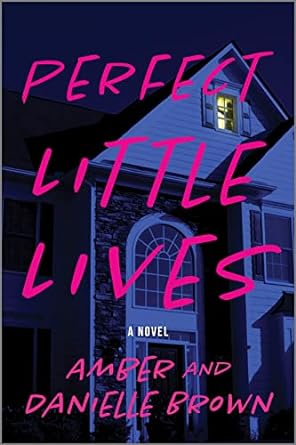
On Asher Lane, some secrets are worth killing for……
CHAPTER 1
A fat, heavy tear trickles down my cheek when I yank the final hair from my left areola, and it’s not even twelve seconds after I exchange my tweezer for the disposable razor I grifted from Reggie’s top drawer that blood is gushing down the inside of my thigh. I pause at the shocking appearance of crimson and immediately wonder if this laceration is punishment for being impatient or an indictment of my anti-feminism. Part of me thinks hustling to shave the stray hairs that still stubbornly sprout along my bikini line, despite the six agonizing laser removal sessions I’ve suffered through, is a reflection of how deeply I’ve internalized the particular brand of misogyny that says any hair below the brows on a woman is gross and revolting, and the fact that I’m doing this for a man, not myself, is in itself gross and revolting. I’ve also already chugged sixteen ounces of pineapple juice this morning, for obvious reasons.
The other part of me thinks it’s complete bullshit, that being hyper hygienic and having a general disdain for visible body hair is simply considerate, because feminism and a preference for hairlessness shouldn’t be mutually exclusive. I don’t actually think Reggie has ever noticed the hairs on my tits, or even the splattering on my toes that I compulsively remove once a week,
so in a way maybe I am actually plucking the hair from my nipples for my own aesthetic appreciation, not because of the patriarchy, and my feminism is not actually in jeopardy at all.
My dad used to get on me all the time for fixating on tiny, inconsequential details, a habit I no doubt inherited from my mom. But I really am torn about whether I should be judging myself or just owning the part of my personality that is unapologetically vain as I glance at my phone again to see if Reggie has gotten back to my three where r u and did u leave yet and you’re still coming, right? texts, which is what I was doing when I slashed myself in the first place.
There is no reply.
No ellipsis to show he’s typing.
I sigh because I can’t remember the last time my thigh has felt even a trickle. Granted, the deep red liquid heading toward the marble tile is vastly less pleasant than the warm ropes that Reggie sometimes sends down my adductor, or wherever I request, but it’s warm and sticky just like it, and in the most bizarre way, watching it drizzle down my skin turns me on a little. After checking my phone again to no avail, I bandage the nick on my leg and toss the razor, assuming Reggie is already packed in a subway car like a sardine. He is not ghosting me. He is not cheating on me. He just doesn’t have reception and can’t write back yet.
Another thing my dad is constantly grumbling about, usually while he scans the days’ headlines in the Star-Ledger I bring him every Sunday, is how highly intelligent people can convince themselves of really dumb shit. So there’s that.
I look myself over, naked except for the fresh bandage and the glint of gold around my neck, and wish I could see myself the way Reggie sees me. I notice the flaws first. The blemishes. The discoloration. The faded scars I still have from childhood. He notices everything he likes and never has time to consider that I could even potentially see a single flaw in my own body because his hands and mouth are always busy pawing and sucking before he has the chance. Well, that’s how it used to be. Before Goldstein & Wagner claimed his soul. Now I think his perpetual delirium from the lack of sleep gives him a soft-focus gaze and that’s why he thinks I’m so hot.
Most of my dresses are of the silky, shapeless variety, but the one I pick for tonight is also obscenely short, more reminiscent of a chemise than a dinner garment, something I would never wear out alone. But whatever I wear has to pull its weight tonight. My period is two days away and Reggie squirms even at the idea of a speck of blood. I’m virtually celibate five days every month because even bloody hand jobs freak him out, but he does run to Duane Reade without complaint whenever I’m almost out of tampons and always grabs the right box depending on my flow, so it balances out. He’s put in at least ten hours at the firm today, but I’m totally down for doing all the work to get us both off, so yes, this is the dress, and I’m going to make sure he orders something light with plenty of green on his plate so he doesn’t get the itis on the ride back to my place.
Still, as much as I am craving tongue and hands and a long, indulgent dicking down to sustain me while my ovaries wreak havoc, I would happily handle it myself once he’s asleep and take a couple hours of slow, deep conversation instead. A little shit talking, but mostly watching him eat, and laughing the way we used to back when we first met, when he was finishing the last leg of law school and had a fraction of the responsibilities he does now. I try not to romanticize the days when we were fresh and new, because it was fresh and new and so of course it was fucking romantic, but I’m human and can only look back on the inception of our relationship through a halcyon lens.
My apartment is a microscopic studio in a freshly gentrified Bed-Stuy, all I can afford on my own with my salary, which, five hundred miles toward the center of the continent, could get me a mortgage on a cute starter home. It can feel claustrophobic with more than two people inside it at once, but when it’s just me here, it’s perfect. The galley kitchen is at the front and my bed is made semiprivate by the two white open-shelf bookcases I have packed with too many books, some vintage with gorgeous, battered spines, most pre-loved before I got my hands on them. Reggie thinks I have a problem since I’ve lost count of how many I have and because I have dozens more books littered around the four-hundred-square-foot place. He had the nerve to toss around the h word once. I deadfished him that night, and he never used it again. Though if I’m being objective, there is barely a flat space that isn’t occupied by at least one paperback, but that’s only because I am an actual slut for an aesthetic floppy copy of almost anything. Reggie doesn’t get it. He thinks hardbacks are supreme, and I think it’s tied to the fragility of his masculinity somehow, especially since he’s barely a recreational reader, which makes his opinion hardly justified. Then again, I’m a fiend for his dick when it’s floppy too, so maybe I’m the one with a complex.
I run through my standard series of poses using my floor-length mirror to check how far I can lean over without flashing my nipples or my ass, and frown at my visible panty line. They’re seamless, allegedly, but I can see the faint indent where they grip my skin beneath the delicate fabric of my dress. I step out of them and shuffle through my top drawer for a much less conspicuous thong, but then shut it empty-handed and decide that it’s fine, Reggie has had a long week and it’s only Tuesday. I’m sure he’ll appreciate the surprise.
I’m ten pages away from knocking another contrived, predictable thriller written by a man that swears the narrative is feminist but comes off glaringly misogynistic off my TBR by the time I hear the jingle of Reggie’s keys outside the door to my unit. I toss the book aside without dog-earing my current page, though I feel an instant pang of regret and swing my legs off the arm of my couch as I reach for my phone to see what time it is. It’s been two hours since I gashed my leg. I wait for the door to fly open and brace myself to be seen, for his jaw to drop when he sees me.
But nothing happens.
Reggie doesn’t push in. I don’t hear that jingle anymore.
Before I fully convince myself that I’m suffering from hallucinations courtesy of my surge of pre-menstruation hormones, I straighten out my dress and cross the space to glance through the peephole and be sure. Reggie is on the other side, head bent over, his thumbs beating away at his phone’s screen, whatever email he’s writing taking precedence over our date. Envy erupts like a geyser inside me.
It’s hard to stay pissed at him once I swing the door open and look him over without the distorting view of the peephole. His shirtsleeves are rolled up to his elbows, revealing his forearms that are corded with thick veins, the left one covered in a massive tribal tattoo I still don’t know the meaning of. So slutty of him. His tie is loosened around his neck, but not all the way undone, and I can still smell the remnants of whatever soap he showered with this morning.
“Hey.” He hasn’t looked up yet. “Sorry I didn’t hit you back. I was swamped.”
I don’t reply, will not dignify anything he says with a response until he properly acknowledges me and all the work I put in to look edible for him tonight. He finally hits send and lifts his chin, a guilty smile tugging at the corners of his mouth. I don’t know why, with all this pent-up anticipation, his double take at my dress still makes me blush, and I sort of resent that part of me. Though, at the same time, it feels good to be taken in like this.
“Thought you said seven thirty,” I say, fighting to not sound too accusatory, but it’s not much of a battle since the way he’s checking me out is softening me right up like a stick of butter in a microwave.
His eyes are moving quickly, like they are being pulled downward by some invisible force. “This new?”
He reaches for my amorphous dress, his touch rough enough for me to worry about the preservation of its barely-there straps.
“Figured you’d like it,” I say.
I would have much preferred an immediate and sincere apology for keeping me waiting, but I relinquish my simmering irritation and let him feel me up as I lean in to give him a kiss. He settles a hand on the small of my back, definitely wanting me closer, wanting more, but I pull away before he gets too distracted by the dessert and no longer has an appetite for the meal.
DID YOU ENJOY WHAT YOU JUST READ? IF YES, THEN SUBSCRIBE TO THE BLOG, GIVE THE POST A LIKE, OR LEAVE A COMMENT! NEW POSTS ARE UP EVERY TUESDAY & THURSDAY!
Can she rewrite the fate of women who came before her?
Prologue
Last night I dreamt I went to Malibu again.
I stood barefoot on the sand, the cool water nipping at my ankles. And there, high above me, perched on the edge of that magnificent cliff, his stunning house sat as it once had, alive, whole. It had ten bedrooms and was on three private cliffside acres, with a lap pool, a tennis court, and a garden blooming flush with pink and white bougainvillea. But from the beach down below all I could see was its long wall of privacy-tinted glass windows, slanting out toward the sea.
He could see me here, out on the beach. I was certain he could, even in my dream.
He was still behind those windows, watching my every step. Though I couldn’t see him. The glass was one-way. But I imagined him there behind the glass so vividly, it had to be real.
Until it wasn’t. Until the heat from the flames would shatter all the windows, break them apart, send smoke spewing from the piano room, down the cliff, evaporating in wisps into the lonely Pacific.
But in my dream, the flames hadn’t existed yet. Or, maybe they never would. He and his house were there, watching me. Wanting me. Haunting me.
“Come back!” His voice was a desperate echo, my undoing. The smoke was so thick, even out on the beach I couldn’t see, and I couldn’t breathe.
So that’s why I did it, in my dream. I turned away from the house, and I walked into the bone-chilling water. It was so cold, it numbed me, but I walked into the sea, up to my shoulders, my neck, my chin. Until I could no longer smell the smoke or hear his voice.
And then my entire head was underwater, and the tide was strong. It sucked me in, held me there.
But I wasn’t trying to drown. I really wasn’t. I was merely trying to escape the fire.
DID YOU ENJOY WHAT YOU JUST READ? IF YES, THEN SUBSCRIBE TO THE BLOG, GIVE THE POST A LIKE, OR LEAVE A COMMENT! NEW POSTS ARE UP EVERY TUESDAY & THURSDAY!
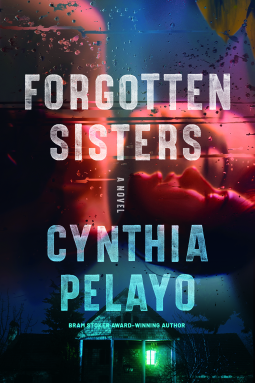
Sisters Anna and Jennie live in a historic bungalow on the Chicago River. They’re tethered to a disquieting past, and with nowhere else to go, nothing can part them from their family home. Not the maddening creaks and disembodied voices that rattle the old walls. Not the inexplicable drownings in the area, or the increasing number of bodies that float by Anna’s window.
To stave off loneliness, Anna has a podcast, spinning ghostly tales of Chicago’s tragic history. But when Anna captures the attention of an ardent male listener, she awakens to the possibilities of a world outside.
As their relationship grows, so do Jennie’s fears. More and more people are going missing in the river. And then two detectives come calling.
They’re looking for a link between the mysteries of the river and what’s housed on the bank. Even Anna and Jennie don’t understand how dreadful it is—and still can be—when the truth about their unsettled lives begins to surface.
GRADE: A
REVIEW:
When I read The Shoemaker’s Magician earlier this year, I thought that it definitely was one of my fave horror thrillers because it had everything I loved rolled into one novel – however, with Forgotten Sisters Pelayo taps into other things I absolutely love – The Little Mermaid, historical tragedies, and a mysterious killer on the loose. Some authors are linked to their location, such as Anne Rice with New Orleans, or Stephen King with Maine, and whenever I think of Pelayo and her writing I link her to Chicago – and love discovering and learning more about this city through her novels.
This novel is a modern retelling of The Little Mermaid but it’s also a ghost story of sorts (I don’t want to delve too much into detail because I think it’s important to find out on your own). But it’s also about the strength of sisterly love since the novel mostly focuses on the relationship between Anna and Jennie. The house they live in is next to a river, and soon both the house and river become important characters within the world of the novel as the people who inhabit it. A lot of this novel reads like a Gothic novel in regards to the two sisters spending most of their time indoors whilst being burdened by ghosts and odd noises. Young men have begun to go missing and show up dead in the river weeks and months later, sparking thoughts of a serial killer, although the police wish to not acknowledge that they may be dealing with one for fear of alarming the public.
A lot of the book is read like a poetic fever dream and works well in regards to its fairytale roots, so it never bothered me that the two sisters spoke like they were Dickensian characters (once you reach the end you’ll understand why). I know some may think that the love that blossomed between Anna and Peter was what some readers would call “insta-love” but really – I felt that it was possible for the two of them to fall for each other as quickly as they did when they had spent so much time exchanging emails prior (I’ve always been a sucker for long emails and letters between people I’m fond of and understand how a relationship can evolve from that rather quickly).
This novel was unique as it was an amalgamation of thriller, horror, crime, history, and fantasy all rolled into one unique story. I recommend this for those who lean towards Gothic atmospheres in their books and enjoy a slower-paced murder mystery.
*Thank you so much to NetGalley & Thomas & Mercer for the digital copy of this book in exchange for an honest review!
DID YOU ENJOY WHAT YOU JUST READ? IF YES, THEN SUBSCRIBE TO THE BLOG, GIVE THE POST A LIKE, OR LEAVE A COMMENT! NEW POSTS ARE UP EVERY TUESDAY & THURSDAY!
I’m drawn to him because of this lingering ferocity I see in men- the possibility of violence.
PLOT SUMMARY:
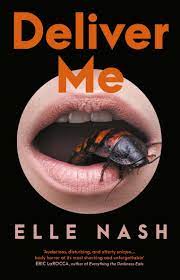
At a meatpacking facility in the Missouri Ozarks, Dee-Dee and her co-workers kill and butcher 40,000 chickens in a single shift. The work is repetitive and brutal, with each stab and cut a punishment to her hands and joints, but Dee-Dee’s more concerned with what is happening inside her body. After a series of devastating miscarriages, Dee-Dee has found herself pregnant, and she is determined to carry this child to term.
Dee-Dee fled the Pentecostal church years ago, but judgment follows her in the form of regular calls from her mother, whose raspy voice urges Dee-Dee to quit living in sin and marry her boyfriend Daddy, an underemployed ex-con with an insect fetish. With a child on the way, at long last Dee-Dee can bask in her mother’s and boyfriend’s newfound parturient attention. She will matter. She will be loved. She will be complete.
When her charismatic friend Sloane reappears after a twenty-year absence, feeding her insecurities and awakening suppressed desires, Dee-Dee fears she will go back to living in the shadows. Neither the ultimate indignity of yet another miscarriage nor Sloane’s own pregnancy deters her: she must prepare for the baby’s arrival.
GRADE: A
REVIEW:
If this book were a series, it’d be “bingeable.” Once you begin reading about Dee-Dee and her insect-obsessed boyfriend, Daddy, you can’t stop. The prose is raw and intimate in ways that will hit you emotionally at the core. Full disclosure, I have a phobia when it comes to insects, so the description of insects being placed on body parts was absolutely terrifying for me. But Nash also had me feeling sorry for these same insects later on in the novel, so that goes to show her deftness in being able to conjure pity even for creatures that I’d rather not have anywhere near me.
Dee-Dee becomes fixated with wanting to be pregnant, and this fixation leads her to tell her partner, Daddy that she’s indeed pregnant, despite her not actually being it. Her life begins to derail once her high school friend and fellow member of a church they both went to begins to live upstairs from her. Dee-Dee is convinced that Sloane wants to steal Daddy from her and that she’s trying to conspire against her. The book flashes between the present and the past, and in both places you can’t help but to feel sorry for Dee-Dee, especially in her present where she’s physically and emotionally exhausted by an occupation and relationship that suck so much out of her, without really feeling gratified by either.
Dee-Dee is a sympathetic character, and you can’t help but to root for her, despite her misgivings and the fact that the reader can sense that there’s a tragedy afoot and you’re sitting on pins and needles waiting to see just how much more terrible her life can really get.
I know this is categorized as horror by some people, but I wouldn’t necessarily say that it’s horror in the way that people define horror – rather it’s horrific in its realness and that can be much scarier than anything supernatural ever could. I recommend this book if you enjoy dark lit, twisted relationships/friendship, and true crime.
*Thank you so much to the author for the digital copy of this book in exchange for an honest review!
DID YOU ENJOY WHAT YOU JUST READ? IF YES, THEN SUBSCRIBE TO THE BLOG, GIVE THE POST A LIKE, OR LEAVE A COMMENT! NEW POSTS ARE UP EVERY TUESDAY & THURSDAY!
Anna Alcott is desperate to have a family. But as she tries to balance her increasingly public life as an indie actress with a grueling IVF journey, she starts to suspect that someone is going to great lengths to make sure that never happens. Crucial medicines are lost. Appointments get swapped without her knowledge. Cryptic warnings have her jumping at shadows. And despite everything she’s gone through to make this pregnancy a reality, not even her husband is willing to believe that someone is playing twisted games with her.
Then her doctor tells her she’s had a miscarriage―except Anna’s convinced she’s still pregnant despite everything the grave-faced men around her claim. She can feel the baby moving inside her, can see the strain it’s taking on her weakening body. Vague warnings become direct threats as someone stalks her through the bleak ghost town of the snowy Hamptons. As her symptoms and sense of danger grow ever more horrifying, Anna can’t help but wonder what exactly she’s carrying inside of her…and why no one will listen when she says something is horribly, painfully wrong.
GRADE: A-
REVIEW:
Full disclosure, I’ve read many of Danielle Valentine’s YA novels (under the name Danielle Vega), her Merciless series being one of the most popular ones. So, I was curious what this author would do in an adult horror novel. I also was curious to read this because the new season of American Horror Story, a series that I really love and watch every year, is going to be based off of this book – and I wanted to read the book prior to viewing the series.
This book explores many things that deal with womanhood and motherhood, and the craziest thing is that what one would think are the horror elements, aren’t really as terrifying as the true elements of the novel. I think I was more horrified by the amount of physical pain and stress the protagonist submitted to during the IVF treatments than when she began having strange cravings (and when I say strange – the cravings are pretty brutal). The men in this novel are mostly trash – so it’s no surprise that they didn’t take any of Anna’s concerns about her body seriously.
This novel is full of twists and turns, and I liked the direction it went rather than going for the tired trope of “evil baby.” I am very curious to see how this book will be adapted in AHS: Delicate and hope that they keep Valentine’s powerful message.
I recommend this book to those who love feminist horror novels that subvert genre expectations.
*Thank you so much to NetGalley and Sourcebooks Landmark for the digital copy of this book in exchange for an honest review!
DID YOU ENJOY WHAT YOU JUST READ? IF YES, THEN SUBSCRIBE TO THE BLOG, GIVE THE POST A LIKE, OR LEAVE A COMMENT! NEW POSTS ARE UP EVERY TUESDAY & THURSDAY!
“Seventy percent of the planet is water. Most of that water is deep ocean. The origin of everything. Less than 5 percent of the deep ocean is mapped. Humans know more about Mars. Anything could be down there. Therefore, everything is.”
PLOT SUMMARY:
Jay Gardiner has given himself a fool’s errand—to find the remains of his deceased father in the Pacific Ocean off the coast of Monastery Beach. He knows it’s a long shot, but Jay feels it’s the only way for him to lift the weight of guilt he has carried since his dad’s death by suicide the previous year.
The dive begins well enough, but the sudden appearance of a giant squid puts Jay in very real jeopardy, made infinitely worse by the arrival of a sperm whale looking to feed. Suddenly, Jay is caught in the squid’s tentacles and drawn into the whale’s mouth where he is pulled into the first of its four stomachs. He quickly realizes he has only one hour before his oxygen tanks run out—one hour to defeat his demons and escape the belly of a whale.
GRADE: A
REVIEW:
I absolutely loved this book – which in a way almost felt like it was two novels in one. One novel is Jay’s battle to escape the various stomachs of the sperm whale he finds himself in, whilst the second novel is Jay’s guilt over his father’s suicide because the two always had a very difficult relationship that only got worse during his father’s cancer – and Jay spent his father’s last few months in life, not living with him or communicating with him. This novel runs against the clock as each chapter notes how much oxygen remains in Jay’s tank, and he’s got very little time to get back out of the whale and up on land before he dies. What I loved about this novel is that it had fast-paced short chapters so reading it was a breeze, but at the same time, it was rich with so many emotions. The reader can’t help but cheer Jay on, wanting him to be freed from the whale, but at the same time, you also hope that Jay can also be freed of his guilt. The novel explores both and I liked the way it ended. I won’t say anything more about it because I think you need to go into this novel blind and experience this journey with Jay.
I recommend this book if you love marine life adventures and character-driven thrillers. I love the ocean so this novel was right up my alley. I’d really love to see this become a film because it would make for an excellent survivalist thriller.
*Thank you so much to NetGalley and Atria and MTV Books for the digital copy of this book in exchange for an honest review!
DID YOU ENJOY WHAT YOU JUST READ? IF YES, THEN SUBSCRIBE TO THE BLOG, GIVE THE POST A LIKE, OR LEAVE A COMMENT! NEW POSTS ARE UP EVERY TUESDAY & THURSDAY!
It’s funny/not funny the things you remember about the worst day of your life.
It was a hot, humid, hazy, August afternoon.
We had hot dogs and baked beans for dinner. Later, I had a cosmic orchestra of gas and flatulence. Mom thought it was hilarious. Palmer accused me of being a show-off. He wasn’t entirely wrong.
Afterward, as we did every Sunday night, we watched The Ed Sullivan Show.
I drifted off to sleep as rain pelted the roof. The sky blinked off and on like a flashlight. The roar of thunder filled all the empty spaces.
My brother Palmer—forever thirteen—shook me awake, his hands red and sticky. I thought it was from a cherry ice pop—but I know now it was blood. Our mother’s blood.
“Hide, Brooks.” Palmer took in a huge gulp of air. “You know where. And don’t come back, whatever you do. The monster. He’s in the house.”
I ran up to the dunes at Ditch Plains Beach as fast as my stubby legs could carry me, soaked and chilled to the bone.
A week later, I woke up in a hospital bed. A nurse jabbed me with something.
My father gripped my hand. “You’re all right, son,” he whispered. “It’s over.”
But of course, it wasn’t. And I was far from all right. I didn’t know it then, but I do now. You have no idea how deep the rot goes until you bite into the apple and see a wriggling worm.
CHAPTER ONE
Sheldon Adler, my agent at Crown-Hawkins and my brother from another mother, is late as usual. No fucking surprise there. When you’re meeting Sheldon, you have to tack on an hour at least. I’m at our usual table at La Bonne Grenouille, the best little French bistro in Manhattan that no one has ever heard of, sipping a glass of ice-cold watermelon seltzer. Sheldon has been my literary agent—no, make that literary savior—since he read my first published short story that didn’t involve erect penises in The New Yorker. He contacted me out of the blue and suggested Hey, why don’t you write a book and I’ll sell it? I wrote Fallen Angels in twenty-four days in a drug haze. When it was finally published, it sold less than two hundred copies, but Sheldon was so fucking proud you would’ve thought it sold two million. I resigned myself to being a failure. Months later, the book was plucked out of obscurity by the senior literary critic of The New York Times and nominated for a Pulitzer. A tabloid dubbed me “The Heroin Hemingway.” The name stuck, even though I’ve been sober and drug-free for more than twenty-five years.
Sheldon got me my first million-dollar advance. He’s the wolf that other wolves hire, and his reputation is well-earned. My biggest supporter, he stayed with me through the lean, mean years when I wrote truly terrible books. Despite my abysmal marital track record, I’m extremely loyal. I wouldn’t dream of leaving Sheldon and believe me, other agents have tried to poach me. And unless I did or said something unacceptable that blew up on social media—which is why I don’t have any social media accounts—Sheldon wouldn’t kick me to the curb or toss me under the bus. All my skeletons are out there. Well, most of them.
A portly man with a vague resemblance to the great Mafia chronicler Mario Puzo, Sheldon huffs his way to our table. I can’t say it to his face, but Sheldon needs to lose forty—make that fifty—pounds, if not for himself, then for his young children. I’m sixty-five and I can still fit into the jeans I wore when I was nineteen. It takes discipline and willpower, of which I have plenty to spare.
After we order and exchange our typical innocuous pleasantries about the weather, politics, and soccer, for we’re both rabid fans, Sheldon downs a gin and tonic. It’s his first of the day and not his last. “Brooks, how is the book coming along?” he booms in a guttural Brooklyn accent that has other diners turning their heads.
“Great,” I reply cheerfully. “It couldn’t be going any better.
Gold, pure gold.”
He tilts his head. “Cassie says you haven’t been sleeping well.”
Cassie’s my third and—if I have anything to say about it—last wife. She interviewed me for a puff piece and months later, when the pregnancy test was positive, I knew I’d met my Waterloo, no thanks to Abba. An abortion was out of the question. Now we have two children under six, our lives are a merry-go-round of sweet chaos. Last fall, I had a vasectomy so there will be no more miniature Andersons polluting the planet.
I finish my seltzer and signal for another. “You know I never sleep well when I’m writing. I do my best work after midnight.” In the old days, that didn’t necessarily apply to writing.
The waitress delivers our meals: me, a grilled chicken Caesar salad with extra feta, and Sheldon a porterhouse with crispy julienne potatoes and parmesan creamed spinach. I eye his steak with unconcealed envy, but Cassie’s always after me to eat healthier. I sigh and add more dressing to my salad. Cassie would be pleased.
“Yeah, I know. You have the constitution of fucking Secretariat. You did drugs with Keith Richards and Lou Reed.” Sheldon cut into his steak; it’s not just blue, it’s bloody raw. Just looking at it makes me queasy. “But this is different. You’re writing about your goddamn family.”
“I can be objective.”
Sheldon puts his fork down. “Not about this, Brooks. Come on. The cold-blooded executions of your mother and brother—”
I suddenly lose my appetite. Sheldon means well. Cassie does, too. But this quasi-intervention is the last thing I need. “Sheldon, you know as well as Cassie that I had no choice. I wasn’t going to let that fucking guttersnipe drag my mother through the mud.” The fucking guttersnipe in question is Marshall Reagan (no relation to the former president), a douchebag posing as a journalist. His brand is writing scandalous, unauthorized biographies of the rich and famous because he knows he can get away with it. No dirt, no sleaze, is beneath him. And when he can’t find anything salacious, he makes shit up and pulls it out of his ass like saltwater taffy.
“You don’t know that.”
“Oh, but I do know. I know exactly the angle he’d take. That my mother was having an affair with Julian.” Julian Broadhurst, born in Lancaster, England, in 1942. An artist who was supposedly the protégé of Peter Max. Julian had long blond hair and drove a robin’s-egg-blue Aston Martin. Palmer and I loathed him. “And when Mom wanted to end it, he killed her. But that wasn’t enough, fuck no. When my brother tried to protect her, Julian killed him, too.” I shake my head, the bile percolating like a fresh pot of coffee. “My mother was brilliant. Graduated from Mount Holyoke with honors. And she was utterly devoted to my father. To us. The idea that she’d have a summer fling with that bohemian scumbag—” I choke on the words (or is it a sliver of chicken that went down the wrong pipe?). “And you know damn well that when that cocksucker Reagan’s done tarring and feathering her, he’ll start in on my father, who has been nothing less than a fucking saint. Saint Bernard.” I rap my fist on the table. “It’s fucking ludicrous.”
Sheldon nods, sympathy oozing from every pore. “All I’m saying is that you have a lot on your plate. The book. The next book. Your father’s gala. You’re writing a speech for that, right? Jesus fucking Christ, Brooks. You’re not Superman. It’s bound to take a toll on you.”
“So, what are you suggesting? I can’t return the advance. It’s already spent.” Six million gone in a heartbeat. Lawyers. Trust funds. The new house in Water Mill. And I was finally able to get my ex-wives off my back with a tidy lump sum. For the first time in years, no alimony to shill out every goddamn month. All thanks to Sheldon, who hadn’t budged an inch during the multi- house book auction. He earned his commission ten times over.
“No one’s suggesting that. That’s crazy.” Sheldon’s halfway through his steak. “But we can ask to push the deadline back by a couple of months.”
“No.” I’m a stubborn son of a bitch. If there’s one thing I’m known for, it’s living up to my contractual obligations. I’ve never missed a deadline. I could be fucking pushing up daisies and I’d still deliver.
Sheldon sighs. “Why are you being so goddamn obstinate?” “I’m well into the book now, it’s just a matter of research.” “Really?” He gives me a side-eye. “Cassie says you’ve barely written the first chapter.”
I’m annoyed. Mostly because Cassie’s right. “It’s all in my head, Sheldon. Don’t worry.”
“Well, I do. Worry, I mean.” Sheldon furrows his bushy eyebrows; he looks like a caterpillar on meth. “I know how good you can be, Brooks. But you push yourself way too hard.”
I make a half-hearted stab at my chicken. He could’ve added— but tactfully didn’t—that he also knows how bad I can be. My books still sold phenomenally well, even that fucking godawful picture book Rocco the Stinky Raccoon, nominated for a Caldecott. I was ecstatic when it didn’t win.
By the time we say our goodbyes, it’s three o’clock. If I hurry, I can see the kids for a minute before they’re trundled off to gymnastics or karate or whatever activity Cassie has planned. Mark loves Star Wars and Hulk. Audra’s obsessed with unicorns. I buy them far too many toys. I love my children desperately, but I don’t pretend to understand them. That’s Cassie’s deal. She’s the hardass. I’m the marshmallow man.
We live in the Dakota on the UWS (upper west side) close to Central Park. Our apartment has a bird’s-eye view of the park. The Dakota’s where John Lennon was shot. We still have tourists who make pilgrimages. I wasn’t there the night it happened, but I’d like to think I’d have stopped Mark Chapman in his tracks. I’d bought into the Dakota with the advance I’d gotten for Fallen Angels. I never would’ve been able to afford it otherwise. That book’s the gift that keeps on giving. It’s been optioned by movie production companies at least a dozen times but it’ll never get made. I’ve reconciled myself to that.
“Daddy’s home!” I shout as I enter the foyer.
The kids always run to see what I’ve bought. Today I have a Baby Yoda electronic gizmo for Mark and a big unicorn doll for Audra. But no excited squeals greet me. Instead, there are two packed suitcases by the door. I walk into the living room and marvel once again at our panoramic views of Central Park.
Cassie, her eyes red, sits on the sofa.
“Bad day with the kids, baby?” I bend down to kiss her. She turns her head. This isn’t a good sign.
“Where are the munchkins?” I toss my suit jacket on a chair. “With my sister in Providence.” Her voice is flat.
I’m surprised. Tammy’s coming down on the weekend. Why would she have come early and taken the kids?
Cassie stares at me. If her eyes were bullets, I’d be a corpse. “Dr. Schultz’s office called. They said you missed your six-month check-up.”
Dr. Schultz. Shit. I try to act casual but my heart thumps like a boom box. I can talk myself out of this one. I’ve done it before. “Damn, I guess I forgot to give them my new cell number. I’ll call in the morning, they’re probably closed now.”
“Kind of like how you forgot to tell me about your vasectomy?” Her voice rises an octave.
I cringe. I’m in for it now. And I fucking deserve it. “I’m not stupid, Brooks.”
No. That’s one thing Cassie isn’t. She’s brilliant in every respect, far more than I could ever hope or aspire to be. I’m painfully aware that I’m the reason she hasn’t gotten the jobs and accolades. I’m the anchor that weighs her down. “We talked about it, Cassie.”
“No. You talked about it. Not me. Not ever.” Cassie’s so mad her body trembles. “Who else knows?”
“Dad.”
“Of course. I bet he was thrilled.” My father wasn’t in favor of this marriage. It was nothing against Cassie. He’d been against all my marriages. When I told him Cassie was pregnant, he was apoplectic. You can’t be serious, he said. You’re too old to be a father. And too fucked-up, he could’ve added. But he eventually came around.
“Who else?”
“Nobody. I mean, nobody important,” I stumble. “Look, I’m sorry.”
“Sorry that you had it done or sorry that I found out?”
The truth was both, but I’d done enough damage for one evening. “Baby, I admit, it was a stupid thing to do. I wasn’t thinking clearly. But you know, maybe not going to the check-up was a good thing. Maybe it didn’t take. And if it did, I can get it reversed. If they can reattach a penis, they can fix this, right?” I nervously chuckle. That’s my default posture. When in a difficult situation, I make a feeble attempt at humor. Usually, it worked. Not this time.
“I’m going to stay at Tammy’s. I don’t know for how long.”
I try not to make a face and fail. Tammy hates me. Well, maybe hate is too mild: detests, loathes, abhors. Tammy would revel in this. “Please, honey. Don’t do that. We can work this out.”
Cassie holds up her hand. “Since you began this book”—the book she and Dad were vehemently against from the start, probably the only thing in the universe they agree on— “you haven’t been the same.”
“That’s not true,” I protest.
“It is true even if you don’t want to admit it. You got the book advance and then a vasectomy. And you don’t see that’s a huge problem? What about last night?”
I give her a look. “What about it?”
“I found you in Audra’s room at two in the morning. Over her bed holding a baseball bat.”
What? I shiver as if I’ve fallen through a river of ice. Water fills my lungs, and I can barely breathe. “That’s preposterous!” I gasp.
“Muttering about monsters. And it wasn’t the first time.” She shot me a look I knew all too well from my boarding school days. I hated it then and I hate it even more now. “You almost had me convinced that writing about what happened to you would be a catharsis. Exorcizing old ghosts and demons. But the opposite is happening, and it scares the shit out of me. It kills me to say this, but I have to protect the kids and I’m not sure they’re safe around you right now.”
Cassie’s words hang in the air. Jesus fucking Christ. Talk about a gut punch. The kids aren’t safe around me? I adore Mark and Audra. I’d die for them in the blink of an eye, with no hesitation. I cut Mark’s umbilical cord. I spent weeks in the neonatal unit with Audra. I changed diapers, I rocked them to sleep, they lacked for nothing materially. “You don’t mean that,” I retort. “You’re upset and angry about the vasectomy.”
“That’s a separate issue. But fuck yeah, I’m angry. I’m fucking livid.”
No one says “fuck” quite the way Cassie does. To my shame, I feel myself getting hard. Embarrassed, I cover myself with a sofa pillow and hope she doesn’t notice.
She does and averts her eyes. “This is a problem, it’s a huge fucking problem. This is beyond my field of expertise, Brooks. I’m a freelance editor, not a therapist.”
“Therapists,” I jeer. I’d had my fill of them. Never again. They’re the modern-day equivalent of leeches. “I sleepwalk. You knew that from day one. I never hid it.”
“This is more than sleepwalking. I want to help you, but I can’t if you won’t admit it’s a problem.”
“And your way of helping is talking to Sheldon?”
“Not just Sheldon. I spoke to Bernard, too. He’s worried about you. He’s noticed the change in you, we all have. Your father and I, we’re never going to be best friends, but I’m telling you, we’re united on this.”
My throat tightens as if someone’s wrapped a cord around my neck. I’m that eight-year-old kid shivering in the dunes, peeing on myself. “It’s been a rough winter. When I’m writing I can be an ogre. Maybe this vacation is what you and the kids need. The kids—” I stop myself. “I’ll call them in the morning. Better yet, why don’t I drive you there and I can tell them goodbye in person.”
Cassie picks up her handbag, the one I gave her last Christmas. A trendy, expensive designer label. To me they all look alike, so I asked the saleslady to give me the most popular one. I take that to mean Cassie isn’t entirely through with me yet. My marriage hung on this fucking bag. That’s how desperate I am. “I can drive myself.” Of course she can. We got his and hers matching Priuses with the book advance.
Cassie walks to the front door.
I follow and sniff her perfume like a love-sick puppy. “It’s getting late. Why don’t we order a very expensive meal, chill out with an old Bogie movie, and you can leave first thing.” I smile, in full Errol Flynn rogue mode.
Determined, she shakes her head. “You can’t fuck your way out of this one, Brooks.” She slams the door behind her so forcefully that my framed certificate from Caldecott falls off the fucking wall.
Immediately, my cell phone buzzes. I ignore Dad’s call. I’m not in the mood for another St. Bernard lecture on what a fucking mess I’ve made of my life. It’s suddenly very hot in the apartment. Or is it me? I tell Alexa to lower the temperature by five degrees, her calm demeanor a stark reminder of how quiet the apartment is without the kids screaming in the background. He pulled my hair! She grabbed my crayon!
I go upstairs into my writing lair. I must compartmentalize what just happened, otherwise, my head will detonate into a thousand pieces. Cassie and I have weathered worse. She’ll come back. She has to. I’ll call Dr. Schultz and fix this mess. For now, I must work on Dad’s speech. I pull out the desk chair and find it’s already occupied by one of Audra’s unicorn dolls.
Dad’s receiving a prestigious humanitarian award from the United Nations. Now pushing eighty-two or eighty-six depending on how many martinis he’s drunk, he’s evolved into an elder statesman on retainer as a crisis handler/negotiator. He advised LBJ on Vietnam. Nixon, too, although Dad couldn’t stand the prick. Dad begged Ford not to pardon Nixon because the voters and history would judge Ford harshly. Dad was right. Clinton made him a Special Envoy to Sarajevo. GW Bush called on him to head the 9/11 Commission, but Dad declined due to other “commitments”. Obama had him on speed dial. Dad has brokered peace agreements between nations and factions that were considered impossible. No one deserves this award more. I’ve been allotted roughly fifteen minutes to tell the world how I feel about him. I’d need fifteen years.
I touch a computer key. In Google Drive, the opening lines to my father’s speech flash on. “My beloved father, Bernard Stewart Anderson, is a generous, kind, honorable, decent man who embodies everything fine and good in this world. A man who has earned the respect of world leaders no matter their political persuasion. A man who goes out of his way to help the weak and oppressed. And he’s also a man who bore the ultimate tragedy with dignity and grace. No one knows Bernard Anderson better than I, his surviving son.”
DID YOU ENJOY WHAT YOU JUST READ? IF YES, THEN SUBSCRIBE TO THE BLOG, GIVE THE POST A LIKE, OR LEAVE A COMMENT! NEW POSTS ARE UP EVERY TUESDAY & THURSDAY!
I have suffered, but it is the suffering of a man who has created his own torture chamber.
PLOT SUMMARY:
All the world is a puzzle, and Mike Brink—a celebrated and ingenious puzzle constructor—understands its patterns like no one else. Once a promising Midwestern football star, Brink was transformed by a traumatic brain injury that caused a rare medical condition: acquired savant syndrome. The injury left him with a mental superpower—he can solve puzzles in ways ordinary people can’t. But it also left him deeply isolated, unable to fully connect with other people.
Everything changes after Brink meets Jess Price, a woman serving thirty years in prison for murder who hasn’t spoken a word since her arrest five years before. When Price draws a perplexing puzzle, her psychiatrist believes it will explain her crime and calls Brink to solve it. What begins as a desire to crack an alluring cipher quickly morphs into an obsession with Price herself. She soon reveals that there is something more urgent, and more dangerous, behind her silence, thrusting Brink into a hunt for the truth.
The quest takes Brink through a series of interlocking enigmas, but the heart of the mystery is the God Puzzle, a cryptic ancient prayer circle created by the thirteenth-century Jewish mystic Abraham Abulafia. As Brink navigates a maze of clues, and his emotional entanglement with Price becomes more intense, he realizes that there are powerful forces at work that he cannot escape.
Ranging from an upstate New York women’s prison to nineteenth-century Prague to the secret rooms of the Pierpont Morgan Library, The Puzzle Master is a tantalizing, addictive thriller in which humankind, technology, and the future of the universe itself are at stake.
GRADE: A-
REVIEW:
Having read Trussoni in the past, I was well aware that I would be in the hands of an expert author. Trussoni has a way with words and blending history with mystery, in a way that’s very gripping. The Puzzle Master is a thrilling novel that races against time. There’s much to love about this book, it’s action-packed and atmospheric, and the doll lover in me was thrilled that it also included creepy dolls.
After a traumatic brain injury, Mike acquired a rare condition known as savant syndrome. He uses this new skill to solve and create complex puzzles. Everything changes once he meets Jess Price, a woman convicted of murder who hasn’t spoken for five years. When Jess begins drawing strange puzzles with religious undertones, that’s when Mike gets involved and the enthralling journey begins.
For someone who loves multiple POV’s, this novel delivers in so many ways. It includes alternating timelines, letters, journal entries, and transcriptions. Trussoni expertly weaves so many genres into this novel, mystery, thriller, horror, and science fiction – so if you’re a fan of any of those genres, you will enjoy this novel. The Puzzle Master is a pulsating, addictive read that I highly suggest taking along with you when you go on holiday this year, you won’t regret it!
*Thank you so much to NetGalley and Random House for the digital copy of this book in exchange for an honest review!
DID YOU ENJOY WHAT YOU JUST READ? IF YES, THEN SUBSCRIBE TO THE BLOG, GIVE THE POST A LIKE, OR LEAVE A COMMENT! NEW POSTS ARE UP EVERY TUESDAY & THURSDAY!







 The Inkblotters