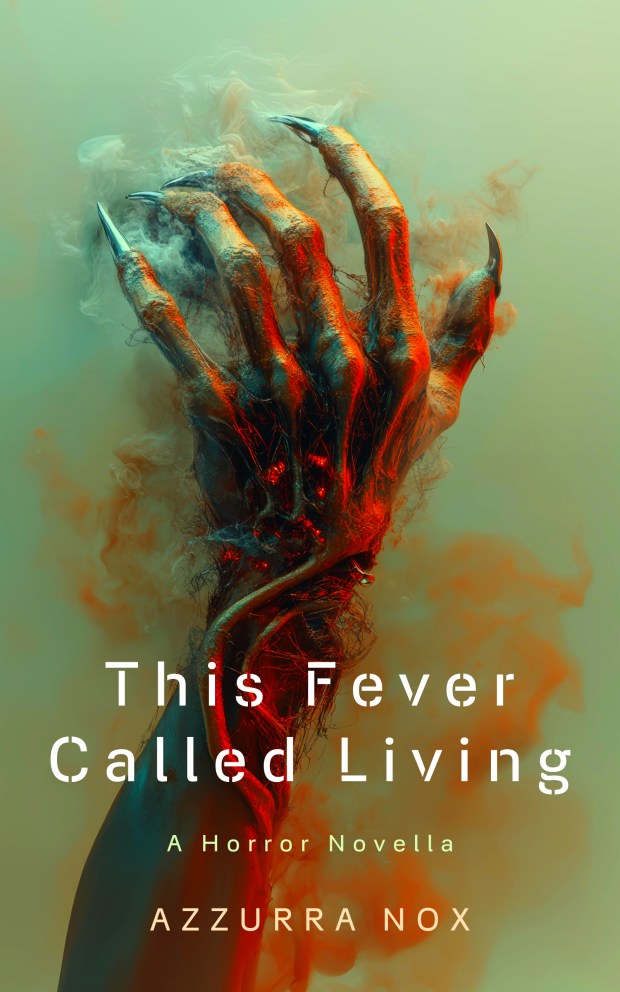

Behind the Scenes: This Fever Called Living

Juliette’s isolation is drawn from my own sense of disconnect as a teenager living in Sicily. Early readers of This Fever Called Living have noted how jarring it feels to encounter modern technology in a setting that seems steeped in history. The truth is, living in Sicily felt just as contradictory. You had modern conveniences like cell phones and the internet, but step outside, and you were surrounded by ancient ruins. Every town seemed like a remnant of whichever empire had once claimed it. This jarring mix was intentional, just as the repetition is. I often find certain phrases looping in my mind, or a song on repeat for hours. Repetition becomes a kind of self-soothing mechanism, a way of coping with the noise of the world.

The passage of time in the novella is intentionally ambiguous. In the present, everything unfolds between January and February, stretching into early March. The past, however, is set in the summer of 1998. As a teenager, time moved in strange ways—winters felt endless, while summers seemed to slip by in a blink. Time itself felt hazy and distorted, and I wanted to capture that sense of unraveling in Juliette’s journey.

This Fever Called Living is a fever dream drenched in tragedy.

The novella comes out March 3.

The Plot Summary:

A dark retelling/mashup of Carmilla and The Fall of the House of Usher.

Palermo, Sicily 1999.

Juliette suffers from a rare illness that keeps her hidden from the sun. Her winter days at Villa Astrid are filled with isolation and gnawing hunger, haunted by fragmented memories of a summer she can’t quite piece together.

Then Elenoire arrives.

Mysterious and magnetic, Elenoire captivates Juliette in a way that’s both thrilling and terrifying. There’s something dangerous about her, something Juliette can’t name. She knows she should keep her distance, yet all she can think about is kissing her.

Meanwhile, young women are turning up dead across Palermo. Whispers of a serial killer spread through the city, but Juliette suspects that something darker is at play. Something not entirely human.

You can pre-order the book HERE.

DID YOU ENJOY WHAT YOU JUST READ? IF YES, THEN SUBSCRIBE TO THE BLOG, GIVE THE POST A LIKE, OR LEAVE A COMMENT! NEW POSTS ARE UP EVERY TUESDAY & THURSDAY!

Interview with Emma Arneil Podcaster of The Horror and Her

Emma Arneil’s The Horror and Her podcast delves into the horror genre and pop culture with a focus on the the representation of women and non binary voices in the genre. She often brings a feminist perspective to the discussion and with her guests tries to explore what horror means to them on a personal level.

Can you talk about your podcast and how it differs from others that are out there?

My podcast The Horror and Her is a podcast that celebrates women, femme and non binary voices in horror. Each episode begins with my guest’s horror origin story, the film that made them first fall in love with the genre. From there we chat about how their relationship with horror has evolved through their life. What makes the show different is that we do not just talk about films we love; we talk about what horror says about power, identity and how this genre can be so personal and transformative and for so many of us, lifesaving.

Whats a book and film you can’t stop recommending?

I have just recently finished Scream with Me – Horror Films and the rise of American Feminism (1968-1980) by Eleanor Johnson and found it such a powerful and insightful read. Johnson links horror classics from the 60s to the 80s and how it was linked to second wave feminism with a real focus on reproductive rights, domestic and patriarchal violence and the war on women’s bodies.

A film I always recommend to anyone asking me for a horror recommendation is John Carpenter’s Halloween. A masterclass in atmosphere and tension and still holds up 47 years later. I could also listen to the soundtrack on repeat forever.

Can you explain how you choose what you decide to talk about on your podcast?

The podcast always starts with a conversation about the film that first sparked something for the guest and what the film says about power and identity.  From there we explore the themes of the film through a feminist lens. Even when we return to films that have been discussed before, each guest brings a new perspective. I love that so much! That the same texts can be constantly reframed and through different women experiences.

Is there a specific drink you like sipping on during your podcast?

I would love to say that I ensure that I am always hydrated and only drink water. Sadly, its nearly always Coke Zero!

Are there any horror tropes you especially love in books or films?

My favourite trope is a final girl but a final girl who is flawed and complex. A final girl who rescues herself and pulls herself out of whatever horror she finds herself in.

Who’s your favourite final girl?

My favourite final girl is Nancy Thompson from Nightmare on Elm Street, she is, for me, the ultimate final girl…a great friend, resourceful and brave as hell!


You can check out The Horror and Her podcast here: https://open.spotify.com/show/6QBrXRe8ElJDR4Zkw2Xims?si=VN6uCYilS8-kgB5RQ0WnMg&nd=1&dlsi=445e907dd3ee47c9

DID YOU ENJOY WHAT YOU JUST READ? IF YES, THEN SUBSCRIBE TO THE BLOG, GIVE THE POST A LIKE, OR LEAVE A COMMENT! NEW POSTS ARE UP EVERY TUESDAY & THURSDAY!

Interview with Viggy Parr Hampton

Viggy Parr Hampton has carved out a prominent place in the horror world. With her spine-chilling books and the popular podcast Horror Humor Hunger, she’s become a go-to expert on everything from horror history to the darkest, most unsettling facts. Now, with her latest release, A Veritable Household Pet, she’s ready to haunt our nightmares in a whole new way.

Can you talk about your latest book and what readers might find appealing about it?

My latest book, A Veritable Household Pet, is horror of a different stripe than usual. Darla Gregory receives a transorbital lobotomy at the age of eleven, and she is never the same. The book follows her life in the aftermath of the surgery, as well as the life of her older sister Ellie, who acts as her caretaker and the reluctant scribe for her story, injecting her views where relevant. A Veritable Household Pet explores a suite of very real terrors, rooted in true history: medical malpractice, family trauma, toxic relationships, mental illness, caregiver fatigue, misogyny, the loss of autonomy and identity, and so much more. It’s my favorite book yet, because it will make readers feel for the characters incredibly deeply.

You always do so much research for your books, what’s something you found out when researching that was surprising or horrifying?

One of the most horrifying pieces of information I came across directly inspired the title of the book. While doing my research on lobotomies, I kept finding before and after photos of patients. In the before photos, the patients would invariably look unkempt and unwell, and in the after photos, while they looked well-groomed and might even be smiling, their eyes looked completely vacant. One such before and after photo even had a caption that said the post-lobotomy patient was ‘a veritable household pet.’ The way these patients were treated as infantilized, docile creatures is both heartbreaking and horrifying in equal measure.

What’s a book you can’t stop recommending?

My Lobotomy by Howard Dully is the memoir of a man who received a lobotomy at the age of 12. It was a pivotal source for my research, but it’s also one of the most fascinating books I’ve ever read in its own right. I will never stop recommending this one!

Can you explain your writing process? What inspires you?

Every time I sit down to start a new novel, I think: Wait a minute, what am I doing? Every novel feels like its own microcosm, but here’s my general process. First, I spend a few months (or even longer) letting the ideas build up and marinate. I keep a notebook with bits and pieces of ideas, and when those ideas start to outgrow the pages, I move them to a document in my writing processor of choice, Scrivener. Then, I make note of any research I’ll need to do—books to read, movies to watch, podcasts to listen to, etc. After I’ve done enough research that I feel ready—or, if the characters start knocking on the proverbial door too hard, whichever comes first—I’ll start writing. I’ve been a plotter in the past, but now I’m a certified pantser.

In terms of inspiration, I pull things from everywhere—articles I’ve read, stories I’ve heard, history I’ve researched, places I’ve been. All of my books have some thread of truth or history running through them, which I think makes them that much punchier.

Is there a snack or drink that gets you into a writing mindset?

Lately I’ve been really loving having a cup of hot green tea next to me. It’s relaxing, and it helps signal my brain that it’s time to get down to business.

Are there any horror tropes you especially love in books or films?

I love two things: an unreliable, complicated narrator and an unhappy ending! It’s horror, after all—I don’t want to come away from it smiling!

Are you currently working on anything new?


My fifth novel, Ripped Up the Middle in Two, will publish in late July, and I’m currently getting that one in shape. It’s a creature feature motherhood horror about a postpartum mom who thinks there’s an evil fairy in the woods that wants to steal her baby. I’m also about to start work on my sixth novel, which will be a time travel-spin on the haunted house story.

A Veritable Household Pet is now available at Amazon and Barnes and Noble websites.

You can keep up with her writing at: https://viggyhampton.com/

DID YOU ENJOY WHAT YOU JUST READ? IF YES, THEN SUBSCRIBE TO THE BLOG, GIVE THE POST A LIKE, OR LEAVE A COMMENT! NEW POSTS ARE UP EVERY TUESDAY & THURSDAY!

Book Review: Hemlock and Silver by T. Kingfisher

PLOT SUMMARY:

Healer Anja regularly drinks poison.

Not to die, but to save—seeking cures for those everyone else has given up on.

But a summons from the King interrupts her quiet, herb-obsessed life. His daughter, Snow, is dying, and he hopes Anja’s unorthodox methods can save her.

Aided by a taciturn guard, a narcissistic cat, and a passion for the scientific method, Anja rushes to treat Snow, but nothing seems to work. That is, until she finds a secret world, hidden inside a magic mirror. This dark realm may hold the key to what is making Snow sick.

Or it might be the thing that kills them all.

GRADE: C

REVIEW:

I’m not usually a fan of fantasy, but I’ve enjoyed every T. Kingfisher book I’ve read so far, so I decided to give this one a try. It also helped that it was marketed as a Snow White retelling—and I’m a total sucker for fairytale retellings.

The good:
Some readers felt the protagonist, Anja, had too much internal monologue, but I didn’t mind it at all. I found her engaging, and it never felt annoying to me. I also absolutely loved the character of Grayling, who easily became a standout.

The not-so-good:
Action-wise, it felt like not much really happened. The mystery surrounding the king’s daughter’s illness wasn’t especially compelling, and I couldn’t help feeling there was a lot of missed potential—particularly when it came to the mirror realm, which could have been explored much more deeply.

Overall:
I really enjoyed Jennifer Pickens’ narration of the audiobook, and I think her performance helped make the story feel more engaging than it might have otherwise. Still, from a plot standpoint, the book didn’t quite live up to my expectations.

*Thank you so much to NetGalley & MacMillan Audio for the audiobook copy of this book in exchange for an honest review!

DID YOU ENJOY WHAT YOU JUST READ? IF YES, THEN SUBSCRIBE TO THE BLOG, GIVE THE POST A LIKE, OR LEAVE A COMMENT! NEW POSTS ARE UP EVERY TUESDAY & THURSDAY!
Book Review: Hazelthorn by CG Drews

PLOT SUMMARY:

Evander has lived like a ghost in the forgotten corners of the Hazelthorn estate ever since he was taken in by his reclusive billionaire guardian, Byron Lennox-Hall, when he was a child. For his safety, Evander has been given three ironclad rules to follow:

He can never leave the estate. He can never go into the gardens. And most importantly, he can never again be left alone with Byron’s charming, underachieving grandson, Laurie.

That last rule has been in place ever since Laurie tried to kill Evander seven years ago, and yet somehow Evander is still obsessed with him.

When Byron suddenly dies, Evander inherits Hazelthorn’s immense gothic mansion and acres of sprawling grounds, along with the entirety of the Lennox-Hall family’s vast wealth. But Evander’s sure his guardian was murdered, and Laurie may be the only one who can help him find the killer before they come for Evander next.

Perhaps even more concerning is how the overgrown garden is refusing to stay behind its walls, slipping its vines and spores deeper into the house with each passing day. As the family’s dark secrets unravel alongside the growing horror of their terribly alive, bloodthirsty garden, Evander needs to find out what he’s really inheriting before the garden demands to be fed once more.

GRADE: B+

REVIEW:

I experienced Hazelthorn as an audiobook, and narrator Michael Crouch did an excellent job bringing the story to life. His performance captured the gothic, moody atmosphere perfectly, and his character voices were distinct and engaging throughout.

I’ll admit that I didn’t really like the main character, Evander. While I understood the reasons behind his intense anxiety, his inner monologue often felt repetitive and grating. I was also not especially drawn in by the book’s opening, which initially presents itself as a murder mystery—an element that turned out to be far less interesting than the story’s true strengths.

What I did love was the writing itself. Drews’s prose is lush and atmospheric, vividly capturing the emotional pain endured by both Evander and Laurie. The concept of the deadly garden was fascinating, and I appreciated how its existence affected not just the main characters but everyone around them. Although the villains fell into the familiar trope of cruel, wealthy antagonists, it didn’t detract much from my enjoyment.

Overall, I liked the ending and found the book memorable for its mood and writing style. I’m definitely looking forward to reading more from this author.

*Thank you so much to NetGalley & Recorded Books for the audiobook copy of this book in exchange for an honest review!

DID YOU ENJOY WHAT YOU JUST READ? IF YES, THEN SUBSCRIBE TO THE BLOG, GIVE THE POST A LIKE, OR LEAVE A COMMENT! NEW POSTS ARE UP EVERY TUESDAY & THURSDAY!

Book Review: The Graceview Patient by Caitlin Starling

PLOT SUMMARY:

Margaret’s rare autoimmune condition has destroyed her life, leaving her isolated and in pain. It has no cure, but she’s making do as best she can—until she’s offered a fully paid-for spot in an experimental medical trial at Graceview Memorial.

The conditions are simple, if grueling: she will live at the hospital as a full-time patient, subjecting herself to the near-total destruction of her immune system and its subsequent regeneration. The trial will essentially kill most of, but not all of her. But as the treatment progresses and her body begins to fail, she stumbles upon something sinister living and spreading within the hospital.

Unsure of what’s real and what is just medication-induced delusion, Margaret struggles to find a way out as her body and mind succumb further to the darkness lurking throughout Graceview’s halls.

GRADE: B-

REVIEW:

The Graceview Patient was marketed as Invasion of the Body Snatchers meets Misery, and since I love both, I went in expecting this to be right up my alley. And in many ways, it was. That said, experiencing it as an audiobook added an extra layer of surreal intensity—especially since it’s narrated by Xe Sands, who also read Spread Me. Her voice turned an already disorienting story into a full-blown fever dream.

Meg has lived for years with a rare autoimmune disease that has slowly stripped away her relationships, her career, and any sense of normalcy. When she’s offered a spot in an experimental medical trial—one that will completely destroy her immune system before rebuilding it—she agrees. After all, she feels she has nothing left to lose (and getting paid doesn’t hurt). But as the treatment progresses, unsettling things start happening, and Meg begins to suspect that the experiment isn’t quite what she was told. Something else may be using her body as its test subject.

This is a deeply trippy, slow-burn descent into medical horror. If you enjoy unsettling atmosphere, creeping paranoia, and stories that blur the line between reality and hallucination, this one’s worth your time. Just be warned: if you’re not into slow burns, it may feel overly repetitive or too dreamlike to fully click.

*Thank you so much to NetGalley & Dreamscape Media for the audiobook copy of this book in exchange for an honest review!

DID YOU ENJOY WHAT YOU JUST READ? IF YES, THEN SUBSCRIBE TO THE BLOG, GIVE THE POST A LIKE, OR LEAVE A COMMENT! NEW POSTS ARE UP EVERY TUESDAY & THURSDAY!

Book Review: What Stalks the Deep by T. Kingfisher

PLOT SUMMARY:

Alex Easton does not want to visit America.

They particularly do not want to visit an abandoned coal mine in West Virginia with a reputation for being haunted.

But when their old friend Dr. Denton summons them to help find his lost cousin—who went missing in that very mine—well, sometimes a sworn soldier has to do what a sworn soldier has to do…

GRADE: A

REVIEW:

This third installment in the Sworn Soldier series delighted me from the start—especially with its eerie West Virginia setting. One of the things I adore about Kingfisher’s work is how she blends dark, gnarly horror with just the right amount of humor, and this book is no exception.

Like the previous entry, What Stalks the Deep introduces a cast of quirky, compelling characters and builds a mystery that pulls you in deeper with every chapter. Following Alex Easton on another wild adventure was a blast, and the shift into the claustrophobic world of the mines adds an extra layer of tension. Mines are unsettling on their own—add Kingfisher’s imagination, and they become downright terrifying.

The audiobook deserves special praise. The performance brings the atmosphere, characters, and creeping dread vividly to life. Honestly, I think it may be the best way to experience this story.

If you’ve enjoyed the earlier books in the series, this is an absolute must-read. It expands the world in exciting ways, leans into cosmic horror with a hint of sci-fi, and delivers another gripping, weird, wonderful journey with Easton at the helm.

*Thank you so much to NetGalley & Macmillan Audio for the audiobook copy of this book in exchange for an honest review!

DID YOU ENJOY WHAT YOU JUST READ? IF YES, THEN SUBSCRIBE TO THE BLOG, GIVE THE POST A LIKE, OR LEAVE A COMMENT! NEW POSTS ARE UP EVERY TUESDAY & THURSDAY!
Book Review: Spread Me by Sarah Gailey

PLOT SUMMARY:

Kinsey has the perfect job as the team lead in a remote research outpost. She loves the solitude, and the way the desert keeps her far away from the temptations teeming out in the civilian world.

When her crew discovers a mysterious specimen buried deep in the sand, Kinsey breaks quarantine and brings it into the hab. But the longer it’s inside, the more her carefully controlled life begins to unravel. Temptation has found her after all, and it can’t be ignored any longer.

One by one, Kinsey’s team realizes the thing they’re studying is in search of a new host—and one of them is the perfect candidate….

GRADE: B-

REVIEW:

This book is definitely one for the freaks—in the best possible way—as it boldly fuses horror with erotica. Imagine The Thing, but trade the Arctic ice for scorching desert sand. Kinsey’s research team stumbles upon a bizarre creature buried in the dunes and, against all common sense, brings it inside to study. That’s when the infection starts… and when the story takes its turn into unsettling, seductive territory.

Kinsey herself harbors a strange fetish: she craves the idea of being overtaken by a virus, of something alien curling its way inside her. As the infection spreads through the team, she finds herself terrifyingly close to getting exactly what she’s always fantasized about—if she’s willing to surrender to it.

It’s a weird, wild ride. I enjoyed the characters and the sheer audacity of the premise, but this is definitely not a universal crowd-pleaser. If you like your erotica served with a generous splash of body horror, this one might be right up your alley. Otherwise, consider yourself warned.

*Thank you so much to NetGalley & Macmillan Audio for the audiobook copy of this book in exchange for an honest review!

DID YOU ENJOY WHAT YOU JUST READ? IF YES, THEN SUBSCRIBE TO THE BLOG, GIVE THE POST A LIKE, OR LEAVE A COMMENT! NEW POSTS ARE UP EVERY TUESDAY & THURSDAY!

Book Review: Bed Rot Baby by Wendy Dalrymple

Her life is falling apart… like, literally.

PLOT SUMMARY:

Being a sugar baby isn’t all it’s cracked up to be. After a failed art career and a failed relationship, Baby has lost her way. She’s adrift in the post-Y2K, pre-Facebook world and stuck in her Florida hometown, selling stolen goods online and working as a sugar baby. Even though she’s hustling hard, there’s still never enough money to pay the bills, and her long-suffering roommate is ready to put her out on the streets. One night after a bad date with her sugar daddy, Baby is assaulted by a mysterious woman in a parking lot. The attack leaves her disoriented and exhausted, so Baby takes to her bed to lie there and rot, like, for real. With every passing day, Baby’s looks and health decline in strange and horrific ways. Soon, it becomes apparent that the strange woman who assaulted her had something to do with her declining state. Baby needs to find her attacker, reclaim her life and her beauty, and get her shit together once and for all. But at what cost?

Bed Rot Baby is a pink horror meditation of self-discovery through self-destruction, and the real cost of self-image, self-esteem, and beauty.

GRADE: A

REVIEW:

Bed Rot Baby is a strange, stylish little gem, eerie, satirical, and surprisingly tender. Wendy Dalrymple offers a fresh and unsettling take on themes of immortality and beauty, exploring what happens when the desire to stay young and untouched by time turns obsessive.

Rather than leaning on the usual tropes, Dalrymple injects the story with biting social commentary and dark humor. The idea of eternal youth is twisted into something claustrophobic, even grotesque, and the result is a story that feels both modern and mythic. It’s a clever reflection on sugar baby culture, the commodification of beauty, and the way society rewards women for staying small, still, and pretty forever.

The writing is sharp and compact, the tone shifting between dreamy and disturbing in all the right ways. It’s not a long read, but it lingers.

If you’re into offbeat horror with something to say, especially about the cost of being “perfect” forever Bed Rot Baby is well worth your time.

*Thank you so much to NetGalley & Quill & Crow Publishing House for a digital copy of this book in exchange for an honest review!

DID YOU ENJOY WHAT YOU JUST READ? IF YES, THEN SUBSCRIBE TO THE BLOG, GIVE THE POST A LIKE, OR LEAVE A COMMENT! NEW POSTS ARE UP EVERY TUESDAY & THURSDAY!
Short Story: Please Serve Cold by Rachel Bolton

She was what you’d call a handsome woman. Particular. Elegant. Grace was not the type to leave her house unbeautified. Hair forever coiffed in the style she’d had for the past thirty years. Timeless flattering suit skirts. A brooch pinned over her heart. Her mother taught her that once one finds a complimentary style, one must stick with it. She did not even own a pair of jeans. Slacks were to be worn under specific circumstances only. Grace thought of herself as enduring. Others saw her as tacky. But a woman approaching her seventies could not please everyone.

“This is such a lovely party, isn’t it, Henry?” She said to her husband. “Elizabeth’s a good hostess.”

Henry’s eldest daughter was in charge of Thanksgiving this year. They had been told not to bring anything. Simply to come and enjoy the food.

“Hmm,” Henry grunted and nodded. Grace refolded her hands in her lap, adjusting the sapphire of her engagement ring so it was in the middle of her finger. Her husband had not been particularly verbose that evening. Grace put it off as being uncomfortable after overeating. Then again, this was the first Thanksgiving after Marie’s death.

The party had moved from Elizabeth’s modest dining room and into the more spacious den. Grace was not fond of the color scheme. When Elizabeth and her husband, Joel, had moved in, Grace put together a binder of suggestions and gifted it to her stepdaughter. Elizabeth thanked her, but the advice was never used.

The house was crowded with over twenty people in attendance. Almost half were conveniently children. Grace liked children, and there was the old reoccurring sorrow she’d never had any of her own. Grace was not a woman to make a fuss. She’d married her first husband, William, right after college. No children followed, only William dropping dead from a heart attack at thirty-two.

A teen girl sat next to Grace, joining her in the quieter end of the room. Grace didn’t know her name, but from her hair and the shape of her jawline, she assumed she was one of Marie’s relatives. The girl started to eat Italian cookies from her plate.

“Did you enjoy the food?” asked Grace. She was making conversation. Sitting in silence wasn’t polite. She’d been raised to have manners.

Unlike the girl, who answered through a mouth full of crumbs. Grace thought about telling her how unladylike that was. But no one else had come over to talk with Grace. One must take one’s company as one can.

Henry’s son Ricky was speaking to his father. Grace believed parents should not have favorites, but as a stepmother she was allowed to. Ricky had been ten when Grace married Henry, young enough that she’d hoped he would’ve formed a son-like attachment to her. Such a sweet boy. She remembered the hand drawn Mother’s Day he’d given her, her first ever. I love you Aunt Grace. From Ricky. All the children called her Aunt Grace. The title had been Marie’s idea.

Grace brought up other topics with the girl, her travels, what did she plan for school. The girl answered her questions yet did not ask Grace any in return. She was not a woman who eavesdropped, but Grace tried to listen to what Henry and Ricky were talking about. She heard the name of a man Henry had worked with for years.

“Henry, did you say that Jack’s going to Florida?” Grace stretched her neck towards the conversation. Not to be intrusive or grotesque, to show she was really listening.

Henry raised a finger towards Grace. A request for silence. Ricky, her dear one, kept his face towards his father.

* * *

Grace walked to the kitchen. She had yet to talk to Elizabeth, to thank her for working so hard on dinner. Marie had always cooked Thanksgiving. From the turkey down to the famous strawberry cream cake. The cake’s absence was noticeable on the dessert table. No one had wanted to bake it, not without Marie’s hands to do so. Elizabeth had been good to step up. She’d been so close to her mother… Grace would offer to help wash the dishes. Protect her hands with the yellow rubber gloves and scrub, scrub, scrub.

Elizabeth was having an intense conversation with an older woman as they cleaned. With a jolt, Grace recognized it was Marie’s sister, Adaline. Grace hadn’t noticed her at the table. Why did Grace find her appearance so jarring? They’d never spoken a word to each other in twenty-five years. She didn’t matter. But Adaline knew things about Grace. She was Marie’s sister, her confidant. A woman who would know more about Grace than she ever would in return.

Grace was not a woman to dwell on the past. She cleared her throat.

“Do you need help with the dishes?”

Adaline glanced in Grace’s direction. Elizabeth kept washing.

“… she didn’t approve of the idea. But the plan was how we got through it,” said Elizabeth. The plate clinked into the drying rack.

Her aunt rubbed Elizabeth’s arm. “You have to do what you need to do.”

“Elizabeth,” said Grace. “The casserole was delicious.”

Elizabeth sprayed the sink.

“Is there anything I can help you with?” added Grace. She rolled her rings with a manicured nail.

“I think we’re all set,” said Adaline, the first time she’d spoken directly to Grace.

Elizabeth dried her hands. “Thanks for everything, Aunt Addie.”

* * *

This Thanksgiving had been an unusual one, Grace remarked as such to her husband on the drive home.

“Thanksgiving was Marie’s holiday,” said Henry.

It was true. Five months after she married Henry, Grace had Thanksgiving at Marie’s new house. Unusual, yes, to dine with your husband’s first wife. To have her serve you mashed potatoes. To eat together at the same table. Henry and Marie had wanted to be the divorced couple who stayed friends for their children’s sakes. Marie had even been the one to make Grace and Henry’s wedding go smoothly.

Grace knew she was lucky. Marie signed the divorce papers as soon as she could. Grace got to be a June bride for her second wedding. Henry’s child support and alimony payments were generous, perhaps a little too generous. Grace kept that opinion to herself. How would Henry have reacted if she said the checks seemed more like assuaging guilt than a kindness towards Marie?

The children were not disruptive before the ceremony. But once they were in the church… Henry was the groom, he had other responsibilities than to mind his brood. As the bride Grace was aware of everything. Harry had taken off his tie and couldn’t find it. Elizabeth, always the leader, sat quietly while her siblings misbehaved. Grace thought she and Harry should have known better. They were young adults then. Henry had found Abigail out smoking with her elder cousins in the parking lot. Jennifer whined like a much younger child that her shoes were too tight. Ricky crossed his arms and buried his chin in his chest. Grace was an understanding woman, but this was her wedding! A much nicer one than her first. Harry was his father’s best man. Her new stepdaughters, junior bridesmaids and the flower girl. And Ricky was to be the ring bearer. He had told Grace how excited he was.

Grace paced in the waiting room and picked at her veil.

“Could you please get your brothers and sisters to behave,” she had asked Elizabeth. The girls were a close little trio, and the bookending boys would follow their sisters. Grace was an only child. She had wanted a little sister once.

“I don’t think anything’s wrong,” said Elizabeth.

Someone, after all these years Grace still doesn’t know who, called Marie. She got the children into order. Marie was not dressed for church. Faded sunhat on her head. Her top showing off freckled shoulders. She still wore her apron, speckled with layers of paint. Ratty old sandals revealing her bare toes.

“I talked to the kids,” she had said. “Everything will be fine.”

Grace thanked her. She was an accommodating woman, the sort who could be friendly to her husband’s ex-wife. Harry found his tie. Elizabeth smiled. Abigail never smoked again. Jennifer’s shoes fit her properly. Ricky smiled as he carried the rings down the aisle.

Before she left, staying for the ceremony would’ve been too much, Grace watched Marie stroke Ricky’s head.

“Remember our agreement?” she had whispered to her son.

Grace thought of her wedding to Henry fondly. The ceremony marking the first moment she’d felt like a real partner to him. All the photos showed a happy new family. Besides, the only person to really dampen the day had been Grace’s father. Who before taking his daughter’s arm said he was glad her mother wasn’t here to see this.

* * *

Jennifer’s birthday was a week into December. Henry considered himself a lucky man since all his children ended up in the same area. Grace loved watching him play with his grandchildren. He would get on his hands and knees to play at their level, even if his arthritis flared up. Henry never missed a baptism, dance recital, game, or any chance to spend one on one time with them. He was the best Grampy. Like her stepchildren, the grandchildren called her Aunt Grace. She had hoped for a grandmotherly nickname when the first was born, but why change what has been perfectly fine for a decade at that point?

The party for Jennifer was small. Just parents, siblings, and in-laws. She and her husband had recently welcomed a surprise second child. Little Matthew was not quite four months. When the pregnancy was announced, Grace had shared her concern about Jennifer’s age. Would the child be healthy?

Jennifer scoffed. “I’m thirty-seven not forty-two.”

Everyone laughed. Forty-two. Grace had been at that age when she married Henry. Possible motherhood was fading away, but not completely gone then. There were a few hopeful weeks, then a return to regular monthly disappointment ‘til menopause. Jennifer just picked a random age. Grace’s stepdaughter had not meant the barb. She knew it in her heart.

Grandchildren were everywhere. The elder ones gathered around Henry, asking him for advice. They really listened to him, their eyes revealing only true interest. No pacifying an old man. Henry was so wise. Grace had been drawn to that from the start. The younger children ran wild, playing games Grace found indecipherable.

She was surrounded by familiar faces. Some she had been around for a quarter century. Harry. Elizabeth. Abigail. Jennifer. Their spouses. But where was Ricky? Grace decided to ask around.

She went to Harry first. Ricky followed him around like a puppy. Don’t all little boys worship their big brothers? Harry was tall, taller than his father. Grace needed to look up to speak to him.

“Harry, where’s your brother?”

Harry didn’t answer. “Cassie, don’t put that in your mouth!” He swooped down to pop a crayon away from his niece.

* * *

Abigail was pouring drinks at the minibar. Of the girls, Grace believed she was closest to her middle stepdaughter. Grace gave Abigail some practical lessons before she went off to college. It was unfortunate, but she was the plainest of her sisters. Her body was shaped with emphasis on the wrong parts. Grace had taken her shopping for graduation. Bought her clothes to flatter what she had.

“Learn to do your hair and face right, dear, and your figure won’t matter,” Grace had said at the tea house afterwards.

Abigail did wear the clothes. Grace had seen photos as proof. Yet not when she was around. And years later, she found the blouses and skirts in a pile for donation.

A cocktail shaker was between Abigail’s large hands. Grace wanted to give her rings, more than a wedding band, to make them daintier.

“I thought Ricky was coming to the party,” said Grace.

“Hey Dad,” said Abigail, as she poured into a stemmed glass. “I’ve got your martini.”

Grace wanted to tap Abigail on the shoulder, to make sure she had heard her. Grace had been raised to think that was impolite. Crass people touched each other to make a point. Instead, Grace waited patiently for Abigail to attend to her.

That moment never came.

* * *

Malcolm, Jennifers’s husband, brought Grace a cup of tea. He told her that Ricky was unable to attend his sister’s party due to work. He could not stay long to chat. He needed to change his baby’s diaper.

Grace was not a woman to mope. What was the point? Life changed whether you wanted it to or not. Her mother always said that regrets were a poison. Regret was not what bothered Grace, absence did. She thought through the haze of Marie’s final days and funeral. Grace did speak to her stepchildren, told them how she had lost her own mother, at a far younger age than all of them.

Jennifer announced she needed to go upstairs and let the baby nurse. Her older sisters guided her on each side. Sister-in-law Becky too. Malcolm’s mother was invited as well. Protectors and escorts. These women retreated into a collective privacy, as old and essential as Eve herself. One that Grace wasn’t invited to share.

Grace wouldn’t have gone. Not to feel the remnant envy of motherhood. Just to be asked would’ve been nice.

* * *

Before dessert, before Abigail brought out a shallow imitation of her mother’s strawberry cream cake, Grace had tried to spend time with the younger grandchildren. She would learn about their games, what television shows they watched, she wanted to be someone they loved.

She ended up overhearing Elizabeth’s daughter and Harry’s youngest son talking about her.

“She’s not really our aunt,” said Kaitlyn. She was exactly like her mother. An authority on all despite her position in the birth order. “She’s just the lady Grampy’s married to.”

“So she’s not Nana’s sister?” asked Steven.

Kaitlyn rolled her eyes. “Don’t be stupid.”

* * *

“Is there something going on with the children?” Grace asked Henry once they returned home. They were always the children, not his children, and definitely never our children.

Henry poured himself a nightcap. “They’re grieving their mother.”

“I know, but I thought they were acting strange.” Grace could have used a stronger word. They are acting difficult. Rude. Insulting. She declined, as Grace was not a woman to start a fight before bed.

Henry swirled the ice in his glass. “Don’t think on it, my dear.”

* * *

The next morning Grace called Ricky. It was a Saturday. He should be home. She left two voicemails, and she attempted to leave a third, but the tape ran out.

* * *

Grace felt a wave of loneliness. She wished for the first time since her marriage to Henry that she had more female friends. There were a few she exchanged Christmas cards with, but none she could call unexpectedly. Grace let her girlhood and college friends drift away. They hadn’t liked Henry. Never tried to understand their love story. I can’t believe you did that to another woman. Grace hadn’t started seeing Henry for sex. That would have been wrong. Low of her to do. It was love. Love was pure and good. Love overcame everything. And Grace was the love of Henry’s life. He had told her so himself.

Who else could she talk to? Her parents were dead, cousins far away by space and years. Maybe Marie had been her friend. Her only one. Not a usual friendship. They never went and spent time together on their own. Neither one bought the other any gifts for birthdays or Christmas. Yet the two had talked. More than just pleasantries. Longer than the polite minimum of time. Marie sent flowers and a kind note when Grace’s father passed away. When Marie was sick and none of the daughters were around, Grace did laundry for her. Folded, ironed, and put away. Wasn’t it meaningful? Wasn’t that real?

* * *

There had been Henry’s birthday dinner a month after Marie’s death. The five children treated their father to an evening out at Antonio’s in town. Grace disliked Antonio’s. The restaurant cooked her steak wrongly every time. All the dishes were oversaturated with butter. She’d get a salad, but it was a gamble if the greens would be wilted or not. It was a relief to let Henry enjoy his birthday without her.

He came home scarcely two hours later, storming in while Grace watched QVC. He muttered something under his breath. He stood by the bar cart and poured himself a drink.

“What happened?” Grace had asked.

Henry knocked back two whiskeys in quick successions.

“Henry!”

The glass shattered against the wallpaper. He had thrown it across his body dismissively. Whiskey drops rolled down to the floor. For the first time Grace was afraid of her husband.

She sat motionless on the sofa, hands clasped over her pounding heart. Henry had approached her then, slowly. He kneeled.

“I’m sorry,” he said, and kissed her hand like a supplicant.

“Would you please tell me what happened?”

He ran his thumb over her knuckles. “Nothing for you to worry about, my love.”

Grace did not ask again. She was not a woman who pried.

* * *

The cold shoulder continued. It was not just the girls or Harry and Ricky. All of Grace’s stepchildren decided to pretend she didn’t exist. How juvenile. They ignored her at church, at the grandsons’ basketball games. Grace had spoken and asked questions, and none of her stepchildren replied. No one met her gaze. The children moved around her like she was a piece of furniture. The five of them had closed ranks, only allowing their father inside.

Her husband seemed content to leave the relationship between his wife and children as is. Grace supposed inaction was easier for him. Henry only benefited from this status quo, and Grace was forced to acquiesce.

Well, she could play their game. Christmas was approaching. The occasion for another family dinner. Harry and his wife were hosting. Grace was not the sort of woman to be drastic. No screaming or crying, or worse, complaining to Henry outright. If she did, the stepchildren had their victory.

There was Marie’s famous strawberry cream cake. She was the only one who made it best, as she had created the recipe. Grace had eaten it many times over the years and knew what the cake was supposed to look like. Always covered in pink vanilla frosting with sliced strawberries in a circle on top. Three layers connected by cream cheese frosting. The cake itself was again vanilla, dyed pink by maraschino cherry juice. Grace was certain the recipe required a splash of liquor. Perhaps sherry?

Grace was an ingenious woman. She had cookbooks and a grocery store a short drive from the house. She could experiment. She’d always done well in chemistry at school. This cake was nothing and everything. The children could not ignore Grace taking from their mother. Again.

* * *

When Henry was out, Grace got to work. She’d bought an apron for the task. A nice one with pockets. Marie would have appreciated her practicality. Grace went through old family albums to find a picture of the strawberry cream cake. The frosting had to match. Fruit sliced correctly.

On the fourth try, Grace made her perfect cake.

* * *

The Christmas Eve dinner was what Grace expected it to be.

The grandchildren ate at various mismatching card tables set up in Harry’s living room. Different heights produced amusement over the placements of serving dishes. Holiday standards played on the radio, and the lights of the tree cast a colorful warm glow. To be festive, Grace wore a red skirt suit with a brooch depicting a miniature nativity scene pinned to the lapel.

The adults in the family were at the table in the kitchen. If Grace had planned the dinner, she would have put the grandchildren in there and let the adults dine in the living room. While the kitchen was spacious, the living room was far better. Harry and Becky told Henry that the kids needed more space than adults. How considerate of them.

As Grace anticipated, her stepchildren continued to deny her existence and her husband went along with this shunning. Grace had been placed between Jennifer’s husband Malcolm and Ricky. Malcolm decided to be polite and asked Grace if she wanted a scoop of stuffing, or if she needed salt for her brussels sprouts. Ricky talked over Grace, around and under her as well.

Where was the little boy she used to read to?

Grace was not a woman who sulked. She nibbled at her plate and drank a half glass of wine. The stepchildren’s behavior was not her concern. Not until just before dessert. The strawberry cream cake, freshly made without Henry noticing, was in a hat box under the tree.

Henry had asked what it was when they got into the car.

“A gift,” replied Grace.

In the box, the cake rested on a glass stand that had once belonged to Grace’s mother. A classic pearlescent white, perfect for a pink cake. Grace had done so well, all the ingredients were correct, and the liquor was a tablespoon of amaretto. This insult to their mother was unignorable. Harry, Elizabeth, Abigail, Jennifer, and Ricky, had to say something to Grace.

While she was frosting the cake, Grace sent out a promise to Marie that after tonight she would never make the strawberry cream cake again. The recipe belonged to her. Grace was merely borrowing it.

* * *

Grace did not wait for the transition between the main course and dessert. She needed them all to be seated for the maximum effect. So as second or third servings were being finished, Grace got up from the table, no one commented, and fetched her hat box. She placed it on the counter and took out the strawberry cream cake and the beautiful stand.

Grace inhaled deeply before she turned around. She would not be smug. The cake was not a punishment, but a conversation starter. The best sort. Strong and undeniable.

“Everyone, I’ve made a special cake for dessert tonight.”

The stepchildren did not respond. No heads turned. No eyebrows raised.

Grace cleared her throat, just loudly enough. “I’ve made the strawberry cream cake.” She lifted the stand to make the point.

“That’s very nice, Aunt Grace,” said Becky, sweet as a kindergarten teacher. “Why don’t you put it down and I’ll cut it for you.”

Grace tried to smile. Becky, her silly little stepdaughter-in-law, talking to her like she was a senile dotard.

“I don’t want to do that,” said Grace. “I want my stepchildren to see their mother’s cake.”

That should’ve been enough. Invoking Marie was transgressive. Now the other guests and Henry knew Grace was trying for their attention. The daughter and sons-in-law adjusted themselves in their chairs, finally uncomfortable, but silent. They must have agreed with their spouses on some level. The cake started to tremble in Grace’s hands. The stepchildren ate and conversed with each other without a care in the world. There was no woman standing with a cake in the kitchen. What stepmother? Henry glanced between his wife and his children, crunching ice in his mouth.

A feeling Grace didn’t believe she possessed grew and grew. Unknown and shocking, like growing a new limb. Why, anger was delightful! Her mother taught her a woman never shows irritability. But anger was clarifying. Anger burned away all the nonsense. Anger traveled from her chest, down her arms, and into her hands.

Now Grace was a woman who could scream.

She hurled the cake and stand onto the floor. The glass shattered spectacularly. Shards glued together by pink frosting and bits of an untouched cake laid in a wide splatter over the linoleum and Grace’s heels. The kitchen had taken a deep breath and would not let it out.

The stepchildren turned and looked at Grace, blankly. Silent stares that cut like glass.

“Ha,” said Elizabeth, only Elizabeth, and then she and her siblings went back to eating.

Grace blinked. The surety of her anger was gone. She stood as if she was naked. What had she done? She’d turned into a silly old woman. Had Elizabeth spoken at all? Grace looked at her hands. The cake. Her eyes followed the pink. She turned her art into a mess. Oh, her mother’s stand… Another heartbreak. Grace could put it back together. She was allowed to have that, right? Becky appeared in yellow gloves and started picking up, trash bag in hand. Please stop! It’s mine! Nothing came out when Grace opened her mouth.

Henry went to Grace and grabbed her wrists. She slipped out of her shoes as he pulled her up.

“For Christ sakes, Grace! What’s wrong with you? You’ve ruined your stockings!”

* * *

Rachel Bolton is a busy writer with more projects than she has time for. Her work has appeared in or is forthcoming from Apex Magazine, Women Write About Comics, Strange Girls, and more. She lives in Massachusetts with her cat. Follow her on Twitter/X and BlueSky @RaeBolt. rachelmbolton.wordpress.com.