The creatures peered at her with beady eyes, lips curling to bare tiny teeth in an expression more suited to a rabid dog.
PLOT SUMMARY:
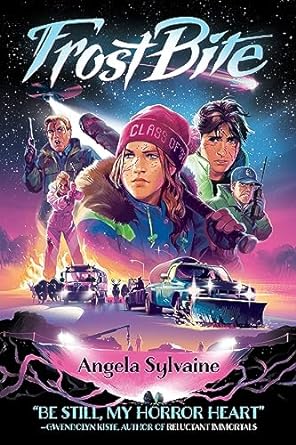
Remember the ’90s? Well…the town of Demise, North Dakota doesn’t, and they’re living in the year 1997. That’s because an alien worm hitched a ride on a comet, crash landed in the town’s trailer park, and is now infecting animals with a memory-loss-inducing bite–and right before Christmas! Now it’s up to nineteen-year-old Realene and her best friend Nate to stop the spread and defeat the worms before the entire town loses its mind. The only things standing in the way are their troubled pasts, a doomsday cult, and an army of infected prairie dogs.
GRADE: A
REVIEW:
I’ve always been a fan of Angela’s short stories as she’s appeared in two of my Women in Horror Anthologies (My American Nightmare with The Ballad of Sorrow and Lila and Strange Girls with Night Terrors), so when I had a chance to read her debut novel I was thrilled. Frost Bite is a fun, entertaining read that follows protagonist Realene as an alien parasite invades her small town ala The Faculty.
There were many fun action-packed scenes that I thoroughly enjoyed and I really loved the emotional highs and lows I got from reading this novel. Personally, I thought the crazed prairie dogs to be quite amusing (I’ve never seen them before so I totally had to Google them and they’re the cutest animals ever).
This very much reads like a 90s horror book but with a nostalgic twist. Anyone who has lived during the 90s will get a kick out of all the references, not to mention be reminded of some things we may have forgotten about. It was really bittersweet in that respect. I also loved that this book reminded me of the 80s film The Curse (also dealing with a meteor falling in a small town with devastating consequences for everyone who lived there).
I recommend this book to anyone who likes horror with a sci-fi alien with a dash of cults and loves snowy, cold settings.
*Thank you so much to Nightworms & the author for the digital copy of this book in exchange for an honest review!
Short Q & A with Author
Was there a specific reason why you chose to set your book in the 90’s?
I grew up in the ’80s and ‘90s, and I was the same age as the main character around the late ‘90s, so it was the most obvious choice since I had specific memories of that time. Maybe I’m lazy? LOL. It was also just really fun to set it then, because it allowed me to reconnect with a lot of the pop culture I experienced and loved. I had a fantastic time researching events, movies, music, and food and figuring out how to thread references throughout the book to give a strong sense of time and place.
Your book has been really popular. Did you think it would’ve resonated with so many people and how does it feel?
I certainly hoped it would be popular but didn’t necessarily expect it. It felt really incredible to know this story and these characters resonated with people, especially since it’s kind of a silly premise. Ultimately, I wanted people to have fun reading it, but I’m really happy people have connected with the heart behind the story, too (I often get messages about Realene’s relationship with her mom, who had dementia, and how meaningful that was to readers).
What can we expect from the sequel?
As those who read book 1 know, there is a bit of a cliff hanger:) Alien worms aren’t so easy to kill, and Realene and Nate will have to step up again, though they are now battling the grief and trauma from the events in book 1. The book takes place during Spring Break, but not in Florida or Cancun. We’ll be venturing up to beautiful Canada!
The meteor in the novel is very reminiscent of the one from the movie The Curse (1987). Have you ever watched that movie?
I do remember that movie, but it has been so long since I have seen it! This is the first time that has been mentioned as a comp, but it is so spot on. I am totally going to rewatch it!
What are you currently working on?
I just finished my debut short story collection, The Dead Spot: Stories of Lost Girls, which will be released May 21st. It’s a collection on seventeen stories of girls and women lost to obsession, manipulation, and the darkness in the world around them, and I’m very proud of it. It’s got a much darker tone than Frost Bite but still has a little sweetness. I also just finished expanding my novella Chopping Spree, which will be rereleased in September. It’s a mall slasher with a cult-y twist that is currently out of print, and this new version is an extended cut (LOL) with a new cover that I can’t wait to show off!
DID YOU ENJOY WHAT YOU JUST READ? IF YES, THEN SUBSCRIBE TO THE BLOG, GIVE THE POST A LIKE, OR LEAVE A COMMENT! NEW POSTS ARE UP EVERY TUESDAY & THURSDAY!
When he looked at the blood, his head began to spin.
PLOT SUMMARY:
Realtor Caleb Birch is on the precipice of earning everything he’s ever dreamed: a partner position at his prestigious realty firm, financial stability that would make his mother proud, and a respectable professional reputation amongst Los Angeles’s wealthy and elite. All he has to do is nail his open house and secure a contract. Enter a mysterious woman with an air of familiarity claiming to be the perfect buyer. Her ruse dissolves revealing nefarious intentions and a twisted game that Caleb must win to survive the night. But she isn’t the only threat lurking behind closed doors. There are skeletons in the closet, and they’re coming out to play.
GRADE: A
REVIEW:
This novella was an action-packed supernatural thriller/horror. It begins with Caleb who is showing off a home that he’s certain if he sells will pretty much settle him into a rich life. Only things go awry when the potential buyer locks him in the Smart Home he was too eager to sell to her. Soon, the novella becomes a cat and mouse chase, as the protagonist tries to survive the night in the Smart Home. There are creepy supernatural elements to this story as well as real-life issues, and they both weave seamlessly well together. I loved how fast paced the novella was and how I wasn’t able to anticipate anything that would happen, which I love when that happens cause I can be just as surprised as the characters when something does happen.
I recommend this novella if you want a short read that is action-packed and filled with some seriously creepy thrills.
Short Q & A With Author
What inspired you to write this novella?
When a friend of mine got her Realtor’s license, my first thought was, “aren’t you afraid to be alone in the house with a bunch of strangers?” That’s where the spark came from. Realtors invite people into homes that they aren’t 100% familiar with, so maybe the house has some secrets, or maybe the potential buyers have dubious intentions. I wanted to explore that setting and see what spooky story manifested.
Caleb is a complex character, he believes he’s doing good although he really isn’t. He’s morally grey. What about him compelled you to tell his story?
Caleb is my first experience writing from the point-of-view of a male protagonist! I considered writing it from the mysterious woman’s experience, but at the end of the day, it was Caleb that needed to be taught a lesson. You’re right. He thinks he’s a good guy. In that way, he’s a bit of a narcissist, but readers quickly learn about the skeletons in his closet. I felt that the only way Caleb would really understand the magnitude of what he did was to make him the star of the show, so to speak.
Novellas are having a golden era right now, especially in the horror genre. Why do you think this format best suited for the genre?
First, I’m THRILLED that novellas are finally getting their time in the spotlight! As a reader, I prefer the shorter length, so give me more novellas!
Horror always seems to work well in shorter lengths whether it’s short stories, novelettes, or even a tight 90 minute movie. The beauty of the shorter form is that it forces writers to focus on what’s really important to the story. Hit the plot beat and move on to the next. Villain attacks hero. Hero reacts. Hero fights back. It’s quick, but it doesn’t jeopardize scene building, story world construction, or character arcs. Really, short form fiction can leave a lot up to the imagination, which adds to the overall suspense, tension, and scary elements of a horror book. In horror, the elements left of the page prove just as haunting as those included.
Do smart homes and robots frighten you or do you find the supernatural more frightening?
Yes! LOL!
Once, I asked Alexa a question and after she responded, I said, “Thank you,” and she replied, “You’re welcome. Have a good day.” Ever since then, I’ve been polite to her because I’m 99% certain she’s secretly becoming human and planning our demise. When she gains full awareness, I want her to remember all the times I was nice to her!
I love supernatural horror! In fact, I have a science fiction horror novella coming out in October 2023 also touches on the supernatural. In real life, I don’t mess with it! No Ouija boards, no haunted house tours, no seances…I’ve seen too many movies and read too many books where characters accidentally conjure a horrific spirit seeking revenge.
No thanks!
What horror books have you recently read that you enjoyed?
I just finished Our Own Unique Affliction by Scott J Moses. It’s a horror novella with vampires, but the heart of the story is emotional and haunting, a truly tragic beautiful story of family and love. I highly recommend!
What are your upcoming projects and where can readers find you?
My science fiction horror novella Static is scheduled for release October 13, 2023 by Aesthetic Press!
Here’s a bit about it:
Ever since her mother’s death, nineteen-year-old Carmen has been seeing black buzzing dots zipping through the air, but are they real or just a figment of her imagination? They escalate in dire fashion, causing Carmen to crash her car, which lands her in a hospital. When Carmen confesses to seeing these hallucinations, psychologist Dr. Barbara MacDonald steps in.
Barbara, a grieving mother, is obsessed with finding a way to communicate and bring back the spirit of her deceased daughter. She believes Carmen’s hallucinations are the key. Under false pretenses, Barbara lures Carmen into her secret laboratory, holds the young woman, and starts conducting unlawful experiments. There’s no one to help Carmen escape; at least, no one alive.
Readers can find me on TikTok, Twitter, Instagram, Substack, Threads, and YouTube all under the handle of @nicobellfiction.
DID YOU ENJOY WHAT YOU JUST READ? IF YES, THEN SUBSCRIBE TO THE BLOG, GIVE THE POST A LIKE, OR LEAVE A COMMENT! NEW POSTS ARE UP EVERY TUESDAY & THURSDAY!
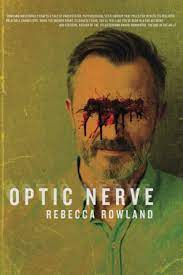
Shawn is a scientist developing the formula for a drug that may cure blindness by stimulating another area of the brain that controls perception. When he surreptitiously tests the drug on himself, he accidentally accesses a neural pathway that appears to allow him to communicate with a complete stranger through telepathy instead. When Shawn finally discovers the significance of their connection and of the drug’s true effects, it is too late to stop the damage their intimate friendship has set in motion to unfold.
GRADE: A
REVIEW:
A genre-bending sci-fi horror that will have you turning pages into the night. Shawn is a scientist on the quest to cure blindness – he has invented a pill that should offer such a respite – and decides to be the guinea pig for his own invention. Slowly, Shawn begins to hear a voice – is it an auditory hallucination induced by the drug, a ghost, or something else? The mystery behind the voice and how the protagonist soon finds himself smitten by the female he can only hear in his head proves to be an interesting love story, albeit a strange one. The writing is fresh and evocative – with realistic dialogue, and a plot twist that will have you questioning everything you’ve read up to that point. You don’t want to miss this one out – especially if you love your spooky to come with a side of body horror.
Short Q & A with Author
What inspired this novella?
I’m not a fan of science fiction traditionally, but two things pushed me to write Optic Nerve. During the pandemic, I found that a number of my friends—all of them were my age: 40s and early 50s—discovered increased strains on their personal relationships. Some ended up separating from their partners. The isolation and the stress of lockdown acted like steroids in an already anxiety-prone time of their lives, middle age. Most of my characters tend to be in their thirties, or early forties at most; I wanted to write about someone middle-aged for Optic Nerve, to address that anxiety head-on. At the same time, I started to experience a marked decline in my eyesight, and that was, and still is, terrifying to me. I’m an English teacher by day and an editor and writer by night: my eyes are my most utilized tools, so the experience of losing them is a true horror.
You’re a very prolific writer, often appearing in various anthologies. How do you stay motivated as an author?
I used to think I was alone in this approach, but I am the kind of writer who doesn’t sit down and create something unless she hears a line of it in her head, and the line usually comes out of nowhere. The experience is as close to having a muse as I can imagine. When I talked about this in another interview, a few authors reached out to me to say they, too, function that way. I wish I could say that x, y, and z motivate me to write, but the truth is, when a sentence appears in my head, I go with it. Sometimes I go months without writing anything because the lines just don’t appear; other periods, I churn out story after story. Someday, the lines may stop appearing altogether. I hope that isn’t the case, but it’s certainly a possibility.
I think we’ve all had an unconventional crush like Shawn, and usually, these unconventional crushes don’t always result well in the end. Are you a fan of unconventional crushes and love stories?
As a general rule, I’m jaded about romantic storylines. I don’t know why that is. Maybe it’s because I’m a realist at heart and I think Hollywood too often idealizes relationships. Whenever I stumble upon a saccharine movie on television, I have to keep my eyes from rolling out of my head. On the other hand, when authors capture the high we feel when we do make that unique connection with someone, it’s poetry. I think unconventional love stories are often the most realistic. Zora Neale Hurston described falling in love as a “soul crawl[ing] out from its hiding place,” and I think that’s spot on, but I don’t think those moments are as ubiquitous as Hollywood presents them. Those moments are rare and precious, and maybe I’m jaded specifically because of the fiction that dumbs them down.
Tell us about any other projects you’re currently working on right now or will be releasing soon.
My weird horror boogeyman-centered novelette Shagging the Boss just dropped this summer, and I had a great time writing it; it’s still one of my favorite projects. I’m proud to have stories in upcoming anthologies releasing this fall, too, including Sinister Smile Press’ Institutionalized, Omnium Gatherum’s In Trouble (100% of proceeds benefit the National Network of Abortion Funds), and Night Terror Novels’ Nerve-Janglers. In early March, my next edited anthology American Cannibal releases; it’s historical horror fiction and the stories are flat-out phenomenal. It’s like nothing else out there right now, and readers are going to be blown away.
What’s the horror book you always find yourself recommending?
I find myself returning to Joyce Carol Oates’ The Doll-Master and Other Tales of Terror over and over. It’s creepy and hypnotic. I’m a fan of unreliable narrators and Oates does them like no one else. (laughs) And there isn’t one sentimental romantic tale in the bunch!
DID YOU ENJOY WHAT YOU JUST READ? IF YES, THEN SUBSCRIBE TO THE BLOG, GIVE THE POST A LIKE, OR LEAVE A COMMENT! NEW POSTS ARE UP EVERY TUESDAY & THURSDAY!
Here’s to the lengths one might go to for everything.
With dark fiction from J.A.W. McCarthy, Avra Margariti, Marisca Pichette, Stephanie Ellis, Christina Wilder, Donna Lynch, Katie Young, Scott J. Moses, Angela Sylvaine, tom reed, Cheri Kamei, Shane Douglas Keene, J.V. Gachs, Tim McGregor, Emma E. Murray, Nick Younker, Jennifer Crow, Joanna Koch, Lex Vranick, Laurel Hightower, Eric Raglin, Eric LaRocca, Daniel Barnett, Bob Johnson, Simone le Roux, Hailey Piper, Bryson Richard, Jena Brown, and Christi Nogle.
Grade: A
Review:
This anthology has some really excellent stories that explore the theme of what are the lengths you’d go to for something you really want? Of course with horror, the lengths are very extreme and sometimes very gory. Here are some of my fave stories from this collection (in no particular order):
“Mos Teutonis” by Bryson Richard: A beautiful tale of lust and lunacy, so dark and seductive.
“The Thread That Dreams Are Made Of: by Hailey Piper: I’m a total whore for fairtytales and fairytale retellings so I’m so here for a Rumpelstiltskin and Sleeping Beauty mashup.
“Silver Dollar Eye” by Laurel Hightower: This story pretty much sums up all the reasons why I’ve never meddled with the afterlife, some things are best left unknown.
“Ella Minnow” by Nick Younker: This story is the brutal tale of the lengths a father will go to in order to find out what happened to his missing daughter. The ending blew me away.
“Blood is Thicker,” by Angela Sylvaine: I’ve had the pleasure of having this author in two of my own anthologies, so I was excited to read a new story from her. I loved this tale of two twin sisters who will go to extreme lengths to succeed as painters.
“The Witch of Flora Pass,” by Scott J. Moses: This was one very creepy and dark story that now left me wary of rivers.
“With Animals,” by J.A.W. McCarthy: This story truly explored the extreme lengths someone would go to for a friend. Very gut-wrenching.
“Moira and Ellie,” by Marisca Pichette: In this story, almost every child has an imaginary friend for a limited amount of time and when you find out how and why these imaginary friends exist, it’s very chilling.
There are many more stories in this anthology that I thoroughly enjoyed, and those above are only a couple that stuck with me long after reading them. It’s a very well put together anthology and I truly recommend it for anyone whose a fan of horror and especially of indie horror.
*Thank you so much to the author for the digital copy of this book in exchange for an honest review!
Short Q & A with Author
What made you select the particular theme you chose for the anthology?
I remember finishing Laurel Hightower’s CROSSROADS, and thinking, “How has no one done an anthology around this topic before?” When I got serious about the idea a couple months later, I already knew I wanted Laurel to introduce What One Wouldn’t Do.
A lot of the short stories selected deal with grief – same as your personal short story collection Hunger Pangs – why do you lean towards grief horror more than other subgenres?
You know, that’s a good question. Why do any of us write what we do? I think it’s just in us and that’s that. That said, I’ve always graduated toward the sadder things in life, and think that they, along with bittersweet endings, can shed the most light and hope on the things we’re afraid of or have yet to face.
Which horror authors have got you really excited about their work right now? Any cool books you’ve read this year that you may want to recommend?
Such a tough question, but here goes. A few authors I think deserve more readership are Eric Raglin, J.A.W McCarthy, Joanna Koch, and Daniel Barnett. They’re all astounding to me, and I highly recommend Raglin’s Nightmare Yearnings, McCarthy’s Sometimes We’re Cruel, Koch’s The Wingspan of Severed Hands, and Barnett’s Nightmareland Chronicles.
What are the pros and cons of being an editor for an anthology?
Pros: Reading tons of great submissions, discovering so many writers I really dig, having complete control of the project, and sending acceptances. And honestly, you learn so much about the submission process when you curate an anthology. Great stories are rejected all the time because they just don’t fit with the flow which forms as you read through the slush, or for example, say two stories have similar themes, monsters, and tone. To have both would be redundant, so one has to go, even if it’s amazing. It taught me a lot about rejections with my own work and that there are far more reasons a story gets rejected than it’s quality. Cons: Sending rejections is the worst. Period. Also, wading through the subs that didn’t bother to follow the guidelines. Quick tip: from my experience on this and the 423 submissions I got for WOWD, those who followed the guidelines we’re already ahead of the 30% that did not. That’s a pretty huge percentage when you think about it, yeah? Another con was that in me self-funding this project in its entirety, I didn’t have the resources to buy all the stories I would’ve liked. The spirit was willing, but the wallet was weak.
Are you currently working on any new projects?
I’ve been on a bit of a hiatus from writing these last months, but have stories publishing this year in various venues and more on submission. I’m thinking I’ll either keep adding to my sophomore collection or toss around this idea for a novella I’ve been sitting on. Thanks for having me, Azzurra. As per usual, you rule.
DID YOU ENJOY WHAT YOU JUST READ? IF YES, THEN SUBSCRIBE TO THE BLOG, GIVE THE POST A LIKE, OR LEAVE A COMMENT! NEW POSTS ARE UP EVERY TUESDAY & THURSDAY!
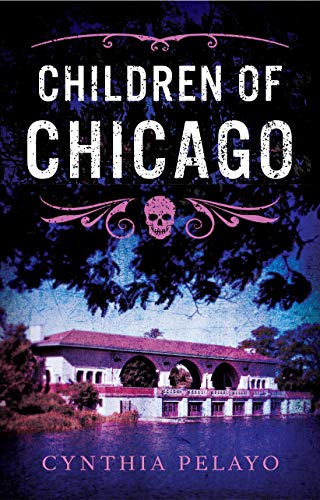
When Detective Lauren Medina sees the calling card at a murder scene in Chicago’s Humboldt Park neighborhood, she knows the Pied Piper has returned. When another teenager is brutally murdered at the same lagoon where her sister’s body was found floating years before, she is certain that the Pied Piper is not just back, he’s looking for payment he’s owed from her. Lauren’s torn between protecting the city she has sworn to keep safe, and keeping a promise she made long ago with her sister’s murderer. She may have to ruin her life by exposing her secrets and lies to stop the Pied Piper before he collects.
Grade: A
Review:
I decided to dive into Cynthia Pelayo’s Children of Chicago with no notion of the plot summary. I recently had read her harrowing true-crime poetry collection, Into the Forest and All the Way Through, as well as her short stories featured in the female driven anthology she edited with Gemma Amour and Laurel Hightower, We Are Wolves, and decided that I would take a leap of faith. I never could’ve been happier with my choice. I’m an avid reader of fairytales and the fact that Children of Chicago expertly weaves the fairytale of The Pied Piper and giving it a Candyman angle, made it a very intriguing read. The writing is both lush and concise, allowing the reader to be emerged in the Chicagoan city life as well as the dark realms of the fairytale forest. It’s a deep dive into darkness and for readers of horror, you will love this.
We follow homicide detective Lauren Medina who’s tasked with trying to figure out who is killing the teens of Chicago, in a city, notorious for its bloody past and violent present. Reality fuses with the supernatural and the reader is never certain if we’re witnessing true events or if the characters are simply victims of a mass hysteria.
The novel is part police procedural and part supernatural horror with hints of magical realism all coming to head with a very explosive truth about the protagonist that will leave readers reevaluating everything that’s happened throughout the novel. Fast-paced and eerily dark, Children of Chicago is the perfect winter read.
*Thank you so much to NetGalley and Agora Books for the digital copy of this book in exchange for an honest review!
SHORT Q & A WITH AUTHOR:
I’m a huge fan of fairytales so reading the novel, this really drew me in. There are so many fairytales to choose from, and of course the Brother Grimms are the most popular, but what exactly drew you to the tale of the Pied Piper and why is he the bad guy in the novel?
It’s very odd, but I usually get an image for my stories before I start writing them and I had an image of a man in a black suit and a black top hat standing outside of a hospital waiting to whisk a small child away. That was all I had. Ultimately that image didn’t make it into the novel, but that’s where his story started. Then I started thinking about who he was. Why was he dressed in such old-fashioned clothes and why did he want to take a child? For a long time I thought maybe he was Slenderman, but that wasn’t quite right. Then the Slenderman stabbing happened in Wisconsin in 2014 and I put the story away in my head, because it just felt like it was in bad taste to continue on with the story during that tragedy.
I had taken courses in my MFA in Writing specifically on fairy tales, and so I have a lot of fairy tale books, and just a fascination with them and their history. It probably was not until I started going back to those books and reading them to my children that I found the Pied Piper again and it clicked. The man in the black suit was the Pied Piper and he wanted to lure the children of Chicago away. Then from there, it was just a manic rush to write the story while it was fresh in my head.
There are some accounts that claim that part of the Pied Piper story is true, to an extent, that children were led away from the town of Hamelin and they never returned. So, I wanted to speak to that tragedy, of this mysterious figure with only ill intent to destroy a society by taking away what was most precious to them, their children.
I also discovered that it wasn’t just the Pied Piper that needed to be weaved into the story, but much of the foundation of fairy tale lore, and other fairy tales, because so many fairy tales are based on some small, and gruesome, truth.
Chicago is as much a character in the novel as also the setting. What made you pick Chicago as the setting as opposed to any other big city instead?
I live in inner city Chicago. Not in the suburbs. Not in a fancy neighborhood in the city, but in a regular working class neighborhood in the city, with a high immigrant population, and a high poverty rate. I went to college, have a great professional career, but it was important for me to stay in the community that raised me, and what I later discovered was that Walt Disney was born just a few blocks away from me in a wooden house. L. Frank Baum who wrote The Wonderful Wizard of Oz wrote parts of that legendary book at the park that I have frequented my entire life. So, it was magical to learn that in my neighborhood, comprised of regular people, that magic was made here.
In addition to that, I can’t ignore the violence of the city that I grew up with, and that I live with still. So, there’s this strange dichotomy, a city that was founded on a lake and that has been home to creative legends that gifted us wonderful works of art, but a city that is plagued by violence, and historically has been plagued by violence – its founding was based on violence.
I wanted to then showcase this place where I live and love and to tell people that Chicago is the prime location for a dark fairy tale.
I feel that Children of Chicago can be read as a fairytale, meaning that most original fairytales served as cautionary tales. I feel that in the novel, we’re cautioned not to put our faith in supernatural entities because the price you have to pay may be bigger than you expect. And yet, I feel like humans tend to lean towards the supernatural if even on a low-key base such as sharing chainletters or keeping lucky charms or totems to ward off evil. Why is that?
Yes, I really would love if people read it as a fairy tale about fairy tales. There’s a lot that I was hoping to accomplish that I hope the careful reader catches on to, like my mentions of other fairy tales, and fairy tale devices, Chicago history and how I tried to hold a mirror up to the city and show the city its beauty, but its cruelty as well.
What I was hoping to communicate with the payment is due aspect of the story is that whatever energy you put out into the universe is the type of energy you are going to receive. If you are putting out negative energy, that is the energy that will return to you and serve you. I’m pretty spiritual and part of my path teaches me that we are all one consciousness, you, me, everyone. So, if I do or wish harm to someone else then I am doing or wishing harm to myself.
We turn to the supernatural for protections for a variety of reasons, religion, faith, but ultimately for the belief that the supernatural can shift our experiences and reality. For example, with regards to violence and harm, these things can sometimes be random, or there are people who just live in toxic situations or places. They turn to these things for the hope that the supernatural can guide them to a safer position.
I believe people need to do what gives them comfort, as long as it is not harming anyone, with regards to owning supernatural devices. However, I want to stress to anyone reading that if you are in a violent or harmful environment then please seek help and do so in a safe manner.
I also believe our words and actions are spells. I believe in being positive and speaking positively so that this is the type of energy we are granted.
This is a loaded question, but what is your favorite fairytale and why?
I love this question.
I love so many of them, but the one that I think about often and have written about is Hansel and Gretel.
It’s about the cruelty that can be done to us by those that are meant to love and protect us, and the tragedy of even when you find what you think is safety you aren’t really safe. There is betrayal. Ultimately, it shows that the only person you can trust is really and truly yourself, or in this case little brother and little sister who trust and save each other in the fairy tale. Hansel and Gretel teaches us that no one in the outside world can ever truly be trusted.
Humans often have motives that are beyond cruel, they are deadly.
What are you currently working on and do you have any other releases on the horizon?
I’m working on a middle grade novel I’m hoping to finish and get to my agent in a few days. I’m also working on a novella I hope to deliver in June. I’m not sure when that will be published but I will announce that soon. Then, I am working on the sequel to the “Chicago fairy tale series” which is not really a sequel to Children of Chicago but another fairy tale that takes place in the city. I also have a few short stories I’m working on. I’ve been very busy but it’s a great kind of busy and I am grateful for all of these creative opportunities.
AUTHOR BIO:
Cynthia “Cina” Pelayo is the author of LOTERIA, SANTA MUERTE, THE MISSING, and POEMS OF MY NIGHT, all of which have been nominated for International Latino Book Awards. POEMS OF MY NIGHT was also nominated for an Elgin Award. Her recent collection of poetry, INTO THE FOREST AND ALL THE WAY THROUGH explores true crime, that of the epidemic of missing and murdered women in the United States. Her modern day horror retelling of the Pied Piper fairy tale, CHILDREN OF CHICAGO will be released by Agora Books on 2/9/21. She holds a Bachelor of Arts in Journalism, a Master of Science in Marketing, a Master of Fine Arts in Writing, and is a Doctoral Candidate in Business Psychology. Cina was raised in inner city Chicago, where she lives with her husband and children. Find her online at www.cinapelayo.comand on Twitter @cinapelayo.
DID YOU ENJOY WHAT YOU JUST READ? IF YES, THEN SUBSCRIBE TO THE BLOG, GIVE THE POST A LIKE, OR LEAVE A COMMENT! NEW POSTS ARE UP EVERY TUESDAY & THURSDAY!
Publisher: Simon & Schuster Books for Young Readers
Price: $15.05 (hardback)
Plot Summary:
Los Angeles, 1992
Ashley Bennett and her friends are living the charmed life. It’s the end of senior year and they’re spending more time at the beach than in the classroom. They can already feel the sunny days and endless possibilities of summer.
Everything changes one afternoon in April, when four LAPD officers are acquitted after beating a black man named Rodney King half to death. Suddenly, Ashley’s not just one of the girls. She’s one of the black kids.
As violent protests engulf LA and the city burns, Ashley tries to continue on as if life were normal. Even as her self-destructive sister gets dangerously involved in the riots. Even as the model black family façade her wealthy and prominent parents have built starts to crumble. Even as her best friends help spread a rumor that could completely derail the future of her classmate and fellow black kid, LaShawn Johnson.
With her world splintering around her, Ashley, along with the rest of LA, is left to question who is the us? And who is the them?
Grade: A-
Review:
The Black Kids is a timely read that spares no emotional punches. Ashley is a sassy, funny, rich girl who has always attended private school with her rich white friends. She doesn’t know exactly what reality less fortunate black people actually live through day in and day out. Sure, she sometimes has dealt with racism, if even subtle by her own friends, but she’s never had to live in dire circumstances like her own cousins. But when the Rodney King riots set the city of Los Angeles ablaze, Ashley can no longer ignore the flames of injustice. For the first time in her life, she has to confront her past, what it means to be a black girl, and figure out who her true friends are. I enjoyed this book because Ashley’s POV was no only blunt but hella funny. I like that Ashley’s character isn’t free of faults, she does some pretty questionable things within the course of the novel but ultimately she tries to make amends where she can and where it counts.
I don’t know if the author has intentions of writing a sequel, but I wouldn’t be against one. Especially if we were to get a book written in LaShawn’s POV (he’s a secondary character in the novel, a black kid who attends the rich kids’ private school because of his sports scholarship). Out of all the characters in the book, he was ultimately the star (much to Ashley’s dismay, since in the beginning of the novel she kinda resents the fact that he’s both smart and charismatic and is going to her dream college).
Pick up this book for timely issues and 90’s nostalgia, you won’t be disappointed.
*Thank you so much to NetGalley and Simon & Schuster Books for Young Readers for the digital copy of this book in exchange for an honest review!
Photo by: Elizabeth T. Nguyen
Short Q&A With Author:
I read that you started writing the novel The Black Kids five years ago. How does it feel that the subject matter of the book is now more timely than ever?
So it’s funny, I actually originally started thinking of the idea for The Black Kids as a thesis film when I was in grad school back in 2010, and ultimately decided against it. When I took a break from screenwriting in 2016, I decided to return to my first love of writing fiction and the short story version of The Black Kids just poured out of me. It felt more imperative than ever given the rise of Black Lives Matter and the fact that smartphones had made it such that we were seeing the effects of unequal policing first hand, literally in our hands and on our televisions. I had no idea that it would feel as timely as it does 2020, which is frustrating, but I also take comfort in the fact that now more than before, non-Black people seem to be trying to seek out and understand Black voices, and to actually be not just passive allies, but advocates for change in meaningful ways.
Female friendships are sometimes difficult. Ashley and Kimberly were childhood friends, but many times we outgrow out childhood friends. Do you think women are more likely to feel an obligated sense of loyalty towards a childhood friend despite not having anything in common with them anyone as they grow older?
I do think women are more likely to push to maintain friendships because women are more likely to have actively nurtured those friendships for years and years. Plus female friendships are so powerful when you’re younger, there’s an almost romantic fervor to them that’s only intensified by the fact that you’re experiencing all these major life changes together in such a relatively short time. When you write “best friends forever” in gel pens in a yearbook, or across each other’s arms in marker, you mean it, and many of us actively work to maintain that promise even when those friendships are toxic, or no longer serve us.
Music played a major role in the novel (or at least Ashley was always listening to songs in many scenes). Were you listening to any artist in particular when working on The Black Kids?
Almost all of the songs that made it into the book were songs that I was listening to as I was writing to transport myself back to the era. Also, randomly, I was listening to a lot of Frank Ocean, especially the songs “Super Rich Kids” and “Sweet Life” which I think are really evocative of the first few chapters before the riots begin. I was also listening to a lot of SZA and Lorde to get myself in the headspace of what it feels like to be a teenager/young woman. A lot of Hole and N.W.A. to capture Jo’s defiance in my head. Also, randomly a lot of Bowie, and Seu Jorge’s Bowie covers. In my head, they actually speak to Ashley’s feelings of not quite fitting in or feeling unmoored in some ways throughout the book. Each character definitely has their own soundscape.
Your novel sheds a light on racism, what lesson do you hope your young readers will take away from reading this novel?
I really view this novel first and foremost as a coming-of age-novel. It’s about Ashley making huge mistakes and learning from them how to be a good daughter, friend, sister, and person. I purposefully wrote her to be super flawed because I think that’s important for young readers and adults alike, especially, when it comes to issues around race. It’s ok if we don’t have all the answers immediately, if we do or say the wrong things, so long as we learn and grow from those mistakes and resolve to move through the world being better, more thoughtful, and more empathetic.
What books do you recommend to your readers if they’re wanting to support Black authors?
First and foremost, I would say that Black authors are authors, period. There are Black authors doing great work across genres, some of which engage with questions of race, some of which don’t. So to those of my readers who are non-Black, diversifying your reading really means just stepping outside your comfort zone within your particular genres of interest to make space for other voices. Don’t dismiss something as written by an author of color as something you won’t relate to. Most of us aren’t women in 19th century Britain in love with a brute with his mad wife in the attic. And yet, people don’t use that to dismiss Jane Eyre. Also, to paraphrase what my friend Nic said in an article – don’t only read books about Black people being oppressed, but also read about our joy.
All that said, Queenie by Candice Carty Williams is really great if you’re looking for something literary, but really funny. It also packs an unexpected emotional punch and delves into mental health issues. Luster has gotten a lot of deserved attention for putting a fresh spin on the struggling millennial in New York story. I really love Zone One by Colson Whitehead, and The Devil in Silver by Victor LaValle. Zone One is a literary zombie apocalypse book and The Devil in Silver is slow burn literary horror that takes place in an insane asylum. Both are nerve-wracking. Lot by Bryan Washington is a beautiful collection of short stories by a queer young Black man from Texas. We Love You Charlie Freeman by Kaitlyn Greenridge, is a not easily characterized, but it’s a coming of age story involving a family and a chimp in an institution in Massachusetts, and explores scientific experimenting in the recent past as it relates to historical scientific experimenting on Black bodies. The Warmth of Other Suns by Isabel Wilkerson is an amazing non-fiction work about the Great Migration. The middle grade book The Only Black Girls in Town, I think actually shares a lot in common with my novel. And YA right now is an absolute treasure trove of Black voices across sexual orientation, religious and gender identities.
DID YOU ENJOY WHAT YOU JUST READ? IF YES, THEN SUBSCRIBE TO THE BLOG, GIVE THE POST A LIKE, OR LEAVE A COMMENT! NEW POSTS ARE UP EVERY TUESDAY & THURSDAY!
In this collection of untitled thoughts, poetry, and affirmations; Vontress plants her powerful feminine energy and wisdom like a seed. Showing growth through struggle, and sharing stories of blooming into a flower. She shines her light like the sun into the darkest parts of her soul.
Grade: A-
Review:
The poems in this collection are often dark, but even in the darkest moments, there is a tiny light that glimmers with hope. And this is what makes this collection stand out from other poems that tackle similar topics like love and heartbreak. The message Renae seems to want to give with these poems is that happiness isn’t something you should search in someone else, or depend on someone else for your own happiness, but rather that happiness lies inside us all if we have self-love and that’s an essential and potent message to give. I recommend this book if you’re into poetry that explores life’s dark moments but that has an uplifting message in the end.
Short Q & A with the Author:
What has inspired your writing?
The inspiration for my writing comes from day to day life. I wonder what people think and put it on paper, my own stories and sometimes the stories of those around me.
When did you first start writing?
I have always written things for as long as I remember, but it was not until recently that I felt comfortable enough to share it with others.
What tips would you give a novice writer?
My advice would be to remove all distractions. There are times that I sign out of social media and take a bit of a hiatus in order to gather my thoughts and get them down clearly.
What’s the best writing advice you’ve been given?
The best advice I was given would be to do what makes me happy. I feel that my writing can take me all the places I want to go in this world I just have to trust myself and believe in what I’m saying on my pages.
What are you currently reading or looking forward to reading?
I am currently reading ” The Subtle Art of Not Giving a F” by Mark Manson. It has definitely been a page-turner and I plan to take a view of the tips that I have learned while reading.
DID YOU ENJOY WHAT YOU JUST READ? IF YES, THEN SUBSCRIBE TO THE BLOG, GIVE THE POST A LIKE, OR LEAVE A COMMENT! NEW POSTS ARE UP EVERY TUESDAY & THURSDAY!
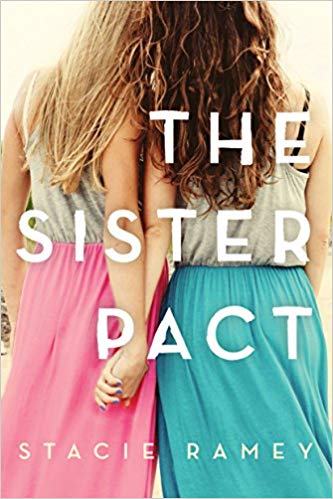
Allie is devastated when her sister commits suicide-and it’s not just because she misses her. Allie feels betrayed. The two made a pact that they’d always be together, in life and in death, but Leah broke her promise and Allie needs to know why.
Her parents hover. Her friends try to support her. And Nick, sweet Nick, keeps calling and flirting. Their sympathy only intensifies her grief.
But the more she clings to Leah, the more secrets surface. Allie’s not sure which is more distressing: discovering the truth behind her sister’s death or facing her new reality without her.
Grade: A
Review:
Full disclosure: I was attracted to this book for all the wrong triggering reasons. A little backstory: Much like the protagonists Allie and Leah, as teenagers, my cousin Melody and I also had made a “pact” to bail out if life took a turn that we couldn’t handle. Flash forward to 2013, and Melody bails out in the worst way possible but also breaking the pact that had made where we would’ve made the decision together. Now, six years later, I am still trying to figure out what I could’ve done or said to make her not wish to want to go. In a way, in these six years, I’ve tried to experience all the things that I knew Melody wished to experience or travel to places she would’ve wanted to. In other words, I’ve tried to live for both of us.
My first book from Stacie Ramey was It’s My Life, and despite the protagonist having cerebral palsy, it wasn’t as dark or heavy as The Sister Pact. There was a stark contrast between the two novels. In It’s My Life, Jenna had to deal with a chronic illness, however, she had a loving family and friends. But in The Sister Pact, the protagonist Allie has to deal with a highly dysfunctional family and awful friends that betray her. What I’m trying to say is, this book was very, very dark.
Ramey doesn’t sugarcoat anything and instead depicts grief and depression in a very realistic way. At times, Allie’s pain is so palpable and visceral that you can almost feel it as your own. I found it to be a very powerful and moving novel. Which seeing that it was this author’s debut novel to boot, she really came into the writing scene with a serious bang.
And although the subject matter of the novel is extremely dark (suicide, depression, drug abuse) it isn’t dreary for the sake of being so. You understand why Allie makes the bad choices that she does. But ultimately, she finds the strength to want to live, even if her older sister Leah, whom she looked up to, isn’t there with her anymore. The end was uplifting and hopeful. And in a way, it made me feel a little hopeful about my own grief over my cousin’s death.
I recommend this for anyone who wants to read a novel that discusses serious topics and has some real feelings.
Jenna and Allie have dramatically different families. One is very loving and supportive while the other is highly dysfunctional. How do you think their families contributed to your protagonists’ personalities?
I think that’s the point, isn’t it? I mean, Allie has to overcome a lot of things. Her sister’s suicide. Her parents’ divorce. Her feeling that her world is unraveling. We understand that her family’s struggle has contributed to her issues, but we also see that she’s undergoing complicated grief which is a type of grief where Allie feels slightly complicit in her sister’s death in addition to everything else and she’s not coping well. But we don’t really blame her because it’s really too much for her and that’s what makes it so empowering to see her crawl out of it and find some hope.
As for Jenna, she has tons of support, but she’s stopped believing in herself. She’s given up on herself and haven’t we all done that at some point in our lives? Her family’s support is constant and wonderful, but it’s also something she’s trying to break away from in order to take the next steps in her life. All teens go through this. Jenna struggles with how to accomplish this in the wake of her disability. Some people have described her as self-pitying, but I don’t buy that. I believe that wish-fulfillment fantasy that she has of being a better version of herself is very typical and her response to the limitations of her body is very believable and deserves our witness, not our judgment. Just my opinion.
In both novels, the protagonists are academically smarter than the classes they decide to be in for themselves. Jenna decides to take easier classes because she is absent from school a lot due to her condition, while Allie decides to take lighter courses because she’s distraught over her sister’s suicide. Do you think this was a subconscious effort for both of them to control one aspect of their lives since they had no control any other way?
Yes. They each try to control their lives in any way possible. Teens have a ton of pressure on them these days (I mean they always have but now we expect them to be little adults from the time they can talk and make decisions).
For Allie, some of the adults in her life are trying to ease her burden, although interestingly enough, her parents do not share this viewpoint. They keep looking for reasons to believe Allie is ok and they look to her progression through typical milestones such as graduating on time and staying focused on getting into a high-pressure college as a means for evaluating her condition. I believe they should, instead, as her guidance counselor suggests, take time to heal, but when bad things happen, we tend to want to get back to business as soon as possible. It’s the wrong way, in my opinion.
As for Jenna, she is definitely trying to flex her decision-making muscles here. It’s not a good decision to go into lower classes, and she regrets it, but sometimes we have to allow ourselves to make bad choices in order to figure out what works and what doesn’t. She’s always fought as Daddy’s little warrior, but now she’s trying to work out who she is now and, more importantly, who she wants to be.
What was your inspiration behind both novels?
It’s My Life was actually the first book I ever wrote even though it was the fourth book I sold. I really wanted to tell the story of a girl who has a disability who gives up on herself and then has to work to find herself again. It was important to me that she has a fully supportive family, because I wanted her struggles to be with herself and how she sees herself. While I do not have cerebral palsy or a mobility disorder, I have struggled with invisible disabilities my entire life. I am the youngest of very capable older siblings and have many times felt lost in my life’s course, even while having my family’s support and love and, like Jenna, I’m still trying to figure out who I am supposed to be.
The Sister Pact was based on a few different things, some easy to discuss in this space, some harder. Mostly, I wanted to write the story of two groups of people who both had the same intent-save Allie-but were in complete opposition on how to do that. In this case, it’s kind of Allie vs her parents and even though both sets of people want Allie to heal, initially they don’t understand the other person’s intentions and methods so they work in conflict with each other. It was really an experiment and I’m glad it worked out that both groups could work together. I also wanted to show how mental health issues can look completely different from what we might expect in this case, Allie’s sister is super successful, all the while she’s battling consuming depression, as is Allie’s mother. I wanted to show how we try to act like everything’s ok when it’s all falling apart. Also, I wanted to show sisters who are so close they tell each other everything, except any of the important things.
Are you currently working on a new project?
I am currently writing a retelling of a Yiddush Fairy Tale. It’s a lot of fun.
*Thank you so much to the author for the digital copy of this book in exchange for an honest review!
DID YOU ENJOY WHAT YOU JUST READ? IF YES, THEN SUBSCRIBE TO THE BLOG, GIVE THE POST A LIKE, OR LEAVE A COMMENT! NEW POSTS ARE UP EVERY TUESDAY & THURSDAY
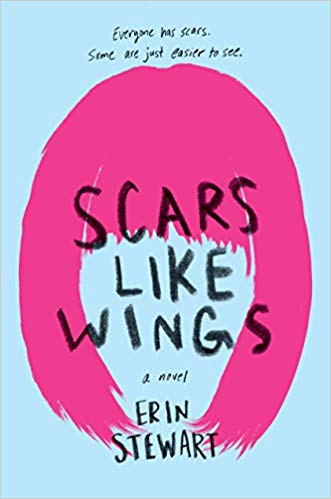
Ava Lee has lost everything there is to lose: Her parents. Her best friend. Her home. Even her face. She doesn’t need a mirror to know what she looks like–she can see her reflection in the eyes of everyone around her.
A year after the fire that destroyed her world, her aunt and uncle have decided she should go back to high school. Be “normal” again. Whatever that is. Ava knows better. There is no normal for someone like her. And forget making friends–no one wants to be seen with the Burned Girl, now or ever.
But when Ava meets a fellow survivor named Piper, she begins to feel like maybe she doesn’t have to face the nightmare alone. Sarcastic and blunt, Piper isn’t afraid to push Ava out of her comfort zone. Piper introduces Ava to Asad, a boy who loves theater just as much as she does, and slowly, Ava tries to create a life again. Yet Piper is fighting her own battle, and soon Ava must decide if she’s going to fade back into her scars . . . or let the people by her side help her fly.
Grade: A+
Review:
Ava’s story is both heartbreaking and uplifting. After becoming severely disfigured by a house fire, she not only has lost both of her parents and cousin but also her face. Or at least what her face used to be. For months, Ava fights for her life as she undergoes surgery after surgery but once she’s deemed healthy enough to leave the hospital, her aunt and uncle think it’s time to transition back into high school. But Ava doesn’t think she can survive high school with the face she has. That is until she meets Piper, a fellow survivor with a spitfire personality.
It’s rare when the characters in a book feel so real to me. But Ava and Piper were incredibly real, and the situations they found themselves in were also real for their circumstances. There were so many heartbreaking moments in the book, but it was also very hopeful. It wasn’t all about despair, as it easily could have been considering the topic. Instead, Ava realized that she could either wallow in misery her whole life and not live or decide to live again and find purpose in her new life with her new friends and support group.
I loved how each character was their own person, and that even the so-called “mean girls” of the school ultimately had a soul and reached a growth of their own by the end.
I suppose this was the sort of book that I wish it hadn’t ended because I still wanted to read more about Ava and Piper. It’s probably why after completing the book I took a break from the novel-reading and instead focused on reading poetry books instead. Because a part of me still wanted to hold on to Ava and her strong spirit. This book is a must-read for readers of any age, but especially teenagers so that they can learn how you can overcome the worst in life if you have the right people standing by you.
Why did you select fire as the source of Ava’s disfigurement?
SCARS LIKE WINGS was actually inspired by Marius, a friend of mine, was burned and severely scarred by a house fire as a child in Romania. Now 20, Marius’ story has always inspired and intrigued me, not only because of the power of his tragedy but because he chooses every single day not to let it define him. He has had children run screaming from him. He has had bullies call him Freddy Krueger. I wanted to write a story that would go to these dark, lonely parts of tragedies like his, but also to the beautiful, hopeful parts. As Marius has told me, the only way he survived was because every time he wanted to give up, someone was there, helping him choose to live. I hope Ava’s story can show readers that we all have a choice after a life-changing event: We can choose to be alone, isolated and angry that our normal is gone, or we can let people in and find a new normal, together.
Reading Scars Like Wings it looks like you did a lot of research in burn victims when it comes to the healing process and medical work needed. Did you speak to professionals that help burn victims or did you solely rely on books about the topic?
Oh, definitely! As I wrote this book, I felt heavily the burden of presenting an accurate, respectful representation of the burn survivor community. I spent a lot of time speaking with survivors, reading their stories, talking to doctors about wound care and recovery, and generally immersing myself in the terrible/wonderful/inspirational/reality of being a burn survivor. Learning about the physical and emotional pain of burns was gut-wrenching at times, but I wanted to preset a story that went beyond stereotypes and pity to the reality of what it’s like to live with physical and emotional scars like Ava’s.
I know that Ava hates seeing herself as a survivor, but she is a very inspiring character. The reader can’t help but want to root for her the whole time. When did Ava’s story first come to you (as in inspiration)?
Well, like I mentioned, Marius originally sparked the idea for this story, but the character of Ava took shape slowly as I started researching and drafting. She has some qualities just like Marius, like her thumbs on her hands instead of fingers, and then pieces of other stories that survivors have shared with me. The more I thought about her and wrote about her, the more she became a fully-formed character with interests like Broadway musicals and a personality all her own. I’d love for readers to see Ava this way by the end of the book, as a smart, funny, talented teenager who just happens to also have scars.
As much as Ava is wonderful, Piper is a true scene-stealer. I feel like everyone needs a Piper in their life. Was Piper inspired by someone in particular?
Not really, but I knew from the beginning that Ava needed someone like Piper to draw her out of her shell and remind her that she has a lot of living and loving left to do. Piper’s loud, out-there attitude is a great counterbalance to Ava’s initial belief that her life is over after the fire. Like a lot of people, though, Piper’s bravado is hiding her own pain and struggles. And when she starts to push Ava away, too, we start to see how deep her pain runs. Both girls finally realize that they can have full, happy lives after their trauma, but they can’t ignore the pain, either.
So many YA novels lately are being made into movies or TV series, which actress would you like to see bring Ava to life?
Oh, wouldn’t that be amazing! If I’m being honest, I’d love to see the role of Ava go to a burn survivor. I think it would be so wonderful to see someone who has actually lived a similar storyline portray this recovery journey!
(Editor’s note: I LOVE Erin’s idea of a burn survivor being the one to portray Ava, although if I had to choose an actress, I think Joey King would tackle Ava’s journey well.)
*Thank you so much to NetGalley and Delacorte Press for the digital copy of this book in exchange for an honest review!
DID YOU ENJOY WHAT YOU JUST READ? IF YES, THEN SUBSCRIBE TO THE BLOG, GIVE THE POST A LIKE, OR LEAVE A COMMENT! NEW POSTS ARE UP EVERY TUESDAY & THURSDAY
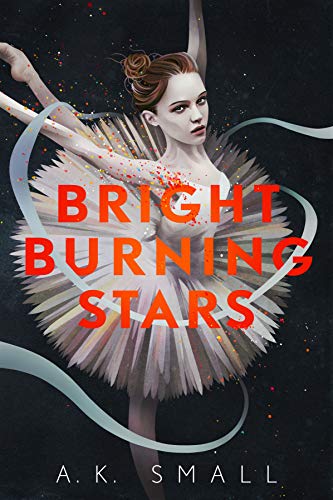
Best friends Marine Duval and Kate Sanders have trained since childhood at the Paris Opera Ballet School, where they’ve forged an inseparable bond through shared stories of family tragedies and a powerful love for dance. When the body of a student is found in the dorms just before the start of their final year, Marine and Kate begin to ask themselves how far they would go for the ultimate prize: to be named the one girl who will join the Opera’s prestigious corps de ballet. Would they cheat? Seduce the most talented boy in the school, dubbed the Demigod, hoping his magic will make them shine, too? Would they risk death for it? Neither girl is sure.
But then Kate gets closer to the Demigod, even as Marine has begun to capture his heart. And as selection day draws near, the competition—for the Prize, for the Demigod—becomes fiercer, and Marine and Kate realize they have everything to lose, including each other.
Bright Burning Stars is a stunning, propulsive story about girls at their physical and emotional extremes, the gutting power of first love, and what it means to fight for your dreams.
Grade: A
Review:
For some reason I find books or films about ballet to be utterly fascinating and alluring. Maybe because I took ballet classes for a year as a kid (before realizing that I should give up cause there was no way I’d ever be a ballerina with my lack of grace). I’m so obsessed with ballet that I even made my protagonist in CUT HERE, Lena one. This is to confirm that I was absolutely excited when I was finally given the ARC for Bright Burning Stars (I had requested it months ago and had only been given it a few weeks prior to publication date).
Things I loved about this novel:
Friendships: The two protagonists, Marine and Kate have a very strong friendship. It actually is the core of the novel and despite the fact that they’re both aiming for “The Prize” aka becoming the exclusive etoile at the Opera National de Paris. “Rats” as the studying ballerinas are referred to in the novel, are so focused on the prize that they’d do anything to obtain it, and Kate is even willing to die for it. Slowly, bestfriends Marine and Kate begin to grow apart as things get more competitive and each wanting to snag the prize title for their own.
Relationships: I love how the author explores various types of relationships, such as showing one romantic relationship as gradually growing into something much more passionate than it initially was, and another romantic relationship that becomes tragically toxic fast.
Setting: Ever since I was little (maybe because I was obsessed with Marie Antoinette & Versailles) I’ve been in love with Paris. So, I’ll automatically favor any novel that takes place in the City of Lights. I was just a bit sad that we, the readers never get a chance to experience the city because we’re always stuck in the dance studios with the two protagonists.
Minor gripe: I wasn’t a fan of how abortion was handled in this book. Not because one of the protagonists decides to go over and beyond to terminate an unexpected pregnancy, but because of how simplistic it was written out to be. Sure, maybe drinking odd toxic herbal teas *can* induce an abortion, but I don’t like how easy it all was for the character. Since this is a YA and intended for teens, I don’t want teens thinking that if you’re pregnant that you can just forego a normal abortion AT A CLINIC and just drink herbal tea and wish everything will get taken care of, because in most cases that won’t work. Just putting that out there for the kids.
The Ending: There were only two ways the book could’ve ended and I assumed both possible endings. Ultimately, the author aimed for the safest one. Which is not to say that is was bad, but probably tragic loving me would’ve opted for the other much more unsettling ending. But seeing that it’s YA I can see why the novel would end on a much more hopeful note than not.
Overall, the novel had very lush and alluring elements to it and I was completely consumed by the story. If you love Paris, ballet, and strong friendships, then this book is for you.
*Thank you so much to NetGalley and Algonquin Young Readers for the digital copy of this book in exchange for an honest review!
I read that you were a ballet dancer. Did you study ballet in Paris, as the characters in Bright Burning Stars did or did you study it elsewhere?
When I was five-years-old, I began dancing in Paris with a famous teacher named Max Bozzoni who taught and danced at the Paris Opera. Then I danced with L’Académie Chaptal where the teachers also danced and taught at the Paris Opera. And in my teens, I danced with the Richmond Ballet Student Company and did a summer at Pacific Northwest Ballet on full scholarship.
Why did you decide to set the story in Paris? Is it because it’s where ballet first began or because Paris is the perfect setting for a book about passion (both for ballet and love)?
I chose Paris because I began my dance adventure there and because I grew up obsessed and in love with the Parisian rats who became principal dancers. I knew I wanted to render homage to them specifically.
Do you think that female friendships are very important to girls in their teenage years and that’s why it’s particularly devastating when they end?
I think female friendships are always important, but when you are a teen you experience love with a particular type of intensity. I feel like those friendships are almost always tattooed in your heart somehow, which do make them hard to reckon with when they unravel.
The ballet world can be very cutthroat and dealing with physical pain is an every day occurrence for a ballerina. Do you think that’s why it’s hard for dancers to relate to others who don’t dance or don’t have a similar passion as their own?
To me, the dance world is like a monastery. You give yourself over to that vocation physically and mentally. Dancers are artists, but also athletes. Imagine a painter who wrestles, or a cellist who plays basketball, or a sculptor who sprints. The complexity of fusing art and sport. Very few people, I believe, know the rigor of ballet and, yes, that keeps the dancers separate from others for sure.
What actresses can you see in the role of Kate & Marine if anyone ever decides to bring Bright Burning Stars on the big or TV screen?
If I had it my way I’d want to see real dancers portray my girls, like Ava Arbuckle and Audrey Freeman whom I follow on IG!
DID YOU ENJOY WHAT YOU JUST READ? IF YES, THEN SUBSCRIBE TO THE BLOG, GIVE THE POST A LIKE, OR LEAVE A COMMENT! NEW POSTS ARE UP EVERY TUESDAY & THURSDAY










 The Inkblotters