
Juliette’s isolation is drawn from my own sense of disconnect as a teenager living in Sicily. Early readers of This Fever Called Living have noted how jarring it feels to encounter modern technology in a setting that seems steeped in history. The truth is, living in Sicily felt just as contradictory. You had modern conveniences like cell phones and the internet, but step outside, and you were surrounded by ancient ruins. Every town seemed like a remnant of whichever empire had once claimed it. This jarring mix was intentional, just as the repetition is. I often find certain phrases looping in my mind, or a song on repeat for hours. Repetition becomes a kind of self-soothing mechanism, a way of coping with the noise of the world.
The passage of time in the novella is intentionally ambiguous. In the present, everything unfolds between January and February, stretching into early March. The past, however, is set in the summer of 1998. As a teenager, time moved in strange ways—winters felt endless, while summers seemed to slip by in a blink. Time itself felt hazy and distorted, and I wanted to capture that sense of unraveling in Juliette’s journey.
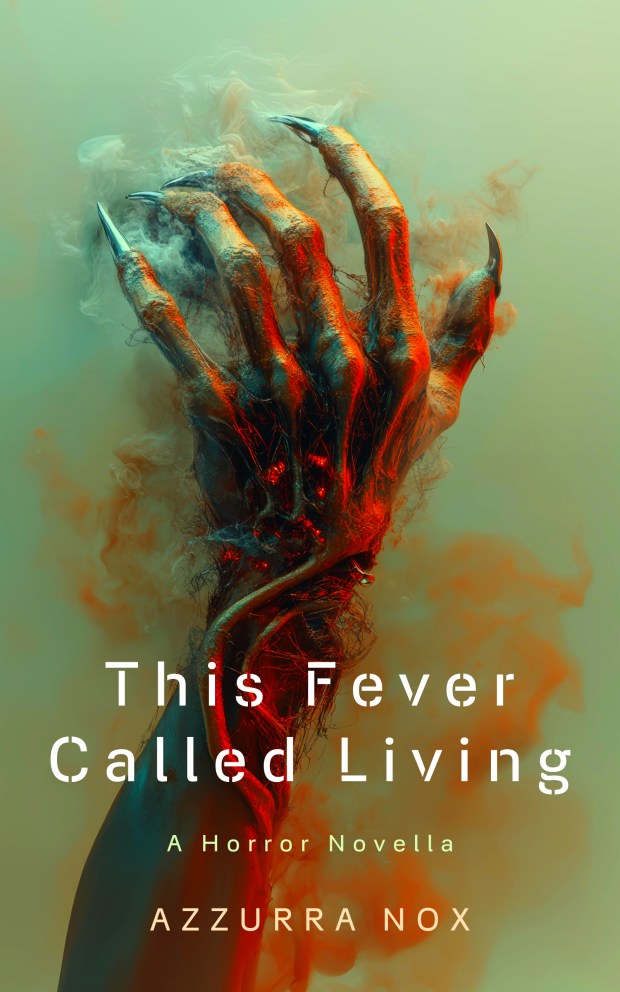
This Fever Called Living is a fever dream drenched in tragedy.
The novella comes out March 3.
The Plot Summary:
A dark retelling/mashup of Carmilla and The Fall of the House of Usher.
Palermo, Sicily 1999.
Juliette suffers from a rare illness that keeps her hidden from the sun. Her winter days at Villa Astrid are filled with isolation and gnawing hunger, haunted by fragmented memories of a summer she can’t quite piece together.
Then Elenoire arrives.
Mysterious and magnetic, Elenoire captivates Juliette in a way that’s both thrilling and terrifying. There’s something dangerous about her, something Juliette can’t name. She knows she should keep her distance, yet all she can think about is kissing her.
Meanwhile, young women are turning up dead across Palermo. Whispers of a serial killer spread through the city, but Juliette suspects that something darker is at play. Something not entirely human.
You can pre-order the book HERE.

DID YOU ENJOY WHAT YOU JUST READ? IF YES, THEN SUBSCRIBE TO THE BLOG, GIVE THE POST A LIKE, OR LEAVE A COMMENT! NEW POSTS ARE UP EVERY TUESDAY & THURSDAY!


 The Inkblotters