Madeline and Wes Drake have invited two hundred of their closest friends and family to their sprawling horse ranch for the most anticipated event of the year: a “pistols and pearls” gender reveal party so sensational it is sure to make headlines. But the party descends into chaos when the celebratory explosive misfires, leaving one woman dead and a trail of secrets.
As the aftershocks of the bloody party ripple across the small town, Agent Jamie Saldano is brought on the scene to investigate. Battling his own demons from the past, Saldano unearths a web of deceit spun around the Drakes. The appearance of some unexpected houseguests only deepens the mystery. And as tensions mount, it becomes clear that the explosion wasn’t just an unlucky accident. But who was the target, and why? As the shadow of a killer looms, the happy parents-to-be must unravel the truth before it’s too late.
DID YOU ENJOY WHAT YOU JUST READ? IF YES, THEN SUBSCRIBE TO THE BLOG, GIVE THE POST A LIKE, OR LEAVE A COMMENT! NEW POSTS ARE UP EVERY TUESDAY & THURSDAY!
My parking garage off Fifth was nearly a mile from where I worked at city hall. I could have paid twice as much to park two blocks from my building and avoid the rows of homeless people: the worn tents, the used needles, the stinking garbage, the aura of hopelessness and distrust that filled a corner park and bled down the streets.
I was listening to my favorite podcast, LA with A&I. Amy and Ian started the podcast two years ago to talk about computer gaming, technology, entertainment and Los Angeles. It had blossomed into a quasi news show and they live streamed every morning at seven. They’d riff on tech and local news as if sitting down with friends over coffee. Like me, they were nerds, born and bred in the City of Angels. I’d never met Amy or Ian in real life, but felt like I’d known them forever.
We’d chatted over Discord, teamed up to play League of Legends, and I often sent them interesting clips about gaming or tech that they talked about on their podcast, crediting my gaming handle. Twice, we’d tried to set up coffee dates, but I always chickened out. I didn’t know why. Maybe because I thought they wouldn’t like me if they met me. Maybe because I was socially awkward. Maybe because I didn’t like people knowing too much about my life.
Today while I drove to work, they’d discussed the disaster that was city hall: all the digital files had been wiped out. The news story lasted for about five minutes, but it would be my life for the next month or more as my division rebuilt the data from backups and archives. It was a mess. They laughed over it; I tried to, but I was beginning to suspect the error was on purpose, not by mistake.
Now they were talking about a sweatshop that had been shut down last week.
“We don’t know much,” Amy said. “You’d think after eight days there’d be some big press conference, or at least a frontpage story. The only thing we found was two news clips—less than ninety seconds each—and an article on LA Crime Beat.”
“David Chen,” Ian said, “a Chinese American who allegedly trafficked hundreds of women and children to run his factory in Chinatown, was arraigned on Monday, but according to Crime Beat, the FBI is also investigating the crime. And—get this— the guy is already out on bail.”
“It’s fucked,” Amy said. “Look, I’m all for bail reform. I don’t think some guy with weed in his pocket should have to pay thousands of bucks to stay out of jail while the justice system churns. But human trafficking is a serious crime—literally not two miles from city hall, over three hundred people were forced to work at a sweatshop for no money. They had no freedom, lived in a hovel next door to the warehouse. Crime Beat reported that the workers used an underground tunnel to avoid being seen—something I haven’t read in the news except for one brief mention. And Chen allegedly killed one of the women as he fled from police. How did this guy get away with it? He kills someone and spends no more than a weekend behind bars?”
“According to Crime Beat, LAPD investigated the business for months before they raided the place,” Ian said. “But Chen has been operating for years. How could something like this happen and no one said a word?”
I knew how. People didn’t see things they didn’t want to.
Case in point: the homeless encampment I now walked by.
I paused the podcast and popped my earbuds back into their charging case.
“Hello, Johnny,” I said to the heroin addict with stringy hair that might be blond, if washed. I knew he was thirty-three, though he looked much older. His hair had fallen out in clumps, his teeth were rotted, and his face scarred from sores that came and went. He sat on a crusty sleeping bag, leaned against the stone wall of a DWP substation, his hollow eyes staring at nothing. As usual, he didn’t acknowledge me. I knew his name because I had asked when he wasn’t too far gone. Johnny, born in Minnesota. He hadn’t talked to his family in years. Thought his father was dead, but didn’t remember. He once talked about a sister and beamed with pride. She’s really smart. She’s a teacher in…then his face dropped because he couldn’t remember where his sister lived.
Four years ago, I left a job working for a tech start-up company to work in IT for city hall. It was barely a step up from entry-level and I couldn’t afford nearby parking garages. If I took a combination of buses and the metro, it would take me over ninety minutes to get to work from Burbank, so factoring the combination of time and money, driving was my best bet and I picked the cheapest garage less than a mile from work.
I used to cringe when I walked by the park. Four years ago, only a dozen homeless tents dotted the corner; the numbers had more than quadrupled. Now that I could afford a more expensive garage, I didn’t want it. I knew most of the people here by name.
“Hey, Toby,” I greeted the old black man wearing three coats, his long, dirty gray beard falling to his stomach. He had tied a rope around his waist and attached it to his shopping cart to avoid anyone stealing his worldly possessions when he slept off his alcohol.
“Mizvi,” he said, running my name together in a slur. He called me “Miss Violet” when he was sober. He must have still been coming down off whatever he’d drank last night.
I smiled. Four years ago I never smiled at these people, fearing something undefinable. Now I did, even when I wanted to cry. I reached into my purse and pulled out a bite-size Hershey Bar. Toby loved chocolate. I handed it to him. He took it with a wide grin, revealing stained teeth.
One of the biggest myths about the homeless is that they’re hungry. They have more food than they can eat. That doesn’t mean many aren’t malnourished. Drug and alcohol abuse can do that to a person.
A couple weeks ago a church group had thought they would bring in sandwiches and water as part of community service. It was a nice gesture, sure, but they could have asked what was needed instead of assuming that these people were starving. Most of the food went uneaten, left outside tents to become rat food. The plastic water bottles were collected to return for the deposit, which was used to buy drugs and alcohol.
But no one gave Toby chocolate, he once told me when he was half-sober. Now, whenever I saw him—once, twice a week—I gave him a Hershey Bar. He would die sooner than he should, so why couldn’t I give him a small pleasure that I could afford? Toby was one of the chronics, a man who’d been on the street for years. He had no desire to be anywhere else, trusted no one, though I thought he trusted me a little. I wished I knew his story, how he came to be here, how I could reach him to show him a different path. His liver had to be slush with the amount of alcohol he consumed. Alcohol he bought because people, thinking they were helping—or just to make themselves feel better—handed him money.
As I passed the entrance to the small park, the stench of unwashed humans assaulted me. The city had put four porta-potties on the edge of the park but they emptied them once a month, if that. They were used more for getting high and prostitution than as bathrooms. The city had also put up fencing, but didn’t always come around to lock the gate. Wouldn’t matter; someone would cut it open and no one would stop them. Trespassing was the least of the crimes in the area.
I dared to look inside the park, though I didn’t expect to see her. I hadn’t seen her for over a week. I found myself clutching my messenger bag that was strapped across my chest. Not because I thought someone would steal it, but because I needed to hold something, as if my bag was a security blanket.
I didn’t see her among the tents or the people sitting on the ground, on the dirt and cushions, broken couches and sleeping bags, among the needles and small, tin foils used to smoke fentanyl. I kicked aside a vial that had once held Narcan, the drug to counteract opioid overdoses. The clear and plastic vials littered the ground, remnants of addiction.
There was nothing humane about allowing people to get so wasted they were on the verge of death, reviving them, then leaving them to do it over and over again. But that was the system.
The system was fucked.
Blue and red lights whirled as I approached the corner. I usually crossed Fifth Street here, but today I stopped, stared at the silent police car.
The police only came when someone was dying…or dead.
Mom.
I found my feet moving toward the cops even though I wanted to run away. My heart raced, my vision blurred as tears flashed, then disappeared.
DID YOU ENJOY WHAT YOU JUST READ? IF YES, THEN SUBSCRIBE TO THE BLOG, GIVE THE POST A LIKE, OR LEAVE A COMMENT! NEW POSTS ARE UP EVERY TUESDAY & THURSDAY!
There is no body. A fact DC Clements finds both a problem and a tremulous, tantalizing possibility. She’s not a woman inclined to irrational hope, or even excessive hope. Any damned hope, really. At least, not usually.
Kylie Gillingham is probably dead.
The forty-three-year-old woman has been missing nearly two weeks. Ninety-seven percent of the 180,000 people a year who are reported missing are found within a week, dead or alive. She hasn’t been spotted by members of the public, or picked up on CCTV; her bank, phone and email accounts haven’t been touched. She has social media registered under her married name, Kai Janssen; they’ve lain dormant. No perky pictures of carefully arranged books, lattes, Negronis or peonies. Kylie Gillingham hasn’t returned to either of her homes. Statistically, it’s looking very bad.
Experience would also suggest this sort of situation has to end terribly. When a wife disappears, all eyes turn on the husband. In this case, there is not one but two raging husbands left behind. Both men once loved the missing woman very much. Love is just a shiver away from hate.
The evidence does not conclusively indicate murder. There is no body. But a violent abduction is a reasonable proposition—police-speak, disciplined by protocol. Kidnap and abuse, possible torture is likely—woman-speak, fired by indignation. They know Kylie Gillingham was kept in a room in an uninhabited apartment just floors below the one she lived in with husband number two, Daan Janssen. That’s not a coincidence. There is a hole in the wall of that room; most likely Kylie punched or kicked it. The debris created was flung through a window into the street, probably in order to attract attention. Her efforts failed. Fingerprints place her in the room; it’s unlikely she was simply hanging out or even hiding out, as there is evidence to suggest she was chained to the radiator.
Yet despite all this, the usually clear, logical, reasonable Clements wants to ignore statistics, experience and even evidence that suggests the abduction ended in fatal violence. She wants to hope.
There just might be some way, somehow, that Kylie—enigma, bigamist—escaped from that sordid room and is alive. She might be in hiding. She is technically a criminal, after all; she might be hiding from the law. She can hardly go home. She will know by now that her life of duplicity is exposed. She will know her husbands are incensed. Baying for blood. She has three largely uninterested half brothers on her father’s side, and a mother who lives in Australia. None of them give Clements a sense that they are helping or protecting Kylie. She will know who abducted her. If alive, she must be terrified.
Clements’ junior partner, Constable Tanner, burly and blunt as usual, scoffs at the idea that she escaped. He’s waiting for a body; he’d settle for a confession. It’s been four days now since Daan Janssen left the country. “Skipped justice,” as Tanner insists on saying. But the constable is wet behind the ears. He still thinks murder is glamorous and career-enhancing. Clements tries to remember: did she ever think that way? She’s been a police officer for nearly fifteen years; she joined the force straight out of university, a few years younger than Tanner is now, but no, she can’t remember a time when she thought murder was glamorous.
“He hasn’t skipped justice. We’re talking to him and his lawyers,” she points out with what feels like the last bit of her taut patience.
“You’re being pedantic.”
“I’m being accurate.”
“But you’re talking to him through bloody Microsoft Teams,” says Tanner dismissively. “What the hell is that?”
“The future.” Clements sighs. She ought to be offended by the uppity tone of the junior police officer. It’s disrespectful. She’s the detective constable. She would be offended if she had the energy, but she doesn’t have any to spare. It’s all focused on the case. On Kylie Gillingham. She needs to remain clear-sighted, analytical. They need to examine the facts, the evidence, over and over again. To be fair, Constable Tanner is focused too, but his focus manifests in frenetic frustration. She tries to keep him on track. “Look, lockdown means Daan Janssen isn’t coming back to the UK for questioning any time soon. Even if there wasn’t a strange new world to negotiate, we couldn’t force him to come to us, not without arresting him, and I can’t do that yet.”
Tanner knocks his knuckles against her desk as though he is rapping on a door, asking to be let in, demanding attention. “But all the evidence—”
“Is circumstantial.” Tanner knows this; he just can’t quite accept it. He feels the finish line is in sight, but he can’t cross it, and it frustrates him. Disappoints him. He wants the world to be clear-cut. He wants crimes to be punished, bad men behind bars, a safer realm. He doesn’t want some posh twat flashing his passport and wallet, hopping on a plane to his family mansion in the Netherlands and getting away with it. Daan Janssen’s good looks and air of entitlement offend Tanner. Clements understands all that. She understands it but has never allowed personal bias and preferences to cloud her investigating procedures.
“We found her phones in his flat!” Tanner insists.
“Kylie could have put them there herself,” counters Clements. “She did live there with him as his wife.”
“And we found the receipt for the cable ties and the bucket from the room she was held in.”
“We found a receipt. The annual number of cable ties produced is about a hundred billion. A lot of people buy cable ties. Very few of them to bind their wives to radiators. Janssen might have wanted to neaten up his computer and charger cords. He lives in a minimalist house. That’s what any lawyer worth their salt will argue.” Clements rolls her head from left to right; her neck clicks like castanets.
“His fingerprints are on the food packets.”
“Which means he touched those protein bars. That’s all they prove. Not that he took them into the room. Not that he was ever in the room.”
Exasperated, Tanner demands, “Well how else did they get there? They didn’t fly in through the bloody window, did they?” Clements understands he’s not just excitable, he cares. He wants this resolved. She likes him for it, even if he’s clumsy in his declarations. It makes her want to soothe him; offer him guarantees and reassurances that she doesn’t even believe in. She doesn’t soothe or reassure, because she has to stay professional, focused. The devil is in the detail. She just has to stay sharp, be smarter than the criminal. That’s what she believes. “She might have brought them in from their home. He might have touched them in their flat. That’s what a lawyer will argue.”
“He did it all right, no doubt about it,” asserts Tanner with a steely certainty.
Clements knows that there is always doubt. A flicker, like a wick almost lit, then instantly snuffed. Nothing is certain in this world. That’s why people like her are so important; people who know about ambiguity yet carry on regardless, carry on asking questions, finding answers. Dig, push, probe. That is her job. For a conviction to be secured in a court of law, things must be proven beyond reasonable doubt. It isn’t easy to do. Barristers are brilliant, wily. Jurors can be insecure, overwhelmed. Defendants might lie, cheat. The evidence so far is essentially fragile and hypothetical.
“I said, didn’t I. Right at the beginning, I said it’s always the husband that’s done it,” Tanner continues excitedly. He did say as much, yes. However, he was talking about Husband Number 1, Mark Fletcher, at that point, if Clements’ memory serves her correctly, which it always does. And even if her memory one day fails to be the reliable machine that it currently is, she takes notes—meticulous notes—so she always has those to rely on. Yes, Tanner said it was the husband, but this case has been about which husband. Daan Janssen, married to Kai: dedicated daughter to a sick mother, classy dresser and sexy wife. Or Mark Fletcher, husband to Leigh: devoted stepmother, conscientious management consultant and happy wife? Kai. Leigh. Kylie. Kylie Gillingham, the bigamist, had been hiding in plain sight. But now she is gone. Vanished.
“The case against Janssen is gathering momentum,” says Clements, carefully.
“Because Kylie was held captive in his apartment block.”
“Yes.”
“Which is right on the river, easy way to lose a body.”
She winces at this thought but stays on track. “Obviously Mark Fletcher has motive too. A good lawyer trying to cast doubt on Janssen’s guilt might argue that Fletcher knew about the other husband and followed his wife to her second home.”
Tanner is bright, fast; he chases her line of thought. He knows the way defense lawyers create murky waters. “Fletcher could have confronted Kylie somewhere in the apartment block.”
“A row. A violent moment of fury,” adds Clements. “He knocks her out cold. Then finds an uninhabited apartment and impetuously stashes her there.”
Tanner is determined to stick to his theory that Janssen is the guilty man. “Sounds far-fetched. How did he break in? This thing seems more planned.”
“I agree, but the point is, either husband could have discovered the infidelity, then, furious, humiliated and ruthless, imprisoned her. They’d have wanted to scare and punish, reassert control, show her who was boss.” They know this much, but they do not know what happened next. Was she killed in that room? If so, where is the body hidden? “And you know we can’t limit this investigation to just the two husbands. There are other suspects,” she adds.
Tanner flops into his chair, holds up a hand and starts to count off the suspects on his fingers. “Oli, Kylie’s teen stepson. He has the body and strength of a man…”
Clements finishes his thought. “But the emotions and irrationality of a child. He didn’t know his stepmum was a bigamist, but he did know she was having an affair. It’s possible he did something rash. Something extreme that is hard to come back from.”
“Then there’s the creepy concierge in the swanky apartment block.”
“Alfonzo.”
“Yeah, he might be our culprit.”
Clements considers it. “He has access to all the flats, the back stairs, the CCTV.”
“He’s already admitted that he deleted the CCTV from the day Kylie was abducted. He said that footage isn’t kept more than twenty-four hours unless an incident of some kind is reported. Apparently the residents insist on this for privacy. It might be true. It might be just convenient.”
Clements nods. “And then there’s Fiona Phillipson. The best friend.”
“Bloody hell. We have more suspects than an Agatha Christie novel,” says Tanner with a laugh that is designed to hide how overwhelmed and irritated he feels. His nose squashed up against shadowy injustice, cruel violence and deception.
“Right.”
“I still think the husband did it.”
“Which one?”
“Crap. Round and round in circles we go.” He scratches his head aggressively. “Do you want me to order in pizza? It’s going to be a long night.”
“Is anyone still doing deliveries? I don’t think they are,” points out Clements. “You know, lockdown.”
“Crap,” he says again, and then rallies. “Crisps and chocolate from the vending machine then. We’ll need something to sustain us while we work out where Kylie is.”
Clements smiles to herself. It’s the first time in a long time that Tanner has referred to Kylie by name, not as “her” or “the bigamist” or, worse, “the body.” It feels like an acceptance of a possibility that she might be somewhere. Somewhere other than dead and gone.
Did she somehow, against the odds, escape? Is Kylie Gillingham—the woman who dared to defy convention, the woman who would not accept limits and laughed in the face of conformity—still out there, somehow just being?
DID YOU ENJOY WHAT YOU JUST READ? IF YES, THEN SUBSCRIBE TO THE BLOG, GIVE THE POST A LIKE, OR LEAVE A COMMENT! NEW POSTS ARE UP EVERY TUESDAY & THURSDAY!
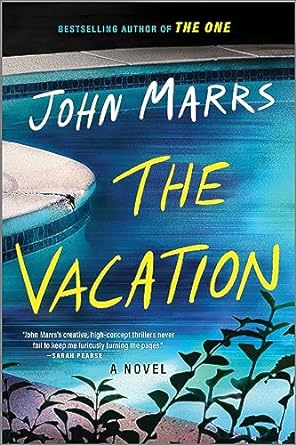
SUNDAY, October 15—Multiple people have been reported dead at the Van Ness Winery after an altercation late Saturday night, our Eyewitness Team reports. Police were dispatched around 1:00 a.m. on Sunday morning after a 9-1-1 call from the estate’s main house, but they were delayed hours getting to the scene because of the torrential rainstorm that flooded Rte. 8 and many of the small roads leading up to the winery.
Our news team is on-site but has not been able to verify details with officials, who are still investigating the scene. It appears the damaged substation in Parnell affected power to the estate as well as a number of neighboring homes and businesses in the Finger Lakes area.
This tragedy is the latest to befall the Van Ness family, whose matriarch, investor and philanthropist Katrina Van Ness, died earlier this year of pancreatic cancer at the age of sixty-eight.
The Van Ness winery, known for producing high-quality, award-winning wines, has been owned by the Van Ness family for several generations. The family started the business in the 1950s, after selling their Arizona-based copper mining company founded by Benson Van Ness. The 985- acre winery and estate is now managed by the Van Ness siblings, who live full-time in New York City. Their family investment office owns interests in multiple different real estate holdings and industrial and manufacturing enterprises. The siblings are believed to have been visiting the estate for the weekend for a family celebration.
We will report more as details are confirmed.
THURSDAY
Two Days before the Party
LAUREN
Ever since Zach told me about The Weekend, it’s all I’ve been able to focus on. Most people would naturally be at least a little nervous to meet their significant other’s family for the first time.
But most people aren’t dating a Van Ness.
“Earth to Lauren.” Zach snaps his fingers, grinning over at me. He left work early to get on the road sooner and didn’t have time to change, so he’s still wearing his suit, purple tie slightly askew but knotted even after hours of driving.
“Sorry,” I say, tugging the ends of my hair. “Zoning out.”
“You look like I’m driving you to your death,” he says, then grabs my hand and squeezes. “Don’t worry. I promise it’ll be fun. Even if my family’s there.”
All I can see out my window are trees and fields and cows, my cell phone bars ticking steadily down. We must be close. Zach is taking care on the steep, curvy roads. One bad turn could send our car into a deep ditch or crashing into a thick tree trunk.
It’s so beautiful up there, my best friend Maisie said when I told her about the invitation. She had that wicked look in her eye. All the rolling hills. A vineyard. Starry sky. Super romantic. Perfect place to propose. My stomach flips at the thought, and I breathe in deep. This weekend is not about us. It’s a birthday party for Zach’s older siblings, Harper and Richard, the twins, an annual tradition to celebrate at the family’s winery. I can’t get ahead of myself.
We drive up a winding gravel road, through patches of dense trees. Taller ones have already gone barren for the winter, but some of the smaller trees arch over the road, their branches meeting and entangling like fingers, blotting out the remaining light.
“Ladies and gentlemen, we are now approaching the famous Van Ness estate,” Zach says in a booming voice as the car’s headlights flick on. “Please, no photographs, and keep all hands and feet inside the moving vehicle at all times.”
Zach had told me the estate was large—a thousand acres— but I didn’t grasp what that meant until the tunnel of trees ends and the view opens to a sprawling expanse of green fields and rolling hills, stretching endlessly against the purple-hued sky. We cross a small stone bridge that extends over a stream, then bump along a rocky road. The vineyards creep closer to us now, eerie in their precise organization, each plant in a perfect row. We’re inching toward winter, and all the grapes must have already been picked for the season, pressed and bottled, because the vines are bare and withered.
When I first moved to New York and waited tables at an Italian restaurant, we served the Van Ness wine. I remember those dark purple labels, the name stamped big and bold on the front. A brand that said, We are too good for you. But Zach is nothing like that, like the Van Nesses you read about online. Sometimes I forget he’s part of that family in the day-to-day rhythm of our lives. He doesn’t talk about them much, offers the scantest of information, or cracks a joke, or completely changes the subject when I bring them up. All I know of them is from the press, fleeting and superficial, like the pages of a glossy magazine, but hazy enough that I can imagine slicing open my finger on the sharp edges if I’m not careful.
“Tell me about them,” I say now, when there’s no evading the topic.
He glances over at me. “My family? What more do you need to know?”
“I don’t know. How can I win them over so they all love me forever and ever?” I say, trying to hide my nerves.
He laughs. “They’re impossible to win over.”
“Oh perfect,” I say. “That makes it easy then.”
“Nah, they aren’t that bad. They’re…particular is all.”
We head up a slight incline. To the right, there’s a gravel path marked Private—Staff Only. We pass it and stop in front of a large metal gate. Zach rolls down his window, fetches a key card from the glove compartment. “We had this installed years ago for extra security,” he says. Once the machine reads his card, the gates swing open soundlessly. I turn to watch them rotate back and slam into place.
As we round a corner, I finally catch a glimpse of the house, a stone mansion, stoic on the hill. The long driveway curves up to an overhang in front, flanked by a series of round potted trees.
“Here we are,” says Zach as we pull up. He shuts off the car, taps the digital clock on the dashboard. “And on time for dinner, too. Elle will be pleased.”
My stomach does another flip.
Breathe deep.
Project confidence.
They’re going to love you.
I get out. The air is chilly—it’s dropped at least ten degrees since we left the city. I wrap my arms across my body.
The massive wooden front door opens, and an older man walks out, gray hair and beard, a deep purple polo shirt with the Van Ness logo stitched on the pocket, two flutes of sparkling wine in his hands.
“Bill! You are the man.” Zach trades him the keys to the car for the glasses. “Lauren, Bill and his wife Linnet have been taking care of the estate—and us—since I was a snotty-nosed kid.”
As Bill heads for the trunk to unload our baggage, I survey the house. My eyes follow the three short steps up to a wide entryway with pillars, to the archway above the door, and then outward to the wings on either side. Greenery climbs up the stonework between the windows, and I imagine Bill must trim it often to keep it so nice. I touch a pillar next to me and feel its cool smoothness.
“Where’s everyone else?” Zach asks Bill. For him, this is business as usual. I doubt he even notices the grandness anymore.
“Oh, they’re around,” he says. “Miss Elle says dinner at 6:30, and you can all meet in the library.”
I smooth down the gold silk top Zach picked out for me, hugging and hiding in all the right places, like expensive clothes do. What would my parents say if they saw me? They would never guess I’d be weekending with a famous family like this. They never thought I’d make it in New York, thought I’d come crawling back begging to return to my night shift writing obituaries at our small-town paper.
But I’m never going back.
I take a sip of the sparkling wine. The bubbles pop, cold and hard against the back of my throat.
DID YOU ENJOY WHAT YOU JUST READ? IF YES, THEN SUBSCRIBE TO THE BLOG, GIVE THE POST A LIKE, OR LEAVE A COMMENT! NEW POSTS ARE UP EVERY TUESDAY & THURSDAY!
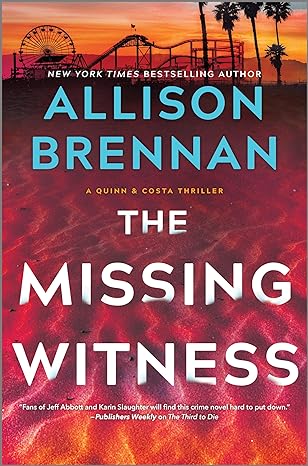
“That’s her,” the driver yelled to the three men waiting in the rear of the transit van.
He pointed a gloved finger in the direction of a slender woman walking along the sidewalk up ahead.
“You sure?” a gruff voice asked. “It’s pretty dark out there.”
The driver was very sure. He’d watched carefully as his target walked with purpose in her high heels. He recalled her appearance an hour earlier as she made her way up a stainless-steel pole before slowly, seductively descending.
“Yeah, man,” he replied. “You don’t forget a pretty little ass like that in a hurry, even from this distance.”
He was confident their mark was completely oblivious to her impending fate. She stopped suddenly, searching for something that was seemingly wedged in her clutch bag; the streetlamps and neon shop signs illuminated the glitter in her hair. The driver lifted his foot slightly from the accelerator and dipped the headlights as he continued to stalk his prey. Meanwhile, his colleagues slipped black balaclavas over their heads and adjusted their bodies into position—one knelt with his hand gripping the door lever, ready to open it on command; another held plastic restraints, and the third clasped a hunting knife with a serrated blade.
“Ready?” the driver asked. They grunted in unison.
The van sped up, but not so fast as to throw the hunters from the positions they’d rehearsed earlier that day. Then, as it pulled up alongside the woman, the door flew open and the first of her assailants sprang out.
The man with the restraints was the first to reel backward into the vehicle as a bullet from her revolver tore its way through his shoulder blade, taking fragments of collarbone with it.
For a split second, the flash from the gun’s muzzle illuminated the van’s interior as she pinpointed two more would-be assailants poised to drag her inside. Twice more she pulled the trigger; twice more she heard the men screaming. The driver remained rooted to his seat, baffled by how off-kilter their mission had suddenly gone. They had been so confident of its success that there was no Plan B.
“Go, man, go!” yelled a desperate voice as another bullet found its target.
Tires squealed as the van lurched forward, veering across the median and then crisscrossing back toward the sidewalk.
A combination of adrenaline and fury propelled the woman to kick off her heels and run after it, firing twice more and shattering its rear windshield. The vehicle clipped an LA Times newsstand, hurling newspapers into the air; they fell like large chunks of confetti.
She fired one last time, but the van had already corrected itself and sped off out of range. Then she watched in horror as that final shot sent a stranger up ahead, carrying a backpack, sprawling face forward onto the pavement.
Time froze as the consequences of her last reckless bullet resonated.
DID YOU ENJOY WHAT YOU JUST READ? IF YES, THEN SUBSCRIBE TO THE BLOG, GIVE THE POST A LIKE, OR LEAVE A COMMENT! NEW POSTS ARE UP EVERY TUESDAY & THURSDAY!
Can she rewrite the fate of women who came before her?
Prologue
Last night I dreamt I went to Malibu again.
I stood barefoot on the sand, the cool water nipping at my ankles. And there, high above me, perched on the edge of that magnificent cliff, his stunning house sat as it once had, alive, whole. It had ten bedrooms and was on three private cliffside acres, with a lap pool, a tennis court, and a garden blooming flush with pink and white bougainvillea. But from the beach down below all I could see was its long wall of privacy-tinted glass windows, slanting out toward the sea.
He could see me here, out on the beach. I was certain he could, even in my dream.
He was still behind those windows, watching my every step. Though I couldn’t see him. The glass was one-way. But I imagined him there behind the glass so vividly, it had to be real.
Until it wasn’t. Until the heat from the flames would shatter all the windows, break them apart, send smoke spewing from the piano room, down the cliff, evaporating in wisps into the lonely Pacific.
But in my dream, the flames hadn’t existed yet. Or, maybe they never would. He and his house were there, watching me. Wanting me. Haunting me.
“Come back!” His voice was a desperate echo, my undoing. The smoke was so thick, even out on the beach I couldn’t see, and I couldn’t breathe.
So that’s why I did it, in my dream. I turned away from the house, and I walked into the bone-chilling water. It was so cold, it numbed me, but I walked into the sea, up to my shoulders, my neck, my chin. Until I could no longer smell the smoke or hear his voice.
And then my entire head was underwater, and the tide was strong. It sucked me in, held me there.
But I wasn’t trying to drown. I really wasn’t. I was merely trying to escape the fire.
DID YOU ENJOY WHAT YOU JUST READ? IF YES, THEN SUBSCRIBE TO THE BLOG, GIVE THE POST A LIKE, OR LEAVE A COMMENT! NEW POSTS ARE UP EVERY TUESDAY & THURSDAY!
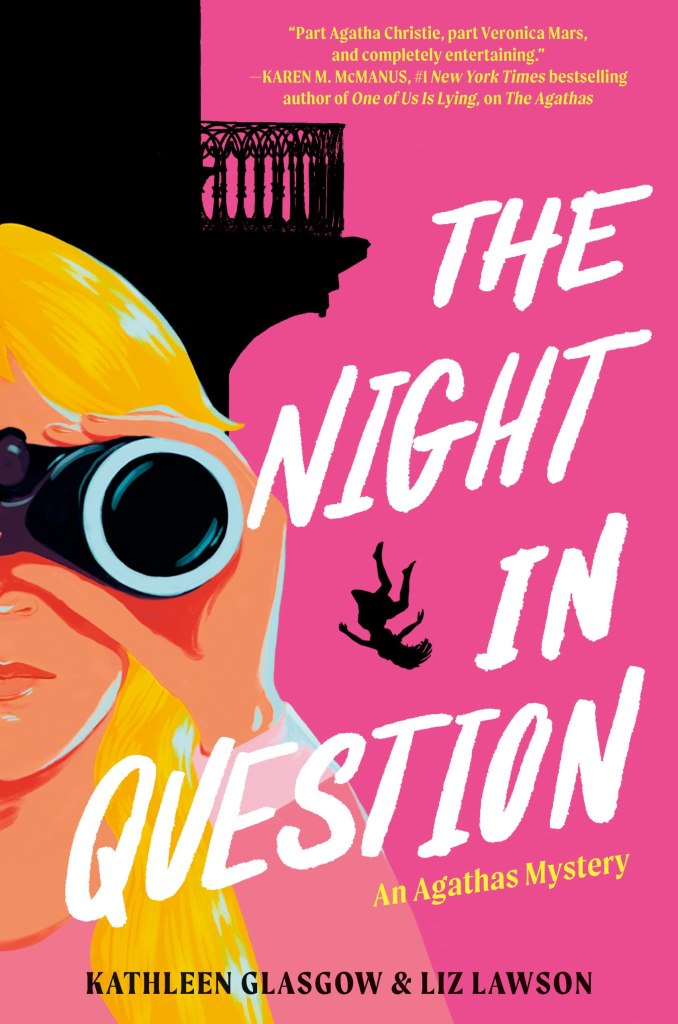
“All leads will be followed. But you and Alice Ogilvie didn’t do that. Just like before, you went full steam ahead on your own, and now look where you are.”
PLOT SUMMARY:
How do you solve a murder? Follow the lessons of the master—Agatha Christie! Iris and Alice find themselves in the middle of another Castle Cove mystery in the sequel to New York Times bestseller The Agathas, by powerhouse authors Kathleen Glasgow and Liz Lawson.
Alice Ogilvie and Iris Adams became the talk of Castle Cove when they cracked the biggest case of the fall: the death of Brooke Donovan. Together, the Agathas put Brooke’s killer away for good, and since then things around town have been almost back to normal. Quiet, even.
But if Alice and Iris know anything, it’s that sometimes quiet is just the calm before the storm. The truth is, Brooke’s disappearance wasn’t the first mystery to rock Castle Cove, and it won’t be the last. So when their school dance at the infamous Levy Castle—the site of film starlet Mona Moody’s unsolved death back in the 1940s—is interrupted by a violent assault, Iris and Alice pull out their murder boards and get back to work.
To understand the present, sometimes you need to look into the past. And if the Agathas want a chance at solving their new case, that’s exactly where they’ll need to start digging. Only, what they uncover might very well kill them.
GRADE: A
REVIEW:
The Night in Question is the highly anticipated sequel of The Agathas that features Agatha Christie aficionado Alice Ogilvie and her unlikely partner in sleuthing Iris Adams. This time Alice and Iris have to try to figure out who assaulted one of their classmates during the Sadie Hawkins dance and what truly happened to famed film star Mona Moody in the 40’s when she accidentally fell off of the balcony at Levy Castle.
This was very fast-paced and read like a cozy mystery, although terrible/violent things did happen! I also liked that Glasgow and Lawson kept their teen detectives credible in what they could manage to find out and how. This sequel was jam-packed with mysteries and reveals and I loved how everything tied up at the end. I also liked that they didn’t necessarily get a happy ending, making this more realistic, but also kind of setting up for another book (I’d love a book three!).
The Levy Castle setting and old Hollywood link to it was part of the allure of this book, not to mention that I loved Alice and Iris’s friendship and how well they work together as wannabe Veronica Mars. But I also like how Glasgow and Lawson show how much trouble the two teens could actually get into if they actually try to help and how law enforcement barely acknowledges them whenever they actually crack a case.
This is a fun read and I recommend this if you’re a fan of teen detectives and cozy mysteries.
*Thank you so much to NetGalley and Delacorte Press for the digital copy of this book in exchange for an honest review!
DID YOU ENJOY WHAT YOU JUST READ? IF YES, THEN SUBSCRIBE TO THE BLOG, GIVE THE POST A LIKE, OR LEAVE A COMMENT! NEW POSTS ARE UP EVERY TUESDAY & THURSDAY!
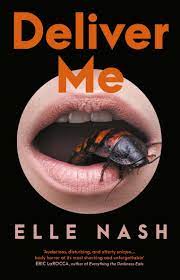
I’m drawn to him because of this lingering ferocity I see in men- the possibility of violence.
PLOT SUMMARY:
At a meatpacking facility in the Missouri Ozarks, Dee-Dee and her co-workers kill and butcher 40,000 chickens in a single shift. The work is repetitive and brutal, with each stab and cut a punishment to her hands and joints, but Dee-Dee’s more concerned with what is happening inside her body. After a series of devastating miscarriages, Dee-Dee has found herself pregnant, and she is determined to carry this child to term.
Dee-Dee fled the Pentecostal church years ago, but judgment follows her in the form of regular calls from her mother, whose raspy voice urges Dee-Dee to quit living in sin and marry her boyfriend Daddy, an underemployed ex-con with an insect fetish. With a child on the way, at long last Dee-Dee can bask in her mother’s and boyfriend’s newfound parturient attention. She will matter. She will be loved. She will be complete.
When her charismatic friend Sloane reappears after a twenty-year absence, feeding her insecurities and awakening suppressed desires, Dee-Dee fears she will go back to living in the shadows. Neither the ultimate indignity of yet another miscarriage nor Sloane’s own pregnancy deters her: she must prepare for the baby’s arrival.
GRADE: A
REVIEW:
If this book were a series, it’d be “bingeable.” Once you begin reading about Dee-Dee and her insect-obsessed boyfriend, Daddy, you can’t stop. The prose is raw and intimate in ways that will hit you emotionally at the core. Full disclosure, I have a phobia when it comes to insects, so the description of insects being placed on body parts was absolutely terrifying for me. But Nash also had me feeling sorry for these same insects later on in the novel, so that goes to show her deftness in being able to conjure pity even for creatures that I’d rather not have anywhere near me.
Dee-Dee becomes fixated with wanting to be pregnant, and this fixation leads her to tell her partner, Daddy that she’s indeed pregnant, despite her not actually being it. Her life begins to derail once her high school friend and fellow member of a church they both went to begins to live upstairs from her. Dee-Dee is convinced that Sloane wants to steal Daddy from her and that she’s trying to conspire against her. The book flashes between the present and the past, and in both places you can’t help but to feel sorry for Dee-Dee, especially in her present where she’s physically and emotionally exhausted by an occupation and relationship that suck so much out of her, without really feeling gratified by either.
Dee-Dee is a sympathetic character, and you can’t help but to root for her, despite her misgivings and the fact that the reader can sense that there’s a tragedy afoot and you’re sitting on pins and needles waiting to see just how much more terrible her life can really get.
I know this is categorized as horror by some people, but I wouldn’t necessarily say that it’s horror in the way that people define horror – rather it’s horrific in its realness and that can be much scarier than anything supernatural ever could. I recommend this book if you enjoy dark lit, twisted relationships/friendship, and true crime.
*Thank you so much to the author for the digital copy of this book in exchange for an honest review!
DID YOU ENJOY WHAT YOU JUST READ? IF YES, THEN SUBSCRIBE TO THE BLOG, GIVE THE POST A LIKE, OR LEAVE A COMMENT! NEW POSTS ARE UP EVERY TUESDAY & THURSDAY!
It’s funny/not funny the things you remember about the worst day of your life.
It was a hot, humid, hazy, August afternoon.
We had hot dogs and baked beans for dinner. Later, I had a cosmic orchestra of gas and flatulence. Mom thought it was hilarious. Palmer accused me of being a show-off. He wasn’t entirely wrong.
Afterward, as we did every Sunday night, we watched The Ed Sullivan Show.
I drifted off to sleep as rain pelted the roof. The sky blinked off and on like a flashlight. The roar of thunder filled all the empty spaces.
My brother Palmer—forever thirteen—shook me awake, his hands red and sticky. I thought it was from a cherry ice pop—but I know now it was blood. Our mother’s blood.
“Hide, Brooks.” Palmer took in a huge gulp of air. “You know where. And don’t come back, whatever you do. The monster. He’s in the house.”
I ran up to the dunes at Ditch Plains Beach as fast as my stubby legs could carry me, soaked and chilled to the bone.
A week later, I woke up in a hospital bed. A nurse jabbed me with something.
My father gripped my hand. “You’re all right, son,” he whispered. “It’s over.”
But of course, it wasn’t. And I was far from all right. I didn’t know it then, but I do now. You have no idea how deep the rot goes until you bite into the apple and see a wriggling worm.
CHAPTER ONE
Sheldon Adler, my agent at Crown-Hawkins and my brother from another mother, is late as usual. No fucking surprise there. When you’re meeting Sheldon, you have to tack on an hour at least. I’m at our usual table at La Bonne Grenouille, the best little French bistro in Manhattan that no one has ever heard of, sipping a glass of ice-cold watermelon seltzer. Sheldon has been my literary agent—no, make that literary savior—since he read my first published short story that didn’t involve erect penises in The New Yorker. He contacted me out of the blue and suggested Hey, why don’t you write a book and I’ll sell it? I wrote Fallen Angels in twenty-four days in a drug haze. When it was finally published, it sold less than two hundred copies, but Sheldon was so fucking proud you would’ve thought it sold two million. I resigned myself to being a failure. Months later, the book was plucked out of obscurity by the senior literary critic of The New York Times and nominated for a Pulitzer. A tabloid dubbed me “The Heroin Hemingway.” The name stuck, even though I’ve been sober and drug-free for more than twenty-five years.
Sheldon got me my first million-dollar advance. He’s the wolf that other wolves hire, and his reputation is well-earned. My biggest supporter, he stayed with me through the lean, mean years when I wrote truly terrible books. Despite my abysmal marital track record, I’m extremely loyal. I wouldn’t dream of leaving Sheldon and believe me, other agents have tried to poach me. And unless I did or said something unacceptable that blew up on social media—which is why I don’t have any social media accounts—Sheldon wouldn’t kick me to the curb or toss me under the bus. All my skeletons are out there. Well, most of them.
A portly man with a vague resemblance to the great Mafia chronicler Mario Puzo, Sheldon huffs his way to our table. I can’t say it to his face, but Sheldon needs to lose forty—make that fifty—pounds, if not for himself, then for his young children. I’m sixty-five and I can still fit into the jeans I wore when I was nineteen. It takes discipline and willpower, of which I have plenty to spare.
After we order and exchange our typical innocuous pleasantries about the weather, politics, and soccer, for we’re both rabid fans, Sheldon downs a gin and tonic. It’s his first of the day and not his last. “Brooks, how is the book coming along?” he booms in a guttural Brooklyn accent that has other diners turning their heads.
“Great,” I reply cheerfully. “It couldn’t be going any better.
Gold, pure gold.”
He tilts his head. “Cassie says you haven’t been sleeping well.”
Cassie’s my third and—if I have anything to say about it—last wife. She interviewed me for a puff piece and months later, when the pregnancy test was positive, I knew I’d met my Waterloo, no thanks to Abba. An abortion was out of the question. Now we have two children under six, our lives are a merry-go-round of sweet chaos. Last fall, I had a vasectomy so there will be no more miniature Andersons polluting the planet.
I finish my seltzer and signal for another. “You know I never sleep well when I’m writing. I do my best work after midnight.” In the old days, that didn’t necessarily apply to writing.
The waitress delivers our meals: me, a grilled chicken Caesar salad with extra feta, and Sheldon a porterhouse with crispy julienne potatoes and parmesan creamed spinach. I eye his steak with unconcealed envy, but Cassie’s always after me to eat healthier. I sigh and add more dressing to my salad. Cassie would be pleased.
“Yeah, I know. You have the constitution of fucking Secretariat. You did drugs with Keith Richards and Lou Reed.” Sheldon cut into his steak; it’s not just blue, it’s bloody raw. Just looking at it makes me queasy. “But this is different. You’re writing about your goddamn family.”
“I can be objective.”
Sheldon puts his fork down. “Not about this, Brooks. Come on. The cold-blooded executions of your mother and brother—”
I suddenly lose my appetite. Sheldon means well. Cassie does, too. But this quasi-intervention is the last thing I need. “Sheldon, you know as well as Cassie that I had no choice. I wasn’t going to let that fucking guttersnipe drag my mother through the mud.” The fucking guttersnipe in question is Marshall Reagan (no relation to the former president), a douchebag posing as a journalist. His brand is writing scandalous, unauthorized biographies of the rich and famous because he knows he can get away with it. No dirt, no sleaze, is beneath him. And when he can’t find anything salacious, he makes shit up and pulls it out of his ass like saltwater taffy.
“You don’t know that.”
“Oh, but I do know. I know exactly the angle he’d take. That my mother was having an affair with Julian.” Julian Broadhurst, born in Lancaster, England, in 1942. An artist who was supposedly the protégé of Peter Max. Julian had long blond hair and drove a robin’s-egg-blue Aston Martin. Palmer and I loathed him. “And when Mom wanted to end it, he killed her. But that wasn’t enough, fuck no. When my brother tried to protect her, Julian killed him, too.” I shake my head, the bile percolating like a fresh pot of coffee. “My mother was brilliant. Graduated from Mount Holyoke with honors. And she was utterly devoted to my father. To us. The idea that she’d have a summer fling with that bohemian scumbag—” I choke on the words (or is it a sliver of chicken that went down the wrong pipe?). “And you know damn well that when that cocksucker Reagan’s done tarring and feathering her, he’ll start in on my father, who has been nothing less than a fucking saint. Saint Bernard.” I rap my fist on the table. “It’s fucking ludicrous.”
Sheldon nods, sympathy oozing from every pore. “All I’m saying is that you have a lot on your plate. The book. The next book. Your father’s gala. You’re writing a speech for that, right? Jesus fucking Christ, Brooks. You’re not Superman. It’s bound to take a toll on you.”
“So, what are you suggesting? I can’t return the advance. It’s already spent.” Six million gone in a heartbeat. Lawyers. Trust funds. The new house in Water Mill. And I was finally able to get my ex-wives off my back with a tidy lump sum. For the first time in years, no alimony to shill out every goddamn month. All thanks to Sheldon, who hadn’t budged an inch during the multi- house book auction. He earned his commission ten times over.
“No one’s suggesting that. That’s crazy.” Sheldon’s halfway through his steak. “But we can ask to push the deadline back by a couple of months.”
“No.” I’m a stubborn son of a bitch. If there’s one thing I’m known for, it’s living up to my contractual obligations. I’ve never missed a deadline. I could be fucking pushing up daisies and I’d still deliver.
Sheldon sighs. “Why are you being so goddamn obstinate?” “I’m well into the book now, it’s just a matter of research.” “Really?” He gives me a side-eye. “Cassie says you’ve barely written the first chapter.”
I’m annoyed. Mostly because Cassie’s right. “It’s all in my head, Sheldon. Don’t worry.”
“Well, I do. Worry, I mean.” Sheldon furrows his bushy eyebrows; he looks like a caterpillar on meth. “I know how good you can be, Brooks. But you push yourself way too hard.”
I make a half-hearted stab at my chicken. He could’ve added— but tactfully didn’t—that he also knows how bad I can be. My books still sold phenomenally well, even that fucking godawful picture book Rocco the Stinky Raccoon, nominated for a Caldecott. I was ecstatic when it didn’t win.
By the time we say our goodbyes, it’s three o’clock. If I hurry, I can see the kids for a minute before they’re trundled off to gymnastics or karate or whatever activity Cassie has planned. Mark loves Star Wars and Hulk. Audra’s obsessed with unicorns. I buy them far too many toys. I love my children desperately, but I don’t pretend to understand them. That’s Cassie’s deal. She’s the hardass. I’m the marshmallow man.
We live in the Dakota on the UWS (upper west side) close to Central Park. Our apartment has a bird’s-eye view of the park. The Dakota’s where John Lennon was shot. We still have tourists who make pilgrimages. I wasn’t there the night it happened, but I’d like to think I’d have stopped Mark Chapman in his tracks. I’d bought into the Dakota with the advance I’d gotten for Fallen Angels. I never would’ve been able to afford it otherwise. That book’s the gift that keeps on giving. It’s been optioned by movie production companies at least a dozen times but it’ll never get made. I’ve reconciled myself to that.
“Daddy’s home!” I shout as I enter the foyer.
The kids always run to see what I’ve bought. Today I have a Baby Yoda electronic gizmo for Mark and a big unicorn doll for Audra. But no excited squeals greet me. Instead, there are two packed suitcases by the door. I walk into the living room and marvel once again at our panoramic views of Central Park.
Cassie, her eyes red, sits on the sofa.
“Bad day with the kids, baby?” I bend down to kiss her. She turns her head. This isn’t a good sign.
“Where are the munchkins?” I toss my suit jacket on a chair. “With my sister in Providence.” Her voice is flat.
I’m surprised. Tammy’s coming down on the weekend. Why would she have come early and taken the kids?
Cassie stares at me. If her eyes were bullets, I’d be a corpse. “Dr. Schultz’s office called. They said you missed your six-month check-up.”
Dr. Schultz. Shit. I try to act casual but my heart thumps like a boom box. I can talk myself out of this one. I’ve done it before. “Damn, I guess I forgot to give them my new cell number. I’ll call in the morning, they’re probably closed now.”
“Kind of like how you forgot to tell me about your vasectomy?” Her voice rises an octave.
I cringe. I’m in for it now. And I fucking deserve it. “I’m not stupid, Brooks.”
No. That’s one thing Cassie isn’t. She’s brilliant in every respect, far more than I could ever hope or aspire to be. I’m painfully aware that I’m the reason she hasn’t gotten the jobs and accolades. I’m the anchor that weighs her down. “We talked about it, Cassie.”
“No. You talked about it. Not me. Not ever.” Cassie’s so mad her body trembles. “Who else knows?”
“Dad.”
“Of course. I bet he was thrilled.” My father wasn’t in favor of this marriage. It was nothing against Cassie. He’d been against all my marriages. When I told him Cassie was pregnant, he was apoplectic. You can’t be serious, he said. You’re too old to be a father. And too fucked-up, he could’ve added. But he eventually came around.
“Who else?”
“Nobody. I mean, nobody important,” I stumble. “Look, I’m sorry.”
“Sorry that you had it done or sorry that I found out?”
The truth was both, but I’d done enough damage for one evening. “Baby, I admit, it was a stupid thing to do. I wasn’t thinking clearly. But you know, maybe not going to the check-up was a good thing. Maybe it didn’t take. And if it did, I can get it reversed. If they can reattach a penis, they can fix this, right?” I nervously chuckle. That’s my default posture. When in a difficult situation, I make a feeble attempt at humor. Usually, it worked. Not this time.
“I’m going to stay at Tammy’s. I don’t know for how long.”
I try not to make a face and fail. Tammy hates me. Well, maybe hate is too mild: detests, loathes, abhors. Tammy would revel in this. “Please, honey. Don’t do that. We can work this out.”
Cassie holds up her hand. “Since you began this book”—the book she and Dad were vehemently against from the start, probably the only thing in the universe they agree on— “you haven’t been the same.”
“That’s not true,” I protest.
“It is true even if you don’t want to admit it. You got the book advance and then a vasectomy. And you don’t see that’s a huge problem? What about last night?”
I give her a look. “What about it?”
“I found you in Audra’s room at two in the morning. Over her bed holding a baseball bat.”
What? I shiver as if I’ve fallen through a river of ice. Water fills my lungs, and I can barely breathe. “That’s preposterous!” I gasp.
“Muttering about monsters. And it wasn’t the first time.” She shot me a look I knew all too well from my boarding school days. I hated it then and I hate it even more now. “You almost had me convinced that writing about what happened to you would be a catharsis. Exorcizing old ghosts and demons. But the opposite is happening, and it scares the shit out of me. It kills me to say this, but I have to protect the kids and I’m not sure they’re safe around you right now.”
Cassie’s words hang in the air. Jesus fucking Christ. Talk about a gut punch. The kids aren’t safe around me? I adore Mark and Audra. I’d die for them in the blink of an eye, with no hesitation. I cut Mark’s umbilical cord. I spent weeks in the neonatal unit with Audra. I changed diapers, I rocked them to sleep, they lacked for nothing materially. “You don’t mean that,” I retort. “You’re upset and angry about the vasectomy.”
“That’s a separate issue. But fuck yeah, I’m angry. I’m fucking livid.”
No one says “fuck” quite the way Cassie does. To my shame, I feel myself getting hard. Embarrassed, I cover myself with a sofa pillow and hope she doesn’t notice.
She does and averts her eyes. “This is a problem, it’s a huge fucking problem. This is beyond my field of expertise, Brooks. I’m a freelance editor, not a therapist.”
“Therapists,” I jeer. I’d had my fill of them. Never again. They’re the modern-day equivalent of leeches. “I sleepwalk. You knew that from day one. I never hid it.”
“This is more than sleepwalking. I want to help you, but I can’t if you won’t admit it’s a problem.”
“And your way of helping is talking to Sheldon?”
“Not just Sheldon. I spoke to Bernard, too. He’s worried about you. He’s noticed the change in you, we all have. Your father and I, we’re never going to be best friends, but I’m telling you, we’re united on this.”
My throat tightens as if someone’s wrapped a cord around my neck. I’m that eight-year-old kid shivering in the dunes, peeing on myself. “It’s been a rough winter. When I’m writing I can be an ogre. Maybe this vacation is what you and the kids need. The kids—” I stop myself. “I’ll call them in the morning. Better yet, why don’t I drive you there and I can tell them goodbye in person.”
Cassie picks up her handbag, the one I gave her last Christmas. A trendy, expensive designer label. To me they all look alike, so I asked the saleslady to give me the most popular one. I take that to mean Cassie isn’t entirely through with me yet. My marriage hung on this fucking bag. That’s how desperate I am. “I can drive myself.” Of course she can. We got his and hers matching Priuses with the book advance.
Cassie walks to the front door.
I follow and sniff her perfume like a love-sick puppy. “It’s getting late. Why don’t we order a very expensive meal, chill out with an old Bogie movie, and you can leave first thing.” I smile, in full Errol Flynn rogue mode.
Determined, she shakes her head. “You can’t fuck your way out of this one, Brooks.” She slams the door behind her so forcefully that my framed certificate from Caldecott falls off the fucking wall.
Immediately, my cell phone buzzes. I ignore Dad’s call. I’m not in the mood for another St. Bernard lecture on what a fucking mess I’ve made of my life. It’s suddenly very hot in the apartment. Or is it me? I tell Alexa to lower the temperature by five degrees, her calm demeanor a stark reminder of how quiet the apartment is without the kids screaming in the background. He pulled my hair! She grabbed my crayon!
I go upstairs into my writing lair. I must compartmentalize what just happened, otherwise, my head will detonate into a thousand pieces. Cassie and I have weathered worse. She’ll come back. She has to. I’ll call Dr. Schultz and fix this mess. For now, I must work on Dad’s speech. I pull out the desk chair and find it’s already occupied by one of Audra’s unicorn dolls.
Dad’s receiving a prestigious humanitarian award from the United Nations. Now pushing eighty-two or eighty-six depending on how many martinis he’s drunk, he’s evolved into an elder statesman on retainer as a crisis handler/negotiator. He advised LBJ on Vietnam. Nixon, too, although Dad couldn’t stand the prick. Dad begged Ford not to pardon Nixon because the voters and history would judge Ford harshly. Dad was right. Clinton made him a Special Envoy to Sarajevo. GW Bush called on him to head the 9/11 Commission, but Dad declined due to other “commitments”. Obama had him on speed dial. Dad has brokered peace agreements between nations and factions that were considered impossible. No one deserves this award more. I’ve been allotted roughly fifteen minutes to tell the world how I feel about him. I’d need fifteen years.
I touch a computer key. In Google Drive, the opening lines to my father’s speech flash on. “My beloved father, Bernard Stewart Anderson, is a generous, kind, honorable, decent man who embodies everything fine and good in this world. A man who has earned the respect of world leaders no matter their political persuasion. A man who goes out of his way to help the weak and oppressed. And he’s also a man who bore the ultimate tragedy with dignity and grace. No one knows Bernard Anderson better than I, his surviving son.”
DID YOU ENJOY WHAT YOU JUST READ? IF YES, THEN SUBSCRIBE TO THE BLOG, GIVE THE POST A LIKE, OR LEAVE A COMMENT! NEW POSTS ARE UP EVERY TUESDAY & THURSDAY!
The sharp sound of a high-pitched scream filled the air. A noise so unrecognizable, at first I didn’t register it had come from deep within me, traveling up my throat in stealth mode before bursting from my mouth.
The remnants of the yell reverberated around the car, forcing their way into my ears and penetrating my skull, urging me to do something. Survival instincts kicked in, and I fumbled with the seatbelt, my other hand grasping for the door handle. The need for the relative safety that solid, stationary ground would bring was so intense it made my stomach heave. A loud click of the central locking system meant my captor had outsmarted me again, obliterating my immediate plan to throw myself from the moving vehicle.
When I looked out the windshield, I knew there was no time to find an alternate escape. The end of the road—the edge of the cliff—announced by signs and broken red-and-white-striped wooden barricades, had been far enough away seconds ago but now gleamed in the car’s headlights, a looming warning yards ahead. I couldn’t comprehend what was about to happen, couldn’t do anything as the vehicle kept going, splintering planks and racing out the other side with nothing but air below. I let out another scream, far louder than my first, the absolute terror exploding from my lungs.
For the briefest of moments, we were suspended, as if this was a magic trick or an elaborate roller coaster. Perhaps, if I were really lucky, this was all a dream. Except I already knew there were no smoke and mirrors, no swirling track leading us through loop-the-loops and to safety. It wasn’t a nightmare I’d wake from with bedsheets wrapped around my sweaty body. This was happening. It was all terrifyingly real.
As the car continued its trajectory, it tipped forward. The only thing to stop our momentum was whatever we were rushing toward, obscured by the cloudy night skies. Pushing my heels into the floor, I tried to flatten my shoulders against the seat. My hands scrambled for the ceiling to brace myself, but I flopped like a rag doll, my loosened seatbelt tearing into my shoulder.
They say your life flashes before you when you’re close to death. That didn’t happen to me. Instead, it was all my regrets. Choices I’d made. Not made. Things I’d said and done. Not said. Not done. It was far too late to make amends. There would be no opportunity to beg anyone for forgiveness. No possibility of offering some.
As the finality of the situation hit me full on, I turned my head. The features of the driver next to me were illuminated in a blueish glint from the dashboard lights. His face had set in a stony grimace; his jaw clenched so tight he had to have shattered teeth. But what frightened me the most were his eyes, filled with what could only be described as maniacal delight.
He’d said we were both going to die. As the car hurtled to the bottom of the cliff, I closed my eyes and accepted he was right.
DID YOU ENJOY WHAT YOU JUST READ? IF YES, THEN SUBSCRIBE TO THE BLOG, GIVE THE POST A LIKE, OR LEAVE A COMMENT! NEW POSTS ARE UP EVERY TUESDAY & THURSDAY!







 The Inkblotters