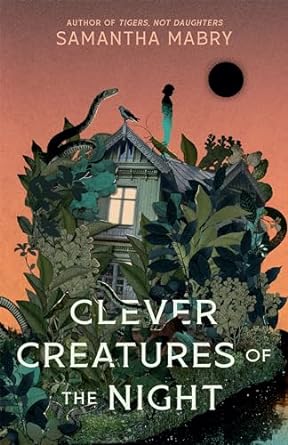
When Case arrives at a run-down, ivy-covered house tucked deep in the West Texas woods, an ashy haze lingers in the air and the sky is tissue-paper pink. Her best friend Drea has been living here with a few classmates Case has never met, and Drea asked her to visit in a letter dated two weeks ago.
But now Drea is nowhere to be found.
Drea’s roommates can’t—or won’t—answer questions, leaving Case to search alone. She finds bits of Drea’s journal hidden in the tiles of the bathroom wall, in a beat-up cooler by the muddy river, wedged into the frame of her closet door. As Case pieces together Drea’s life in this strange house, the roommates’ behavior puts her increasingly on edge—and she’s not the only one. The animals nearby are lashing out, attacking each other, threatening the humans.
Something bad happened in this house. Something that must be connected to Drea’s disappearance. And if she gets too close to the truth, Case just might be next.
GRADE: C
REVIEW:
I was truly anticipating reading this book because I absolutely adored Tigers, Not Daughters so much. Unfortunately, my reading experience with Clever Creatures of the Night wasn’t that good. It did start off promising – Case goes to visit her friend Drea only to find out that she’s not there. Did she go missing? Are her roommates responsible for her absence? The issue is that the book takes place during the course of one day. There’s only so much Case can do to find her friend in a place where they’re located in the middle of nowhere and there’s no cell signal. Initially, the mystery of what happened to her friend had me really invested. The problem is that this book has so much promise and truly could’ve been something amazing, instead we get a really underwhelming reason as to why Drea’s not around. The writing is beautiful, but for a book that was very short (around two hundred pages) it felt impossibly long.
The supporting characters needed to be more interesting to keep this book going for how long it did. Instead, they were rather dull and one-dimensional. This was such a letdown after reading Tigers, Not Daughters.
This book is good for readers who like slow-burn mysteries and literary thrillers. I wouldn’t even call this horror.
*Thank you so much to NetGalley and Algonquin Young Readers for the digital copy of this book in exchange for an honest review!
DID YOU ENJOY WHAT YOU JUST READ? IF YES, THEN SUBSCRIBE TO THE BLOG, GIVE THE POST A LIKE, OR LEAVE A COMMENT! NEW POSTS ARE UP EVERY TUESDAY & THURSDAY!
This is the meal I’ve been waiting for, and I’m going to savor it.
PLOT SUMMARY:
Ji-won’s life tumbles into disarray in the wake of her appa’s extramarital affair and subsequent departure. Her mother, distraught. Her younger sister, hurt and confused. Her college freshman grades, failing. Her dreams, horrifying… yet enticing.In them, Ji-won walks through bloody rooms full of eyes. Succulent blue eyes. Salivatingly blue eyes. Eyes the same shape and shade as George’s, who is Umma’s obnoxious new boyfriend. George has already overstayed his welcome in her family’s claustrophobic apartment. He brags about his puffed-up consulting job, ogles Asian waitresses while dining out, and acts condescending toward Ji-won and her sister as if he deserves all of Umma’s fawning adoration. No, George doesn’t deserve anything from her family. Ji-won will make sure of that.For no matter how many victims accumulate around her campus or how many people she must deceive and manipulate, Ji-won’s hunger and her rage deserve to be sated.
GRADE: A+
REVIEW:
I devoured this book in two days (probably would’ve read it in one sitting if I didn’t have to do life things like work, eat, and sleep). I love how unhinged this book was. When we meet Ji-Won her father has just left his family to get with another woman, leaving her and her sister to deal with her grieving mother on their own. Ji-Won is also beginning her first year of college and once her mother starts dating a new man George (who she’s certain has an Asian girl fetish) things begin to to truly escalate. First of all, Ji-Won becomes obsessed with George’s eyes and her nightmares explore that obsession. As Ji-Won’s life begins to derail (she’s failing in college – her relationship with her sister and mother is strenuous and trying to fit in at college is difficult) – the book takes a very dark and twisted turn that I highly enjoyed.
I don’t want to say much about the plot because I wish you to experience this book the way I did – totally diving into it blind and staying for the wild ride. This is one excellent horror thriller with one of the best endings I’ve ever read (and I’m very picky when it comes to endings – I’m rarely satisfied by them).
Read this if you’re a fan of unhinged female characters ala Maeve Fly or Bunny.
*Thank you so much to NetGalley and Erewhon Books for the digital copy of this book in exchange for an honest review!
DID YOU ENJOY WHAT YOU JUST READ? IF YES, THEN SUBSCRIBE TO THE BLOG, GIVE THE POST A LIKE, OR LEAVE A COMMENT! NEW POSTS ARE UP EVERY TUESDAY & THURSDAY!
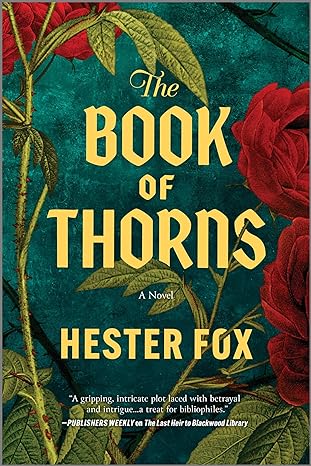
BEGONIA: a favor repaid, a warning foretold, a promise delivered in darkness.
Sussex, England, February 1815
I can feel Betsy watching me from the doorway.
She hovers like a bee, rehearsing some small speech in whispers. I pretend not to notice her fidgeting and instead focus on the vase of narcissi before me, the weight of my pencil in my hand. Betsy clears her throat, twice, but I am already arcing out the path of the dainty stems and unfurling petals. There is something calming about reducing the flowers to splashes of grays and blacks, finding beauty in the absence of light.
Betsy lets out a throaty cough. “You might as well come in and be done with it,” I tell her without looking up.
“Yes, miss.” She drops a curtsy, her gray ringlets bouncing under her cap. “It’s just that there’s a man in the drawing room with your uncle, miss, and your uncle asks that you join them.”
I continue sketching, watching the frilly petals take shape on my paper. “Please make my excuses,” I tell her. Uncle likes to bring me out when he has business meetings, the same way he sets out the good claret and crystal goblets with the old family crest. With no wife and no children of his own, I make a pretty addition and bring a touch of softness to his otherwise hard demeanor. “There’s a cake in the kitchen and cold ham as well that you might bring them,” I add as an afterthought.
But Betsy doesn’t leave. She wrings her hands and tuts about like a fussing hen. “No, miss. He’s for you.”
I carefully set aside my pencil. This is what I was afraid of. Closing my eyes, I rub my temples, wishing that it was anything else besides this. My time is not even my own, and I hate being pulled out of my work just to oblige Uncle.
“Very well.” I dismiss Betsy and take a moment in front of the mirror in the hall. Uncle’s friends and associates are mostly stodgy old men, but there is always the possibility that it could be someone young, someone exciting. I pinch roses into my cheeks and tease out a few of my yellow curls. If have control of nothing else in this house, I at least can take pride in my appearance.
I take a deep breath and let myself into the drawing room. “Betsy said you wanted me, sir?”
Uncle stands and tugs at his waistcoat. “Cornelia, come in.”
Though not more than fifty years in age, his poor temper and taste for rich food and drink has left my uncle with a ruddy complexion and portly figure. He is not a healthy man, and his jowls are loose, his complexion jaundiced. What he lacks in polished comportment, though, he makes up in his wardrobe, opting for elaborate cravats and showy brocaded waistcoats that never quite fit him but speak of money and an account in good standing at the tailor. Uncle waves me over, impatient. “Come meet Mr. Reeves.”
Obedient, I come and position myself near the window where I know the soft gray light is especially flattering to my fair complexion. The man unfolds himself from his chair. He is tall and spare, his black frockcoat well-cut and his boots shined. He looks familiar, perhaps from church or one of Uncle’s interminable business dinners. I suppose some might consider him handsome, but there is an intensity in his dark eyes that is more predatory than charming. “Miss Cornelia,” he says, taking my hand and bowing over it, “a pleasure.”
“Mr. Reeves.” I withdraw my hand. “I hope my uncle is not boring you with land yields and livestock accounts.”
He shares a confidential look with my uncle. “On the contrary. Our conversation has been on the most enjoyable of topics.”
“He’s here to see you,” Uncle says, plowing straight into the heart of the matter as he always does. “Mr. Reeves comes as a suitor.”
Uncle makes the outcome of this meeting perfectly clear in the sharp downturn of his lips. His patience with the matter of my marital status is wearing thin.
Well, that makes two of us.
I don’t fancy marriage, but I certainly don’t fancy spending one more day than I have to under my uncle’s roof, either. My dreams of publishing a book remain foggy and out of reach, and the money from my illustrations published in a French newspaper under a nom de plume pays only a pittance. It is not enough to live on, and certainly not enough for a young woman who enjoys fine things and an easy life. A husband would solve at least two of my problems, but it would create a host more.
“I’ll leave you two alone to talk,” Uncle says, cutting me with a look that says there will be hell to pay if I emerge from this room without securing an engagement.
The air usually lightens, the room sighing a breath of relief, when Uncle leaves, but Mr. Reeves’s presence prickles me under my stays, makes me fidgety.
Betsy is posted outside the door, her needles softly clacking as she knits some horrid bonnet or muffler. Outside, a fine mist has rolled over the gentle Sussex hills. A smile spreads over Mr. Reeves’s sharp features. “Your uncle says you’re a spirited filly. That you need a strong hand to break you.”
Ah, so it is to go like that, then. I pour a cup of tea, ignoring my guest’s outstretched hand, instead lifting the cup to my lips. “That does sound like the sort of nonsense my uncle would say.”
Mr. Reeves regards me, his dark eyes calculating. “Your uncle was right, but I think he also underestimated you. I can see you possess some wits, so I’ll not mince words.” He crosses his long legs. “I am looking for a wife, and your uncle is looking to expand his landholdings to the south of the county.”
If the man who has sat down across from me was meek, pliable, then perhaps I would have more patience in hearing his suit; I don’t need someone who will get underfoot or try to handle me. Even some doddering old lord who might die quickly and leave me a widow would be acceptable. But Mr. Reeves is irritatingly young and looks to be in good health.
“My uncle was mistaken. I am not in need of a husband.” I offer him a cold smile, my mind already back on my flowers, my fingers itching to hold my pencil. The light has shifted with the gathering clouds, and I will have to rework my shading.
He pours himself a cup of tea. “Come, wouldn’t you like to have a fine house? Be mistress of a whole host of servants? I can see that you enjoy some degree of freedom, and I can give you that. You will have a mare and a generous allowance.”
“I should think it would be terribly lowering to have to lure a wife into one’s home with promises of horses and gowns. Shouldn’t you rather wish her to come of her own volition because she holds you in some esteem?”
“You are naive if you think that marriage is anything other than a business transaction. You are a young woman of beauty and some small means but a drain on your guardian. I am an enterprising man, with successful business dealings and a good bloodline looking for a wife who will elevate his status and ornament his home. I hold a commission in the army and anticipate traveling to the Continent shortly. It is a good deal for you, and you would be hard-pressed to find a better one, especially with your lack of polish and manners.”
“It’s a little late to be going over to the Continent, isn’t it? I believe we quite vanquished Napoleon.”
Irritation animates his dark eyes before he glances away, taking what I suspect is an intentionally long sip of his tea.
I study him over the rim of my cup, imagining the way I would draw the sharp angle of his chin, the aquiline nose, before finally placing where I’ve seen him. “You were married before, were you not?”
There is an almost imperceptible stiffening of his body. “Yes, I make no secret of the fact that I am a widower,” he says shortly.
“And how, exactly, did your first wife die?” The roses in the vase on the table beside me are vibrating, warning me. I pretend not to notice, pretend that I am a normal young woman who does not receive messages from flowers.
His lips thin. “An unfortunate fall.”
“Mm. She did not bear you any children, did she?”
“Barren.” He tugs at his cravat, irritated. “You would do well not to let your ear wander to every housemaid that has a piece of gossip to peddle,” he says coldly.
“In any case, I am not interested.” I move to put my cup down, but a hand closes around my wrist, hard. I look up to find that he has leaned in close, his breath hot on my neck.
“Perhaps you’ve also heard that I have certain…proclivities.”
The roses in the vase strain toward me, singing, setting my teeth on edge. My fingers begin to tremble, but I do not let him see it. “Why would you tell me that?”
“Because I think, dear girl, that you are under the impression that I would use you poorly.” He leans back, but only slightly, the air around him still charged and menacing. “I can be a very hard man when I’m tested, but I can take my pleasures elsewhere, so long as my wife is obedient.”
His gaze is sharp, his grip painful, and I realize that here is a dangerous man, one who is not just a brute but also clever. He cannot be fobbed off with witty barbs or batting eyelashes.
“This conversation bores me,” I tell him, standing. “I will not be your wife. I’m sorry that you wasted your time in coming here.”
But he makes no move to stand, his cool gaze sliding over me in a way that leaves me feeling horribly exposed. “I’ve seen you often, Cornelia. In church, sitting so demurely with your hands folded in your lap. You may think to have everyone else fooled, but I see the spirit in your eyes. A woman like you can never be satisfied with the life of a spinster, put on a shelf here in Sussex. I can offer you fine things, take you to exciting places abroad with me.”
And I’ve seen you, I think. I’ve seen how cruelly you used your first wife, the bruises on her pretty face. The way she faded little by little every week in church, until she was just a ghost in a dress, her final service that of her funeral. That will not be me.
“Surely there are other young ladies that would be flattered by your attentions,” I tell him.
“None so beautiful, none that I would take so much pleasure in breaking. The more you deny me, the more determined I am. Ask your uncle. I am a man who gets what he wants, one way or another.”
All the promise of gold or Continental trips would not be enough to tempt any marriage-minded mama to let her daughter enter into an arrangement with a man like Mr. Reeves. But of course, I have no mama to arrange such matters for me, to keep me safe.
“Then, perhaps it was time you lose for a change. Do you not find it dull to always get what you expect?”
He stands, drawing close and jabbing a finger into my bodice. It takes some great force of will to stand my ground and not let him see my fear. “You may think yourself clever, but this visit was just a courtesy. Your uncle and I have all but drawn up the contract already.”
He storms out, and the room grows quiet in the wake of the front door slamming. Betsy startles from her seat where she had fallen to dozing. I close my eyes, take a breath, wait until my heartbeat grows even again. Then I return to my waiting drawing in the parlor.
If I work quickly, I can still finish it and have it ready for tomorrow’s post. But for now, there is no waiting publisher, no silly French pseudonym; it is just the light and the shadows and me, a silent dance as I commit them to paper. Mr. Reeves and his odious proposal quickly fade away from my mind.
But then a raised voice shatters the silence, breaking my concentration, and there is the thundering velocity of Uncle coming down the hall.
DID YOU ENJOY WHAT YOU JUST READ? IF YES, THEN SUBSCRIBE TO THE BLOG, GIVE THE POST A LIKE, OR LEAVE A COMMENT! NEW POSTS ARE UP EVERY TUESDAY & THURSDAY!
The creatures peered at her with beady eyes, lips curling to bare tiny teeth in an expression more suited to a rabid dog.
PLOT SUMMARY:
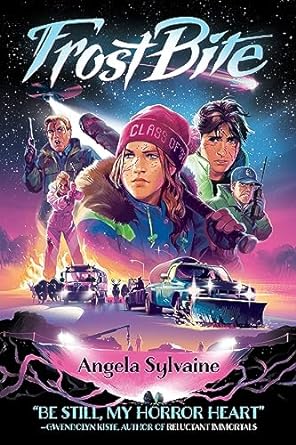
Remember the ’90s? Well…the town of Demise, North Dakota doesn’t, and they’re living in the year 1997. That’s because an alien worm hitched a ride on a comet, crash landed in the town’s trailer park, and is now infecting animals with a memory-loss-inducing bite–and right before Christmas! Now it’s up to nineteen-year-old Realene and her best friend Nate to stop the spread and defeat the worms before the entire town loses its mind. The only things standing in the way are their troubled pasts, a doomsday cult, and an army of infected prairie dogs.
GRADE: A
REVIEW:
I’ve always been a fan of Angela’s short stories as she’s appeared in two of my Women in Horror Anthologies (My American Nightmare with The Ballad of Sorrow and Lila and Strange Girls with Night Terrors), so when I had a chance to read her debut novel I was thrilled. Frost Bite is a fun, entertaining read that follows protagonist Realene as an alien parasite invades her small town ala The Faculty.
There were many fun action-packed scenes that I thoroughly enjoyed and I really loved the emotional highs and lows I got from reading this novel. Personally, I thought the crazed prairie dogs to be quite amusing (I’ve never seen them before so I totally had to Google them and they’re the cutest animals ever).
This very much reads like a 90s horror book but with a nostalgic twist. Anyone who has lived during the 90s will get a kick out of all the references, not to mention be reminded of some things we may have forgotten about. It was really bittersweet in that respect. I also loved that this book reminded me of the 80s film The Curse (also dealing with a meteor falling in a small town with devastating consequences for everyone who lived there).
I recommend this book to anyone who likes horror with a sci-fi alien with a dash of cults and loves snowy, cold settings.
*Thank you so much to Nightworms & the author for the digital copy of this book in exchange for an honest review!
Short Q & A with Author
Was there a specific reason why you chose to set your book in the 90’s?
I grew up in the ’80s and ‘90s, and I was the same age as the main character around the late ‘90s, so it was the most obvious choice since I had specific memories of that time. Maybe I’m lazy? LOL. It was also just really fun to set it then, because it allowed me to reconnect with a lot of the pop culture I experienced and loved. I had a fantastic time researching events, movies, music, and food and figuring out how to thread references throughout the book to give a strong sense of time and place.
Your book has been really popular. Did you think it would’ve resonated with so many people and how does it feel?
I certainly hoped it would be popular but didn’t necessarily expect it. It felt really incredible to know this story and these characters resonated with people, especially since it’s kind of a silly premise. Ultimately, I wanted people to have fun reading it, but I’m really happy people have connected with the heart behind the story, too (I often get messages about Realene’s relationship with her mom, who had dementia, and how meaningful that was to readers).
What can we expect from the sequel?
As those who read book 1 know, there is a bit of a cliff hanger:) Alien worms aren’t so easy to kill, and Realene and Nate will have to step up again, though they are now battling the grief and trauma from the events in book 1. The book takes place during Spring Break, but not in Florida or Cancun. We’ll be venturing up to beautiful Canada!
The meteor in the novel is very reminiscent of the one from the movie The Curse (1987). Have you ever watched that movie?
I do remember that movie, but it has been so long since I have seen it! This is the first time that has been mentioned as a comp, but it is so spot on. I am totally going to rewatch it!
What are you currently working on?
I just finished my debut short story collection, The Dead Spot: Stories of Lost Girls, which will be released May 21st. It’s a collection on seventeen stories of girls and women lost to obsession, manipulation, and the darkness in the world around them, and I’m very proud of it. It’s got a much darker tone than Frost Bite but still has a little sweetness. I also just finished expanding my novella Chopping Spree, which will be rereleased in September. It’s a mall slasher with a cult-y twist that is currently out of print, and this new version is an extended cut (LOL) with a new cover that I can’t wait to show off!
DID YOU ENJOY WHAT YOU JUST READ? IF YES, THEN SUBSCRIBE TO THE BLOG, GIVE THE POST A LIKE, OR LEAVE A COMMENT! NEW POSTS ARE UP EVERY TUESDAY & THURSDAY!
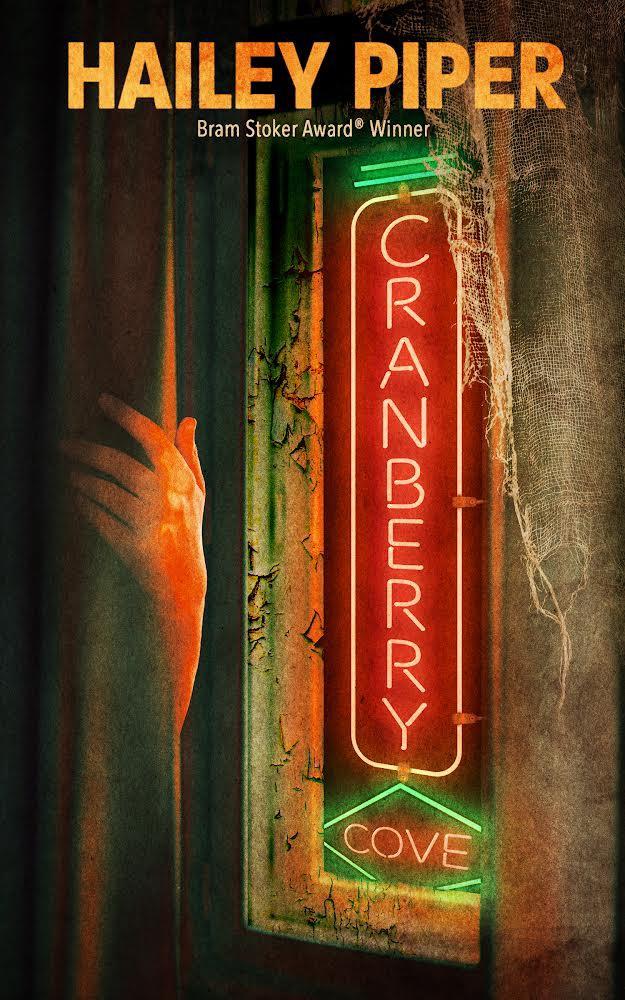
A hotel haunted by an unseen presence, and even the insects somehow knew to keep away.
PLOT SUMMARY:
What’s been happening at Cranberry Cove? It’s unspeakable. It’s unspoken.
Emberly Hale is about to take a dark journey inside the derelict hotel—and inside her own past—to find out the horrible truth.
GRADE: A-
REVIEW:
This novella started off in complete medias res, meaning that for the first few pages, it felt like we the readers were dropped off in the middle of something and had to figure out what exactly was going on. I really loved Emberly a lot and Piper has this way of taking rehashed tropes and injecting new life into them with a unique spin. I always love haunted hotels so I was thrilled to read this. The way Piper described the hauntings in this novella was chilling especially when you find out what exactly is doing the haunting. The novella was filled with tension and you couldn’t help but be on the edge of your seat as you tried to figure out the mystery of Cranberry Cove along with Emberly. I don’t know if Piper will bring Emberly back for a sequel (but I totally feel like this novella deserves one!) because there are so many more things one could explore.
I recommend this book for those who love ghosts and hauntings but are told in a new and fresh way.
*Thank you so much to Nightworms & the author for the digital copy of this book in exchange for an honest review!
DID YOU ENJOY WHAT YOU JUST READ? IF YES, THEN SUBSCRIBE TO THE BLOG, GIVE THE POST A LIKE, OR LEAVE A COMMENT! NEW POSTS ARE UP EVERY TUESDAY & THURSDAY!
Two years ago, a small percentage of population underwent a transformation known as the Hollowing. Those affected were only able to survive by consuming human flesh. The people who went without quickly became feral, turning on their friends and family. Luckily, scientists were able to create a synthetic version of human meat that would satisfy their hunger. As a result, humanity slowly began to return to normal.
Cut to Zoey, Celeste, Valeria, and Jasmine, four hollow girls living in Southern California. As a last hurrah before graduation they decide to attend a musical festival in the heart of the desert. They have a cooler filled with seltzer, vodka, and Synflesh… and are ready to party.
But on the first night of the festival Val goes feral and ends up killing and eating a boy in one of the bands. As other festival guests start disappearing around them the girls soon discover someone is targeting people like them. And if they can’t figure out how to stop it, and soon, no one at the festival is getting out alive.
GRADE: A-
REVIEW:
This book explored a new take on zombies (or like this author and George A. Romero like to refer to them as ghouls). The group of friends in this novel are all ghouls and survived the ordeal of the Hallowing (when the whole world became infected by the ghoul disease) until scientists were able to figure out how to get ghouls back to being human if they were provided with human flesh (so the ghouls in this book devour a government approved SynFlesh a synthetic spin on human flesh). When this group of friends decides to go to a music fest in the Mojave Desert much like Coachella, they find themselves having to deal with some ghouls having gone rogue and having a buffet of humans at this overpopulated music festival. This was a fun book and I liked the Sapphic undertones, the gory horror scenes, and the friendship group. If you’re looking for a YA book with a new twist on the zombie virus, then you’ll find this one fitting!
*Thank you so much to NetGalley and Sourcebooks Fire for the digital copy of this book in exchange for an honest review!
DID YOU ENJOY WHAT YOU JUST READ? IF YES, THEN SUBSCRIBE TO THE BLOG, GIVE THE POST A LIKE, OR LEAVE A COMMENT! NEW POSTS ARE UP EVERY TUESDAY & THURSDAY!
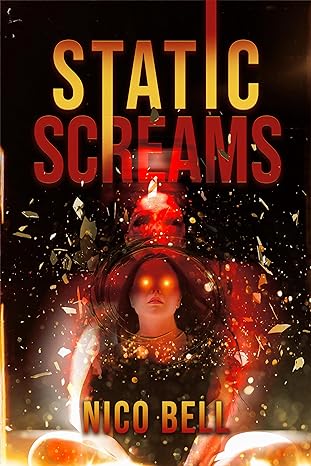
Carmen Franco’s untethered mind twists reality into a nightmare filled with relentless hallucinations.
Her greatest desire is a peaceful life, but despite countless doctors and swallowing a pharmacy’s worth of pills, she can’t escape her disturbing delusions brought forth from a past tragedy.
Enter Dr. Barbara MacDonald, a brilliant psychologist proposing an innovative and experimental treatment program. Barbara ignites a flicker of hope, but Carmen quickly realizes the doctor’s motives aren’t exactly pure. Carmen holds the key to the one thing Barbara covets most in the world, and the determined psychologist intends to obtain it by any means necessary.
Now, Carmen races against the clock to save herself as madness and deception converge. Will she unravel Barbara’s menacing motives before time runs out or will Carmen fall prey to the dark abyss pulling her in?
GRADE: A
REVIEW:
I love it when horror books can blend sci-fi elements so seamlessly. I often get turned off by plain sci-fi because sometimes it gets too technical, but I love it when it’s fused with paranormal elements and this was done so masterfully. Carmen has scary hallucinations and the plot supercharges the moment Dr. MacDonald enters the scene. This novella was reminiscent of Stephen King’s Carrie and Firestarter in some ways, and I really liked that a lot. If you enjoy grief horror, this book will be right up your alley. I don’t want to talk too much about the plot because I don’t want to inadvertently spoil the fun for a reader. But I totally recommend this book if you’re a fan of twisty endings and love a superb mashup of horror and sci-fi with a female-driven cast. Bell always manages to infuse a new slant on familiar tropes and upends them in very distinct and remarkable ways.
*Thank you so much to the author for the physical copy of this book in exchange for an honest review!
DID YOU ENJOY WHAT YOU JUST READ? IF YES, THEN SUBSCRIBE TO THE BLOG, GIVE THE POST A LIKE, OR LEAVE A COMMENT! NEW POSTS ARE UP EVERY TUESDAY & THURSDAY!
The Babadook meets The Blair Witch Project in this chilling contemporary horror novel about confronting trauma. When fake spiritualist Brigit returns home to investigate the disappearance of two teenagers, the case eerily echoes her own sister’s death sixteen years earlier.
This chilling tale of siblings, the emotional toll of the places you once called home, and the necessity of confronting and moving beyond past trauma brings together the psychological horror of The Babadook with the found footage and supernatural eeriness of The Blair Witch Project.
Brigit Weylan’s older sister, Emma, is dead. Sixteen years ago, Emma walked into the woods in their small hometown of Ellis Creek and slit her wrists. She was troubled, people said—moody and erratic in the weeks leading up to her death, convinced that there was a monster in Ellis Creek, and had even attempted to burn down the copse of trees where she later took her life. Marked by the tragedy, Brigit left and never once looked back. Now, Brigit and her cameraman Ian travel around the country, investigating paranormal activity (and faking the results), posting their escapades on YouTube in the hopes that a network will pick up their show. The last thing she expects is a call from an Ellis Creek area code with a job offer—and payout—the two cannot refuse.
When Brigit and Ian arrive in Ellis Creek, they’re thrust in the middle of an investigation: two teenagers are missing, and the trail is growing colder with each passing day. It’s immediately apparent that Brigit and Ian are out of their depth; their talents lie in faking hauntings, not locating lost kids. Except for the fact that, in the weeks leading up to their disappearance, the teens had been dreaming about Emma—Emma in the woods where she died, ringed with trees and waiting for them. As Brigit and Ian are drawn further into the investigation, convinced that this could be the big case to make their show go viral, the parallels to Emma’s death become undeniable. But Brigit is worried she’s gone too far this time, and that the weight of being back in Ellis Creek, overwhelmed by memories of Emma, will break her…if it hasn’t already. Because Brigit can’t explain what’s happening to her: trees appearing in her bedroom in the middle of the night, something with a very familiar laugh watching her out in the darkness, and Emma’s voice on her phone, reminding Brigit to finish what they started.
More and more, it looks like Emma was right: there is a monster in Ellis Creek, and it’s waited a long time for Brigit Weylan to come home.
DID YOU ENJOY WHAT YOU JUST READ? IF YES, THEN SUBSCRIBE TO THE BLOG, GIVE THE POST A LIKE, OR LEAVE A COMMENT! NEW POSTS ARE UP EVERY TUESDAY & THURSDAY!
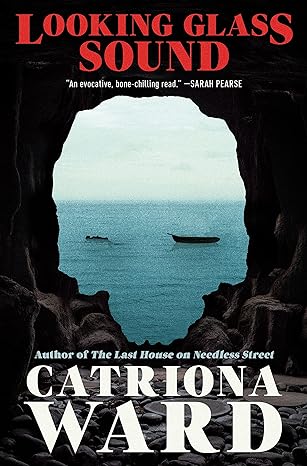
The human heart is deep and dark with many chambers. Things hide down there.
PLOT SUMMARY:
In a cottage overlooking the windswept Maine coast, Wilder Harlow has begun the last book he will ever write.
It is the story about the sun-drenched summer days of his youth in Whistler Bay, and the blood-stained path of the killer that stalked his small vacation town. About the terrible secret he and his companions, Nat and Harper, discovered entombed in the coves off the bay. And how the pact they swore that day echoed down the decades, forever shaping their lives.
But the more Wilder writes, the less he trusts himself and his memory. He starts to see things that can’t be real – notes hidden in the cabin, from an old friend now dead; a woman with dark hair drowning in the icy waters below, calling for help; entire chapters he doesn’t recall typing, appearing overnight. Who, or what, is haunting Wilder?
No longer able to trust his own eyes, Wilder begins to fear that this will not only be his last book, but the last thing he ever does.
GRADE: A
REVIEW:
This novel is absolutely twisty and I love it! I don’t want to delve too much into the plot because I don’t want to spoil the fun for anyone else. But the novel begins with Wilder, who goes to spend a summer in his dead uncle’s home with his parents and there he meets two other teens his age, Harper and Nathaniel. They become instant friends and vow to see each other every summer thereafter. But their lives become upended when a man known as “The Dagger Man” is finally discovered by the police, in ways that the group of friends never thought possible.
I’ve read previous Ward novels and I’ve loved them all. I rushed through this novel in two days, unable to put it down – I had to know what was going on! If you love coming of age, mysteries, and twists upon twists, then this novel is for you!
*Thank you so much to NetGalley and Tor Nightfire for the digital copy of this book in exchange for an honest review!
DID YOU ENJOY WHAT YOU JUST READ? IF YES, THEN SUBSCRIBE TO THE BLOG, GIVE THE POST A LIKE, OR LEAVE A COMMENT! NEW POSTS ARE UP EVERY TUESDAY & THURSDAY!
Sunny Lee is on the top of the world. She’s one third of Sweet Cadence, the hottest up-and-coming teen pop group, alongside her new BFFs, Candie and Mina. The three are inseparable as they ride their way to the top of the charts, even as Candie and Sunny fight to resist the growing spark between them. But when a shocking scandal breaks, the group is suddenly torn apart. Then the unthinkable – Mina dies tragically right before Sunny and Candie’s eyes. And Sunny suspects the dark and otherworldly secrets she and Candie were keeping may have had something to do with it . . .
NOW:
For the past two years, Sunny has spent her days longing for her former life and her nights wondering just what caused Mina’s death. So when she discovers that Candie is attending a new K-pop workshop right in her hometown, Sunny has no choice but to follow her there. Candie might be chasing stardom again, but Sunny is only after one thing: answers.
At the workshop, the lines between nightmare and reality start to blur as Sunny is haunted by ghostly visions and her competitors’ bodies turn up bizarrely maimed and mutilated. To survive the twisted carnage, Sunny will have to expose the ugly truth behind the workshop’s spotlights and the sinister forces swirling around Candie. Stitched with cutting commentary on the ugly side of stardom and impossible beauty standards, Linda Cheng’s mind-bending thriller will have readers screaming and swooning for more.
GRADE: A
REVIEW:
Wow! This was one wild ride. The prologue started off with a bang, it was mysterious, devastating and utterly hooked me into the story. I really loved the characters Sunny, Candie, and Mina. So even when it was a little slow, it wasn’t boring. I liked getting to know more about the K-pop music industry and what it takes to become a pop star. The book took some very crazy turns that I wasn’t expecting but that I absolutely loved. This was a mixture of horror and sapphic romance. This was a mixture of so many things: folklore, cults, celebrity worship, and beauty obsession. I couldn’t stop reading because I was so invested in finding out what was happening (so many twists and secrets!). For horror fans, some truly gruesome, unsettling scenes would make for a very twisted horror movie. I really enjoyed reading this book and loved the main character Sunny a lot, even though she wasn’t necessarily always good and sometimes made poor choices, but it’s what made her more human to me.
I recommend this book to those who love sapphic horror novels, and although it is marketed as a YA, I feel like it can be a fun read even for adults.
*Thank you so much to NetGalley and Roaring Book Press for the digital copy of this book in exchange for an honest review!
DID YOU ENJOY WHAT YOU JUST READ? IF YES, THEN SUBSCRIBE TO THE BLOG, GIVE THE POST A LIKE, OR LEAVE A COMMENT! NEW POSTS ARE UP EVERY TUESDAY & THURSDAY!