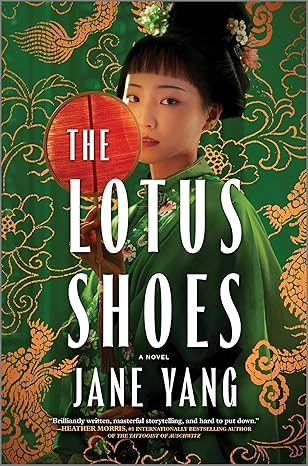
I sat shivering on a low stool in our farmhouse kitchen. The frosty air stung my cheeks and chilled my hands and feet until they hurt. To warm up, I rubbed my arms and legs. Though it never snowed in southern China, this winter in the sixth year of Emperor Guangxu’s reign felt brutally cold. Normally, I would still be curled beneath our patched quilt, but my aa noeng had woken me at first light.
“We are going on an adventure today,” she announced, turning to me with a basin of boiling water. For the first time in months, her thin, pale face broke into a smile. But it wasn’t a proper sparkling smile, like the ones she used to shower on me before my aa de died. This smile looked stiff, and her eyes remained dull.
“I’m taking you to Canton City,” she continued. “Farmer Tang will give us a ride on his cart.” She poured cold water into the basin. I squealed, clapping with delight. I had never been to Canton City, but I had heard all about it from traveling storytellers. Peddlers prowled the streets, selling sugared plums, sweet buns and roasted chestnuts. My belly grumbled at the thought of them, reminding me that I had not eaten since yesterday’s bowl of watery congee. The storytellers also boasted of traveling acrobats, men who swallowed live snakes, and puppet shows.
“Is Little Brother coming too?” I asked.
“He is too young,” she said. “I’ve sent him to our neighbor for the day. This is a mother-and-daughter trip.”
“Why are we going?” “Little girls should not ask questions,” she chided. “Good girls keep quiet, follow rules and obey grown-ups.” Her tone was mild, but her face sagged with misery, frightening me into silence.
She knelt in front of me, cradling my golden lilies in her palms. “Do you remember why I started binding your feet when you were only four?” she asked.
“Because…because…” I shook my head. With a heavy sigh she explained, “Other six-year-old girls in our village wouldn’t start foot-binding until now. Some farming families might even wait until their daughter is seven or eight, if they’re desperate for an extra worker around the house. But that is risky. Do you know why?”
I shook my head again. “The bones might already be too stiff to be shaped. I love you so much that I bound your feet two years ago, as though you’re a little lady, to make sure you get perfect golden lilies so you can be like Consort Yao Niang. Do you remember her story?”
“I do!” Eager to impress her, I merrily recited the bedtime tale she had often told me. “Once upon a time, before the Manchu invaded and when China was cut up into lots of little kingdoms, like a patchwork quilt, there lived an emperor called Li Yu. He loved to see new things. One day he asked his many, many wives to surprise him with a new dance. Everyone tried but no one was good enough except Yao Niang. She wrapped her feet into crescents and danced on her toes!”
“What else?” she quizzed.
I frowned.
She prompted, “The emperor was so impressed that he promoted her to Royal Imperial Consort—”
“Oh!” With a bounce I finished her sentence, “So no other wife could boss Yao Niang around except the empress. All the ladies of the court copied her and soon rich girls across the country started to do the same. Now all re-respectable girls have bound feet. And the most loving mothers make sure their daughters have perfect four-inch golden lilies.”
I expected the rest of my speedy answer would earn praise, especially since I had only stumbled on two characters, but Aa Noeng’s lips trembled. I reached out to hug her, but she shook her head as she straightened her back and smoothed her faded tunic-blouse, ou.
“Even the poorest boy might hope to pass the imperial exams and become a mandarin if he is clever and studious,” she said, “but a girl’s only chance for a better life is through her golden lilies. This is my priceless gift to you. No matter what happens, I want you always to remember how much I love you. You’re my precious pearl. Do you understand?”
“I love you this much too!” I swung my arms behind my back until my palms touched. But she didn’t return my smile.
“Why is it important to have perfect four-inch golden lilies?” she asked.
“To get a good marriage,” I chirped. “Matchmakers and mothers-in-law like tiny feet. Golden lilies are proof of a girl’s goodness.”
“Yes,” she agreed. “Only girls with immense endurance and discipline can get perfect golden lilies. This is what mothersin-law from nice families want for their sons.” She squeezed my hands and asked, “Do you want to marry into a nice family when you grow up?”
“Yes.”
“How do you get four-inch golden lilies?” she asked.
“I must sit very still when you clean my feet and change my bandages.”
“What else?”
“I mustn’t complain when you tighten the bindings.”
“That’s true,” she replied slowly. “But…” After a long pause she said, “You are a big girl now. It’s time you learned to take care of your golden lilies yourself.”
“I’m still little!” I protested, alarmed by her grave tone.
“Watch carefully,” she instructed. She unraveled the binding and eased my left foot into the basin of warm water. She massaged away the dead skin on the sole and between my toes. Next she trimmed my toenails and wrapped my foot in a towel before sprinkling alum onto it.
“Be sure to use a generous amount of alum,” she said. “It wards off sweat and itch.”
She wound a length of clean, dark blue cotton around and around my foot. The pressure increased with each layer until my foot throbbed and my eyes ached with unshed tears. I had to use all my willpower not to groan. She continued to wrap the bindings, much more tightly than usual. I tried to pull my foot away. She gripped it harder. “Stay still,” she ordered.
“Aa Noeng,” I cried. “It hurts too much.”
“Hush,” she said. “One day these golden lilies will bring you a good marriage. You will wear silk and live in a house with tiled floors. Best of all, you will never go hungry again.”
My whimpering faded as she continued to talk about the tasty food that would fill my belly when I become a bride in a wellto-do family. Finally, she eased my foot into my best pair of indigo cotton shoes. She pushed the basin toward me.
“Now you must do the same for your right foot,” she said.
DID YOU ENJOY WHAT YOU JUST READ? IF YES, THEN SUBSCRIBE TO THE BLOG, GIVE THE POST A LIKE, OR LEAVE A COMMENT! NEW POSTS ARE UP EVERY TUESDAY & THURSDAY!
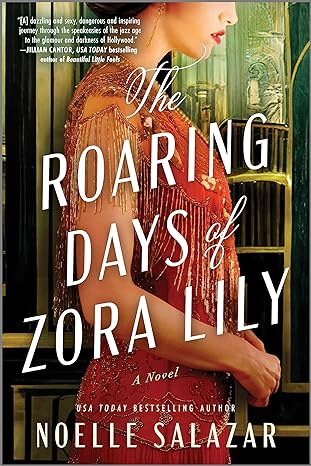
The fluorescent lights blinked on in a domino effect, one after the other, a faint buzzing sound filling the room as I stood squinting in the unnatural light.
I inhaled, taking in my small slice of heaven within the storied walls of the Smithsonian National Museum of American History. The long room with its high ceiling, soothing taupe walls, and wood floors—weathered in spots from years of conservators standing and pacing as they labored over the works of great minds—brought a sense of peace as soon as I stepped inside.
The museum had been my happy place since I was a little girl, when my mother would walk with me from our baby blue–painted row house on Capitol Hill, her slender fingers wrapped around my pudgy ones. We’d wander past sprawling parks, melancholy monuments documenting history, to the austere but magical facade housing wonders my six-year-old eyes could barely comprehend. By the age of eight I knew all the regular exhibits like the back of my hand, and waited anxiously for the monthly newsletter that arrived in our mailbox, telling us what traveling exhibits we could expect next. It was one such exhibit, a gallery of gowns worn by British royalty, that had burrowed itself inside me in such a way that a dream was born.
“I’m going to work here one day,” I’d told my mother, pushing back a strand of dirty-blond hair as I stared up at a jewel-colored gown once worn by Queen Elizabeth the Second.
I was twelve.
I wanted to exist within these walls. It was my church, and I believed in its teachings wholeheartedly. I had drunk the water. Read the great books. And prayed to the gods of knowledge and creativity. I wanted to be part of whatever it took to bring history to life for others. And for the past nine years…that’s exactly what I’d done.
I stared at the scene sprawled out before me.
“Sanctuary,” I whispered, tucking a blond-highlighted strand of hair behind my ear.
Gleaming table after gleaming table sat covered in silk, satin, lace, and velvet. Gowns and dresses and blouses previously only seen on movie screens and in photographs now lay delicately in wait of tending to, their sparkle and sinew in contrast to the stark lights and tepid surroundings. Mannequins, my constant companions, stood at the ready, waiting for their moment.
Thread in every color imaginable, like a rainbow of rotund spool soldiers on a rolling rack, waited to be chosen. Needles in pincushions, strips of bias tape, shimmering appliqués, ribbons, seam rippers, clear drawers filled with buttons and clasps and snaps, and boxes upon boxes of straight pins, their colorful heads a happy bouquet of tiny plastic globes, were scattered across every surface, peeking from where they’d fallen to the f loor, rolled beneath furniture, and stuck—I bent to pull a pink-headed pin from the rug beneath my feet—in a variety of inconvenient places.
The door clicked open behind me and I smiled.
“Good morning, Sylvia,” a familiar voice said.
“Morning, Lu,” I said to the one member of my team who, like me, couldn’t wait to get to work.
Every day, my friend and fellow fashion-obsessed cohort, Lu Huang, and I arrived within minutes of one another, and a full half hour before anyone else. Working as conservators for the museum was a coveted get for us. A dream job that every morning caused us to rush from our respective homes, grabbing an insufficient breakfast on our way out the door, and wondering hours later why we were so hungry. We lost track of time constantly, surviving on coffee and bags of chips from the vending machine, and leaving friends and family waiting on us as we turned up late to holiday parties, dinners, and events we’d implored others to attend but couldn’t possibly get to on time, and having forgotten to blend the concealer we’d hurriedly dotted on in the train, with paint under our nails and bits of thread or glue on our jacket cuffs.
In Lu I’d found not only the perfect work companion, but a kindred spirit. Over the nine years we’d worked together, we’d enjoyed laughing over our shared love of no-nonsense ponytails, and waxing poetic about old films and vintage fashion. We sat in her living room or mine, rewatching the movies that had shaped us and sharing stories of our schoolgirl walls plastered with images of iconic women of the silver screen, while our schoolmates favored posters of half-clothed men. So, when the idea for the newest exhibit started floating around our superiors’ offices upstairs, we’d spent many a night poring over which films we’d choose if asked, and then deliberated, scrapped, and chose again until we had the perfect array.
Out of curiosity, we began to inquire with movie studios about the costumes we’d be interested in displaying, running into new obstacles with each call we made. Several times we chose a beloved film only to find half the costumes had been lost in a fire, were part of a decades-long legal battle, or were just plain lost—a travesty over which we consoled ourselves with a huge plate of nachos and a pitcher of margaritas. Eventually, the decisions about which movies to include boiled down to three simple things: Where were the costumes we’d need? Would they be available to us for the time required? And what kind of shape were they in?
Once we’d gotten the green light that the exhibit was on, we finalized our list, made the calls, gathered confirmations, and began the design for the wing the costumes would be shown in. And then we waited, barely able to contain ourselves as one by one the garments that would be featured in The Hollywood Glamour Exhibition arrived.
We chose two movies per decade, going back one hundred years to the 1920s. Every piece that had been worn by the female lead was sent to us from studios, museums, or estates. Once in our possession, my job as costume curator, along with my staff of seven, was to remove each gown or outfit from its protective garment bags or boxes, and go over it with a fine-tooth comb, looking for tears, stains, missing buttons, and the like. We’d been working for months. Some of the more intricate gowns needed extensive rebeading or sequin replacement, and many of the older pieces needing patching inside to hold the outside fabric together. In two cases we’d had to sew exact replicas of the linings, and then carefully fit them inside the original, giving it something to cling to, extending its life.
A pantsuit from the forties had lost an outside pocket and matching the fabric had been hell. The brim of an iconic straw hat that belonged to another outfit had been scorched by a cigarette and needed to be patched. Each garment presented its own set of unique problems, and we were giddy as we worked to solve each puzzle.
With our intention for each item to be viewed from all sides, it was crucial they looked as flawless as possible. Thankfully, my team were experts in their field, and excited at the opportunity to handle costumes worn by some of the most famous women in film history.
“Can’t believe we’re down to the final film,” Lu said, running a finger over a strip of fringe hanging from a black evening gown. “I think this batch is my favorite.”
I nodded, taking in the room of costumes from the 1928 film The Star. Each piece had been worn by the iconic Greta Garbo and was the epitome of elegance and class. And a notable diversion from the designer’s usual style.
“It’s so odd Cleménte changed her MO for this one film,” I said, tilting my head as I took in the distinct wide neckline featured in each of the eight pieces. Even a blouse and jacket had been designed to show off the actress’s collarbones. The pieces were alluring, but Cleménte had always been known for a more modest style.
Michele Cleménte had been a well-known designer in the ’20s and ’30s, her signature style demure, with higher necklines and longer hems. But for this movie, she’d completely diverged.
“It is strange,” Lu said, frowning. “The studio must’ve wanted something exact.”
“Then why hire her?” I asked. “Not that she didn’t do a lovely job. The clothing is exquisite. I’d wear them all now.”
“And look fab doing it.”
I felt myself blush with pleasure at the compliment. Being tall and willowy had its advantages. Unfortunately for me, I had neither the opportunity nor the bank account to wear clothes as fine as the ones before us.
“Thanks, Lu,” I said, bending to peer closer at the large white beaded star on the white satin gown that was to be the centerpiece for the entire show.
Aside from the star, the rest of the fabric had been left unadorned, letting the beaded element shine before one’s eye went to the skirt, which fell in soft overlapping layers to the floor. It was a stunning piece of art. But a confusing one. Because it
had no resemblance to any piece ever sewn before by Cleménte. At least not any piece I’d seen in my years of studying the different famous designers. It didn’t have her specific way of hand sewing or her distinctive technique of tying off a knot, or even her tendency toward geometric shapes. But it was the neckline that really threw me off. Cleménte had preferred to leave a lot to the imagination. It was her calling card during a time when everyone else was showing more skin. And yet for these, she’d completely gone off-script.
The rest of the crew arrived at nine on the dot and the quiet of the room rose to a dull roar as individual desk lights were turned on, loupes donned to scrutinize the tiniest details, and we all began to sew, glue, and chat our way through the day.
“Syl?”
I glanced up and winced as my back protested from having been bent over a table for the past hour. Lu stood, her coat over her arm, by the door. Everyone else had vanished.
“What time is it?” I asked.
“Nearly seven.”
“Shit. How does that always happen?” I pulled the loupes from my head.
“You happen to be in love with a dress,” Lu said. “That’s how.”
“Story of my life.”
“Explains so much.”
“Does it?”
“I mean, it definitely explains why you haven’t had a date with a real live human in a while. Only—” She gestured to the mannequin beside me.
We laughed. She wasn’t wrong.
Lu was the only person who truly understood me. The only person besides my sister who I’d ever allowed to see inside my guest room closet where dozens of scavenged vintage dresses, trousers, jackets, and hats hung, waiting to be delicately cared for like the ones I lovingly handled at work.
“You gonna stay?” Lu asked, watching me as I looked back at the dress spread out before me.
I rubbed my eyes and stared at the tiny white beads I’d been replacing. We’d named the dress The Diaphanous Star, and I’d been carefully sewing on one bead at a time for the past two hours. It was a delicate task as the fabric they clung to was nearly one hundred years old. I had to work slowly and thoughtfully to keep from shredding it.
“Yeah,” I said, rotating my head. “I want to get this star done. How’d you do today?”
I glanced over at the black evening gown she was working on.
“I’m close,” she said. “You can barely see the snag in the back now, and I should be able to replace the bit of fringe that’s missing tomorrow.”
“Perfect,” I said, reaching over to wake my laptop and clicking on the calendar. “We are ahead of schedule, which bodes well should we have any catastrophes.”
Lu knocked a small wooden box holding scissors inside it.
“Don’t jinx us,” she said and then waved. “See you B and E.”
“See you B and E,” I said.
B and E. Bright and early. We’d made it up one day after the youngest woman in our group rattled off a bunch of acronyms as if the rest of us should know what they mean. We used it constantly. She didn’t think it was amusing. This of course made it that much funnier.
I pulled my loupes back down and resumed placing the beads that formed the shimmering star. Thirty minutes later I sat up, set the magnifying glasses on the table, and arched my back in a well-deserved stretch.
“Okay, you,” I said to the dress. “Time to get you on a mannequin.”
Sliding my arms beneath the gown, I lifted it carefully and carried it to the far end of the table where a mannequin with roughly Greta Garbo’s 1927 torso measurements stood in wait,
minus its arms which would be attached once I got the dress on it.
Unfortunately, the wide neckline made it hard to secure.
“You’re pretty,” I muttered, trying to keep the dress from slipping to the floor while I reached for one of the arms. “But a pain in my ass.”
I clicked an arm into place, moving the capped sleeve over the seam where the appendage attached to the shoulder, and making sure the hand was resting just right on the mannequin’s hip. Satisfied, I reached for the other arm and did the same on the other side.
“Not bad, headless Garbo,” I said, straightening the gown and smiling at the beaded star glimmering under the lights.
I grabbed my notepad and made my way around the dress, writing down problems that still needed to be addressed. Loose threads, the unraveling second tier of the skirt, and a bit of fabric that looked like it had rubbed against something and was scuffed. There was a stain on the hem in back, and one of the capped sleeves sagged, leading me to investigate and find a spot inside where the elastic was stretched out of shape.
My eyes moved along every inch of fabric, bead, and thread, my fingers scribbling notes as I took in what was easier to see with the dress hanging rather than sprawled on a tabletop. As I scrutinized the neckline in back, I noticed the tag was exposed and reached up to tuck it in. But as I pulled the material back, the tag fluttered to the floor.
With a sigh, I bent to pick it up. I could leave the fix until morning, but as I had nothing but an empty apartment waiting for me, I began the task of detaching the arms of the mannequin and sliding the dress back off and onto the table.
“Always something with you ladies,” I said, grabbing a needle and thread. “Can’t complain, I guess. Hottest date I’ve had in a while.”
But as I turned my attention to the spot the tag had fallen
from, I frowned and pulled the dress closer, peering at a small, elegant stitch no longer than the length of the tag that had covered it.
“Is that…”
I grabbed my loupes and looked again, the stitching now magnified and leaving zero doubt that beneath the tag, in white thread and a beautiful freehand stitch, was a name—and it wasn’t Cleménte’s.
Sitting back, I removed my glasses and stared at the gorgeous dress with its beautiful wide neckline and capped sleeves, the beaded star, the tiered skirt that was so unlike Cleménte in style, and wondered aloud to the empty room—
DID YOU ENJOY WHAT YOU JUST READ? IF YES, THEN SUBSCRIBE TO THE BLOG, GIVE THE POST A LIKE, OR LEAVE A COMMENT! NEW POSTS ARE UP EVERY TUESDAY & THURSDAY!
“Maple Sugar Inn, how may I help you?” Hattie answered the phone with a smile on her face because she’d discovered that it was impossible to sound defeated, moody or close to tears when you were smiling, and currently she was all those things.
“I’ve been planning a trip to Vermont in winter for years and then I spotted pictures of your inn on social media,” a woman gushed, “and it looks so cozy and welcoming. The type of place you can’t help but relax.”
It’s an illusion, Hattie thought. There was no relaxation to be had here; not for her, at any rate. Her head throbbed and her eyes pricked following another night without sleep. The head housekeeper was threatening to walk out and the executive chef had been late two nights running and she was worried tonight might be the third, which would be a disaster because they were fully booked. Chef Tucker had earned their restaurant that coveted star, and his confit of duck had been known to induce moans of ecstasy from diners, but there were days when Hattie would have traded that star for a chef with a more even temperament. His temper was so hot she sometimes wondered why he bothered switching on the grill. He could have yelled at the duck and it would have been thoroughly singed in the flames of his anger. He was being disrespectful and taking advantage of her. Hattie knew that, and she also knew she should probably fire him but Brent had chosen him, and firing him would have severed another thread from the past. Also, conflict drained her energy and right now she didn’t have enough of that to go around. It was simpler to placate him.
“I’m glad you’re impressed,” she said to the woman on the phone. “Can I make a reservation for you?”
“I hope so, but I’m very particular about the room. Can I tell you what I need?”
“Of course.” Bracing herself for a long and unachievable wish list, Hattie resisted the temptation to smack her forehead onto the desk. Instead, she reached for a pad of paper and pen that was always handy. “Go ahead.”
How bad could it be? A woman the week before had wanted to know if she could bring her pet rat with her on vacation—answer: no!—and a man the week before that had demanded that she turn down the sound of the river that ran outside his bedroom window because it was keeping him awake.
She went above and beyond in her attempts to satisfy the whims of guests but there were limits.
“I’d like the room to have a mountain view,” the woman said. “And a real fire would be a nice extra.”
“All our rooms have real fires,” Hattie said, “and the rooms at the back have wonderful views of the mountains. The ones at the front face the river.”
She relaxed slightly. So far, so straightforward.
“Mountains for me. Also, I’m particular about bedding. After all, we spend a third of our lives asleep so it’s important, don’t you agree?”
Hattie felt a twinge of envy. She definitely didn’t spend a third of her life asleep. With having a young child, owning an inn and grieving the loss of her husband, she barely slept at all. She dreamed of sleep but sadly, usually when she was awake.
“Bedding is important.” She said what was expected of her, which was what she’d been doing since the police had knocked on her door two years earlier to tell her that her beloved Brent had been killed instantly in a freak accident. A brick had fallen from a building as he’d been walking past on his way to the bank and struck him on the head.
It was mortifying to remember that her initial reaction had been to laugh—she’d been convinced it was a joke, because normal people didn’t get killed by random bricks falling from buildings, did they?—but then she’d realized they weren’t laughing and it probably wasn’t because they didn’t have a sense of humor.
She’d asked them if they were sure he was dead, and then had to apologize for questioning them because of course they were sure. How often did the police follow we’re sorry to have to tell you…with oops, we made a mistake.
After they’d repeated the bad news, she’d thanked them politely. Then she’d made them a cup of tea because she was a) half British and b) very much in shock.
When they’d drunk their tea and eaten two of her homemade cinnamon cookies, she’d shown them out as if they were treasured guests who had honored her with their presence, and not people who had just shattered her world in one short conversation.
She’d stared at the closed door for a full five minutes after they’d left while she’d tried to process it. In a matter of minutes her life had utterly changed, the future she’d planned with Brent stolen, her hopes crushed.
Even though two years had passed, there were still days when it felt unreal. Days when she still expected Brent to walk through the door with that bouncing stride of his, full of excitement because he’d had one of his brilliant ideas that he couldn’t wait to share with her.
I think we should get married…
I think we should start a family…
I think we should buy that historic inn we saw on our trip to Vermont…
They’d met in England during their final year of college and from the first moment she’d been swept away on the tide of Brent’s enthusiasm. After graduating, they’d both taken jobs in London but then two things had happened. Brent’s grandmother had died, leaving him a generous sum of money, and they’d taken a trip to Vermont. They’d fallen in love with the place, and now here she was, a widow at the age of twenty-eight, raising their five-year-old child and managing the historic inn. Alone. Since she’d lost Brent she’d tried to keep everything going the way he’d wanted it, but that wasn’t proving easy. She worried that she wasn’t able to do this on her own. She worried that she was going to lose the inn. Most of all she worried that she wasn’t going to be enough for their daughter. Now Brent was gone she had to be two people—how could she be two people when most days she didn’t even feel whole?
She realized that while she’d been indulging in a moment of maudlin self-pity, the woman on the phone was still talking. “I’m sorry, could you say that again?”
“I’d like the bedsheets to be linen because I do struggle with overheating.”
“We have linen bedding, so that won’t be a problem.”
“And pink.”
“Excuse me?”
“I’d like the linen to be pink. I find I sleep better. White is too glaring and drab colors depress me.”
Pink.
“I’ll make a note.” She grabbed a notepad and scribbled Help followed by four exclamation marks. She might have written something ruder, but her daughter was a remarkably good reader and was given to demonstrating that skill wherever and whenever she could, so Hattie had learned to be mindful of what she wrote and left lying around. “Did you have a particular date in mind?”
“Christmas. It’s the best time, isn’t it?”
Not for me, Hattie thought, as she checked the room occupancy. The first Christmas after Brent had died had been hideous, and last year hadn’t been much better. She’d wanted to burrow under the covers until it was all over, but instead, she’d been expected to inject festive joy into other people’s lives. And now it was the end of November again and Christmas was just weeks away.
Still, providing she didn’t lose any more staff, she’d no doubt find a way to muddle through. She’d survived it twice, and she’d survive it a third time.
“You’re in luck. We do still have a few rooms available, including one double facing the mountains. Would you like me to reserve that for you?”
“Is it a corner room? I do like more than one window.”
“It’s not a corner room, and there is only one window in this particular room, but it has wonderful views and a covered balcony.”
“There’s no way of getting a second window?”
“Sadly not.” What was she supposed to do? Knock a hole through the wall? “But I can send you a video of the room before you make your choice if that would help.”
By the time she’d taken the woman’s email address, put a hold on the room for twenty-four hours and answered the rest of her questions, half an hour had passed.
When the woman finally ended the call, Hattie sighed. Christmas promised to be a nightmare. She made a note under the reservation. Pink sheets. Linen.
How would Brent handle it? It was a question she asked herself a million times a day and she allowed herself to glance at one of the two photographs she kept on the desk. This one was of Brent swinging their daughter high in the air. Both were laughing. Sometimes, she’d discovered, remembering the best of times sustained you through the worst.
DID YOU ENJOY WHAT YOU JUST READ? IF YES, THEN SUBSCRIBE TO THE BLOG, GIVE THE POST A LIKE, OR LEAVE A COMMENT! NEW POSTS ARE UP EVERY TUESDAY & THURSDAY!




 The Inkblotters