JUST ONE MORE CHAPTER. Emma lingered in the storage area on the second floor of her father’s bookshop, Tower Bookshop, with Jane Austen’s Emma cradled in her lap. Sadly, not her namesake—her parents had named her Emmaline for an aunt she’d never met, who had died on Emma’s seventh birthday ten years ago.
Still, the book was one of Emma’s favorites.
“Emma.” Papa’s voice rose from somewhere in the bookshop, sharp with irritation.
She frowned. Papa was seldom ever cross with her.
Perhaps the smoke from the man who had come in with his cigar earlier still lingered in the shop.
She settled a scrap of paper into the spine of her book.
“Emmaline!” Something to that second cry snapped her to attention, a raw, frantic pitch.
Papa was never panicked.
She leaped up from the seat with such haste, the book dropped to the ground with a whump.
“I’m in the warehouse,” she called out, racing to the door.
The handle was scalding hot. She yelped and drew back. That’s when she saw the smoke, wisps seeping beneath the door, glowing in the stream of sunlight.
Fire.
She put her skirt over her hand and twisted the knob to open the door. Thick plumes of smoke billowed in, black and choking.
She sucked in a breath of surprise, unintentionally inhaling a lungful of burning air. A cough racked her and she stumbled back, her mind reeling as her feet pulled her from the threat.
But to where? This was the only exit from the storeroom, save the second-floor window.
“Papa,” she shouted, terror creeping into her voice.
All at once, he was there, wrapping a blanket around them, the one she kept in the shop for cold mornings before the furnace managed to heat the old building.
“Stay at my side.” Papa’s voice was gravelly beneath the blanket where he’d covered the lower part of his face. Even as he led her away, a great cough shuddered through his lean frame.
Beyond the wall of smoke was a vision straight out of Milton’s Paradise Lost as fire licked and climbed its way up the towering stacks of books, devouring a lifetime of careful curation. Emma screamed, the sound muted by the blanket.
But Papa’s hand was firm at her back, pressing her forward. “We have to run.” Not slowing, he guided her to the winding metal staircase. She used to love clattering down it as a girl, hearing the metal ringing around her.
“It’s hot,” Papa cautioned. “Don’t touch it.”
Emma hugged against his side as they squeezed down the narrow steps that barely fit the two of them together. It swayed beneath their weight, no longer sturdy as it had once been. The blazing heat felt as though it was blistering Emma’s skin. Too hot. Too close. Too much.
And they were plunging deeper into the fiery depths.
The soles of Emma’s shoes stuck to the last two steps as rubber melted against metal.
What had once been rows of bookshelves was now a maze of flames. Even Papa hesitated before the seemingly impassable blaze.
But there was nowhere else to go.
The fire was alive. Cracking and popping and hissing and roaring, roaring, roaring so loud, it seemed like an actual beast.
“Go,” he shouted, and his grip tightened around her, pulling her forward.
Together they ran, between columns of fire that had once been shelves of books. An ear-shattering crack came from above, spurring them to the front as fire and sparks poured down behind them.
Emma ran faster than she ever had before, faster than she knew herself capable. Papa’s arm at her side yanked her this way or that, navigating through the fiery chaos. Until there was nowhere to go.
Papa roared louder than the fire beast and released her, running toward the blazing door. It flew open at the impact, revealing clean sunny daylight outside. He turned toward her even as she rushed after him and grabbed her around the shoulders, hauling her into the street.
Emma gulped in the clean air, reveling in the cool dampness washing into her tortured lungs. A crowd had gathered, staring up at the Tower Bookshop. Some came to Emma and Papa, asking in a frenzy of voices if they were hurt.
In the distance came the scream of emergency sirens. Sirens Emma had heard her entire life, but had never once needed herself.
There was need now. She held on to Papa’s hand and looked behind her at the building that had been in her family for two generations and was meant to become hers someday. Her gaze skimmed over the bookshop to the top two floors where their home had once been.
The fire beast gave a great heaving howl and the top floor crumpled.
Someone grabbed her from behind, dragging her back as the rest of the structure came down, ripping her hand from her father’s. She didn’t reach for him again, unable to move, unable to think, her eyes fixed on the building as it crashed in on itself in a fiery heap. Their livelihood. Their home.
All the pictures of her mother who had died after Emma was born, all the books she and her father had lovingly selected from bookshops around England on the trips they’d taken together, everything they’d ever owned.
Gone.
Emma choked on a sob at the realization.
Everything was gone.
“We need a doctor.” A man’s voice broke through her horror, pulling her attention to her father.
He lay on the ground, motionless. Soot streaked his handsome slender face, and his thick gray hair that had once been the same shade of chestnut as hers was now singed in blackened tufts.
“Papa?” She sagged to the ground beside him.
His eyes lifted to her, watery blue and filled with a love that made her heart swell. The breath wheezed from his chest like a kettle’s cry. “You’re safe.”
Once the words left his mouth, his body relaxed, going slack.
“Papa?” Emma cried.
This time his eyes did not meet hers. They looked through her. Sightless and empty.
She shuddered at how unnatural he appeared. Like her father, and yet not like her father.
“Papa?”
The wailing sirens were still too far-off.
“I’m a doctor.” A man knelt on the other side of her father. His fingers went to Papa’s blackened neck and the man’s sad brown eyes turned up to her.
“I’m sorry, love. He’s gone.”
Emma stared at the man, refusing to believe her ears even as she saw the truth.
It had always just been Emma and her father, the two of them against the world, as Papa used to say. They read the same books to discuss together, they worked every day at the bookshop together, friends and colleagues as much as they were father and daughter. Once Emma had completed her schooling, she’d even traveled with him, curating books like the first editions they were still waiting on to arrive from Newcastle.
Now that beautiful light that shone in his eyes had dulled. Lifeless.
DID YOU ENJOY WHAT YOU JUST READ? IF YES, THEN SUBSCRIBE TO THE BLOG, GIVE THE POST A LIKE, OR LEAVE A COMMENT! NEW POSTS ARE UP EVERY TUESDAY & THURSDAY!
On the morning of his first haunting, Grimalkin felt supple and alive; more alive, in fact, than he’d ever felt as a sentient breathing Victorian cat.
He had landed in 1909 with a thump. Rather than having to acclimatize his senses to the eerie, misty environment of Cat-sìth’s waterfall, the transition through time felt immediate, as if he had been dropped from a huge height. Suddenly, he was just there…sitting back on a fine oak table in the bay window of 7/7 Marchmont Crescent. With one turn of the head, he could see the whole street: there were the communal gardens opposite, tucked behind filigreed iron railings and sweeping off to the right as the street disappeared into a tree smudged infinity. It was clearly springtime as the trees opposite were bursting with taut little pods of pink blossom. Glimpsed at intervals along the street, the odd horse and carriage loitered while awaiting the emergence of passengers from tenement doors, their oil-painting-like stillness disturbed only when the horses tugged against the reins or stamped on the cobbles with an irritated clop. Above, purple clouds huddled tightly, their edges yellow where the sun tried its best to pierce through. The cobbles were dark with the wetness of a recent shower. Grimalkin knew these showers well, having often bolted in from the garden when they struck, only to stare longingly out of this very window as the Edinburgh sun burst out again, making steam rise off the carriage tops below. It was a familiar and heart-warming scene; one Grimalkin could happily gaze at for hours in Victorian times, particularly if it was mating season and the pigeons were out on the sandstone sill, cooing and clucking tantalizingly close, almost within swiping distance.
Well, nothing has changed! thought Grimalkin suddenly, with a pang of disappointment. That Cat-sìth charlatan has merely returned me to Victoria’s reign! Why, I have been duped! Ah…ah, ah steady on, wait…
He turned his gaze back into the belly of the room. His eyes widened and his back fur prickled upward in shock. Here, everything was different. In place of the somber damask wallpaper of his Victorian youth, the walls had been painted a pure, apple-green. Rather than great mirrors and huge paintings, little artworks studded the walls in clusters. Most of them appeared to feature the same fairy-like woman in billowing white robes. French? Dutch? Grimalkin wasn’t sure. There was a soft hiss emanating from the room…somewhere on the wall? Somewhere above? Grimalkin’s ears twitched furiously. Yes, there! In the center of the ceiling, the chandelier had been removed. In its place there hung a little brass sconce that breathed out an orangey flame behind a smoked-glass lampshade. Above it, the formerly pristine ceiling rose had turned black with tarry soot and Grimalkin could feel the dryness of the gas-heated air rasp at his throat.
They think they’re being clever, he thought, eyeing the ceiling rose. They will struggle to beat a good coal fire for efficiency and comfort!
Fancy bow-fronted armchairs, settees and cabinets squatted about the floor, upon which books and papers were piled up into dubious little towers. On a side table, a looking glass and moustache comb rested beside an open snuff box. Apart from the flicker of the blue flame, everything was perfectly still as if frozen by some kind of spell.
Humph, apologies Cat-sìth… I see there HAS been a change…
How can so much change in just seven years? Was Eilidh still tending the fires? It made Grimalkin feel eerie looking at it all: this room where he drew his final breaths had become a lens into the future. He was suddenly struck with the sense that this whole business of time travel might turn out to be rather more taxing on his brain than he’d initially thought.
But something else was different—Grimalkin himself. As he stood on the table, his paws perfectly centered, he became suddenly aware of a complete absence of pain. The arthritic throb in his back and legs had vanished. His left rear leg and flank, always a focus of curiosity to Marchmont Crescent’s visitors owing to its bright marmalade hue, had lost its oily aged texture and become velveteen again, like a fox cub’s tail. Down at the point where his paw hinged from the base of his leg, the little bald patch that had so long been the recreation ground for a particularly stubborn army of fleas, was now smooth and itch-free.
Could it be that my ghosting role has rid me of the pestilence? If so, praise be!
Grimalkin rewarded the discovery with a wash. Gazing at the windowpane, he was shocked to discover he couldn’t see his reflection. However, as he rose and arched his back with ease, and felt the springiness of his ears as they pinged up each time he sent a damp paw across them, and glimpsed his perfectly pink toe pads, he could tell he had become young again. He couldn’t see his eyes, but were he able to, he would have guessed that they were no longer rheumy and grayish and that his whiskers were sharp and unjagged again. And he would have been right.
My word, I’m veritably juvenile! he thought, stretching up his tail like a broom handle. A potent, virile pride washed across him: he was a looker again, an Adonis of cats…a youthful, muscular mouser whose iron claw had once commanded the envy and respect of all the cats in the neighborhood. He rose to his paws and turned a large vainglorious circle on the table, his ears pricked up into sharp triangles. He leaped onto the back of an armchair, his supernatural paws making no noise whatsoever as they landed on the polished oak. He felt positively ageless, neither kitten nor adult…with all the vim and energy of the former but with the latter’s acuity of mind.
I feel in the most capital of moods! May I be a spirit-puss FOREVER MORE!
Suddenly a noise. From over his shoulder there came the familiar creak of the living room door lock turning. Grimalkin spun around. A short, narrow-shouldered man entered the room in a silver-swirled Jacquard waistcoat. The man strode over to the bay window as if about to pull open the sashes, before turning back and making a sudden stop in the middle of the room, as if he’d been halted by a police constable. He then proceeded to bounce on the balls of his feet, his hands clenching and unclenching, and his eyes darting around the room frantically. At one point, he appeared to look directly in Grimalkin’s direction, though could see nothing of him of course. What caught Grimalkin’s feline attention most of all, however, was the perfect little mustache that crossed the man’s top lip, its ends waxed up into points, like a mouse’s tail. It seemed to jiggle in perfect time with the man’s nervous energy as he bounced up and down on the spot. Stiffly, the man flopped down on the settee, placing one leg over the other with a dandy-like flourish, the fingers on his right hand patting a little ditty on the settee cushion, in an ongoing attempt to calm himself.
The man of the house? mused Grimalkin, for the man moved with the ease of a gentleman who knows he is unobserved in his own space; a rich man; an entitled man who has the wealth and means to live, by and large, as he pleases…
The man closed his eyes and let out a big sigh through lips circled into an O-shape.
There was a jumpiness to the way he moved around, which, along with his scruffy waistcoat, misaligned collar and limp bow tie, made up the sort of human that would put any cat ill at ease. His fingers were continually tap-tap-tapping, and Grimalkin was convinced he was the type who went about their business far too quickly as if there was a fire around every corner, or a bear careening up the stairwell, or a marauding army of Jacobites about to scale the tenement walls. This behavior was at odds with Grimalkin’s, who, like all Victorian cats, knew a thing or two about taking his time and tending to his appearance properly. It was like being around a jack-in-the-box… an awful spring-loaded human who could leap and surprise at any moment and positively ruin a good slumber.
I wish he’d bally-well SLOW DOWN. Such unrestful behavior!
It didn’t help matters that there appeared to be something on the man’s mind. Something important.
A thought occurred to Grimalkin. He cannot see me, but I wonder if he can hear me? With that, he opened his mouth and let out a gentle, but concerted purr-mew.
Prrrrrp? Prrrrrrrrrrrrrr—woaw?
But the man did not respond.
Silence briefly filled the space between cat and man as the gentleman took a pipe from his breast pocket. Drumming his fingers, he plucked a tin from a little adjacent table from which he extracted a healthy amount of stringy tobacco and a box of matches. Striking one of the matches, he guided the flame to the two gas lamps that curled out from the mantelpiece like the necks of swans. Blue-yellow flames leaped out from the sconces as the lit match approached, spurting like fiery dragon breath, and reflecting for a moment on the man’s forehead.
“Heavens Archie, man, pull yourself together!” blurted the gentleman to himself, tossing his tobacco box back on the side table. “You’re a publisher, for God’s sake. He should fear you if anything. Just be civil. J. M. Barrie. Humph! So, he’s started doing well for himself. Well, who hasn’t in this day and age? The whole world’s on the make what with motorcars and electric lights and God knows what else! J. M. Barrie? Why, he’s just like everybody else! And I need not fear him; you hear that Archie, ol’ bean? You need not fear him.” The man fell silent for a moment. Grimalkin scrutinized his brow to see if any secrets of his character lurked there.
“Prrrrrpppppppp…” said Grimalkin, this time a little louder. No, he cannot hear me. For three he stays, for three he strays, for three he plays. I am only meant to observe in this age…with no poltergeist capabilities, and perhaps no power to roam beyond this flat either. This gentleman and I shall have to get better acquainted.
Unseen observation felt exciting to Grimalkin: the thrill of the gaze, unthreatened, with the only prospect of pain being that which is emotional, rather than physical…the chance to witness the unvarnished truth of the ages! He wanted to find out what happened and who this J. M. Barrie character was. Evidently, he was a writer of some sort, though not one Grimalkin had ever heard of during Queen Victoria’s reign. There had been piles of books he’d slept on and, occasionally, perused, back in the 19th century; but they had all been written by a certain Robert Louis Stevenson who was preoccupied with lighthouses, or Elizabeth Gaskell, who was obsessed with wizened old clerks and long descriptions of dirty mills that, frankly, made Grimalkin’s whiskers droop.
With a moody burst of energy, the man procured a walking cane from underneath the settee which he used to jab a wooden button, mounted just to the right of the fireplace. On pushing this, a bell chimed down the hall. There followed a padding of feet. And from those feet alone, Grimalkin could tell who was approaching…the mere dance of that noise into his ears made him slowblink in fondness. Eilidh.
The doorknob turned, and in came Eilidh herself, the same boar-bristle brush in her hand, and the same flushed face, like a little rosy moon, under the same white headdress. Unchanged. She smiled and turned to the master.
“Yes, sir? Can I help ye?”
A delicious scent came with her into the room: one of her famous pies was in the oven, known throughout Edinburgh for its exquisite taste. She breathed heavily. It was then Grimalkin noticed the first signs of age: she was a little wider about the shoulders and her eyes, though still sparkling, had lost their youthful, girlish twinkle. The pompadour hairstyle had gone; instead, her hair was pulled back in a matronly style that Grimalkin suspected offered maximum practicality for her work and nothing else. Her skin had become thicker, too, and those once perfectly pink cheeks had lost some of their porcelain tautness. But Eilidh’s hands were perhaps the biggest change—the skin was cracking about the knuckles, which had clearly become arthritic, and the undersides were so red that Grimalkin suspected they must bleed often. Despite this, her fingernails remained scrupulously clean, the progress of years clearly doing nothing to her habit of scrubbing them free of coal dust after each shift. Oh, Eilidh! The same sweet maid who found Grimalkin in Thirlestane Lane stables, and tended to him throughout his young life, right up to his dying day in 1902!
DID YOU ENJOY WHAT YOU JUST READ? IF YES, THEN SUBSCRIBE TO THE BLOG, GIVE THE POST A LIKE, OR LEAVE A COMMENT! NEW POSTS ARE UP EVERY TUESDAY & THURSDAY!
“Can you hear me?” A male face peers into mine. Midthirties, glasses, expressive eyebrows. Andy. Kind.
“Yes,” I say. There’s an overwhelming barrage of hot sensation, then click, it all evens out—light, sound, the air on my skin—settling like embers, then cooling.
I breathe in, feel my chest balloon, breathe out. Lift my hands to face level and flex my fingers, mapping how the smooth pale skin with its smattering of freckles shifts and ripples over my knuckle ridges.
I’m sitting. Dressed in what seems to be an evening gown. I register how tight the skirt is around my thighs. How beautifully the blue sequins catch in the ice-white light from above. Palms down, I skim the fabric, tickling the pads of my fingers as the sequins catch, lift, fall. It’s like wearing a party. I like it.
“Do you know who you are?” says Andy.
I look up and feel myself smile. He’s in baggy jeans, a gray T-shirt with a buffalo plaid shirt open over top and a pen hooked on the breast pocket. A dark five-o’clock shadow travels down his neck. His look screams sleepless nights.
“Of course,” I say. Everything is simply there, no effort, natural as breathing. “I’m Julia Walden.”
“Do you know where you are? What year it is?”
“We’re in LA. It’s January 2022 and Biden is President.” I tilt my head. “We’re in the middle of a pandemic.”
“Do you know what’s about to happen?”
I register, out of the corner of my eye, a boom mic operator to our deep left, but keep my attention on Andy.
“I’m about to compete on The Proposal.”
“God,” breathes Andy, putting a fist to his chest like my answers are slaying him. “You—you’re—” He crooks a finger at his lips.
“Here?” I suggest with a light laugh. Now I’m rubbing my arms, the rough skin at my elbows, allowing my hands to touch my own face, then wander up to my hair, long and loose. I fish it around my shoulder. It’s a fiery, sun-gleam red. I love it. I love everything about being Julia Walden.
“Real,” says Andy when he’s recovered his speech. “Working. Amazing. I kind of want to hug you?”
“You don’t have to ask.” I stand in my high heels, taller than Andy by nearly a head. His glasses collide with my shoulder as applause bursts around us. After a second, he hooks my hands in his and pulls back, eyes moist.
“Wow, Julia. Just wow.”
I scan our surroundings as flashes pop. We’re in a warehouse. To the right, large machines quietly rest. I note hydraulics, robotic arms, big sheets of pale, rubbery material. Skin, I realize, and my own skin seems to respond, tiny goose bumps racing up my arms.
It’s not a bad feeling, exactly. Just…unpleasant, like touching something wet that you thought would be dry.
To my left, a film crew makes a crescent shape. One hefty man shoulders an equally hefty camera, trained on me. I know without being told they’re here from The Proposal.
It’s a little strange to be having this intimate moment with Andy while everyone watches. Then again…that’s about to be my life. Fully on camera.
Andy claps his hands. “So. Ready to meet Josh?”
“I was born ready,” I say with a laugh. My eyes flicker up to the answering sound of laughter from the film crew. But while I did mean to be funny, I also mean it.
Andy pulls out a cell phone. “This is yours. Let’s break it in.” He leans into me and we smile for our first selfie.
“Should we post it to Insta?” he says. “Your handle just went live—we had to wait until the other contestants’ phones were taken away. Oh, and we can’t mention you’re on The Proposal yet—” But I reach for the phone.
“I got it.” My fingers navigate the screen easily. Also, wow— how does @TheRealJuliaWalden already have close to a million followers…and counting? I caption the picture the journey be-gins!!!, noting the tug of resistance within me as I put the phone down. I guess part of me wanted to watch the reactions roll in. Immediately I wall up this thought. I’m not here for everyone. Just one man.
Andy has pulled out a blue pen while I’ve been messing with the phone, and is nervously gnawing on the clicker end. Weirdly, I want to reassure him, It’ll be okay. You’ll see.
“Julia!” the producer calls out. “Could you introduce your-self? For our viewers?”
I look at the camera’s cold eye across the distance and imagine that I’m looking into the face of a friend who can’t wait to see me. I smile.
“Sure! I’m a Synth. My name is Julia. And I’m here to find love.”
DID YOU ENJOY WHAT YOU JUST READ? IF YES, THEN SUBSCRIBE TO THE BLOG, GIVE THE POST A LIKE, OR LEAVE A COMMENT! NEW POSTS ARE UP EVERY TUESDAY & THURSDAY!
What seems to us as bitter trials are often blessings in disguise.
—Oscar Wilde
At Nice’s Côte d’Azur Airport, the pretty woman coming down the jetway looked like every other bleary-eyed traveler. Rumpled T-shirt over jeans with an indeterminate stain on the right thigh, hair shoved into a messy ponytail mussed from the headrest. A backpack was slung over her right shoulder, weighed down with items that weren’t technically hers but looked like they could be. She’d sorted through them on the seven-hour flight, just long enough to make the contents feel familiar.
“Don’t lose it,” the Turkish man said when he hung it on her arm, and she hadn’t.
The jetway dumped her into the terminal, and she trailed behind a family of five, past gates stretched out like spider legs, along the wall of windows offering a blinding view of the sparkling Mediterranean, a turquoise so bright it burned her eyes. The backpack bounced against her shoulder bone, and her heart gave a quiet, little jingle.
She made it through passport control without issue, thanks to her careful selection of the agent behind the glass. A man, first and foremost. Not too old or too young, not too handsome. A five to her solid eight—or so she’d been told by more than one man. This one must have agreed because he stamped her passport with an appreciative nod. French men were like that. One smile from a woman out of their league, and they melted like a cream-filled bonbon.
She thanked him and slid her passport into her pocket.
In it were stamps to every country in Europe and the Americas, from her crisscrosses over every continent including Antarctica, from her detours to bask on the famous beaches of Asia, Australia, the South Seas. More than once, she’d had to renew the booklet long before it expired because she’d run out of empty spots for customs agents to stamp. She was particularly proud of that, and of how she could look any way you wanted her to look, be anyone you needed her to be. Today she was playing the role of American Tourist On A Budget.
At baggage claim, she slid the backpack down an aching shoulder and checked the time on her cell. Just under six hours for this little errand, plenty of time assuming she didn’t hit any unexpected roadblocks. If she didn’t get held up at customs, if the taxi line wasn’t too long, if traffic on the A8 wasn’t too awful, which it would be because getting in and out of Monte Carlo was always a nightmare at this time of year. If if if. If she missed the flight to London, she was screwed.
A buzzer sounded, and the baggage carousel rumbled to a slow spin.
At least she didn’t look any more miserable than the people milling around her, their faces long with jet lag. She caught snippets of conversation in foreign tongues, German, Italian, Arabic, French, and she didn’t need a translator to know they were bitching about the wait. The French were never in a hurry, and they were always striking about something. She wondered what it could be this time.
Thirty-eight eternal minutes later, the carousel spit out her suitcase. She hauled it from the band with a grunt, plopped the heavy backpack on top and followed the stream of tourists to the exit.
Walk with purpose. Look the customs agent in the eye. Smile, the fleeting kind with your lips closed, not too big or too cocky. Act breezy like you’ve got nothing to prove or to hide. By now she knew all the tricks.
The customs agent she was paired with was much too young for her liking, his limbs still lanky with the leftovers of puberty, which meant he had something to prove to the cluster of more senior agents lingering behind him. She ignored their watchful gazes, taking in his shiny forehead, the way it was dotted with pimples, and dammit, he was going to be a problem.
He held up a hand, the universal sign for halt. “Avez-vous quelque chose à déclarer?”
Her fingers curled around the suitcase handle, clamping down. She gave him an apologetic smile. “Sorry, but I don’t speak French.”
That part was the truth, at least. She didn’t speak it, at least not well and not unless she absolutely had to. And her rudimentary French wasn’t necessary just yet.
But she understood him well enough, and she definitely knew that last word. He was asking if she had something to declare.
The agent gestured to her suitcase. “Please, may I take a look in your luggage?” His English was heavy with accent, his lips slick with spit, but at least he was polite about it.
She gave a pointed look at the exit a few feet away. On the other side of the motion-activated doors, a line of people leaned against a glass-and-steel railing, fists full of balloons and colorful bouquets. With her free hand, she wriggled her fingers in a wave, even though she didn’t know a single one of them.
She looked back at the agent with another smile. “Is that really necessary? My flight was delayed, and I’m kind of in a hurry. My friends out there have been waiting for hours.”
Calm. Reasonable. Not breaking the slightest sweat.
The skin of his forehead creased in a frown. “This means you have nothing to declare?”
“Only that a saleslady lied to my face about a dress I bought being wrinkle resistant.”
She laughed, but the agent’s face remained as stony as ever.
He beckoned her toward an area behind him, a short hallway lined with metal tables. “S’il vous plait. The second table.”
Still, she didn’t move. The doors slid open, and she flung another glance at the people lined up outside. So close yet so far.
As if he could read her mind, the agent took a calculated step to his left, standing between her and the exit. He swept an insistent arm through the air, giving her little choice. The cluster of agents were paying more attention now.
She huffed a sigh. Straightened her shoulders and gave her bag a hard tug. “Okay, but fair warning. I’m on the tail end of a three-week vacation here, which means everything in my suitcase is basically a giant pile of dirty laundry.”
Again, the truth. Miami to Atlanta to LA to Tokyo to Dubai to Nice, a blur of endless hours with crummy movies and soggy airplane food, of loud, smelly men who drank vodka for breakfast, of kids marching up and down the aisles while everybody else was trying to sleep. What she was wearing was the cleanest thing she had left, and she was still thousands of miles from home.
She let go of the handle, and the suitcase spun and wobbled, whacking the metal leg of the table with a hard clang. Let him lug the heavy thing onto the inspection table himself.
She stood with crossed arms and watched him spread her suitcase open on the table. She wasn’t lying about the laundry or that stupid dress, which currently looked like a crumpled paper bag. He picked through her dirty jeans and rumpled T-shirts, rifled through blouses and skirts. When he got to the wad of dirty underwear, he clapped the suitcase shut.
“See?” she said. “Just a bunch of dirty clothes.”
“And your other bag?”
The backpack dangling from her shoulder, an ugly Tumi knockoff. Her stomach dropped, but she made sure to hold his gaze.
“Nothing in here, either. No meat, no cheese, no forgotten fruit. I promise.”
She’d done that once, let an old apple sink to the bottom of her bag for a hyped-up beagle to sniff out, and she paid for it with a forty-five minute wait at a scorching Chilean airport. It was a mistake she wouldn’t make again.
“Madame, please. Do not make me ask you again.”
The little shit really said it. He really called her madame. This kid who was barely out of high school was making her feel old and decrepit, while in the same breath speaking to her like she was a child. His words were as infuriating as they were alarming. She hooked a thumb under the backpack’s strap, but she didn’t let it go.
And yet what choice did she have? She couldn’t run, not with those senior agents watching. Not with this pubescent kid and his long, grasshopper limbs. He’d catch her in a hot second.
She told herself there was nothing to find. That’s what the Turkish man had promised her with a wink and a smile, that nobody would ever know. He swore she’d cruise right on through customs. And she had, many, many times.
As she slid the backpack from her arm with another dramatic sigh, she hoped like hell he wasn’t lying. “Please hurry.”
The agent took the bag from her fingers and emptied it out on the table. He took out the paperback and crinkled magazines, the half-eaten bag of nuts with the Japanese label, the wallet and the zippered pouch stuffed with well-used cosmetics that had never once touched her face. He lined the items up, one after the other, until the contents formed a long, neat row on the shiny metal surface. The backpack hung in his hand, deflated and empty.
She lifted a brow: See?
But then he did something she wasn’t expecting. He turned the backpack upside down, just…upended the thing in the air. Crumbs rained onto the table. A faded receipt fluttered to the ground.
And there it was, a dull but discernible scraping sound, a sudden weight tugging at the muscles in his arm, like something inside the backpack shifted.
But nothing else fell out. There were no internal pockets.
“What was that?”
“What was what?” With a clanging heart, she pointed to the stuff on the table. “Can I put that back now? I really have to go.”
The agent stared at her through a long, weighted silence, like a held breath.
Hers.
He slapped the backpack to the table, and she cringed when he shoved a hand in deep, all the way up to his elbow. He felt around the sides and the bottom, sweeping his fingers around the cheap polyester lining. She saw when he made contact with the source of the noise by the way his face changed.
The muscles in her stomach tightened. “Excuse me, this is ridiculous. Give it back.”
The agent didn’t let go of the backpack. He reached in his other hand, and now there was another terrifying sound—of fabric, being ripped apart at the seams.
“Hey,” she said, lunging for the backpack.
He twisted, blocking her with his body.
A few breathless seconds later he pulled it out, a small, flat object that had been sewn into the backpack lining. Small enough to fit in the palm of his hand. Almost like he’d been looking for it.
“What is this?” he said, holding it in the air between them.
“That’s a book.” It was the only thing she could think of to say, and it wasn’t just any book. It was a gold-illuminated manuscript by a revered fourteenth-century Persian poet, one of the earliest copies from the estate of an Islamic art collector who died in Germany last year. Like most of the items in his collection, this one did not technically belong to him.
“I can see it’s a book. Where did you get it?”
Her face went hot, and she had to steady herself on the metal table—the same one he was settling the book gently on top of. He turned the gold-leafed paper with careful fingers, and her mind whirled. Should she plead jet lag? Cry or pretend to faint?
“I’ve never seen it before in my life.”
This, finally, was the truth. Today was the first time she’d seen the book with her own eyes.
The agent looked up from the Arabic symbols on the page, and she didn’t miss the gotcha gleam in his eyes. The way his shiny forehead had gone even shinier now, a million new pinpricks of satisfied sweat. His gaze flitted over her shoulder, and she understood the gesture perfectly.
He was summoning backup.
She was wondering about French prison conditions.
His smile was like ice water on her skin. “Madame, I must insist you come with me.”
DID YOU ENJOY WHAT YOU JUST READ? IF YES, THEN SUBSCRIBE TO THE BLOG, GIVE THE POST A LIKE, OR LEAVE A COMMENT! NEW POSTS ARE UP EVERY TUESDAY & THURSDAY!
BEGONIA: a favor repaid, a warning foretold, a promise delivered in darkness.
Sussex, England, February 1815
I can feel Betsy watching me from the doorway.
She hovers like a bee, rehearsing some small speech in whispers. I pretend not to notice her fidgeting and instead focus on the vase of narcissi before me, the weight of my pencil in my hand. Betsy clears her throat, twice, but I am already arcing out the path of the dainty stems and unfurling petals. There is something calming about reducing the flowers to splashes of grays and blacks, finding beauty in the absence of light.
Betsy lets out a throaty cough. “You might as well come in and be done with it,” I tell her without looking up.
“Yes, miss.” She drops a curtsy, her gray ringlets bouncing under her cap. “It’s just that there’s a man in the drawing room with your uncle, miss, and your uncle asks that you join them.”
I continue sketching, watching the frilly petals take shape on my paper. “Please make my excuses,” I tell her. Uncle likes to bring me out when he has business meetings, the same way he sets out the good claret and crystal goblets with the old family crest. With no wife and no children of his own, I make a pretty addition and bring a touch of softness to his otherwise hard demeanor. “There’s a cake in the kitchen and cold ham as well that you might bring them,” I add as an afterthought.
But Betsy doesn’t leave. She wrings her hands and tuts about like a fussing hen. “No, miss. He’s for you.”
I carefully set aside my pencil. This is what I was afraid of. Closing my eyes, I rub my temples, wishing that it was anything else besides this. My time is not even my own, and I hate being pulled out of my work just to oblige Uncle.
“Very well.” I dismiss Betsy and take a moment in front of the mirror in the hall. Uncle’s friends and associates are mostly stodgy old men, but there is always the possibility that it could be someone young, someone exciting. I pinch roses into my cheeks and tease out a few of my yellow curls. If have control of nothing else in this house, I at least can take pride in my appearance.
I take a deep breath and let myself into the drawing room. “Betsy said you wanted me, sir?”
Uncle stands and tugs at his waistcoat. “Cornelia, come in.”
Though not more than fifty years in age, his poor temper and taste for rich food and drink has left my uncle with a ruddy complexion and portly figure. He is not a healthy man, and his jowls are loose, his complexion jaundiced. What he lacks in polished comportment, though, he makes up in his wardrobe, opting for elaborate cravats and showy brocaded waistcoats that never quite fit him but speak of money and an account in good standing at the tailor. Uncle waves me over, impatient. “Come meet Mr. Reeves.”
Obedient, I come and position myself near the window where I know the soft gray light is especially flattering to my fair complexion. The man unfolds himself from his chair. He is tall and spare, his black frockcoat well-cut and his boots shined. He looks familiar, perhaps from church or one of Uncle’s interminable business dinners. I suppose some might consider him handsome, but there is an intensity in his dark eyes that is more predatory than charming. “Miss Cornelia,” he says, taking my hand and bowing over it, “a pleasure.”
“Mr. Reeves.” I withdraw my hand. “I hope my uncle is not boring you with land yields and livestock accounts.”
He shares a confidential look with my uncle. “On the contrary. Our conversation has been on the most enjoyable of topics.”
“He’s here to see you,” Uncle says, plowing straight into the heart of the matter as he always does. “Mr. Reeves comes as a suitor.”
Uncle makes the outcome of this meeting perfectly clear in the sharp downturn of his lips. His patience with the matter of my marital status is wearing thin.
Well, that makes two of us.
I don’t fancy marriage, but I certainly don’t fancy spending one more day than I have to under my uncle’s roof, either. My dreams of publishing a book remain foggy and out of reach, and the money from my illustrations published in a French newspaper under a nom de plume pays only a pittance. It is not enough to live on, and certainly not enough for a young woman who enjoys fine things and an easy life. A husband would solve at least two of my problems, but it would create a host more.
“I’ll leave you two alone to talk,” Uncle says, cutting me with a look that says there will be hell to pay if I emerge from this room without securing an engagement.
The air usually lightens, the room sighing a breath of relief, when Uncle leaves, but Mr. Reeves’s presence prickles me under my stays, makes me fidgety.
Betsy is posted outside the door, her needles softly clacking as she knits some horrid bonnet or muffler. Outside, a fine mist has rolled over the gentle Sussex hills. A smile spreads over Mr. Reeves’s sharp features. “Your uncle says you’re a spirited filly. That you need a strong hand to break you.”
Ah, so it is to go like that, then. I pour a cup of tea, ignoring my guest’s outstretched hand, instead lifting the cup to my lips. “That does sound like the sort of nonsense my uncle would say.”
Mr. Reeves regards me, his dark eyes calculating. “Your uncle was right, but I think he also underestimated you. I can see you possess some wits, so I’ll not mince words.” He crosses his long legs. “I am looking for a wife, and your uncle is looking to expand his landholdings to the south of the county.”
If the man who has sat down across from me was meek, pliable, then perhaps I would have more patience in hearing his suit; I don’t need someone who will get underfoot or try to handle me. Even some doddering old lord who might die quickly and leave me a widow would be acceptable. But Mr. Reeves is irritatingly young and looks to be in good health.
“My uncle was mistaken. I am not in need of a husband.” I offer him a cold smile, my mind already back on my flowers, my fingers itching to hold my pencil. The light has shifted with the gathering clouds, and I will have to rework my shading.
He pours himself a cup of tea. “Come, wouldn’t you like to have a fine house? Be mistress of a whole host of servants? I can see that you enjoy some degree of freedom, and I can give you that. You will have a mare and a generous allowance.”
“I should think it would be terribly lowering to have to lure a wife into one’s home with promises of horses and gowns. Shouldn’t you rather wish her to come of her own volition because she holds you in some esteem?”
“You are naive if you think that marriage is anything other than a business transaction. You are a young woman of beauty and some small means but a drain on your guardian. I am an enterprising man, with successful business dealings and a good bloodline looking for a wife who will elevate his status and ornament his home. I hold a commission in the army and anticipate traveling to the Continent shortly. It is a good deal for you, and you would be hard-pressed to find a better one, especially with your lack of polish and manners.”
“It’s a little late to be going over to the Continent, isn’t it? I believe we quite vanquished Napoleon.”
Irritation animates his dark eyes before he glances away, taking what I suspect is an intentionally long sip of his tea.
I study him over the rim of my cup, imagining the way I would draw the sharp angle of his chin, the aquiline nose, before finally placing where I’ve seen him. “You were married before, were you not?”
There is an almost imperceptible stiffening of his body. “Yes, I make no secret of the fact that I am a widower,” he says shortly.
“And how, exactly, did your first wife die?” The roses in the vase on the table beside me are vibrating, warning me. I pretend not to notice, pretend that I am a normal young woman who does not receive messages from flowers.
His lips thin. “An unfortunate fall.”
“Mm. She did not bear you any children, did she?”
“Barren.” He tugs at his cravat, irritated. “You would do well not to let your ear wander to every housemaid that has a piece of gossip to peddle,” he says coldly.
“In any case, I am not interested.” I move to put my cup down, but a hand closes around my wrist, hard. I look up to find that he has leaned in close, his breath hot on my neck.
“Perhaps you’ve also heard that I have certain…proclivities.”
The roses in the vase strain toward me, singing, setting my teeth on edge. My fingers begin to tremble, but I do not let him see it. “Why would you tell me that?”
“Because I think, dear girl, that you are under the impression that I would use you poorly.” He leans back, but only slightly, the air around him still charged and menacing. “I can be a very hard man when I’m tested, but I can take my pleasures elsewhere, so long as my wife is obedient.”
His gaze is sharp, his grip painful, and I realize that here is a dangerous man, one who is not just a brute but also clever. He cannot be fobbed off with witty barbs or batting eyelashes.
“This conversation bores me,” I tell him, standing. “I will not be your wife. I’m sorry that you wasted your time in coming here.”
But he makes no move to stand, his cool gaze sliding over me in a way that leaves me feeling horribly exposed. “I’ve seen you often, Cornelia. In church, sitting so demurely with your hands folded in your lap. You may think to have everyone else fooled, but I see the spirit in your eyes. A woman like you can never be satisfied with the life of a spinster, put on a shelf here in Sussex. I can offer you fine things, take you to exciting places abroad with me.”
And I’ve seen you, I think. I’ve seen how cruelly you used your first wife, the bruises on her pretty face. The way she faded little by little every week in church, until she was just a ghost in a dress, her final service that of her funeral. That will not be me.
“Surely there are other young ladies that would be flattered by your attentions,” I tell him.
“None so beautiful, none that I would take so much pleasure in breaking. The more you deny me, the more determined I am. Ask your uncle. I am a man who gets what he wants, one way or another.”
All the promise of gold or Continental trips would not be enough to tempt any marriage-minded mama to let her daughter enter into an arrangement with a man like Mr. Reeves. But of course, I have no mama to arrange such matters for me, to keep me safe.
“Then, perhaps it was time you lose for a change. Do you not find it dull to always get what you expect?”
He stands, drawing close and jabbing a finger into my bodice. It takes some great force of will to stand my ground and not let him see my fear. “You may think yourself clever, but this visit was just a courtesy. Your uncle and I have all but drawn up the contract already.”
He storms out, and the room grows quiet in the wake of the front door slamming. Betsy startles from her seat where she had fallen to dozing. I close my eyes, take a breath, wait until my heartbeat grows even again. Then I return to my waiting drawing in the parlor.
If I work quickly, I can still finish it and have it ready for tomorrow’s post. But for now, there is no waiting publisher, no silly French pseudonym; it is just the light and the shadows and me, a silent dance as I commit them to paper. Mr. Reeves and his odious proposal quickly fade away from my mind.
But then a raised voice shatters the silence, breaking my concentration, and there is the thundering velocity of Uncle coming down the hall.
DID YOU ENJOY WHAT YOU JUST READ? IF YES, THEN SUBSCRIBE TO THE BLOG, GIVE THE POST A LIKE, OR LEAVE A COMMENT! NEW POSTS ARE UP EVERY TUESDAY & THURSDAY!
It’s three-deep at the bar, and I get my order in seconds before they ring for time. I double up: a JD and Coke each and two beers to take with us. The lights are up and the music’s gone quiet as I weave the tray through the punters. Standing in the doorway out to the terrace, I am disorientated. There must be fifty tables outside between here and the river and it’s still packed out, darker and smokier than ever. I search the crowd but can’t see Holly.
I negotiate my way down to the water’s edge. She’s maybe ten tables away, oblivious, a ciggie poised skyward in her fingers like she’s posing for Vettriano. I smirk, enjoy my good fortune again.
“Excuse me, good gentlemen,” I say to a group of four in my path, voice cocky with booze and lust. They shuffle over, not breaking from their conversation. The resulting gap between their circle and the edge of the path isn’t wide enough—a careless elbow would send the tray of drinks into the river, possibly me with them.
“If you don’t mind, guys?” I lay a palm on the forearm of the bloke with his back to me. Their circle opens out and he turns side-on, ushering me past. “Nice one,” I say, glancing at him as I pass.
I look back at the ground. There’s a delay in my brain processing who it is I’m walking past. There’s a moment in which it seems that we’ll just carry on, pretend like we don’t know each other.
The air thickens. Time slows. I stop, a step past him. Look again. Razor-sharp short back and sides, hooded eyes, lopsided mouth. Preppy. It’s a face I catch myself imagining sometimes, never for long. A waking nightmare. Not that my imagination does it justice. Not even close, I now realize.
His recognition of me unfolds in slow motion. Perhaps like me, alcohol has dulled his synapses, delayed the inevitable shift of mode.
Blake Benfield. There have been times in the past when just hearing that name in my head has stopped me dead, left me incapable.
How long since we last ran into each other? I was sixteen—best part of four years, then. Feels so recent. Our paths crossing has always been inevitable; we grew up barely a mile apart. He spat at me that last time, called me faggot cunt. The many times before that I’d just legged it, hidden from his fury and his hatred. But you get too old to do that.
This crowded place seems so quiet now. Like there’s cotton wool stuffed in my ears. The two bottles tip over on my trembling tray, foam splattering to the ground. One rolls over the edge and shatters on the concrete. People turn.
How long have we stood here, him glaring at me, me unable to hold his stare? Saying nothing. A few seconds? Feels longer.
There’s the smell of burned-out house in my nose. The sound of his whisper in my ears that I try to drown out.
Don’t think about it. Do not think about that day.
Why do I shake? I’m a fucking grown man. Why am I shaking?
He takes a half step closer to me.
I once told him I was sorry. It was years ago—when I was still a kid. I was sorry. Does he remember?
I spin around. Where’s Holly? She must be watching this.
There’s no more delay. There is, of course, nothing for me and this bloke to say to each other. We have ventured into each other’s space, and that brings with it a remembering. And, as we always have, we must deal with that in our own way.
His knuckles graze my chin. I stumble backward and the tray falls to the ground. His swing is off, though; there is no pain. Not even surprise. We definitely have an audience now.
My response is pure instinct: palms raised, lean away. Easy now.
I don’t want to fight this man. I want to go back thirty seconds, walk a different route, have this night back for myself.
Blake closes the gap, my weakness an invitation. His second punch crashes into my ear like a swinging girder. My brain slaps side to side in my skull. Vision sways. My head boils, a cool trickle from my eardrum.
Where is Holly? Panic grips. I can’t just stand here and take this.
My eyes flit to our audience. He swings again, this time with his left. But I see it coming, dodge. He stumbles.
I drive my weight, shoulder first, into his ribs. He goes over, sprawled among the spilled drinks and shattered glass.
On all fours, he stares up at me. I’m perfectly positioned. I could kick him square in the face. End this right now. Why don’t I do it? Why can’t I bring myself to do it? I’d rather turn my back and cry than kick his head in.
He glares up at me. Why do I pity him? Why am I so uncomfortable towering over him like this? It’s like the positions we’ve always held have been reversed. The power is mine.
I let him find his feet.
He’s up and level with me again. He glares like a bloodthirsty dog, wipes his nose on the sleeve of his polo shirt. If we were alone, maybe I’d run. But with people watching, with Holly watching, that’s no option.
My punch lands perfectly. His jaws scissor against each other. For a second his head floats, eyes rolling.
I realize my error too late. I should’ve followed up when I had the chance. One punch is only enough in the movies, everyone knows that. His hands are on the collar of my shirt, cloth tearing as he holds firm. His forehead slams into the bridge of my nose like a sledgehammer. My face is suddenly and totally numb. I drop to the ground. A ruby-red stain spreads fast through the jewels of broken glass around me.
He shouts above me. Every filthy word I’ve long come to expect. Something soft disperses against my head. Spit.
The neck of the Stella bottle I dropped lies on the ground. Inches away. Blood gurgles in my mouth as I take a deep breath. I launch like a sprinter. Leading with the dagger of green glass, I’m aiming straight at his face and closing fast.
Blake backs into a table, stumbles, hands slow to cover his face. His eyes widen, abject fear. But this is no time to be derailed.
I see it too late. No time to react. One of Blake’s friends windmilling a table ashtray. The side of my skull cracks like thunder.
The ground feels like a cushion, drawing me in and bouncing me back. My vision finds enough order in time to see the sole of boot accelerating toward me, like a cartoon piano from the sky.
There is no pain. Just a sense of floating in space.
Time passes. More blows land.
The surface of the Thames billows like a black satin sheet as it rises toward me. There’s no fear. Is that Holly I can hear calling my name? It’s so distant, so hard to tell.
The river gathers me in like it’s here to take care of me.
Cool water spears my lungs like sharpened icicles. I sink forever.
A low hum builds in my ears. Lights fades to nothing.
And I sleep.
NOVEMBER 30, 2010 | AGE 35
My head throbs. It doesn’t matter if I open or close my eyes, the pain worsens either way. My mouth is like dust. Joints and muscles lie seized.
Last night is a blank. I hate that. I look above me. Focusing is excruciating. The ceiling is browny cream, textured in spikes like a Christmas cake. An unshaded bulb swings in the draft, the filament shivering. It’s really cold in here.
DID YOU ENJOY WHAT YOU JUST READ? IF YES, THEN SUBSCRIBE TO THE BLOG, GIVE THE POST A LIKE, OR LEAVE A COMMENT! NEW POSTS ARE UP EVERY TUESDAY & THURSDAY!
The mountain had existed long before there had been anyone around to name it, pushed up by the inevitable forces that made the Appalachian Range millions of years ago. Hulking, it stood with a peculiar formation at its apex, two peaks like a pair of horns, giving the mountain its eventual name of Devil’s Peak. The coal mine inside was abandoned long ago.
On the southern side of Devil’s Peak was the town of Wesley Falls, where there were no remnants of the mine except for the overgrown paths crisscrossing up to two entrances, ineffectually boarded up, partially hidden but available to anyone looking hard enough. Down the western side were the steeper paths, far more overgrown with vegetation, leading down to the abandoned town of Evansville. That side of the mountain and beyond grew strange because of the coal fire that had been burning underground for almost a century. The Bureau of Mines had managed to contain the fire to the western side of the mountain so that only Evansville suffered. Only Evansville had bouts of noxious gases, open cracks of brimstone in the roads, residents complaining of hot basements and well water. Over time they left town, leaving behind a ghost.
Unlike its unfortunate neighbor, Wesley Falls had avoided the mine fire and transitioned from a coal-mining town to something not unlike Pennsylvania suburbia. It was the sort of town where one of the billboards outside the Golden Praise megachurch proclaimed, “Wesley Falls: the BEST place to raise a family!” and most adults agreed with that assessment. The sort of place where the city council had voted against a bid to allow a McDonalds to open, arguing that it would “lead to the deterioration of the character of Wesley Falls.” This had less to do with concerns about childhood obesity or dense traffic than it did a desire to keep the town trapped in amber. The sort of town where the sheriff was the son of the previous sheriff.
Jia Kwon, stepping off a train at the station some miles away from Wesley Falls, looked around the crowded station for that son—the sheriff—now in his thirties, though she had trouble picturing this. Sheriff Zachary Springsteen had an air of formality that she couldn’t match up with the image of the boy she knew from high school, whom everyone called Blub. He was an inoffensive, nondescript kid who delivered papers via his clackety bike, who then grew to be the generic teen who stood in the back row of yearbook pictures. She had always been friendly with him, but never quite friends, starting from when she had transferred from St. Francis to the Wesley Falls public school system and Blub sat next to her in homeroom.
Was the fact that she had chosen to keep in contact with this not-quite-friend after she moved away from Wesley Falls an accident? No—she knew that now. Blub had been the perfect person to report back town news over the years because he never suspected her interest was anything more than curiosity. Their exchanges over the years had been just enough for him to feel comfortable, or compelled enough, to make the phone call that had brought her here.
Jia paused to put her phone in her purse, pretending she did not notice any stares. No one looked twice at her in Philly, but here she stood out as the only Asian, drawing even more attention to herself because she had dyed her hair a shade of silvery gray with hints of lavender in it. It would only be worse when she got into town, but even as a kid she had been so used to being stared at that she just exaggerated her strangeness, opting for bright clothes rather than trying to blend in.
“Jia?” said an uncertain voice.
She turned her head and instantly recognized Blub, who stood with the gawky awkwardness of someone uncomfortable with his own height. “Blub!” she exclaimed, coming closer. She embraced him, her head only coming up to his midchest. “You’ve grown two feet!”
He shoved his hands into his pockets, smiling. “Want to ask me if I play basketball?” Their smiles felt hollow, she realized, because of the strangeness of the situation and everything they weren’t saying. “I appreciate you taking the time to come out here. I know you’re probably busy but…” He led her to his patrol car. “Sorry, you’ll have to ride in the back.”
“It’s no problem,” she murmured, surprised to see that he had brought someone along for the ride.
“This is Deputy Sheriff Henry,” Blub said, turning the car on. A smaller man whom she did not recognize half turned and nodded at her curtly, though Jia could see him looking at her in the rearview mirror as they pulled away from the station. What on earth had Blub told him?
That once, in one of their email exchanges, when he complained about having to repair his roof, she made a joke about which team to bet on for the Super Bowl, and he did, and she had been right? That she had one too many stock tips that turned out to be good? That she inexplicably sent him a “You okay?” email at 8:16 a.m. on September eleventh, thirty minutes before American Airlines Flight 11 crashed into the North Tower of the World Trade Center? There had been enough incidents as strange as these that when he called her last year asking for help, it felt like something clicking into place. Something that was supposed to happen. Over the years, she had started to feel comfortable with that clicking feeling, rather than being afraid of it. Last winter he had called her saying that Jane Merrick was missing from the old-folks home—she was prone to running— and she was outside in the freezing weather in only a nightgown, and they were worried about her. He did not say why he was asking her, a person who hadn’t lived in Wesley Falls for two decades, a person who neither knew nor liked Jane Merrick. She told him to look in the barn on the Dandriges’ property without providing an explanation of how she knew. She knew because she saw it. She knew because sometimes she could call up things when she wanted to, though not all the time, but this was still significantly better than when she was a kid and she couldn’t control when the visions hit her, or stop them, or even understand them.
And now, in the peak of summer heat, he had called again, saying that there was a missing person, could she help, friends were worried. She did not ask who because she felt something like the deepest note on a double bass vibrating, reverberating through her body. She saw herself walking, her white maxi dress—the one she was wearing right now—catching on brambles as she maneuvered her way down the overgrown path to the ghost town.
She had to go back to Wesley Falls. It was time.
“You all went to school together?” Deputy Sheriff Henry said when they pulled onto the highway.
“Yeah,” she said. “We didn’t overlap with you, did we?” Henry shook his head. “Blub and I go way back,” she said, meeting Blub’s eyes in the rearview mirror.
“I’ll never get over the fact that people call you Blub,” Henry remarked. “How’d you get that name anyway? Were you chubby or something?”
“I don’t think there’s an origin story,” Blub said, looking like he wanted the subject to change.
“I remember!” Jia exclaimed. “It’s when you threw up in fourth grade.” She leaned forward, pressing against the grate that divided the car, addressing Henry directly. “It was during homeroom. He threw up on his pile of books. I remember because it was clear and ran down the sides like pancake syrup.”
Henry laughed and Blub flushed. “Jia, you can’t remember that because you weren’t there. You were at St. Francis in grade school!”
She stopped laughing abruptly. “I could have sworn I remember that happening!”
“Sometimes when enough people tell you a story, you start to remember it like you were there,” Henry mused.
Sometimes, Jia thought. But there were other people who could see things that had happened or would happen, even if they weren’t there.
As they drove down the highway and drew closer to Wesley Falls, the mood shifted to an anxious silence. Jia checked her phone for anything work related. She ran a small solar panel company called Green Solutions with her two best friends, both hyper-competent, both probably picking up on Jia’s strange tone when she said she had to go back home for a short trip. They probably thought that it had to do with the settling of her mother’s estate, and Jia, even though she was uncomfortable with lying, allowed them to believe this. When her mother had died, Jia had come to Wesley Falls to liquidate everything in The Gem Shop and sell the store itself to the least annoying bidder: a fifty-something-year-old former teacher who wanted to open a bakery. A significant part of the decision had been not that her baked items were good—they were—but something about her aggressive combinations of spices had seemed witchy, and, most importantly, she did not attend Golden Praise. Jia’s mother, Su-Jin, would have approved.
And now, with Blub turning off the highway, her heart felt torn in different directions. Wesley Falls wasn’t home, but it was, because it was where most of her memories of Su-Jin lived. As the car moved it felt as if they traveled through an invisible veil, something that felt uncomfortable in a way she could not put into words anyone else would understand, but was familiar and, she knew, strange. Strange like how she was strange.
But then it came: the feeling that arose every time she had gone home to visit her mother—the feeling that she shouldn’t be here. Except this time, it was worse. They had just arrived in Wesley Falls, passing Wiley’s Bar, which was on the outskirts of town. It was frequented by truckers stopping for a cheap burger and beer.
“That place is still here?” she murmured.
“They got karaoke now,” Blub offered.
“Please kill me,” Jia responded, trying to sound light. Blub laughed, then turned onto Throckmartin Lane. The street hadn’t changed in twenty years: it still housed Greenbriar Park, which everyone called “The Good Park,” and the larger homes where the wealthier families lived. Built before McMansions had hit this part of Pennsylvania, the houses differed in their architecture—some colonial, some farmhouse—but were all similar with their immaculate lawns, American flags, and WESLEY FALLS FOOTBALL signs.
Blub slowed to a stop, making eye contact with her in the rearview mirror. He was waiting for directions.
She gestured for him to turn onto Main Street, that old, curved road with the bottom half of the C drawn out like a jaw that had dropped wide open—it was impossible to drive anywhere in Wesley Falls without driving on Main Street at some point. They passed the police station, then the row of shops. Some of the mom-and-pop stores that lined Main Street had changed, but Wesley Falls still didn’t have a Target, a chain grocery store, or a reasonable place to buy clothes. Indeed, the best place to raise a family was apparently a place where you had to drive ten miles to the mall to get many of the things people wanted. She gazed at the bakery that used to be The Gem Shop. Spade’s Hardware was still there—her mother had had a grudging friendship with the owners. The candy shop had changed ownership but it was still a candy shop. They drove along the north side of town, by the lake and the Neskaseet River—called Chicken River by locals because of its proximity to and usage by the chicken processing plant at the north edge of town.
Wesley Falls and Evansville had both popped up in the 1800s, their economies at first built entirely around the Wesley coal mine, which resided inside Devil’s Peak. No matter how many times well-meaning adults attempted to close off the entrance of the mine, which had been abandoned in the 1930s when the coal ran out, high school kids always found their way in. Drawn to the allure of ghost stories, rumors that if you found the right path you could find the mine fire in Evansville, and the inevitable urban legends about the Heart.
Jia pointed and Blub turned onto the unpaved road that crossed the Neskaseet and wound up the side of Devil’s Peak to Evansville. From this elevation, she could see the entire tiny, abandoned town. The simple, squared-off eight shape of the town’s few roads, the dilapidated strip of larger buildings at the center, then the rectangles of homes, all identical because they had been provided by the mining company.
The road came to an end, trees and shrubbery blocking their passage. Blub put the car in Park, turning to face Jia. “Can’t drive farther.”
“Then we walk,” she said. She led the way, ignoring the looks from both men as she freed herself from prickly branches that caught onto her dress. Blub used his nightstick to whack away a tangle of vegetation, then Jia found a path that led down to the town.
It smelled like sulfur with a hint of cigar. Jia picked her way gingerly down the main road, which was buckled and cracked in places, then turned a corner behind the old church and stopped. There was someone in the road wearing a bright fuchsia shirt. She could only see the top half of the figure’s body. The lower part, from the stomach down, was trapped inside the road in what looked like a fresh sinkhole.
Jia knew without looking. Some part of her had known from the moment Blub called her. He needed help finding a missing person, but he hadn’t said who. This was the thing that had pulled her back, made her feel an insistent anxiety for the past few months.
Blub and Henry were running to the body, the latter yelling. When Jia finally approached, Blub was trying to get a pulse. She watched the two men huddle over the body, Henry almost making an attempt to pull her from the chasm before Blub stopped him. This could be a crime scene.
Blub sat back on his haunches. The fuchsia T-shirt was soaked with last night’s rain. Her blond hair was pulled into a ponytail, tendrils stuck to the sides of her face. That face. Familiar but different. She’s still so pretty, Jia thought. Her mouth was open and a scratch stood out livid on her pale cheek. Her eyes were closed.
“It’s her,” Blub stated.
“Maddy Wesley,” Henry said, disturbed and awed.
“You knew that Maddy was the missing person? You didn’t tell me,” Jia said, trying to keep her voice stable.
Blub remained crouched, his elbows on his knees with his hands dangling down. “Didn’t think I needed to,” he stated, his voice devoid of the warmth it had had while in the car. He didn’t look at her as he examined the scene, and it occurred to Jia that he was actually the sheriff. Not Blub, the kid who threw up on his pile of books, but an actual agent of the law.
Jia edged backward, fearful that the road could break under her.
“You know her?” Henry asked.
His gaze made her self-conscious. Jia had never been a good liar. Much of the lying she had done that summer so many years ago had been by omission. She was working on a project. She was hanging out with Padma. These things had been true, but misleading.
“She was in our year,” Jia managed. “We all went to high school together.”
Blub’s eyes went from the body to Jia. “You weren’t friends, though, were you?” Maddy ran with the popular crowd, the Golden Praise crowd. Jia had been the opposite of that.
DID YOU ENJOY WHAT YOU JUST READ? IF YES, THEN SUBSCRIBE TO THE BLOG, GIVE THE POST A LIKE, OR LEAVE A COMMENT! NEW POSTS ARE UP EVERY TUESDAY & THURSDAY!
Carter Cho wasn’t really into science experiments.
Otherwise, he might have completed his degree in quantum mechanics. Cooking experiments, though? Totally different, because there was a real joy to that process. But setting a hypothesis, identifying controls, and looking for…stuff?
Seriously, that seemed like such a slog.
Except for this particular Thursday morning, on the corner of a crosswalk and standing across from the world’s biggest, most advanced particle accelerator, a science experiment felt necessary.
He didn’t really have a choice. It seemed to be the only way to possibly understand or even escape his very strange predicament.
Carter checked the time on his phone, waiting for it to tick specifically to twenty-three seconds past 8:22 a.m.
At that moment, the crosswalk light would switch, signaling for pedestrians to go.
Then everything would cascade, a waterfall of specific actions by the world around him:
The person on Carter’s right would step out first.
The person behind him would wait an extra four seconds, eyes stuck on his phone.
Annoyed, the woman next to that person would let out an exaggerated sigh, move around, then rush forward six steps into the street before catching her shoe.
Then she would stumble forward, her coffee spilling. The first time he went through this, he’d noticed the spill just in time to sidestep it before continuing on.
All of these actions sat line by line on the old-fashioned paper notebook in his hands, a checklist of what was to come with the precision delivered by his photographic memory.
Science experiments all led to a result. As for this, he wasn’t quite sure what the result, or even the purpose, might be. He already knew he was in a loop of some sort, something that started the instant he woke up on Monday mornings.
And it always ended up with the huge facility across the street exploding.
The Hawke Accelerator, both a modern marvel of technology circa 2094 and also some sort of weird top-secret project that no one really understood—now also the place that would simply go boom.
Carter should know. The first time he experienced this, he was in the accelerator chamber’s observation room, right in the heart of where the go boom happened at precisely 12:42 p.m. on Thursday. Which was today, again. Just a few hours from now.
He’d been through this six times before, each time expanding his acute understanding of the details surrounding him. Usually he wrote things down at the end of the day, a memory trick he’d learned about himself very early on that helped cement the details into place, so even when he started the loop over without any scribbled notes to organize his thoughts, his photographic memory recalled it.
But this morning, he went in reverse, writing out the exact steps as they were meant to be.
And then he’d make sure it played out that way, bit by bit.
After that, he wasn’t sure. Carter thought of his parents, their usual voices chastising him for his lack of planning and forethought, how his teenage foray into coding and hacking was more about fun than applying himself, and now look at him, simply a technician running tests and tightening screws. Even now that he’d been through this loop several times, he hadn’t bothered to call them back from their birthday messages. Part of him used the excuse that he should stay as close to the original path as possible, but he knew better.
Even if this weird loop existence meant a complete lack of consequences, calling his parents was the last thing he wanted to do.
Carter checked his phone one more time, five seconds remaining until the crosswalk kicked off the sequence. He gripped the notebook, staring at the list of things to come.
A chime came from the crosswalk. And Carter began to move.
The person on the right moved.
The man behind Carter stayed.
An exasperated sigh came from behind him. Carter kept his eyes on his notebook, counting steps in his head. “Ack,” the woman said, right when Carter sidestepped. His focus moved down to the next item on the list, then the next, then the next, not once looking up. Instead, he executed through a combination of memory and instinct, sliding sideways when a cyclist rolled by on the sidewalk and slowing down just enough to follow in a group waiting at the front entrance of Hawke.
Someone coughed, marking a time to pause and wait thirteen seconds, enough time to review the next items on the notebook still in front of him:
Front desk hands out mobile device for the David AI digital assistant.
Security guard says something about visiting group from ReLive project.
Passing scientist asks what time Dr. Beckett’s flight gets in.
He moved through the security gate designated for employees, taking him past the lobby threshold and over to the main hallway that split in three directions. He stopped, leaned against the wall and waited for the final item to come to pass. Nothing special or unique, just the sound of heels walking in a hurried cadence from his right to his left. Carter checked the notebook, waiting for the visitor’s David AI to speak exactly what he wrote.
“Your next meeting starts in two minutes,” the AI said from the small mobile unit in his familiar London accent. “Oops! Looks like you might be late. Should I give the meeting notice of that?”
Carter mouthed the words as the visitor spoke, his voice fading down the hallway. “No, thanks. I’ll just hurry.”
David’s simulated voice could still be heard as Carter put the notebook down, holding it at his side while considering what just happened. He wasn’t particularly religious, though part of him wondered if he’d been condemned to some sort of purgatory. The predictability of it all, the strange exactness of everything he saw playing out as written on the notebook in his hands.
The first few times, he’d felt disbelief. Then curiosity. Then amusement.
This time, well, he guessed that was the purpose of this experiment: to figure out how he felt knowing he could predict every exact movement of every person he encountered.
Disbelief, curiosity, amusement, and now the whole thing was just unnerving.
Nothing out of turn. Nothing different. Nothing unexpected.
He blew out a sigh, hands pushing back his wavy black hair. Something tugged at him, a wish for things to be different. A person walking from his left instead of his right. Or the plant behind him coming to life and biting his arm. Or a piano dropping out of the sky and smashing his foot.
Anything at all to end this.
Ten minutes passed with Carter lost in his own thoughts, but that in itself turned out to be a change. Normally, he’d take a walk to clear his head, but the list’s finality wound up freezing him. All the previous loops, he’d tried to follow his original path as closely as possible, always ending back in the observation room where the accelerator started to deteriorate and a massive blast of energy struck him. Perhaps that was the only real difference, as he’d changed spots in those final moments to see exactly where the bolt landed on the floor, even using his photographic memory to draw a precise grid of the floor panels.
What he could do with that information, he wasn’t sure. But it had to mean something.
This time, though, a weight paused him, an all-encompassing blanket that left him pondering far longer than he’d ever done.
And then it hit him: he’d deviated farther from his path than before, and nothing bad had happened.
Heck, if he wanted something bad to happen simply so it could, maybe it’d be best if he pushed farther. Or even went in the complete other direction.
At this point, he’d normally turn right, check in with the technician’s desk, grab his cart of tools and begin going through his assignments for the day. But a sharp, almost foreign defiance grabbed him.
He would turn left. He would not check in with his supervisor. Instead he’d go…
Carter’s eyes scanned, looking for the most opposite thing he could possibly do.
Of course.
His steps echoed as he pressed ahead, a strange jubilance to his feet. He moved around people milling about or talking about actual work things, practically skipping with joy until he turned to the entrance of the Hawke cafeteria and straight to the bakery station and its waft of morning pastries.
Ten minutes passed with Carter lost in his own thoughts, but that in itself turned out to be a change. Normally, he’d take a walk to clear his head, but the list’s finality wound up freezing him. All the previous loops, he’d tried to follow his original path as closely as possible, always ending back in the observation room where the accelerator started to deteriorate and a massive blast of energy struck him. Perhaps that was the only real difference, as he’d changed spots in those final moments to see exactly where the bolt landed on the floor, even using his photographic memory to draw a precise grid of the floor panels.
What he could do with that information, he wasn’t sure. But it had to mean something.
This time, though, a weight paused him, an all-encompassing blanket that left him pondering far longer than he’d ever done.
And then it hit him: he’d deviated farther from his path than before, and nothing bad had happened.
Heck, if he wanted something bad to happen simply so it could, maybe it’d be best if he pushed farther. Or even went in the complete other direction.
At this point, he’d normally turn right, check in with the technician’s desk, grab his cart of tools and begin going through his assignments for the day. But a sharp, almost foreign defiance grabbed him.
He would turn left. He would not check in with his supervisor. Instead he’d go…
Carter’s eyes scanned, looking for the most opposite thing he could possibly do.
Of course.
His steps echoed as he pressed ahead, a strange jubilance to his feet. He moved around people milling about or talking about actual work things, practically skipping with joy until he turned to the entrance of the Hawke cafeteria and straight to the bakery station and its waft of morning pastries.
“Don’t worry about it. It’s totally fine. I, uh,” he said. She bit down on her lip, brow scrunched, though eventually they locked gazes. “I should have watched where I was going.” He gestured at the growing coffee stain on his outfit.
“You sure?”
“Absolutely. It’s work clothes. It gets dirty. No big deal.”
The woman’s expression broke, relief lifting her cheeks into a toothy grin, one of those unexpected sights that made everything a little bit better. She looked back at the group, then the coffee cup in her hands. “Damn it, I spilled a bunch. Is there a place to get a refill?”
“You’re going to the main conference room?”
“Yeah. Spent all week there.”
All week. All the times Carter had been through the loop before, even seen the names of various guest groups on schedules, and yet they’d never crossed paths—not until he did the exact opposite of his routine.
Funny how that worked.
“We finally get to see the observation room, though. In a little bit.” She held up her coffee cup. “Just need a refill somewhere along the way.”
“Café is back there,” he said, thumb pointing behind him. “Way back there.”
“Ah,” she said with furrowed brow, a conflicted look that seemed about much more than a coffee refill. “Probably should meet with the team. Not enough time.”
Not enough time. The concept almost made Carter laugh. “Well,” he said, pulling out a bag, “a donut for making you late?”
She took the bag and peaked inside, cheeks rising with a sudden smile. “I don’t usually like donuts. But these glazed ones. Simple, you know?” She shuffled the bottom of the bag to nudge the donut out the opening. “Are you sure? I spilled coffee on you.”
“Yeah. I’m, uh,” he started, pausing as their gazes lingered. “My fault for running into you.”
The wrapper crinkled as she examined it up close before taking a small bite. “I should get back to my team. Maybe they’ll hand out free coffee by the time we get to the observation room. Thanks for this.”
Carter dipped his chin, a quick farewell as he considered the inevitability of the next few hours, a march toward a chaotic and violent reset. He matched her smile, though as she turned, he pondered saying something.
Normally, he wouldn’t. But with the world exploding soon? He went with the opposite of normal.
“My name’s Carter, by the way,” he said. “Carter, the guy who gives people donuts.”
Her gaze shifted, first looking at the floor, then up at the ceiling, even at the bag on her shoulder before finally locking eyes again. “Mariana,” she said, holding up the donut bag, “the woman always looking for coffee.” She bit down on her lip before glancing around. “I’m going to tell you something completely random.”
“Okay?” Carter said slowly. “About donuts?”
She laughed, an easy, bright laugh, though her eyes carried something far heavier. “No. The group I’m with. We’re touring the facility. But I’m quitting. They don’t know yet. Today’ll be my last day. Science is great until it’s not.” Her shoulders rose and fell with a deep breath. “I don’t know why I’m telling you this. Probably because we’ll never see each other again.” She spun on her heel, an abrupt move followed by determined steps forward.
“Not unless you need another glazed donut.”
She turned, slowing as she walked away backward, this mystery scientist who spilled coffee on him and then caught his attention. Because the idea that someone didn’t like most donuts, well, that was as opposite as anything he’d ever encountered in his life. “Maybe that,” she said with a small grin.
“I’ll remember your name in case we do,” he said. “Mariana.”
Her fingers fluttered in a quick wave, then she turned, and Carter leaned against the wall, ignoring the people who came and went.
Mariana. Maybe he should write that down, just in case she became important. He pulled the notebook out from under his arm, only to find the pages soaked with coffee.
A pen would rip through those pages. He’d have to trust his memory to recall her name, her voice, her face. On the off chance that they ever met again.
None of it mattered anyway, but as experiments went, this morning did at least prove helpful.
Now Carter knew that he could do anything, even the opposite of normal. And that might just lead to him escaping this thing. Or, at the very least, a lot more pastries.
Mariana disappeared into the sea of people, and as she did, her words echoed in his mind. First her group went to the conference room, then the observation room above the accelerator core. He knew that space well; after all, he’d been in that same room when everything began to explode and—
Wait.
That was it. A possible connection that he’d somehow missed before. He’d been there, of all places, summoned to check some of the power conduits lining the walls as the whole thing fell apart. Could that exact space be important?
Carter’s head tilted up. Maybe the observation room held the key to everything.
And if it did, what would happen if others were caught in it too?
DID YOU ENJOY WHAT YOU JUST READ? IF YES, THEN SUBSCRIBE TO THE BLOG, GIVE THE POST A LIKE, OR LEAVE A COMMENT! NEW POSTS ARE UP EVERY TUESDAY & THURSDAY!
My parking garage off Fifth was nearly a mile from where I worked at city hall. I could have paid twice as much to park two blocks from my building and avoid the rows of homeless people: the worn tents, the used needles, the stinking garbage, the aura of hopelessness and distrust that filled a corner park and bled down the streets.
I was listening to my favorite podcast, LA with A&I. Amy and Ian started the podcast two years ago to talk about computer gaming, technology, entertainment and Los Angeles. It had blossomed into a quasi news show and they live streamed every morning at seven. They’d riff on tech and local news as if sitting down with friends over coffee. Like me, they were nerds, born and bred in the City of Angels. I’d never met Amy or Ian in real life, but felt like I’d known them forever.
We’d chatted over Discord, teamed up to play League of Legends, and I often sent them interesting clips about gaming or tech that they talked about on their podcast, crediting my gaming handle. Twice, we’d tried to set up coffee dates, but I always chickened out. I didn’t know why. Maybe because I thought they wouldn’t like me if they met me. Maybe because I was socially awkward. Maybe because I didn’t like people knowing too much about my life.
Today while I drove to work, they’d discussed the disaster that was city hall: all the digital files had been wiped out. The news story lasted for about five minutes, but it would be my life for the next month or more as my division rebuilt the data from backups and archives. It was a mess. They laughed over it; I tried to, but I was beginning to suspect the error was on purpose, not by mistake.
Now they were talking about a sweatshop that had been shut down last week.
“We don’t know much,” Amy said. “You’d think after eight days there’d be some big press conference, or at least a frontpage story. The only thing we found was two news clips—less than ninety seconds each—and an article on LA Crime Beat.”
“David Chen,” Ian said, “a Chinese American who allegedly trafficked hundreds of women and children to run his factory in Chinatown, was arraigned on Monday, but according to Crime Beat, the FBI is also investigating the crime. And—get this— the guy is already out on bail.”
“It’s fucked,” Amy said. “Look, I’m all for bail reform. I don’t think some guy with weed in his pocket should have to pay thousands of bucks to stay out of jail while the justice system churns. But human trafficking is a serious crime—literally not two miles from city hall, over three hundred people were forced to work at a sweatshop for no money. They had no freedom, lived in a hovel next door to the warehouse. Crime Beat reported that the workers used an underground tunnel to avoid being seen—something I haven’t read in the news except for one brief mention. And Chen allegedly killed one of the women as he fled from police. How did this guy get away with it? He kills someone and spends no more than a weekend behind bars?”
“According to Crime Beat, LAPD investigated the business for months before they raided the place,” Ian said. “But Chen has been operating for years. How could something like this happen and no one said a word?”
I knew how. People didn’t see things they didn’t want to.
Case in point: the homeless encampment I now walked by.
I paused the podcast and popped my earbuds back into their charging case.
“Hello, Johnny,” I said to the heroin addict with stringy hair that might be blond, if washed. I knew he was thirty-three, though he looked much older. His hair had fallen out in clumps, his teeth were rotted, and his face scarred from sores that came and went. He sat on a crusty sleeping bag, leaned against the stone wall of a DWP substation, his hollow eyes staring at nothing. As usual, he didn’t acknowledge me. I knew his name because I had asked when he wasn’t too far gone. Johnny, born in Minnesota. He hadn’t talked to his family in years. Thought his father was dead, but didn’t remember. He once talked about a sister and beamed with pride. She’s really smart. She’s a teacher in…then his face dropped because he couldn’t remember where his sister lived.
Four years ago, I left a job working for a tech start-up company to work in IT for city hall. It was barely a step up from entry-level and I couldn’t afford nearby parking garages. If I took a combination of buses and the metro, it would take me over ninety minutes to get to work from Burbank, so factoring the combination of time and money, driving was my best bet and I picked the cheapest garage less than a mile from work.
I used to cringe when I walked by the park. Four years ago, only a dozen homeless tents dotted the corner; the numbers had more than quadrupled. Now that I could afford a more expensive garage, I didn’t want it. I knew most of the people here by name.
“Hey, Toby,” I greeted the old black man wearing three coats, his long, dirty gray beard falling to his stomach. He had tied a rope around his waist and attached it to his shopping cart to avoid anyone stealing his worldly possessions when he slept off his alcohol.
“Mizvi,” he said, running my name together in a slur. He called me “Miss Violet” when he was sober. He must have still been coming down off whatever he’d drank last night.
I smiled. Four years ago I never smiled at these people, fearing something undefinable. Now I did, even when I wanted to cry. I reached into my purse and pulled out a bite-size Hershey Bar. Toby loved chocolate. I handed it to him. He took it with a wide grin, revealing stained teeth.
One of the biggest myths about the homeless is that they’re hungry. They have more food than they can eat. That doesn’t mean many aren’t malnourished. Drug and alcohol abuse can do that to a person.
A couple weeks ago a church group had thought they would bring in sandwiches and water as part of community service. It was a nice gesture, sure, but they could have asked what was needed instead of assuming that these people were starving. Most of the food went uneaten, left outside tents to become rat food. The plastic water bottles were collected to return for the deposit, which was used to buy drugs and alcohol.
But no one gave Toby chocolate, he once told me when he was half-sober. Now, whenever I saw him—once, twice a week—I gave him a Hershey Bar. He would die sooner than he should, so why couldn’t I give him a small pleasure that I could afford? Toby was one of the chronics, a man who’d been on the street for years. He had no desire to be anywhere else, trusted no one, though I thought he trusted me a little. I wished I knew his story, how he came to be here, how I could reach him to show him a different path. His liver had to be slush with the amount of alcohol he consumed. Alcohol he bought because people, thinking they were helping—or just to make themselves feel better—handed him money.
As I passed the entrance to the small park, the stench of unwashed humans assaulted me. The city had put four porta-potties on the edge of the park but they emptied them once a month, if that. They were used more for getting high and prostitution than as bathrooms. The city had also put up fencing, but didn’t always come around to lock the gate. Wouldn’t matter; someone would cut it open and no one would stop them. Trespassing was the least of the crimes in the area.
I dared to look inside the park, though I didn’t expect to see her. I hadn’t seen her for over a week. I found myself clutching my messenger bag that was strapped across my chest. Not because I thought someone would steal it, but because I needed to hold something, as if my bag was a security blanket.
I didn’t see her among the tents or the people sitting on the ground, on the dirt and cushions, broken couches and sleeping bags, among the needles and small, tin foils used to smoke fentanyl. I kicked aside a vial that had once held Narcan, the drug to counteract opioid overdoses. The clear and plastic vials littered the ground, remnants of addiction.
There was nothing humane about allowing people to get so wasted they were on the verge of death, reviving them, then leaving them to do it over and over again. But that was the system.
The system was fucked.
Blue and red lights whirled as I approached the corner. I usually crossed Fifth Street here, but today I stopped, stared at the silent police car.
The police only came when someone was dying…or dead.
Mom.
I found my feet moving toward the cops even though I wanted to run away. My heart raced, my vision blurred as tears flashed, then disappeared.
DID YOU ENJOY WHAT YOU JUST READ? IF YES, THEN SUBSCRIBE TO THE BLOG, GIVE THE POST A LIKE, OR LEAVE A COMMENT! NEW POSTS ARE UP EVERY TUESDAY & THURSDAY!
There is no body. A fact DC Clements finds both a problem and a tremulous, tantalizing possibility. She’s not a woman inclined to irrational hope, or even excessive hope. Any damned hope, really. At least, not usually.
Kylie Gillingham is probably dead.
The forty-three-year-old woman has been missing nearly two weeks. Ninety-seven percent of the 180,000 people a year who are reported missing are found within a week, dead or alive. She hasn’t been spotted by members of the public, or picked up on CCTV; her bank, phone and email accounts haven’t been touched. She has social media registered under her married name, Kai Janssen; they’ve lain dormant. No perky pictures of carefully arranged books, lattes, Negronis or peonies. Kylie Gillingham hasn’t returned to either of her homes. Statistically, it’s looking very bad.
Experience would also suggest this sort of situation has to end terribly. When a wife disappears, all eyes turn on the husband. In this case, there is not one but two raging husbands left behind. Both men once loved the missing woman very much. Love is just a shiver away from hate.
The evidence does not conclusively indicate murder. There is no body. But a violent abduction is a reasonable proposition—police-speak, disciplined by protocol. Kidnap and abuse, possible torture is likely—woman-speak, fired by indignation. They know Kylie Gillingham was kept in a room in an uninhabited apartment just floors below the one she lived in with husband number two, Daan Janssen. That’s not a coincidence. There is a hole in the wall of that room; most likely Kylie punched or kicked it. The debris created was flung through a window into the street, probably in order to attract attention. Her efforts failed. Fingerprints place her in the room; it’s unlikely she was simply hanging out or even hiding out, as there is evidence to suggest she was chained to the radiator.
Yet despite all this, the usually clear, logical, reasonable Clements wants to ignore statistics, experience and even evidence that suggests the abduction ended in fatal violence. She wants to hope.
There just might be some way, somehow, that Kylie—enigma, bigamist—escaped from that sordid room and is alive. She might be in hiding. She is technically a criminal, after all; she might be hiding from the law. She can hardly go home. She will know by now that her life of duplicity is exposed. She will know her husbands are incensed. Baying for blood. She has three largely uninterested half brothers on her father’s side, and a mother who lives in Australia. None of them give Clements a sense that they are helping or protecting Kylie. She will know who abducted her. If alive, she must be terrified.
Clements’ junior partner, Constable Tanner, burly and blunt as usual, scoffs at the idea that she escaped. He’s waiting for a body; he’d settle for a confession. It’s been four days now since Daan Janssen left the country. “Skipped justice,” as Tanner insists on saying. But the constable is wet behind the ears. He still thinks murder is glamorous and career-enhancing. Clements tries to remember: did she ever think that way? She’s been a police officer for nearly fifteen years; she joined the force straight out of university, a few years younger than Tanner is now, but no, she can’t remember a time when she thought murder was glamorous.
“He hasn’t skipped justice. We’re talking to him and his lawyers,” she points out with what feels like the last bit of her taut patience.
“You’re being pedantic.”
“I’m being accurate.”
“But you’re talking to him through bloody Microsoft Teams,” says Tanner dismissively. “What the hell is that?”
“The future.” Clements sighs. She ought to be offended by the uppity tone of the junior police officer. It’s disrespectful. She’s the detective constable. She would be offended if she had the energy, but she doesn’t have any to spare. It’s all focused on the case. On Kylie Gillingham. She needs to remain clear-sighted, analytical. They need to examine the facts, the evidence, over and over again. To be fair, Constable Tanner is focused too, but his focus manifests in frenetic frustration. She tries to keep him on track. “Look, lockdown means Daan Janssen isn’t coming back to the UK for questioning any time soon. Even if there wasn’t a strange new world to negotiate, we couldn’t force him to come to us, not without arresting him, and I can’t do that yet.”
Tanner knocks his knuckles against her desk as though he is rapping on a door, asking to be let in, demanding attention. “But all the evidence—”
“Is circumstantial.” Tanner knows this; he just can’t quite accept it. He feels the finish line is in sight, but he can’t cross it, and it frustrates him. Disappoints him. He wants the world to be clear-cut. He wants crimes to be punished, bad men behind bars, a safer realm. He doesn’t want some posh twat flashing his passport and wallet, hopping on a plane to his family mansion in the Netherlands and getting away with it. Daan Janssen’s good looks and air of entitlement offend Tanner. Clements understands all that. She understands it but has never allowed personal bias and preferences to cloud her investigating procedures.
“We found her phones in his flat!” Tanner insists.
“Kylie could have put them there herself,” counters Clements. “She did live there with him as his wife.”
“And we found the receipt for the cable ties and the bucket from the room she was held in.”
“We found a receipt. The annual number of cable ties produced is about a hundred billion. A lot of people buy cable ties. Very few of them to bind their wives to radiators. Janssen might have wanted to neaten up his computer and charger cords. He lives in a minimalist house. That’s what any lawyer worth their salt will argue.” Clements rolls her head from left to right; her neck clicks like castanets.
“His fingerprints are on the food packets.”
“Which means he touched those protein bars. That’s all they prove. Not that he took them into the room. Not that he was ever in the room.”
Exasperated, Tanner demands, “Well how else did they get there? They didn’t fly in through the bloody window, did they?” Clements understands he’s not just excitable, he cares. He wants this resolved. She likes him for it, even if he’s clumsy in his declarations. It makes her want to soothe him; offer him guarantees and reassurances that she doesn’t even believe in. She doesn’t soothe or reassure, because she has to stay professional, focused. The devil is in the detail. She just has to stay sharp, be smarter than the criminal. That’s what she believes. “She might have brought them in from their home. He might have touched them in their flat. That’s what a lawyer will argue.”
“He did it all right, no doubt about it,” asserts Tanner with a steely certainty.
Clements knows that there is always doubt. A flicker, like a wick almost lit, then instantly snuffed. Nothing is certain in this world. That’s why people like her are so important; people who know about ambiguity yet carry on regardless, carry on asking questions, finding answers. Dig, push, probe. That is her job. For a conviction to be secured in a court of law, things must be proven beyond reasonable doubt. It isn’t easy to do. Barristers are brilliant, wily. Jurors can be insecure, overwhelmed. Defendants might lie, cheat. The evidence so far is essentially fragile and hypothetical.
“I said, didn’t I. Right at the beginning, I said it’s always the husband that’s done it,” Tanner continues excitedly. He did say as much, yes. However, he was talking about Husband Number 1, Mark Fletcher, at that point, if Clements’ memory serves her correctly, which it always does. And even if her memory one day fails to be the reliable machine that it currently is, she takes notes—meticulous notes—so she always has those to rely on. Yes, Tanner said it was the husband, but this case has been about which husband. Daan Janssen, married to Kai: dedicated daughter to a sick mother, classy dresser and sexy wife. Or Mark Fletcher, husband to Leigh: devoted stepmother, conscientious management consultant and happy wife? Kai. Leigh. Kylie. Kylie Gillingham, the bigamist, had been hiding in plain sight. But now she is gone. Vanished.
“The case against Janssen is gathering momentum,” says Clements, carefully.
“Because Kylie was held captive in his apartment block.”
“Yes.”
“Which is right on the river, easy way to lose a body.”
She winces at this thought but stays on track. “Obviously Mark Fletcher has motive too. A good lawyer trying to cast doubt on Janssen’s guilt might argue that Fletcher knew about the other husband and followed his wife to her second home.”
Tanner is bright, fast; he chases her line of thought. He knows the way defense lawyers create murky waters. “Fletcher could have confronted Kylie somewhere in the apartment block.”
“A row. A violent moment of fury,” adds Clements. “He knocks her out cold. Then finds an uninhabited apartment and impetuously stashes her there.”
Tanner is determined to stick to his theory that Janssen is the guilty man. “Sounds far-fetched. How did he break in? This thing seems more planned.”
“I agree, but the point is, either husband could have discovered the infidelity, then, furious, humiliated and ruthless, imprisoned her. They’d have wanted to scare and punish, reassert control, show her who was boss.” They know this much, but they do not know what happened next. Was she killed in that room? If so, where is the body hidden? “And you know we can’t limit this investigation to just the two husbands. There are other suspects,” she adds.
Tanner flops into his chair, holds up a hand and starts to count off the suspects on his fingers. “Oli, Kylie’s teen stepson. He has the body and strength of a man…”
Clements finishes his thought. “But the emotions and irrationality of a child. He didn’t know his stepmum was a bigamist, but he did know she was having an affair. It’s possible he did something rash. Something extreme that is hard to come back from.”
“Then there’s the creepy concierge in the swanky apartment block.”
“Alfonzo.”
“Yeah, he might be our culprit.”
Clements considers it. “He has access to all the flats, the back stairs, the CCTV.”
“He’s already admitted that he deleted the CCTV from the day Kylie was abducted. He said that footage isn’t kept more than twenty-four hours unless an incident of some kind is reported. Apparently the residents insist on this for privacy. It might be true. It might be just convenient.”
Clements nods. “And then there’s Fiona Phillipson. The best friend.”
“Bloody hell. We have more suspects than an Agatha Christie novel,” says Tanner with a laugh that is designed to hide how overwhelmed and irritated he feels. His nose squashed up against shadowy injustice, cruel violence and deception.
“Right.”
“I still think the husband did it.”
“Which one?”
“Crap. Round and round in circles we go.” He scratches his head aggressively. “Do you want me to order in pizza? It’s going to be a long night.”
“Is anyone still doing deliveries? I don’t think they are,” points out Clements. “You know, lockdown.”
“Crap,” he says again, and then rallies. “Crisps and chocolate from the vending machine then. We’ll need something to sustain us while we work out where Kylie is.”
Clements smiles to herself. It’s the first time in a long time that Tanner has referred to Kylie by name, not as “her” or “the bigamist” or, worse, “the body.” It feels like an acceptance of a possibility that she might be somewhere. Somewhere other than dead and gone.
Did she somehow, against the odds, escape? Is Kylie Gillingham—the woman who dared to defy convention, the woman who would not accept limits and laughed in the face of conformity—still out there, somehow just being?
DID YOU ENJOY WHAT YOU JUST READ? IF YES, THEN SUBSCRIBE TO THE BLOG, GIVE THE POST A LIKE, OR LEAVE A COMMENT! NEW POSTS ARE UP EVERY TUESDAY & THURSDAY!

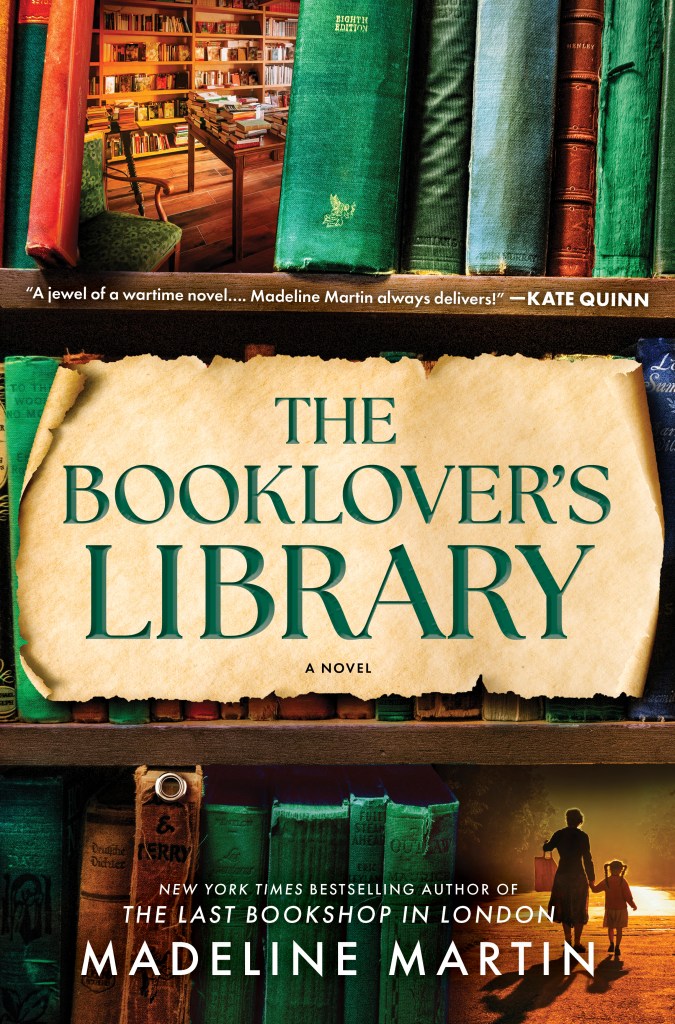




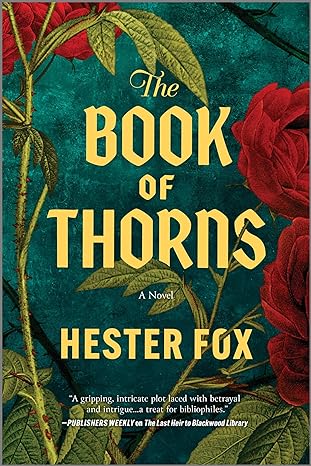



 The Inkblotters