
Book Excerpt: The Time Hop Coffee Shop by Phaedra Patrick

2005

MAPLE GOLD COFFEE COMMERCIAL SCRIPT

VOICEOVER: ‘Maple Gold is here for endings and new beginnings . . .’

The scene opens with a young woman, Greta, standing on the pavement, waving as a car pulls away. She’s holding a small cardboard box.

GRETA (WHISPERING): ‘Bye Mum.’

She turns to face a pretty white house, straightens her back and smiles bravely. She’s ready to enter a new phase of her life—moving into her first home.

The front door is ajar, and she enters a hallway, then a sitting room. We can see there are more, bigger boxes sitting around the place, sealed and ready to unpack.

VOICEOVER: ‘It’s here for the good times and the even better ones . . .’

Greta looks apprehensive but takes a moment to take in her new surroundings. She switches on the kettle and opens a cupboard, disappointed to find it empty.

She spies her name written on the side of the box she carried in and opens it. Inside is her old teddy bear and a jar of Maple Gold coffee, a gift from her mum. Greta takes the jar out, becoming misty-eyed as she makes herself a cup of coffee. Wrapping her fingers around the cup helps her to feel more at home.

The doorbell rings, and she opens the door to find a group of her new neighbors gathered outside. They present Greta with flowers and another jar of coffee as a welcome present. It’s Maple Gold, of course.

They all laugh, and she invites them inside for coffee.

A CAPPELLA GROUP (SINGING): ‘You’re always at home with Maple Gold.’

Chapter  1

Present Day

GRETA PERKS LOVED three things in life more than anything—her family, the thrill of performing, and a fine cup of coffee. When she could combine all three, it was as satisfying as a frothy cappuccino on a cold day. But recently, a happy home life and sparkling career seemed to be slipping through her fingers.

‘I wish you could stay longer,’ she said, glancing between her husband, Jim, and their daughter, Lottie, as coffee cups clattered in the background. ‘Tonight’s important to me.’

She’d volunteered to be the guest speaker at Brewtique’s monthly Coffee Lover’s Night Out, talking about her acting career. It had been a while since she’d last performed in public, and her nerves were jumping around like frogs in a pond.

Jim offered her a smile. ‘I wish we could, too. But I promised Lottie I’d get her back to school.’ He passed Greta a shopping bag like it was a peace offering. ‘Just brought a few things you might need . . .’

‘Talent show rehearsal,’ Lottie muttered, not looking up from her phone. ‘Total waste of time.’

Greta and Jim shared a glance, a silent understanding of the challenges of raising a fifteen-year-old together while living apart.

 ‘A talent show? Sounds fun.’ Greta gave Lottie’s arm a quick reassuring rub. ‘What are you doing? A show tune, or a monologue? Perhaps even a Shakespeare sonnet?’

Lottie shrugged a disinterested shoulder.

Greta’s spirits dipped a little. ‘Well, whatever you do, I bet you’ll be great,’ she said.

‘We’ll grab a burger afterward, then I’ll drop her back at your place.’ Jim opened his mouth slightly, as if wanting to say something more. ‘Stay safe returning to your car tonight, okay?’

Greta nodded, hoping for a word of encouragement, perhaps a ‘good luck,’ ‘break a leg,’ or even a quick hug. But Lottie was already heading toward the door.

Jim’s fingers lightly brushed Greta’s arm, but didn’t linger.

Then he turned and followed their daughter outside.

Through the window, Greta watched as her family dashed across the road without her. She smiled brightly and waved, even though her stomach was twisting.

Drop her back at your place.’ The words stung like a paper cut. 

She and Jim were over four months into a trial separation, with just a few weeks left until their self-imposed New Year’s Eve deadline. At that point they’d agreed to make a final call on the future of their marriage.

It didn’t seem as clear-cut as Greta had hoped. What had once felt like a simple decision—to try to rebuild their marriage or let it go—now felt tangled with uncertainty. After almost twenty years together, was she still in love with Jim? Was he still in love with her?

Greta peeked inside the bag, her mood lifting when she saw Jim had brought her herbal throat lozenges, a new notebook, and a spare pen.

Outside, the wet, grey pavement was the same color as the inky November sky, and she suddenly craved a rich mocha.

 Greta turned to face the room. In half an hour, the place would hopefully be buzzing with people. She was determined to deliver an entertaining talk, even if it wasn’t exactly her kind of coffee shop.

She preferred cozy spaces where she could curl up with a good book, sipping coffee from mugs the size of plant pots. The type of place that served homemade rocky road and had a corner dedicated to board games.

Brewtique, on the other hand, had industrial-style light- bulbs and blackboards showcasing quirky concoctions, such as rhubarb and custard lattes. A pink neon coffee cup on the wall cast an eerie pink glow on her face. The spindly branches of a Christmas tree on the counter looked like they’d been pecked by crows.

Her long-time agent, Nora, had applauded Greta for spotting Brewtique’s Facebook post asking for local speakers. ‘Putting yourself forward shows brilliant initiative, darling. Well-done,’ Nora had gushed. ‘You never know who might be in the audience. Any exposure could help give your career a little boost. Plus, it’s a great way to plug your acting classes.’ 

A boost? Greta knew her career needed a defibrillator. If one human year equals seven dog years, the same rule definitely applied to actors out of the spotlight. She felt like her career had been on pause for too long, and she was ready to hit Play again.

Greta missed the camaraderie on set, filming the iconic Maple Gold coffee commercials she’d starred in with Jim and Lot- tie a decade ago. Nothing compared to the soar of her senses when the director called, ‘Action,’ and everything clicked into place. She longed to find that spark again, not just for herself, but in the hope of pulling her family back together again.

If Greta was honest, she also missed the attention. Champagne on ice in a silver bucket, fans queuing around the block for her autograph, and the occasional limousine whisking her to grand events had been cherries on top of the cake. Those memories felt almost unreal now, as if they belonged to someone else.

The students she’d coached since then seemed to enjoy her acting classes, but it wasn’t the same. Guiding nervous amateurs through voice projection techniques or stage presence didn’t give her the same buzz as stepping in front of a camera or an audience. Hopefully, tonight would rekindle some of that feeling, proof she still had something to offer.

The sound of dropped cutlery pulled her out of her thoughts. Greta turned to see Brewtique’s owner, Josie, rushing around, a dusting of flour in her hair. Meanwhile, her young pink-haired assistant, Maisie, dawdled in a corner, glued to her phone.

‘Need a hand with anything?’ Greta called out.

‘Oh gosh, no.’ Josie shook her head frantically. ‘You’re the talent. I’m just running a bit late with everything . . .’

‘Are you sure? I’ve already prepped for my talk.’

Josie bit her lip, tempted. ‘Well . . . setting up the refreshment table would be helpful, while I get changed. I’ve just popped fresh brownies in the oven. Maisie knows to keep an eye on them.’ She gave Greta a pointed look. ‘She’s new here.’

‘Sure,’ Greta said, catching her drift. ‘Leave it to me.’

Greta set out coffee cups with vigor, arranged cookies on plates, and laid out napkins. Her pulse quickened when she saw the time. ‘Maisie!’ she called out. ‘We need to hurry. There’s only fifteen minutes left until showtime.’

The young woman barely raised her eyes. ‘Didn’t your family once star in some coffee ads or something?’ she asked. ‘One day, I’ll get discovered like that. Want to see my latest TikTok audition?’ She held out her phone.

‘Yes, we starred in them.’ Greta briskly polished a spoon on her apron. ‘I’ll look at your clip later. Now, please check all  the glasses. Some of these are scratched, and Josie said you’re in charge of the brownies…’

When Josie reappeared wearing fresh clothes, she glanced out of the window and sighed. ‘Looks like we’ve got a smaller crowd than usual.’

‘How many are you expecting?’ Greta asked, joining her. ‘Six or seven. I’ve just checked my messages and had quite a few cancellations. Christmas is coming, and it’s the Strictly Salsa final on TV tonight.’

Greta chewed her lip. Disappointment was part of an actor’s life—the rejections, the scathing reviews, and the occasional inappropriate behavior from a director she’d once respected. She hadn’t expected a theatre-sized crowd, but six?

‘An intimate gathering,’ she said with a nod. ‘I’ll make it work.’

Josie welcomed the guests inside. When they were settled down around tables with coffee and cake, she launched into her introduction.

‘Welcome to the monthly Brewtique Coffee Lover’s Night Out. We’ve been fortunate to hear some incredible stories from our speakers this year—conquering Mount Everest, training guide dogs for the blind, and a brain surgeon who worked in war-torn countries. And tonight we’ve got the former star of the Maple Gold coffee commercials. Let’s bid a warm welcome to our special guest, Greta Perks.’

No pressure, Greta thought, smiling brightly as she stepped forward.

‘G . . . good evening, everyone,’ she started, feeling woefully out of practice. ‘Thanks for coming.

‘I’m going to tell you a story about how I became the face of the Maple Gold coffee commercials. Yes, for ten years, I was the lady who made you believe coffee could make your life perfect.’

 A few chuckles rang out, and Greta soon found her flow. She paced up and down, commanding the little coffee shop as if starring in a West End theatre production.

‘Did you know that Maple Gold was born in 1950, as a humble roastery in the back streets of London? Over the years, it became a household name, beloved for its delicious blends and vintage appeal.’ She leaned in, as if sharing a secret. ‘And who wouldn’t want to live in Mapleville, the idyllic town from the commercials? The sun always shone, the grass was emerald green, and the whole town thrived on cups of Maple Gold.’

She took out her phone and played the jingle.

When you wake at sunrise, 

and open your eyes.

You’re ready to start your day, the Maple Gold way.

You’re always at home with Maple Gold.

From the faraway looks on a few faces, it seemed like nostalgia was working.

‘I locked eyes with my love interest, Jim, when he painted my garden fence in the commercial, and things went a bit further off-camera,’ Greta said with a wink. ‘We got married and then had Lottie, our own little star. We were such a happy family, on-screen and off . . .’

She paused as a twinge of sadness crept in, like how bitter- ness stays on the tongue after an espresso. A screech of metal chair legs against wooden floorboards made her flinch.

A woman in the audience called out, uninvited. ‘Are you guys still working?’

Greta blinked, the question taking her by surprise. ‘Yes, everything’s going wonderfully,’ she said, feeling guilty at embellishing the truth. ‘Jim’s still gracing the stage and screen,

 Lottie’s currently rehearsing for a school Christmas talent show, and as for me . . . well . . . I run some excellent acting classes, if anyone is interested?’

A few seconds of silence followed before more questions flew at her like arrows.

‘How’s Lottie?’ 

‘Where’s Jim?’

‘How do you feel about Maple Gold replacing you with a different family?’

‘Does Lottie resent you putting her on-screen at such a young age?’

‘Those are some great, um, deep questions,’ Greta said with a swallow. She grabbed her notes, hurriedly trying to recover her thread. ‘I think my talk will cover most of them . . . Now, where was I?’

Then, suddenly, the shrill scream of the smoke alarm pierced the moment. Greta jumped and spun around to see smoke billowing from the oven.

Josie shouted out over the bleeping alarm. ‘Maisie. Did you forget about the brownies?’

Maisie’s head snapped up, her eyes widening when she noticed the grey clouds. ‘Oops.’

A flurry of activity broke out.

Maisie darted behind the counter and yanked open the oven door, waving her arms as the grey smoke curled out. ‘It’s fine. Totally under control.’

Josie grabbed her oven gloves and pulled out the tray. The burnt brownies looked like steaming lumps of coal, and she tossed them into the sink.

Greta rushed over to help, spinning on the tap so the brownies spat and sizzled. She threw open the front door to let in some fresh air, then grabbed a tea towel and wafted it in front of the smoke alarm until it stopped. ‘Is everyone okay?’ she called out.

 An elderly couple had already put on their coats and scuttled outside. The remaining four guests had drifted toward the buffet table, their focus now on cake rather than conversation. Greta followed them, trying to salvage what was left of the evening.

One man wrapped cake into a napkin and slipped it into his pocket. A couple of women wearing matching blue anoraks conversed loudly.

‘I didn’t recognize Greta at first, did you? She’s put on quite a bit of weight,’ one said.

‘I know. Age isn’t kind to some ladies,’ her friend replied. ‘Ahem.’ Greta stood beside them and picked up a cookie.

‘I’m forty-five and proud of it,’ she said, biting it into it. ‘Worth every extra pound, don’t you think?’

The women paused with their cakes suspended mid-air, before nodding sheepishly.

Greta attempted to spark interest in her acting classes, but the attention was elsewhere, mostly on the kitchen, which looked like it had been trampled by a herd of buffalo.

She joined Josie at the door, wearily bidding goodnight to the guests as they filtered out.

‘Sorry everything didn’t go to plan. I can’t thank you enough,’ Josie said. She handed Greta a brown envelope containing her small fee. ‘I’m not sure I’m cut out to run a coffee shop . . .’

Greta mustered a tired smile. After tonight, she felt the same way about performing in public.

She said goodnight, then called Lottie while trudging to her car, leaving a message on her voicemail. ‘Hi, sweetheart. I’ll be home soon. Hope your rehearsal went well.’

Rain pelted down, and Greta hunched her shoulders against the cold. The streets were empty and quiet, and icy droplets snaked down her neck, making her shiver. In the dark, she noticed a hunched figure approaching, and Jim’s warning about staying safe echoed in her mind. She tried to swerve, but the person bumped her arm.

Startled, Greta dropped her car keys and stooped to pick them up. When she looked up, a woman in a long, dark coat stood over her. Her face was part hidden by a voluminous hood, and long tendrils of her damp white hair hung down. With a quick muttered apology, the stranger handed a piece of paper to Greta and hurried across the road.

As she stood up, Greta’s heart thudded in her chest. Under the dim street lamp, she uncurled her fingers and glanced at the flyer. It was probably just a pizza menu, but the vintage-style design caught her eye. It featured an illustration of a white rabbit and the words ‘Looking for the Perfect Blend?’ Beneath it was an image of a jar with the label ‘Drink Me.’

She gripped the flyer tighter, unsure what it was even promoting. A strange feeling of curiosity rippled through her body. Looking for the perfect blend? In her life, she most certainly was.

She climbed into her car and tossed the flyer onto the passenger seat. Sitting there for a moment, she flopped her head against the steering wheel as the evening’s events raced through her mind. Was she ever going to get her life back on track?

With a deep sigh, Greta turned the key in the ignition and waited for the engine to rumble to life. The light from the street lamps twinkled orange in the raindrops on the wind- screen, and she released the handbrake.

It was probably just a trick of the light, but as Greta pulled off the car park, she could have sworn the white rabbit on the flyer gave her a wink.


From The Time Hop Coffee Shop by Phaedra Patrick. Copyright © 2025 by Phaedra Patrick. Published by Park Row Books, an imprint of HarperCollins.

DID YOU ENJOY WHAT YOU JUST READ? IF YES, THEN SUBSCRIBE TO THE BLOG, GIVE THE POST A LIKE, OR LEAVE A COMMENT! NEW POSTS ARE UP EVERY TUESDAY & THURSDAY!

Book Excerpt: No One Aboard by Emy McGuire

Chapter 1

Jerry Baugh

Jerry Baugh didn’t see the ship. He didn’t notice the red warning on the screen. He was, in fact, cozied up in the cockpit of his Dyer 29 lobster boat, feet propped between the rungs of the helm and hands stacked on his belly.

Jerry’s day of deep-sea fishing had been successful—a sailfish bill, broken at the hilt, currently stuck out of his bomber jacket pocket—and he was thinking about whether the meat

should be marinated in lemon juice or just plain old butter.

He was too distracted to detect the boat in his path—white and gleaming, suspended between the black water of the Atlantic and the starless, moonless sky with the same sinister beauty of an iceberg.

Or a ghost.

When the boat alarm went off, Jerry jolted in his seat, sending his Bass Pro Shops cap tumbling down his chest. A single drop of sailfish blood had, at some point, fallen onto the face of his watch, which read nine minutes after midnight.

He detangled his feet from the helm and peered at the radar. He was heading two hundred and fifty-eight degrees toward Hallandale Marina. The strange white sailboat blocked

his way.

Jerry switched off the autopilot and eased the throttle to slow down, his heart thumping soundly in his chest. If the alarm hadn’t sounded, he might have shipwrecked them both.

This sent a surge of anger through him. Why hadn’t the captain of the sailboat moved out of his way? Sheila 2.0 wasn’t subtle, her engine making an ugly chewing noise not unlike a trash compactor. They should have heard her coming.

Jerry allowed his boat to chug closer before he killed the engine and processed what on the devil’s blue sea he was looking at.

It was a sailboat, yes, but not like the rust-laced ones that docked near Sheila 2.0 in the Hallandale Marina.

This boat was mesmerizing.

It had twin aluminum masts, a wood-finished deck, and sunbathing mattresses laid out on the chart house. The body of the boat was a blinding white, smooth, curvaceous. The cap

rails were teak and coated with a glittering crust of sea salt. No one had cleaned them in some time. Cursive lettering on the side spelled out the boat’s name.

The Old Eileen

Jerry stared, a bit starstruck. Boats like Sheila 2.0 were made to choke marine diesel oil and seawater until they finally died twitching in a harbor like a waterlogged beetle on its back.

Boats like The Old Eileen were made to be beautiful.

Jerry found his radio, hooked to his waistband, and cleared

his throat before speaking into it.

“Eileen, Eileen, Eileen, this is Sheila, Sheila, Sheila, over.”

He waited.

There was a time when Jerry was younger (and a good bit stupider) that he wanted to buy a sailboat instead of a motorboat. It was romantic, the idea of harnessing the wind to travel

the world. But in the end, it was those same winds that terrified him. Wind could overpower him, seize control of the boat and bend its course. Jerry would have had to accept that possibility. He would have had to bare his throat to the mercy of the sea.

A mercy, he had come to understand, that did not exist.

“Eileen, Eileen, Eileen!” Jerry repeated into the radio.

They must be asleep. Jerry leaned forward and sounded his horn—five short blasts to signal danger. He waited for the radio to crackle to life, for a silver-spooned captain to sputter

apologies, or maybe for an underpaid deckhand to rush up top and get the boat moving once more.

There was only the sound of the luffing, useless sails, and the ever-shifting sea.

Jerry frowned and fiddled with the fish bill in his pocket.

He should leave.

He fumbled in the dark to switch the engine back on. He would report what he’d seen to the coast guard, get the captain in trouble for being so reckless. He’d be back in Florida by dawn.

But Steve . . .

Jerry glanced at his dash where he had taped up a photograph of himself with his younger brother. It was the last picture taken of Steve before he died. Jerry closed his eyes for a moment. He would have traded his boat, his bait, and everything he owned if someone had stopped that night to help Steve.

“Well, shit.” Jerry rubbed at his clavicle and swallowed hard. He would be in and out. Just to make sure all was well.

Jerry moved across the deck, aware of every sound his shuffling feet made. He rummaged through his fishing equipment, eyes never leaving The Old Eileen. His calloused, practiced

hands fit right around the harpoon gun, and he felt a measure of reassurance with a weapon in his grasp. He wasn’t scared, he was too old for that, but there was nothing quite like a creaking, old ship on the ocean at night to make a man into a boy again.

He tucked the harpoon gun under one arm and set to work

lowering his tiny dinghy. He’d take one moment to wake

whoever was on board, then get right back on his boat. Good

deed done for the day. Maybe the decade.

Jerry grunted as he climbed up the Eileen’s porthole and over the rail. The deck was empty save for an orange life preserver tied to the stern, the boat’s name written in black on the top and a slogan in italics around the bottom.

Unwind Yachting Co.

Safe to sail in any gale!

With no one in sight, Jerry located the companionway stairs that led down beneath the cockpit and gave one last scan of the deck before going below.

Downstairs, the chart house was neat and captainless, but the ship’s manifest was sitting in the center of the table, open to the first page.

SHIP’S MANIFEST—THE OLD EILEEN

SKIPPERCaptain Francis Ryan Cameron (55)

MATEMJ Tuckett (67)

CREWAlejandro Matamoros (54), Nicolás de la Vega (22)

PASSENGERSLila Logan Cameron (54), Francis Rylan Cameron (17), Taliea Indigo Cameron (17)

Seven souls. Seven souls aboard The Old Eileen, and not a single one had answered the radio, which lay next to the manifest like an amputated limb. Jerry picked it up and felt an ice-cold trickle of sweat on the back of his neck.

The cord had been cut.

Jerry’s knuckles went white against the harpoon gun. Bad things happen at sea. Storms kill and brothers drown.

But the radio cord hadn’t been severed by the ocean.

Jerry crept through the luxurious salon and to a door that must lead to a cabin. He let his trigger hand slip down for a moment so he could turn his radio to 16—the international maritime emergency channel.

Just in case.

He opened the door to the cabin.

The master bedroom. King-size bed with an indigo comforter and cream sheets. Velvet couch molded to fit the tight corner. A woman’s lipstick lay open on one bedside table, rolling back and forth as the boat rocked.

There was no one there. No sleeping captain, no apologetic deckhands, no life whatsoever. Had they just . . . left?

Jerry checked the next room. This one held two twin beds with identical navy bedspreads. One bed was unmade, with a variety of books scattered at its foot. The bedclothes on the other were tucked in, military-style.

A sketchbook was half hidden by the pillowcase, open to an illustration of some kind of monster.

Jerry mopped his brow with a rag he kept in his shirt pocket, not caring that it had dried sailfish blood caking the edges. He should have motored on by and called the damn guard.

He forced himself to concentrate. He was doing the right thing. The captain could be out cold and in need of help.

There were only a few more rooms.

But the last cabin was just as quiet.

Jerry peeked into the galley and the bilges, running out of places to check.

The heads. Each of the three cabins must have its own personal bathroom, and he hadn’t yet tried any of them. Hands slick with sweat around the harpoon gun, Jerry retraced his steps, checking first in the crew members’ head, then the master suite’s, then back to the room with the twin beds and the drawing of the monster.

He nudged open the last bathroom door and looked inside.

In the mirror, his own ref lection stared back at him, interrupted only by a string of crimson words that had been written on the glass.

A weight dropped anchor inside his stomach, flooding Jerry with a kind of dread he had avoided for thirty years. The harpoon gun slipped from his hands, and he reached for his radio, unable to peel his gaze from the message on the mirror.

Save yOur Self

The Convey

OPINION: The Ocean Is Our Great Equalizer (why the newest Atlantic disaster seems to

spell K-A-R-M-A for the one percent)

MIKE GRADY

The Camerons—a family of four headed by television darling Lila Logan and business tycoon Francis Cameron—have been reported missing after their multimillion-dollar sailing yacht turned up eighty miles offshore without a single person onboard early in the morning of June 9. Authorities and reporters have leaped into extensive action. The Atlantic has already been tempestuous at the beginning of this year’s hurricane season. Potential upcoming storms have given the search a dangerous time component in an investigation reminiscent of the Titan, the infamous submersible that imploded with five passengers aboard on its way to see the Titanic wreck. The world had plenty to say about the Titan and its affluent victims, and this latest oceanic mystery has the potential to play out the same. Francis and Lila Cameron both had modest childhoods, but thanks to the entertainment industry, the business world, and the good old American dream, they have skyrocketed into the fraction of Americans who own multiple homes (Palm Beach villa, LA bungalow, and a sleek Aspen chalet, if anyone’s wondering), not to mention the multimillion-dollar sailing yacht that came up empty in the early hours of yesterday morning. While I’m not necessarily here to say that the Atlantic Ocean is doing a better job than God or taxes to rid us of the elite, I do want to pose a big-picture question while authorities are sussing out the how did this happen? and where did they go? Of it all. My question instead to you, dear reader, is this: Why the Camerons?

Excerpted from No One Aboard by Emy McGuire, Copyright © 2025 by Emy McGuire. Published by Graydon House.

DID YOU ENJOY WHAT YOU JUST READ? IF YES, THEN SUBSCRIBE TO THE BLOG, GIVE THE POST A LIKE, OR LEAVE A COMMENT! NEW POSTS ARE UP EVERY TUESDAY & THURSDAY!

Book Excerpt: Dawn of the Firebird by Sarah Mughal Rana

Before…

Year 495 after Nuh’s great flood,

Era of the heavenly birds

Tezmi’a Mountains, Azadniabad Empire

I would inherit the power of the Heavens, Uma had said so.

But my power was a curse, this she did not have to say. Like any great legend, my tale began with tragedy.

In the stories later recounted from my maternal uncle, my uma had a glad-tiding the night of my birth, as all mothers of gifted children did. It was near the winter solstice in the year 495, she dreamt of light emanating from my infant body, bathing her in a cool glow. She knew the Divine had shown the power I would come to inherit: nūr, cold Heavenly light, the same spiritual power that flows through the firebird.

But that night when I sprang free of Uma’s womb, our chieftains dreamt of a world of darkness. War and destruction. She is an omen, the tribe murmured, despite my uncle the khan reprimanding their frivolous superstitions. Her mother refuses to name her, nor does her father, the Great Emperor, accept her. With his many wives and heirs, this child is but one of many. But Uma knew in her heart that blessings came with a little suffering, that was the Divine’s way. My child is neither cursed nor omen. She has the affinity of light. Uma liked her secrets. This one she tucked close to her chest.

In the spring pastures of our valley Tezmi’a, that year brought a drought that starved the lands, killing portions of herd. Other peculiar happenings sowed fear in the tribe: more raids, more deaths. When Uma suckled me, wild birds would encircle the yurt before flapping into the felt tents, spilling dried meat, spoiling the yak milk and provoking our hunting birds.

‘The girl is cursed,’ my clansmen argued.

‘The girl is simply a girl. And we are God-fearing men,’ my uncle would reprimand. ‘We blame misfortune on no one but our own sins.’

‘But the birds,’ the tribe would insist, ‘they surround the babe. She is unnatural!’ It was true – wherever I was carried there was the sweep of wings above, and birdsong from the trees.

Swaddling me close, the khan’s most favoured wife spoke. Babshah Khatun. To her, not one dared argue. ‘Enough, you superstitious fools. She is a blessing who has brought forth more birds for hunting. She is unusual; but, unusual children bear the greatest gifts. However I hear your fear. The chief folkteller has the hearts of their kinsmen, for they carry the histories of our sorrows. As your folkteller, Divine as my witness, I will make this babe my apprentice. She will carry with her the tales of your greatest joys and fears until the end of her days.’

The stern lady, though young, never broke her oaths. In irony, her oath became my curse. 

In the winter quarters, the best pastures were south of the alpine lake. That year, the khan’s tribe erected their yurts and herded thousands of yaks, wild mares and lambs at the base of the harsh snow-capped mountains, amongst the rolling green alpine meadows, thin grass growing above cold dirt. From the lake, icy streams broke through the rocky grasslands of Tezmi’a.

It was my seventh Flood Festival, commemorating the day Nuh left the ark after the Great Flood. That morning, the children competed, to see whose prized hunting bird would find the keenest prey. Before long, the khan’s favoured wife interrupted and led the children up the pastures until they reached the end of the settlement of tents, toward the thick woodland. 

Some of the tribe’s warriors, who’d escorted goods and cattle across the mountain pass for the emperor’s merchants, rested against the boundary of trees, waxing their compound bows. Others sipped apricot tea to fling back the wet chill, nodding to us in greeting. The khan sat with them, my uma – his sister – beside him. When she spotted our group, Uma scowled and stalked toward us.

‘O, Babshah, what senseless idea do you have now?’

Babshah Khatun merely smiled in silence. Uma placed a hand against my back, staring at the hunting birds cowing upon my shoulder. She warned, ‘Do not go too south of the mountain pass. There are patrols from the enemy clans who snatch away children like her.’

Still Babshah Khatun continued deep into the womb of the valley, past protruding boulders, and clumps of elm, into the tall deep grasses that fattened the wild onagers. Trails where humans rarely ventured, and the jinn-folk still reigned. The wind whispered into the children’s hair. The entombed roots of wizened trees sprawled through the woodlands, and whizzing sprites, those mischievous little apprentices to the long-passed fae of these lands, showered seeds to pollinate the flora. A deceivingly drowsy day for the violence that it promised. A place where the old ways still mattered and the Divine-made boundary between jinn-folk and human blurred.

Determined, I tripped along next to Babshah, resisting the urge to clasp the long end of her yak leather tunic, lest she think me not brave. Even my hunting buzzards on my shoulders canted their heads, curious.

Babshah sat squat and brushed her pale hand across the dirt. Her black hair swung with the wind, a dozen thin braids clasped in silver beads and an array of hawk feathers, not dissimilar to my own. The only difference was a camel-skin cord around her temple with a blue wooden block indicating her status as a wife of the khan.

‘Today, we will do a new type of hunt,’ Babshah declared. ‘Hunting by folktelling.’

The children murmured amongst themselves, but Babshah did not elaborate. Instead, she latched on to my hand – ‘Prepare yourself, my apprentice’ – before continuing along the fir path.

When we stopped, and it came time for our hunting pairings, my milk-sibling Haj refused to take me as a partner. He was ten years old, only three years my senior, but the gap was large enough to fuel his arrogance. He took his complaints to Babshah.

‘My uma says to stay away from her, else she will curse my bird’s game! I train with a spotted sparrowhawk. The girl trains with a pair of sooty buzzards. Smaller and useless, just like her. With all the birds that follow her, she will scare away the prey.’

‘I may be Ayşenor’s only child, but I am not useless,’ I muttered, keeping my lip from trembling.

***

Excerpted from Dawn of the Firebird by Sarah Mughal Rana, Copyright © 2025 by Sarah Mughal rana. Published by Hanover Square Press.

DID YOU ENJOY WHAT YOU JUST READ? IF YES, THEN SUBSCRIBE TO THE BLOG, GIVE THE POST A LIKE, OR LEAVE A COMMENT! NEW POSTS ARE UP EVERY TUESDAY & THURSDAY!
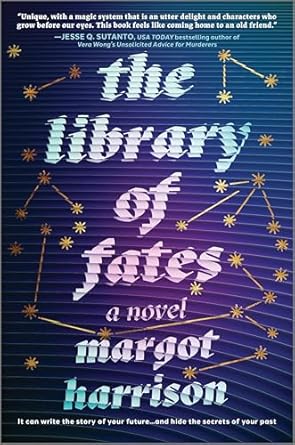
Book Excerpt: The Library of Fates by Margot Harrison

Now

September 26, 2019, 1:15 p.m.

The Library of Fates lived tucked under the mansarded roof of a tall, charcoal- gray building in Harvard Yard. To a casual visitor, it was like any other library, lined with shelves for hours of pleasantly aimless browsing. But every student knew that if you came to the Library of Fates and asked for a book to guide you safely through turbulent times, the librarian would go straight to the shelf and put a book in your hands. And that book would change your life.

Eleanor Dennet was that librarian now, but the knowledge felt hollow. Her predecessor, Odile Vernet— her mentor, her guiding star, her best friend— had died suddenly three days ago, and she could barely process it.

Her throat still raw from crying, her brain still woozy from too much vodka, she stepped over the threshold of the library that had been her refuge for most of the past twenty-four years. On the surface, everything seemed the same: the dark oak paneling and moss- green area rugs and accents; the pearly glow that came through the recessed skylight; the sweet, faintly musty smell. The custodian had opened the curtains and blinds of the nine bay windows on each long side of the room. Sunlight bathed the books in a greenish haze and washed over the varnished seminar table and armchairs. The mural on the ceiling evoked the magic of stories.

But something felt different here. Something was wrong. 

Then Eleanor saw him.

From his seat in a green brocade armchair angled toward the window, he didn’t seem to have noticed her entrance. Barely daring to breathe, she took in black hair sprinkled with gray on the headrest and long lashes outlined on his cheek as he gazed down at a sheaf of papers in his hand.

Daniel Vernet, Odile’s son.

The last time they’d seen each other, in 1995, they’d been standing here in the library. Eleanor’s view of Daniel had been clouded by tears, but she would never forget his dark eyes gazing back as if she were a stranger. The bland way he’d smiled, as if she meant nothing to him after everything they’d been through.

And here were more damned tears, rising and choking her. She would have to face Daniel eventually, to give condolences and make arrangements for his mother’s memorial. But not yet. She wasn’t ready for that. She darted to the window bay farthest from his chair, silent on the thick carpet, and slipped behind the floor-length curtain.

Daniel sighed heavily. The papers crackled. Frozen in place, Eleanor watched through a gap as he stood up. He didn’t look his age, the lines of his chin and cheekbones still firm.

A sharp click- clack of heels sounded on the stairs behind them. “Ready, Daniel?” asked a slightly accented voice that Eleanor recognized as Liliana, Odile’s housekeeper and close friend.

Daniel nodded, but his gaze was still on the papers. “What the hell is this?” he asked. “What the hell?”

As the older woman put a soothing hand on Daniel’s shoulder, Eleanor saw his body heave. Was he grieving his mother, then? Their relationship had never been smooth. Though Odile visited her son in Europe on occasion, it had taken her death to bring him back to the States for the first time in decades.

Liliana gave Daniel a hug and led him toward the door. “Everything will work out. You’ll see. We don’t want to be late for our appointment.”

“I’m just so confused!” Eleanor heard him still exclaiming as their feet thudded down the stairs.

She emerged from behind the curtain and stood very still, waiting for the tension to dissipate and the atmosphere to settle. Listening for a faint but steady thrum on the edge of her awareness, a rumble that was neither pipes nor heating. Like Odile, Eleanor was attuned to the library’s vibrations, inaudible to most people.

But now, standing dead center in the library, straining her senses in the stillness, she detected no reassuring thrum. Nothing. As if the library were an immense machine that had stopped running.

Panic gripped her. It can’t be.

She hurried to the oak door at the far end of the room and unlocked it with trembling fingers. Here in the librarian’s small office, The Book of Dark Nights was kept, secure in a safe, its pages alive with the power of the secrets trapped inside, for the library drew its power from the Book. As long as the Book remained there, the library would function.

On top of the safe, she found a sticky note in Odile’s strong cursive:

A place of pages,

A subterranean secret,

Where love is shared.

One book brought you together.

 Start from there.

Eleanor stared at it for a dazed second. Odile often left literary quotes on sticky notes, but this didn’t seem like the style of poetry she would read— or write, if Odile had been a poet.

Then she knelt beside the safe to type in the code. Fumbling in her urgency, she had to enter it twice before the light turned green and she could swing the door open. Eleanor closed her eyes and said a silent prayer: Please let it be here.

The Book had been stolen only once, and the results had been disastrous. Eleanor tried not to think about them as she reached into the safe for the cracked calfskin of the Book’s binding, bracing herself to feel the usual tingle as her fingers made contact. Needing to experience that uncanny suggestion that the Book was alive. To know that it was only Daniel’s presence that had made the library feel wrong.

But there was nothing.

She knew people saw her as Odile’s mousy, adoring acolyte, hidden away in the library like a relic herself. A perennial student who had never even finished her PhD. A wan spinster, a living history display. Here in the library was the one place Eleanor mattered. In these books is your future, Odile had told her long ago. In these books are all the tools you need to live your life to the fullest. But all that depended on the magic.

And as she ran shaky fingers from corner to corner of the steel compartment, she found only shadows and a fine, powdery dust that came off on her fingertips.

The Book of Dark Nights was gone.

Excerpted from THE LIBRARY OF FATES by Margot Harrison, Copyright © 2025 by Margot Harrison. Published by Graydon House, an imprint of HarperCollins.

DID YOU ENJOY WHAT YOU JUST READ? IF YES, THEN SUBSCRIBE TO THE BLOG, GIVE THE POST A LIKE, OR LEAVE A COMMENT! NEW POSTS ARE UP EVERY TUESDAY & THURSDAY!

Book Excerpt: Aphrodite by Phoenicia Rogerson

Aphrodite I

I’m a liar, to begin with.

Well, if I’m being exceedingly honest with you – and I am trying – I was nothing at all, to begin with. Then I was my father’s testicles. Then the weaver of Fate itself, which is when the lying started. After that, it all got a bit complicated.

I was the daughter of Ouranos. The daughter of Zeus. The daughter of no one at all. A winner, a loser, though never much in between. The world standard of beauty and a crone, both. Olympus’ very own it-girl. Maybe the worst wife in all of history. A lover, a friend, a co-conspirator. A snitch. Selfless – once or twice. A bitch – more than twice. A monster, a villain, a victim – if you must. A good mother, a bad mother, a really bad mother. Lonely and famous and beloved and alone. Precious and worthless. A rival, a cheat. Afraid, often, and terrifying, also often. Oh, and I started a war. That’s very important.

The goddess Aphrodite. I was that too. I don’t think I am

anymore. Look, it’s all very knotted. Maybe I should start from the beginning.

First, there was Chaos, which meant something different then to what it does now. The time of Chaos was empty. It was a blank canvas for the optimists and an endless sinkhole for the pessimists. It was a time of absolutely nothing. I suppose I was nothing then, but we all were, so I won’t hold that against her.

Chaos was empty, until she met Nyx. I like to think that the two of them were in love, but I’ve never met my grandmothers, so I can’t say for certain. The two of them created the earth and the seas and the sky, and they had three children to gift them to.

Their daughters received the sea and the earth, and they were happy with them.

Their son wasn’t, as is the way of youngest children. He wanted to be the king of a world consisting of only five people, so they let him.

My father, given the world like a toy so he’d play nicely with his sisters. I suspect he was spoiled rotten, but then I quite like being spoiled, myself. And he did ask, before he took. He spoke with such conviction about the glittering future he would bring, the life he would spread across this world, that they believed him.

Ouranos became the first king of this world. He took his sister to be his wife and he made good on his promises. Together – let’s not give him all the credit; he didn’t carry their children – they filled the world with life. They brought forth the Titans, beings more powerful than even they were, who could control the elements around them more easily than breathing. And they brought forth the Cyclopes, and the Hecatonchires – the hundred-handed ones – who Gaia loved and who did not ask for power, only a life, which meant Ouranos did not respect them. He thought them irrelevant to the world, because they didn’t demand to own it. They lived between the oceans and created beautiful wonders with all the energy they saved from fighting.

I don’t know how many children they had together. It doesn’t matter. All that really matters is it was one child too many.

It’s always the youngest son who has the most to prove.

Their youngest was a Titan, Cronus. He wanted to be king too, only Ouranos wasn’t like his mothers. He didn’t want to give up what was his.

Cronus asked for power; his father said no. Cronus did not ask a second time.

So the world came to know a new word: war.

It didn’t last long, that first war. It couldn’t. All the Titans could be counted on fingers and toes.

Cronus armed himself. He went to the Cyclopes and asked for their support. He promised them positions in his new order, new lives beneath the sun instead of deep below the sea. He told them he would respect them as their father never did. And he let their conversation be heard just enough to build fear in his father.

It’s a bold strategy, to tell your enemy that you’re coming, but it works well with the men in my family. They’re so afraid of it, it eats away at them, into their very bones, and they forget that they’re anything other than the position they hold.

Ouranos ordered the Cyclopes sent to Tartarus, a prison in the underworld he’d had to create personally, because one had never been needed before.

(It’s a problem when you’re an immortal fighting other immortals. You have to be careful about who you piss off because there’s no getting rid of them. They’ll be there, hating you. Forever.)

How Cronus himself escaped being tied up in proto-damnation is beyond me, but he did. I suspect his mother helped. He promised her – how they promise! – he would free her sons, bring them to the power they deserved. When Cronus was king, everyone would live equally in a utopia, just below him.

He had his people behind him. He had his shining vision for the future. He had the weapons and the belief. It was only a matter of time.

He followed his father across the land, over the oceans, waited for the perfect storm to be whipping around them, for winds too loud for words – I know that for certain. I made my entrance soon enough.

I think it’s unlikely they’d have had much to chat about, anyway. When you get to weapons at dawn, what do you say?

I want power!

No, me!

No, me!

They were both armed, but Cronus’ reach was longer. That’s been true of every new generation I’ve seen, that they’re just a little bigger than their parents, trying to prove they’re better in the most

pointless of ways.

Cronus carried a sickle. I don’t know what my father’s weapon was. He lost.

There was no point in aiming to kill. There never has been, for us. Instead, Cronus thought of the worst shame he could possibly imagine, and he castrated his father.

Chopped his balls off.

De-testicled him.

I’ve heard every possible variation of the phrase, some with great solemnity and some with a snigger, and I’ve never been able to explain why I’m not laughing.

I can tell you now, though.

Those balls were me.

I grew from them. I was born from them. They were me and I am them and that will always be the truth. That is my beginning.

I made my debut at the end of the first great war, in a storm unlike any other, as the world turned itself upside down trying to find its way in the new order. All of this is true, yet my birth is reduced to a punchline.

I hid it for so long, not wanting my entire existence to be reduced to one man’s shame, but I’m over that now. I’m much more famous than him, after all.

I’ve always wondered how Cronus managed to castrate him so neatly. It was only my father’s testicles that made me – call my knowing that feminine intuition, if you want – but Cronus used a sickle.

How? Were they hanging so low? Was Ouranos’ stance so wide because he needed the world to see his mighty balls? What possible physical arrangement leads to one man being able to castrate another with a weapon made for cutting wheat?

Cronus would have had to practise, but he can’t have. Surely he had better things to do in the war, and I’ve met some of his generals. I can’t imagine them offering themselves up for the chop.

That one is a mystery for the ages, I’m afraid, but it doesn’t matter, because now I’m here. That’s it. All of the relevant history before I arrived. Done.

Cronus lifted his arms in mighty victory and bellowed so that all around him could cheer and crown him the new king of everything. Like his father, he went home and married his sister, ready to fill the world with people who looked just like him.

Ouranos, newly ball-less, gave an anguished cry.

‘You think yourself so smart, so powerful, but one day you will be just like me, dethroned by your own children.’

Cronus looked at his father’s crotch. ‘I will never be just like you, will I?’

He ordered Ouranos tied and bound in Tartarus, that prison of his own making, never to be seen again.1

So distracted were they by their respective shouting that the testicles fell into the ocean, instantly swallowed by the swells of the waves, pulled down into utter blackness, presumed lost.

Wrong.

1 For a certain value of never. We are immortals, after all. —A

Excerpted from Aphrodite by Phoenicia Rogerson. © 2025 by Phoenicia Rogerson, used with permission from Hanover Square Press, an imprint of HarperCollins.

DID YOU ENJOY WHAT YOU JUST READ? IF YES, THEN SUBSCRIBE TO THE BLOG, GIVE THE POST A LIKE, OR LEAVE A COMMENT! NEW POSTS ARE UP EVERY TUESDAY & THURSDAY!

Book Excerpt: Otherwise Engaged by Susan Mallery

How does the horse look?

Victoria Rogers pressed her good arm to her very bruised, almost broken ribs. “Dad, don’t,” she said, trying to stay as still as possible. “You can’t be funny. It already hurts to breathe. It wasn’t a horse.”

Her father frowned. “I was told you were thrown off a horse.” “I was thrown out of a truck.”

“Then how’d you get the black eyes?”

“The ground was a little bit pissy when I hit it and punched me back.”

There wasn’t a part of her that didn’t hurt. The good news was that now that the medical staff had determined she didn’t have a head injury, they were going to give her drugs to help with the pain. She’d already said she didn’t want any of that weak-ass pill stuff. She wanted a nurse to give her a shot of something that would work instantly and let her rest. Because in addition to the bruised ribs, requisite scrapes and contusions, she had a broken left leg and a sprained wrist. Her previously dislocated shoulder also throbbed, but that was kind of the least of it.

As she lay in her hospital bed, feeling like death on a tortilla, she had the thought that maybe stunt work wasn’t for her. Injuries came with the job, but this was the third time in five years she’d landed in the hospital. The first time she’d messed up, so that was on her, but the other two had just been plain bad luck. The incident with the truck had come about because one of the tires had blown, causing the however many ton vehicle to jump the curb—an action that had sent her flying up and over the side. Gravity, being the bitch it was, had flung her onto the sidewalk. Hence the injuries.

Her father studied her, his brows drawn together in concern. “None of this makes me happy,” he told her.

The incongruous statement nearly made her laugh. She remembered—just in time—that her ribs wouldn’t appreciate the subsequent movement and they would punish her big-time. 

“Today isn’t my favorite day either,” she admitted, trying not to groan. “I didn’t wake up with the thought that I should try to get thrown out of the back of a pickup.” Although technically getting thrown out of the truck had been the stunt. Just not when it had happened and without warning or a plan.

“I’m worried,” her father told her. 

“I’ll be fine.”

“This time.”

She winced, and not from pain. “Now you sound like Mom.” 

Her father, a handsome man only a few months from his sixtieth birthday, brightened. “Thank you, Victoria. That’s such a nice thing to say.”

Given her weakened condition, she let that comment slide. Honestly she didn’t have the strength to deal with it right now, even though she knew her father understood exactly what she’d been saying. He was only pretending to not get it.

“If you’re going to act like that, you should go,” she said, then amended what could be construed as a catty comment into something more kind. Mostly because she only had the emotional energy not to get along with one of her parents, and her mother had already claimed that prize. “Besides, they’ll be bringing my drugs any second. I plan to surrender to sleep, so I’m not going to be very conversational.”

As if to prove her point, one of the nurses walked in with a syringe. “Ready to feel better?” he asked cheerfully.

“Yes, and let me say, you’re my favorite person ever.” 

He winked. “I get that all the time.”

He slowly injected whatever the medication was into her IV. Victoria drew in a shallow breath as she waited to feel that first blurring of the edges of the pain. Modern medicine was a miracle she intended to embrace.

The nurse left. Milton took her good hand in his.

“I’ll let you rest,” he told her. “But I’ll be back later tonight.” He squeezed her fingers. “Tomorrow, when you’re released, I’m taking you home.”

Ugh. Victoria knew that her father wasn’t talking about the pretty condo he’d bought her when she’d turned twenty-one. Instead he meant the house where she’d grown up. The one where her mother still resided.

“I don’t need to move back,” she protested, feeling the first telltale easing of the pain. “I have a few bumps and bruises.”

“Along with a broken leg. And what about your ribs? You can barely move without wincing.”

“I have zero pain tolerance. I’m a total wimp.”

He frowned. “You’re tough and stoic. If you’re showing signs of pain, it’s bad. You’ll stay with your mother and me until you’re well enough to be on your own.” He pointed at her. “I mean it, Victoria. You don’t get a vote.”

Her father was rarely stern with her, so his sharp tone warned her he wasn’t kidding. And she knew from twenty-four years of experience that arguing with the man would get her nowhere. Milton didn’t take a stand very often, but when he did, he was the immovable object.

“I wish you loved me less,” she murmured, feeling a little floaty and stumbling over her words. “Okay, I feel drugs. Let me enjoy the experience of breathing without, you know, wanting to die.”

Oh, baby girl. You’ve always been difficult.”

“I know. It’s one of my best qualities.” Her eyes drifted closed. “Love you, Dad.”

“Love you more.” He kissed her cheek. “I’ll see you tonight.” 

“Come alone.”

His soft chuckle was the last thing she heard.

Excerpted from Otherwise Engaged by Susan Mallery, Copyright © 2025 by Susan Mallery Inc. Published by MIRA Books. 

DID YOU ENJOY WHAT YOU JUST READ? IF YES, THEN SUBSCRIBE TO THE BLOG, GIVE THE POST A LIKE, OR LEAVE A COMMENT! NEW POSTS ARE UP EVERY TUESDAY & THURSDAY!

Book Excerpt: Julia Song is Undateable by Susan Lee

BRIBE BAGS

JULIA SONG HATED being the center of attention.

So standing here at the head of the conference table, expect-ant eyes of Very Important People all on her, was pretty much torture.

But Julia was the CEO of Starlight Cosmetics, this company was her baby, these VIPs the executives she hired to help grow the business. And the news she had to share with them was monumental.

She scanned her memory for the advice from her executive coach for this kind of situation. The only thing she could remember was, contrary to everything she’d ever been told before in her life, never try to picture your audience naked. It would make the nerves even worse.

And, of course, now that’s all Julia could think of.

She closed her eyes for a moment to clear her mind of all the unfortunate images fighting to run through her head.

What was that one thing her coach told her?

Squeeze your butt cheeks to hold the plank. Wait, no, that was her abs coach.

If the recipe calls for garlic, double it. Wrong again. That was her cooking coach.

Oh, screw it. What was the use of having all these people to help Julia better herself when she couldn’t call upon the advice when needed?

She cleared her throat and decided to wing it.

“I know you’re all busy, so I’ll make this quick. Look, it’s not how I wanted to do this . . .”

Her dream, rather, was to one day point at each of them and tell them an exorbitant dollar amount for a bonus. Enough money for them to buy new homes in the hills or on the beach, whichever they preferred.

“Wait—are you firing us?” someone cried out from the other end of the table.

Julia’s eyebrows shot up to her hairline. “What? No, of course not. Don’t be ridiculous.”

Always start with something personal and positive to get people excited about what you’re going to say. Oh yeah, that’s the brilliant advice her coach had mentioned.

“Oh gosh, I’m so sorry. I didn’t mean to sound so ominous.” Julia quickly backtracked. “It’s just that, well, at the risk of get-ting too squishy in a work meeting, I really wanted to thank you all for taking a chance on me way back when all of this was just an idea in my head.”

Julia swallowed the emotion building in her throat as she looked around at the team she’d put together to lead this company. They were the ones who took her idea to merge the best in the Korean skincare market with the high demands of the US consumer and built what was now one of the fastest- growing organic, clean K- beauty brands in America.

“I just want to tell you how much I appreciate your hard work and loyalty. I don’t know that any of us anticipated this kind of success. But honestly, none of it would have happened without each and every one of you and your contribution. And now, I have some really great news. As you know, Starlight’s Lotus Bamboo Essence was selected for Allure’s Best of Beauty awards. Which was a dream come true for us. But it doesn’t end there.”

Julia inserted the dramatic pause her public speaking coach had encouraged her to use. The looks of anticipation around the room fueled her excitement.

“I’m thrilled to share that the same Lotus Bamboo Essence has also been selected as one of this year’s Oprah’s Favorite Things!”

There was a silent pause of shock, followed by an eruption of applause and cheers, high fives, and hugs shared around the table.

“We’ll need to reforecast sales projections. We’re gonna blow up with the exposure . . .”

“We’re gonna have to update a comms plan . . .”

“We have to think of how we add this to the packaging design . . .”

“We need to make sure the supply chain can handle the increased distribution . . .”

“Oprah still has major influence on Gen X consumer spending. It’s a big win for a product . . .”

Yup, that was her team  .  .  . no- nonsense, capable, loyal, honest . . . and the hardest- working, most talented people in the industry. And they were all business, just like her.

Her chest swelled as she watched them leave to get back to work, patting each other on the back as they walked out, taking the noise with them.

Julia started this company at only twenty- six years old. She’d disappointed her parents by changing her major from pre- med to business administration. She lived off ramen and PB&J sandwiches for a good year just to scrape by as she worked tirelessly to research the hadn’t exactly welcomed her with open arms. And she stomached the start- up community’s boys’ club as she tried to secure funding for the company.

And four short years later, they were on the verge of something huge. Hard work and dedication had brought them to this level of success. So yeah, she was proud of them, proud of herself. And at only thirty, she was finally in a position financially to take care of her family without worry.

When the last person left her office, Julia turned to look out the windows, the hustle and bustle of Santa Monica ten floors below. She took a deep breath.

“That’s right, motherfuckers,” she screamed, while pumping her fist. She shook her hips back and forth, adding in some aggressive hair throws and, why the heck not, followed it with a body roll. “Oh yeah, uh- huh . . .”

“Oh dear, that’s something I’m not likely going to forget seeing.”

Record scratch.

Julia halted her celebratory dance and quickly patted down her hair, trying to tuck her I- knew- I’d- regret-these bangs behind her ear as her assistant, Annette, entered the office.

“Unlike what your schedule says on paper, you’ve only actually attended that hot yoga class once. Should you really be try-ing to move your body like that?” Annette asked. “I wouldn’t want you to hurt yourself.”

“You’re fired.”

Annette passed her the cup of black coffee in the Morning Person mug that she knew was a lie, along with a multivitamin and a probiotic. Breakfast of champions.

“Just remember that I know where the bodies are hidden. Oh, and I have those pictures of you from that one holiday party . . .” 

“Okay, fine, you can stay,” Julia conceded. 

“Is it a good time to ask for a raise?”

Julia tried to shoot Annette a glare but couldn’t keep back the smile. It was a secret to no one that Annette was invaluable to the Starlight team, and most days she was the one bossing Julia around. Julia shook her head and took a seat at her desk. “Can you forward the O magazine email to the team so they know all the details?”

“You betcha,” Annette said. “Have you told your folks yet?” 

“No, not yet. I don’t think they’d even understand what a big deal this is.”

“Make sure to tell them.” Annette wasn’t only her assistant, she was also her work- mother as well. “Oh, and here is the updated short list of investors we might want to approach for global expansion. One bad meeting doesn’t have to halt progress.”

One bad meeting was an understatement. The last time Julia had met with an investment firm for an informational meeting, they kept asking about her significant other, driving home that they were a family- run business built on traditional values. They looked at her as young and inexperienced not because of her age— she knew plenty of male CEOs who were thirty— but because she wasn’t married with children. In their eyes, Julia wasn’t reliable because she wasn’t settled . . . settled down, that is.

Her accomplishments, alone, weren’t enough.

I’ll show them, she thought to herself as she gritted her teeth. Julia grabbed the list from Annette with a little bit more force than necessary and nodded. “Thanks.”

“Hey.” Annette softened her voice like she so rarely ever did. The one word in that tone made Julia surprisingly emotional. “It’s a good day, boss lady. You should be proud.” She patted Julia on the shoulder before walking back to her desk just outside Julia’s office.


Excerpted from JULIA SONG IS UNDATEABLE by Susan Lee. Copyright © 2025 by Susan Lee. Published by Canary Street Press, an imprint of HarperCollins.

DID YOU ENJOY WHAT YOU JUST READ? IF YES, THEN SUBSCRIBE TO THE BLOG, GIVE THE POST A LIKE, OR LEAVE A COMMENT! NEW POSTS ARE UP EVERY TUESDAY & THURSDAY!

Book Excerpt: Higher Magic by Courtney Floyd

CHAPTER ONE

You should be writing. hexing people who tell you that you should be writing.

—NOTE ON THE BLACKBOARD IN THE MAGE STUDENT COPY ROOM, EDITED IN ANOTHER HAND

THE CLASSROOM DOOR SHIMMERED, AND I SCOWLED AT IT. Twenty minutes ago, the door had been normal. Mundane, even. A steel slab with a hydraulic hinge that had a nasty habit of seeming to swing slowly shut before slamming all at once. It opened onto a fluorescent-lit room overstuffed with motley desks and accessorized with a decrepit whiteboard. Inside, I’d drawn my containment circle using a piece of chalk pilfered from the lecture hall down the way and cast my working. Then, I’d stepped out for a coffee.

Now, two minutes late to my own class, I pressed my palm to the door and felt a frizzle of static ghost its way up my arm and into my hair. My bangs went blowsy. I swatted them out of my eyes and shook the sting from my hand.

So much for making a professional first impression.

Of all the ill-starred winter terms I’d experienced in this program, this one was already well on its way to being the worst, and it was only day one. If I was being fair, it wasn’t the door’s fault. Someone else teaching in this room had thrown up a ward to penalize late students. I was going to have to take it down, or spend the next ten weeks fighting with it. But I wasn’t in the mood to be fair. Not with an 8 a.m. class to teach and a meeting with my advisor immediately after.

Sighing, I levered the door handle down and pushed through the field of prickling magic. Thirty-five

heads—according to my course roster—swiveled in my direction as I stalked toward the front of the room. I pretended not to notice them, smoothing my bangs with my fingertips in an effort to compose myself.

“Hey! The professor’s going to be here any minute, dude. Stop messing around,” someone called out.

As a young, femme, and heavily tattooed instructor who habitually dressed in faded jeans and the nicest clean top I could find in the laundry basket—today’s wasn’t wrinkled . . . much—I was used to that reaction. Instead of replying, I set my satchel on the long table that served as the room’s makeshift lectern and fished out a dry-erase marker.

Concerned whispers soughed through the room. I ignored them, scrawling information on the board:

Spell Composition I

Under that, I added:

Ms. Dorothe Bartleby (she/her)

As I wrote, the whispers quieted until the only sounds were the squeaking of my marker and the high-pitched flickering of the fluorescent lights.

When both my nerves and the room were well and truly calm, I turned back around with a flourishing bow that triggered the working I’d cast earlier.

Students gasped and giggled as syllabi winked into existence above each occupied desk and slowly fluttered into place. They wouldn’t be as impressed if they knew my housemate, Cy, had given me his spell for the working just a couple days earlier. Still, their delighted bafflement was almost enough to make me smile, despite the morning’s irritations.

“My name is Dorothe Bartleby, but you can call me Ms. B.”

I paused to gesture at the board. “I teach Spell Composition I. If you’re here for another class, this is your cue to exit.”

A couple of students scurried out of the room as inconspicuously as possible. Which of course meant that the sound of their packing, bags zipping, and sneakered tiptoeing on the waxed vinyl flooring was so loud it was pointless to continue until the capricious classroom door swung shut behind them.

The remaining thirty-three or so students watched me warily. Smiling, I reached for my heavily annotated copy of the syllabus.

“This course is part of a learning community with Ms. Darya

Watkins’s Herbalism 101. The work you do in Spell Composition I will complement your work in that class. By the end of the term, you will have drafted and revised two academic-quality spells.”

The corresponding groan came from nowhere and everywhere at once, an overwhelming expression of sentiment that shuddered me back into freshman year. My shoulders tensed with the sense-memory of panicked drafting, late-night grappling with the arcane rules of the Mage Language Coven’s style guide, the growing certainty I’d never be a real practitioner because I couldn’t even format my grimoire citations correctly on the battered electric typewriter I used for my assignments.

I took a breath and dropped my shoulders, forcing myself to focus on the students in front of me. Someone had helped me, and I would help them. They might still hate the class at the end. Hec, most of them probably would. It was a gen-ed, designed for gatekeeping and consequently loathed by the student population. But they’d make it through. I’d see them through.

Quiet settled in as I regarded them.

Tangled auras, pained grimaces, sleep-crusted eyes . . . This group was so starkly different from last term’s Spell Composition I students that I couldn’t help a sudden rush of sympathy. There was something special about the off-cycle students, the unwieldy or unlucky or un . . .something few who’d fallen out of the campus’s natural rhythm. And it wasn’t just that I had recently become one of them.

Students who took this course in fall term, as admin recommended, tended to be bright eyed and happy-go-lucky, brimming with the magic of sun-dappled October days and pumpkin-flavored beverages. But it was January, skies glowering with rain clouds, and these students were in for a bumpier ride. They knew it. And they’d persist, despite it.

I looked at them and they looked back at me, wearily expectant.

“Most of my students come to class with a very specific preconceived notion,” I told them. “Maybe it’s self-imposed, or maybe it’s something you were told again and again until it stuck.”

I stalked back to the board and scrawled a giant number across it.

“According to our preclass survey, eighty-five percent of you self-identify as ‘bad spell writers.’ That’s bullshit.”

The class gasped and tittered.

“You’ve been hexed, or hexed yourselves, into believing one of the biggest lies in academia—that there’s only one kind of ‘good spell writing,’ or that only certain kinds of practitioners can be good spell writers. Bull. Shit.”

Fewer titters this time, because I’d gotten their attention. Hexing was a serious accusation—workings intended to cause harm violated the student code—and right about now they’d be trying to sort out whether I meant it literally or metaphorically. The thing was, it didn’t matter whether someone had literally hexed them to think of themselves as bad spell writers. The only thing that signified was that 85 percent of them did. It was part of the story they’d learned to tell about themselves. And reality reshapes itself around stories.

“Does anyone have a hunch about why I’d say that?”

Silence. Stillness. As though I was a predator who could only hunt when prey was in motion or making sound. I folded my arms and waited, even though the approximately seven seconds that went by felt like an eternity.

Finally, a hand climbed skyward.

“Yes? You in the striped shirt. What’s your name?”

“Alse. Um, Alse Hathorne.”

“Hi, Alse. Any thoughts?”

“Well . . .” Alse fidgeted with their glasses and scrunched their face, as if uncertain whether their thoughts were worth sharing. “It’s okay to speculate. Take a wild guess.”

Alse huffed. “Okay, thanks. It’s just . . . When you said spell writing isn’t just one thing, it made me wonder what actually counts. Like, am I writing when I’m flipping through old grimoires for research? Does daydreaming about what I want my spell to do count?”

Their tone was half-sincere, half-sarcastic, but I could work with that. I smiled, waiting to see if any of their classmates had a response before sharing mine.

A blonde in a pink tie-dye T-shirt waved, excited.

“Um, yeah, Reed here. Like, are we writing when we select spell ingredients?”

More hands flew up, and for a little while I forgot it was an ill-starred term. I lost myself in discussion.

BLEAK REALITY CROWDED BACK IN AS MY STUDENTS FILED OUT OF THE classroom. In a matter of minutes, my advisor would be giving me the come-to-Hecate talk I’d been dreading since last term. Her email yesterday hadn’t said that, but I could read between the lines of her vague Let’s chat. Can you stop by my office tomorrow?

A knot formed in my stomach as I repacked my satchel.

Every mage student got two attempts—and only two—to pass the Branch and Field exam, our program’s version of the qualifying exam that marked the transition from coursework to dissertation work. I’d failed my first attempt, and this term I’d get one last chance to convince my committee that I had what it took to be a mage.

Except, I wasn’t certain I believed it anymore. I had magic, sure. I was one of the lucky few born with the ability to see past consensus reality to other possibilities. But I didn’t belong here. Not really. Not in the way my housemates did. They were stars in their respective branches, innovating and winning awards. I was squarely middle-of-the-pack among my fellow Thaumaturgy students. A mediocre practitioner in a branch that I’d heard laughingly referred to as the underwater basket weaving of Magic more times than I could count. It wasn’t true. Thaumaturgy was so much more than a catchall for the bits and bobs of magical scholarship that weren’t interesting or important enough to make it into the curricula of Necromancy or Alchemy or even Divination. But my branch’s undeserved reputation didn’t help my confidence.

And now Professor Husik wanted to chat. She was going to tell me I didn’t get a second attempt, after all. That my first try had been so egregiously bad the committee wanted me to pack my things and go. I was so engrossed in the thought that it took me a minute to notice the student who’d stopped in front of my desk, smiling nervously. I blinked a few times, forcing myself to refocus. 

“Sorry—”I dredged my memory for the student’s name “—Alse. Do you have a question?”

Alse rummaged in their bag. “Not a question, really, just, uh—”

They handed me a piece of paper and backed away quickly, as if the slightly crumpled page was actually a detonation charm. A ghost of static tickled up my arm as I skimmed the photocopied text, achingly aware that I was going to have to sprint to my advisor’s office to make it on time.

It was an accommodation letter. The requests were common ones: time and a half on exams, an extra week to compose spells, use of an object-based sensory working to manage attention and focus.

I looked up. Alse had used the time to shrink into themself. 

“Thank you.” If only I could will away their nerves with my smile. “I know these letters don’t always give me a full picture of how I can best support you. I’d love to chat about that. Can you make it to my office hours today?”

“Really?”

“Really.”

“My last professor nearly exploded when I gave her the letter.”

I couldn’t help but wince. Some faculty took the letters as a personal affront, rather than expressions of students’ desire to be able to actually do the work.

“Is everything okay?”

Alse shrugged. “Sure.” Their tone wasn’t convincing, but every nerve in my body was shouting at me to get moving.

“Okay, good. The directions to my office are in the syllabus. Now, I apologize, but I have to run to another meeting.”

I was halfway down the hall and already out of breath by the time that traitorous classroom door slammed behind me. When it slammed again, signaling Alse’s departure, I’d rounded the corner and hauled open the stairwell door.

I swore under my breath as I climbed. Most elevators on campus were too old and slow to be relied on in a rush. But teleportation wasn’t an option—not even for disabled students.

A group of them had lobbied administration for a change to the policy last year. Their requests were met with a volley of excuses. Teleportation was banned in the student code of conduct due to its disruptive nature and disrespect to the hallowed halls and grounds of this fine institution. It was federally restricted. Over and above all that, though, it was expensive.

I shoved the thought aside, taking the stairs two at a time. I had until the last full moon of term to pass my exam and convince my committee, and myself, that I deserved to be here. That I was ready to advance to mage candidacy, write my dissertation, and join the ranks of full mages out in the world.

I didn’t have time to worry about anyone else’s problems. Even without my advisor’s cryptic summons, I had more than enough of my own.


Excerpted from Higher Magic by Courtney Floyd. © 2025 by Courtney Floyd, used with permission from HarperCollins/MIRA Books.

DID YOU ENJOY WHAT YOU JUST READ? IF YES, THEN SUBSCRIBE TO THE BLOG, GIVE THE POST A LIKE, OR LEAVE A COMMENT! NEW POSTS ARE UP EVERY TUESDAY & THURSDAY!

Excerpt: A Campus on Fire by Patrick O’Dawd

1

Tess Azar’s notes on Rose Dearborn:

Tall. Sharp green eyes. A small, pointed nose. Pale. Red hair, worn down, falls just below her shoulders, framing her compact face. Her posture is pristine, and she appears to be flexing, though that may be her natural state. Her hands are folded, left over right. She sports an unblemished French manicure and light pink lipstick that you’d never notice unless you were looking for it. She has two earrings on her left ear, both in the lobe, and one on her right. They’re all diamonds, and I’m sure they’re real. She wears a light blue Oxford shirt. It looks like it was designed for her frame—towering and athletic, without succumbing to bulk. Over the shirt, she wears a light jacket, tan and slim fitted, with bronze buttons. It looks like it was born to be a man’s jacket but changed its mind when it met her.

She had me from the start. It was her wave. It showed the world she came from, the sophistication, the poise, the casual superiority. It was a wave that had been passed down, refined, choreographed. A stiff hand, a pirouette, a fold. It was elegant in its learned simplicity.

She paired it with a vacant, performative smile. It wasn’t for me. It was for the watchers. It told the world that she wasn’t, despite appearances, one of those people. She was, in fact, a normal person, perhaps even a kind one.

I nodded my acknowledgment and matched her smile. Mine was professional, a journalist’s smile, continuing the performance we were engaged in.

We were meeting at an outdoor café on campus. One of those places where students bring their laptops and pretend to work. It’s not a place to work, not true work. It’s a place to be seen to be working.

 She stood as I sat, a prosaic gesture that nonetheless endeared her to me.

I felt the cool spring breeze and heard birds singing in a tree nearby. A woman shouted in the distance, and I didn’t even turn to look. I assumed it was playful. I used to be able to assume that.

“Tess,” she said, not a question but a statement of fact. “And you’re Rose?”

“Yes.” She smiled and took a sip of her coffee. She placed it down, and I noticed it was uncovered, no lid in sight.

I looked at my own cup, a lipstick-stained plastic lid of shame sitting atop it. I felt her eyes on it, felt the judgment. I shouldn’t have had a lid. I should’ve told them I didn’t want one. Lids were plastic, single-use plastic. They were death. They were climate change. They were a stain upon you as a person.

I tore it off, and the steam burned my hand. I didn’t flinch, too afraid it would be another strike against me. Rose looked like the type of person who never flinched, who never got sick or hurt. She looked like she went to the cape on the weekends and played tackle football with her brothers and more than held her own.

I pulled out my notebook, almost knocking over my coffee as I did so. The cup rattled, but I grabbed it before it tipped and smiled an apology. I opened to a fresh page, and, as I always did when beginning an interview, I took down a description.

“Are you writing a novel?” Her voice was cold and clipped, formal and challenging.

I blushed, and my skin turned a few shades darker. I’m sure she noticed. Rose looked like she never blushed. Or at least never out of embarrassment. I imagined she did on occasion, but with a purpose.

I hid in my notebook. “No, I, uh, well…”

I hated myself. It was odd for me. I wasn’t like that. I wasn’t a stammering, stumbling fool. I wasn’t often awed. I was the one in a relationship who was distant. I was the one who was unaffected by the end of the affair, the one who needed to be wooed.

But there was something about her, an aura, a magic. Some- thing that changed me, disrupted me. I both hated and loved it. Longed to be free of this pull and to never leave it. One could chalk it up to the difference in age—Rose was twenty-one to my nineteen, but it was more than that. She had something. Something I wanted.

I twirled my pen around a finger and clicked it. It was a nervous habit, one that would take years to tame. Rose watched, a cryptic smile in her eyes. I placed my phone on the table and set it to record. “Do you mind?”

She shook her head, but I could feel her quiet disapproval. “I just like to get the setting down,” I said and motioned to

my notebook. I calmed myself by sipping the spring air, a slight scent of grass being cut somewhere in the distance. ““I was taught that if you have the time, you should overwrite, even in journalism. Easier to cut later. ‘Never trust your memory’ is what my professor says.”

This wasn’t true. My professors would be appalled by my long, florid notes. They advocated direct, blunt ones. But I wasn’t writing for them. Not anymore. I’d already developed my own strategies, my own style, and my notes were part of that.

She met my eyes, an intrigued look cresting across her face. I’ll never forget that look and the feeling that accompanied it, tracing up my spine and nesting in my skull. I felt my embarrassment disappear. I remembered who I was. I remembered that I was someone, and she knew it.

“Well.” She drank her coffee. I followed her lead. Mine was still too hot, and it scalded my throat. “I guess whatever you’re doing, it’s working.”

And there it was. The reason she’d come. It was a hint, a slight lead, but we both knew where she was taking the conversation. I may have my objective, my questions, my story, but she didn’t care. She wanted to discuss it. She met me so she could discuss it.

“I still have a lot to learn —”

“But to have an article receive national attention as a sophomore.” She cut me off with the ease of someone used to doing it. “My guess is it won’t be long before the job offers start coming.”

They already had, but she didn’t need to know that. Not yet. You need to save things. You need to build a relationship with patient precision if you want it to last.

I nodded and went back to my notebook. I should’ve steered the conversation, transitioned from my success to the work- shop. But I couldn’t, I wanted to press on, I wanted to talk more about my article. I wanted to astonish her and luxuriate in that astonishment.

That’s all it took. A little acclaim, a little attention, and, as I’m sure she’d planned, I’d forgotten my questions, my story.

“Now.” She unstacked her hands and moved one toward mine. “I’m not a journalist, just a fiction writer, but I felt your piece transcended the subject and demonstrated an uncanny ability to be informative, engaging, and unique. I couldn’t put it down, and more to the point, I found myself rereading it even after knowing the story, which I feel is a true test of great writing. Your work doesn’t read like journalism. It reads like fiction, good fiction.”

I felt the familiar warmth of praise pulse through me.

Her assessment was pretentious and vapid, it said nothing. It raised my own work by comparing it to the vaunted heights of fiction and, in doing so, denigrated journalism, but I didn’t care. “Thank you.” I tried to temper my grin. “I appreciate that.

It was a good article, and I was pleased with the exposure it received. That’s an important issue that I think will continue to pervade our society.”

I was trying to match her. Her intellectual snobbery, her placid distance, her broad generalities.

“So.” She leaned forward, and I found my eye tracing down to the opening of her shirt. I caught a glimpse of lace and looked away, landing on her forearm. It was exposed, and

 I could just make out a pale purple bruise. She noticed and dropped her arm beneath the table. “I have to ask. How did you get the interview? How did you get him to agree to that? To say all that?”

I nodded and leaned back. This was what they always asked. This was what made the article. This was why it garnered national attention, why everyone was talking about it, why I was someone.

Hearing her ask the same, tired question settled me.

I ran a finger along the seam of my pants and looked around, debating whether to do it, whether to take the leap. I felt the brief flutter of nervous excitement that we all come to know at some point.

I paused and felt my heart rattle. It felt wrong. She should be the one to ask me out, not the other way. I didn’t even know if she was gay. But somehow, I did. I could tell. I could feel an opening. This was my chance. She was curious, everyone was. I had a story, I had cache, I was someone, if only for a moment. So, I leapt. “How about this? You have dinner with me tomorrow night, and I’ll tell you how I got the interview. Deal?”

The question hung in the air as it always does, time elongating—heavy and thick with anxiety but exhilarating. All the world is packed into that pause between the question and the answer.

“What, like a date?” She tilted her head, a smile leaking out of the side of her mouth, a slight hue dampening her cheeks.

I nodded.

Someone shouted at a table not far from us, and chairs scraped against the ground.

“All right,” she said, her smile spreading. “Deal.”

And just like that, the anxiety exploded into a million shards of light. I was ebullient. I was phosphorescent. I was invincible. After that, I tried to stay present, tried to listen to what she said, to not think about the future that was already being crafted

in my mind.

But it was no use, I was gone. My mind was adrift. There were winters skiing and summers sailing. There were literary arguments and good coffee. There was an initial frigid period with her family. A tense scene with her grandfather where he reverted to his old prejudices, dismissing the whole of me based on the half that was Lebanese, but I won him over by talking history and baseball. I became one of them. And later, there were galas and houses full of antiques and rich wood.

“I guess you’re not here to talk about your article, are you?” She shifted back. “You’re here to talk about Jack.” Her face fell, her hands fidgeted in her lap. The color left her cheeks. The radiance of our previous conversation still lingered, but it was just a residual taste. We’d moved on.

I nodded but said nothing. Being a journalist is a lot like being a therapist. You need to draw them out. You need to make them comfortable and then let them talk.

“Terrible, just horrible.” She looked like a different person, like an actor trying to play Rose in a marginal play. “Such a waste.”

I let the silence linger, hoping she’d continue. When she didn’t, I eased into it. “Did you know him well?”

She nodded, and took her forefinger and thumb and pinched the bridge of her nose as if that could stop the tears and the pain. “Yes, of course. We all… I mean, you know about it, right? About the workshop? Dr. Lobo?”

I did. Everyone knew about the workshop. It was a creative writing group on campus, not an official workshop, whatever that means, just a group of students whom an acclaimed professor had taken an interest in.

Dr. Lobo’s workshop. Sylvia’s kids. The Creative Writing Cult.

Sylvia Lobo’s second novel, A Wake of Vultures, was an instant classic. She was teaching here as an associate professor when she wrote it, and after its publication, she became an instant celebrity. Now she teaches creative writing and gives few lectures. I took one during my first semester. Someone had dropped right when I was registering, otherwise, I’d have never

gotten in. It was on the erosion of the past in literature. Novels set during times of change with characters who are stuck in the past and grappling with the future. It was an eighty-person class, and I don’t think I said more than three words all year.

“Yeah,” I said. “I know about Dr. Lobo.”

“Have you read any of her work?” The energy that had left us returned.

“I’ve read A Wake of Vultures and Jezebel.”

Rose tried to hide her excitement and nodded to herself. I could tell I’d passed a test. “I’ll give you Chariot Races and Bubblegum. If you like those, we can go from there. If not…”

More tests. But that was all right. For her, I would take them.

“You’re all very close, right?”

“Yes, Sylvia’s big on that. We’re all working toward the same goals and have the same interests, and it’s essential that we spend time together. She says it makes for better writing. Look at Paris in the twenties. Do you think it was an accident so many great writers were there at the same time?”

I took my time and wrote this down verbatim. It sounded rehearsed.

“Some people even…” She laughed. “…say we’re a bit of a cult.”

Her laughter stopped, and I made sure not to smile. This wasn’t a joke. This was a repudiation of a nasty piece of gossip. I’d have to be careful with that. I’d have to watch that I never hinted at the cultish atmosphere of the workshop.

People had good reason to call them a cult. They took all the same classes, not just Sylvia’s, but everything—history, science, even phys ed. They got coffee together at the same time every day. The same table, the same café, the same black coffee, the same far-off look while they drank. They ate lunch together. They ate the same things for lunch. They ate with purpose. Refined but rapid. They walked the same, hurried steps announcing their presence, clearing a path. They talked the same. The same talking points, the same articles referenced, the same political issues discussed, same positions held with fervor. They used the same words. They spoke at the same frantic pace. Their hands moved with their every word, painting a mute portrait of their argument. They used the same pens, same notebooks, read the same books, watched the same movies, chewed the same gum, smoked the same colorful French cigarettes, not because they were addicted, but because it stoked conversation and helped with the writing process.

They were the same. They were like her.

That was how she drank her coffee, how she ate, how she walked, how she spoke, how she thought.

They idolized her. They forced her works into their conversations. They cited her. Not just her published comments and writing but personal ones from conversations they’d had with her. They attributed immense weight to these citations as if mentioning her name ended all debate. If Sylvia said it, it wasn’t to be questioned. It was fact.

The cultish atmosphere of the program was why I decided to write the story. Why I was sitting there, interviewing Rose. Jack’s suicide was a part, but not the whole. I hoped to expand it, turn it into a piece on Sylvia and the workshop. Get a glimpse behind the curtain. See what was fact and what was fiction.

Rose stared at me after the cult comment. Judging me, reading my reaction. I met her stare and held it. “Well, these days, I think gossip is the sincerest form of flattery. As for Jack, I’m sorry for your loss.”

She nodded and raised a hand to her chest. “Yes, he was, well, very talented. We came in together, same class. We were both in her freshman seminar on literature’s obsession with the past.”

“I took that class.”

“Really? Not the same one though? I’m sure I’d have noticed you.”

“No, you wouldn’t have. But it must’ve been a different year,

you’re what, a senior?”

 “She teaches it every other year. You’re fortunate you got in.”

“I could say the same to you,” I said, unable to avoid the

opening to flirt.

“Hah.” She rolled her head back. She didn’t laugh. She said, hah. Spat it. “No, I sent her my writing from high school, two awful short stories about— Oh god, I don’t even want to say… one was about my high school friends and a teacher of ours, and the other was about a ski instructor. They were dreadful, but she saw something in them, something in me.”

She looked over at the sprouting trees that lined the walk, feigning to hide her satisfied smile. “She reads the work applicants send in, as do her current students, and selections are made. If she picks you, you’re assured a spot in her freshman seminar and the creative writing major and some other class- es. See, where most creative writing programs don’t really get serious until graduate school, she starts right away. Freshmen year. She believes that you need to get to a writer early, before they learn those bad habits and become just a poor imitation of some famous writer. She wants you raw, unadulterated, malleable.”

“I thought you said she teaches that seminar every other year?”

She shook her head as if I was a mistaken child. “Oh no, just that one class on literature and the past. She teaches that in even years. She teaches a different one on female writers and the diaspora in odd years.”

I nodded and smiled and waited.

She rubbed the bruise on her arm, caught herself, and dropped her hands, resuming her practiced pose of mourning. “Yes, I was close to Jack. We were in all the same classes. I was his shadow, as we called it. Like a peer editor, you read everything they write. He was my shadow too. Sylvia thought our work complemented one another’s. He was a genius, and I don’t use that word lightly. It’s a true tragedy. Not just for him and those of us who knew him but for the world. The world lost a great writer.” Another tear, she lifted a napkin to stop it. “I edited his book. The one that we—Sylvia and I—are helping to finish. You know about that, right?”

“Yeah.”

“Sylvia worked to get it published, not that it was all that difficult, it’s a brilliant novel. But she took it on. She wanted to… She knew it was what he would’ve wanted. And now, at least, that part of him will live on. A tribute of sorts.”

“I hear the money’s going to charity?”

“A suicide prevention charity. And some will go to the creative writing program here as well, help to make it official, and I think some is going other places, but I don’t have the details on that.”

“Any to his family?”

“He didn’t have family. An uncle upstate somewhere, whom he grew up with, but they weren’t close, and I think he passed away. His parents weren’t in the picture.”

“Anyone else you think I should talk to?” I was afraid to push too hard too soon. You can always come back with more questions. You can always have a second interview, provided, of course, you remain on good terms.

“People in the workshop. I can give you some names. Intro- duce you.”

“That’d be great.” I looked down at my notebook, pretending to scan it, knowing what I needed to ask. “Look, Rose, I’m sorry to ask this, but I have to. Do you have any idea why he would’ve done this? I heard he didn’t leave a note.”

A writer not leaving a note. Seemed off.

She shook her head and forced another tear. “He was”— she ran a fingernail around the rim of her now-empty coffee cup—“troubled, like many writers are. It’s true what they say, ‘genius and madness flow from the same source.’ Good work often comes from pain, and I think, not to be unkind, but I think some can court it. Wallow in it. Again, I don’t mean to… I loved Jack, and it’s a tragedy what happened, but he lived in that pain. It’s what his work was about. He’d go into it and be down there and write, and after he finished, he’d come back up. He’d live in joy for a bit. But this time, with the novel, he was down there too long. He couldn’t surface.”

This, too, felt rehearsed. Maybe not quite scripted but planned. She knew I’d ask about it, and she was ready. There’s nothing wrong with that. Meeting with a journalist is stressful, and people like to be prepared.

But still, it felt off.

“Well,” I said, “I think that’s all I’ve got for today. I might have some follow-ups, but I’m sure you’re busy.”

“Yes, I have to decide what I’m wearing for our date.” I blushed and withdrew to my notes.

“I hope we won’t have to muddy that up with this?” she said. “No, I wouldn’t think so.”

We both stood, and I stared at her, straining my eyes, as she retreated into the falling sun.


Excerpted from A CAMPUS ON FIRE by Patrick O’Dowd © 2025 by Patrick O’Dowd, used with permission by Regal House Publishing.

DID YOU ENJOY WHAT YOU JUST READ? IF YES, THEN SUBSCRIBE TO THE BLOG, GIVE THE POST A LIKE, OR LEAVE A COMMENT! NEW POSTS ARE UP EVERY TUESDAY & THURSDAY!
Excerpt: BAT EATER AND OTHER NAMES FOR CORA ZENG by Kylie Lee Baker

ONE 

April 2020 

East Broadway station bleeds when it rains, water rushing down from cracks in the secret darkness of the ceiling. Someone should probably fix that, but it’s the end of the world, and New York has bigger problems than a soggy train station that no one should be inside of anyway. No one takes the subway at the end of the world. No one except Cora and Delilah Zeng. 

Delilah wanders too close to the edge of the platform and Cora grabs her arm, tugging her away from the abyss of the tracks that unlatches its jaws, waiting. But Delilah settles safely behind the yellow line and the darkness clenches its teeth. 

Outside the wet mouth of the station, New York is empty. The China Virus, as they call it, has cleared the streets. News stations flash through footage of China—bodies in garbage bags, guards and tanks protecting the city lines, sobbing doctors waving their last goodbyes from packed trains, families who just want to fucking live but are trapped in the plague city for the Greater Good. 

On the other side of the world, New York is so empty it echoes. You can scream and the ghost of your voice will carry for blocks and blocks. The sound of footsteps lasts forever, the low hum of streetlights a warm undercurrent that was always there, waiting, but no one could hear it until now. Delilah says it’s unnerving, but Cora likes the quiet, likes how much bigger the city feels, likes that the little lights from people’s apartment windows are the only hint of their existence, no one anything more than a bright little square in the sky. 

What she doesn’t like is that she can’t find any toilet paper at the end of the world. 

Apparently, people do strange things when they’re scared of dying, and one of them is hoarding toilet paper. Cora and Delilah have been out for an hour trying to find some and finally managed to grab a four-pack of one-ply in Chinatown, which is better than nothing but not by much. 

They had to walk in the rain because they couldn’t get an Uber. No one wants Chinese girls in their car, and they’re not the kind of Chinese that can afford their own car in a city where it isn’t necessary. But now that they have the precious paper, they’d rather not walk home in the rain and end up with a sodden mess in their arms. 

“The train isn’t coming,” Cora says. She feels certain of this. She feels certain about a lot of things she can’t explain, the way some people are certain that God exists. Some thoughts just cross her mind and sink their teeth in. Besides, the screen overhead that’s supposed to tell them when the next train arrives has said DELAYS for the last ten minutes. 

“It’s coming,” Delilah says, checking her phone, then tucking it away when droplets from the leaky roof splatter onto the screen. Delilah is also certain about many things, but for different reasons. Delilah chooses the things she wants to believe, while Cora’s thoughts are bear traps snapping closed around her ankles. 

Sometimes Cora thinks Delilah is more of a dream than a sister, a camera flash of pretty lights in every color that you can never look at directly. She wraps herself up in pale pink and wispy silk and flower hair clips; she wears different rings on each finger that all have a special meaning; she is Alice in Wonderland who has stumbled out of a rabbit hole and somehow arrived in New York from a world much more kind and lovely than this one. 

Cora hugs the toilet paper to her chest and peers into the silent train tunnel. She can’t see even a whisper of light from the other side. The darkness closes in like a wall. The train cannot be coming because trains can’t break through walls. 

Or maybe Cora just doesn’t want to go home, because going home with Delilah means remembering that there is a world outside of this leaky station. 

There is their dad in China, just a province away from the epicenter of body bags. And there is the man who emptied his garbage over their heads from his window and called them Chinks on the walk here. And there is the big question of What Comes Next? Because another side effect of the end of the world is getting laid off. 

Cora used to work the front desk at the Met, which wasn’t exactly what an art history degree was designed for and certainly didn’t justify the debt. But it was relevant enough to her studies that for a few months it stopped shame from creeping in like black mold and coating her lungs in her sleep. But no one needs museums at the end of the world, so no one needs Cora. 

Delilah answered emails and scheduled photo shoots for a local fashion magazine that went belly-up as soon as someone whispered the word pandemic, and suddenly there were two art history majors, twenty-four and twenty-six, with work experience in dead industries and New York City rent to pay. Now the money is gone and there are no careers to show for it and the worst part is that they had a chance, they had a Nai Nai who paid for half their tuition because she thought America was for dreams. They didn’t have to wait tables or strip or sell Adderall to pay for college but they somehow messed it up anyway, and Cora thinks that’s worse than having no chance at all. She thinks a lot of other things about herself too, but she lets those thoughts go quickly, snaps her hands away from them like they’re a hot pan that will burn her skin. 

Cora thinks this is all Delilah’s fault but won’t say it out loud because that’s another one of her thoughts that no one wants to hear. It’s a little bit her own fault as well, for not having her own dreams. If there was anything Cora actually wanted besides existing comfortably, she would have known what to study in college, wouldn’t have had to chase after Delilah. 

But not everyone has dreams. Some people just are, the way that trees and rocks and rivers are just there without a reason, the rest of the world moving around them. 

Cora thinks that the water dripping down the wall looks oddly dark, more so than the usual sludge of the city, and maybe it has a reddish tinge, like the city has slit its own wrists and is dying in this empty station. But she knows better than to say this out loud, because everything looks dirty to her, and Cora Zeng thinking something is dirty doesn’t mean the average human agrees—at least, that’s what everyone tells her. 

“Maybe I’ll work at a housekeeping company,” Cora says, half to herself and half to the echoing tunnel, but Delilah answers anyway. 

“You know that’s a bad idea,” she says. 

Cora shrugs. Objectively, she understands that if you scrub yourself raw with steel wool one singular time, no one likes it when you clean anything for the rest of your life. But things still need to be cleaned even if Delilah doesn’t like it, and Cora thinks there are worse things than leaning a little bit into the crazy parts of you. Isn’t that what artists do, after all? Isn’t that the kind of person Delilah likes? The tortured artist types who smoke indoors and paint with their own blood and feces. 

“Mama cleaned toilets for rich white people because she had no choice,” Delilah says. “You have a college degree and that’s what you want to do?” 

Cora doesn’t answer at first because Mama means Delilah’s mom, so Cora doesn’t see why her thoughts on Cora’s life should matter. Cora doesn’t have a Mama. She has a Mom, a white lady from Wisconsin who probably hired someone else’s mama to clean her toilet. 

Cora quite likes cleaning toilets, but this is another thing she knows she shouldn’t say out loud. Instead, she says, “What I want is to make rent this month.” 

Legally, Cora’s fairly certain they can’t be evicted during the pandemic, but she doesn’t want to piss off their landlord, the man who sniffs their mail and saves security camera footage of Delilah entering the building. He price-gouges them for a crappy fourth-floor walkup in the East Village with a radiator that vomits a gallon of brown water onto their floor in the winter and a marching band of pipes banging in the walls, but somehow Cora doubts they’ll find anything better without jobs. 

Delilah smiles with half her mouth, her gaze distant like Cora is telling her a fairy tale. “I’ve been burning lemongrass for money energy,” Delilah says. “We’ll be fine.” This is another thing Delilah just knows

Cora hates the smell of lemongrass. The scent coats her throat, wakes her up at night feeling like she’s drowning in oil. But she doesn’t know if the oils are a Chinese thing or just a Delilah thing, and she hates accidentally acting like a white girl around Delilah. Whenever she does, Delilah gives her this look, like she’s remembered who Cora really is, and changes the subject. 

“The train is late,” Cora says instead of acknowledging the lemongrass. “I don’t think it’s coming.” 

“It’s coming, Cee,” Delilah says. 

“I read that they reduced service since no one’s taking the train these days,” Cora says. “What if it doesn’t stop here anymore?” 

“It’s coming,” Delilah says. “It’s not like we have a choice except waiting here anyway.” 

Cora’s mind flashes with the image of both their skeletons standing at the station, waiting for a train that never comes, while the world crumbles around them. They could walk— they only live in the East Village—but Delilah is made of sugar and her makeup melts off in the rain and her umbrella is too small and she said no, so that’s the end of it. Delilah is not Cora’s boss, she’s not physically intimidating, and she has no blackmail to hold over her, but Cora knows the only choice is to do what Delilah says. When you’re drowning and someone grabs your hand, you don’t ask them where they’re taking you. 

A quiet breeze sighs through the tunnel, a dying exhale. It blows back Delilah’s bangs and Cora notices that Delilah has penciled in her eyebrows perfectly, even though it’s raining and they only went out to the store to buy toilet paper. Something about the sharp arch of her left eyebrow in particular triggers a thought that Cora doesn’t want to think, but it bites down all the same. 

Sometimes, Cora thinks she hates her sister. 

It’s strange how hate and love can so quietly exist at the same time. They are moon phases, one silently growing until one day all that’s left is darkness. It’s not something that Delilah says or does, really. Cora is used to her small annoyances. 

It’s that Delilah is a daydream and standing next to her makes Cora feel real. 

Cora has pores full of sweat and oil, socks with stains on the bottom, a stomach that sloshes audibly after she eats. Delilah is a pretty arrangement of refracted light who doesn’t have to worry about those things. Cora wanted to be like her for a very long time, because who doesn’t want to transcend their disgusting body and become Delilah Zeng, incorporeal, eternal? But Cora’s not so sure anymore. 

Cora peers into the tunnel. We are going to be stuck here forever, Cora thinks, knows. 

But then the sound begins, a rising symphony to Cora’s ears. The ground begins to rumble, puddles shivering. 

“Finally,” Delilah says, pocketing her phone. “See? I told you.” 

Cora nods because Delilah did tell her and sometimes Delilah is right. The things Cora thinks she knows are too often just bad dreams bleeding into her waking hours. 

Far away, the headlights become visible in the darkness. A tiny mouth of white light. 

“Cee,” Delilah says. Her tone is too delicate, and it makes coldness curl around Cora’s heart. Delilah tosses words out easily, dandelion parachutes carried about by the wind. But these words have weight. 

Delilah toys with her bracelet—a jade bangle from their Auntie Zeng, the character for hope on the gold band. Cora has a matching one, shoved in a drawer somewhere, except the plate says love, at least that’s what Cora thinks. She’s not very good at reading Chinese. 

“I’m thinking of going to see Dad,” Delilah says. 

The mouth of light at the end of the tunnel has expanded into a door of brilliant white, and Cora waits because this cannot be all. Dad lives in Changsha, has lived there ever since America became too much for him, except it’s always been too much for Cora too and she has nowhere to run away to, her father hasn’t given her the words she needs. Delilah has visited him twice in the last five years, so this news isn’t enough to make Delilah’s voice sound so tight, so nervous. 

“I think I might stay there awhile,” Delilah says, looking away. “Now that I’m out of work, it seems like a good time to get things settled before the pandemic blows over.” 

Cora stares at the side of Delilah’s head because her sister won’t meet her gaze. Cora isn’t stupid, she knows what this is a “good time” for. Delilah started talking about being a model in China last year. Cora doesn’t know if the odds are better in China and she doubts Delilah knows either. All she knows is that Delilah tried for all of three months to make a career of modeling in New York until that dream fizzled out, smoke spiraling from it, and Delilah stopped trying because everything is disposable to her, right down to her dreams. 

Cora always thought this particular dream would be too expensive, too logistically complicated for Delilah to actually follow through on. Worst-case scenario, they’d plan a three-week vacation to China that would turn into a week and a half when Delilah lost interest and started fighting with Dad again. The idea of flying during a pandemic feels like a death sentence, but Cora has already resigned herself to hunting down some N95 respirators just so Delilah could give her modeling dream an honest try. 

Because even if Delilah tends to extinguish her own dreams too fast, Cora believes in them for all of their brief, brilliant lives. If Cora ever found a dream of her own, she would nurture it in soft soil, measure out each drop of water, each sunbeam, give it a chance to become. So Cora will not squash her sister’s dreams, not for anything. 

“I’ll just put my half of the rent on my credit card until I find work,” Delilah says, “so you won’t need a new roommate.” 

Then Cora understands, all at once, like a knife slipped between her ribs, that Delilah isn’t inviting Cora to come with her. 

Of course she isn’t. Delilah has a mama who speaks Mandarin to her, so Delilah’s Chinese is good enough to live in China. But Cora’s isn’t. Delilah would have to do everything for her, go everywhere with her because she knows Cora would cry just trying to check out at the supermarket. Delilah could do it for her, but she doesn’t want to. 

Cora suddenly feels like a child who has wandered too far into a cave. The echoes become ghosts and the darkness wraps in tight ribbons around your throat and you call for a mom who will never come. 

Cora’s hands shake, fingers pressing holes into the plastic wrap of the toilet paper, her whole body vibrating with the sheer unfairness of it all. You can’t string someone along their whole life and then just leave them alone one day holding your toilet paper in a soggy train station. 

“Or you could stay with your aunt?” Delilah says. “Then you wouldn’t have to worry about rent. It would be better for both of us, I think.” 

Auntie Lois, she means. Mom’s sister, whose house smells like a magazine, who makes Cora kneel in a confessional booth until she can name all her sins. Delilah has decided that this is Cora’s life, and Delilah is the one who makes decisions. 

Delilah keeps talking, but Cora can’t hear her. The world rumbles as the train draws closer. The white light is too bright now, too sharp behind Delilah, and it illuminates her silhouette, carves her into the wet darkness. Delilah has a beautiful silhouette, the kind that men would have painted hundreds of years ago. Cora thinks about the Girl with a Pearl Earring, and the Mona Lisa, and all the beautiful women immortalized in oil paint, and wonders if they said cruel things too, if their words had mattered at all or just the roundness of their eyes and softness of their cheeks, if beautiful people are allowed to break your heart and get away with it. 

The man appears in a flash of a black hoodie and blue surgical mask. 

He says two words, and even though the train is rushing closer, a roaring wave about to knock them off their feet, those two words are perfectly clear, sharp as if carved into Cora’s skin. 

Bat eater. 

Cora has heard those words a lot the past two months. The end of the world began at a wet market in Wuhan, they say, with a sick bat. Cora has never once eaten a bat, but it has somehow become common knowledge that Chinese people eat bats just to start plagues. 

Cora only glances at the man’s face for a moment before her gaze snaps to his pale hand clamped around Delilah’s skinny arm like a white spider, crunching the polyester of her pink raincoat. Lots of men grab Delilah because she is the kind of girl that men want to devour. Cora thinks the man will try to kiss Delilah, or force her up the stairs and into a cab, or a thousand things better than what actually happens next. 

Because he doesn’t pull her close. He pushes her away. 

Delilah stumbles over the yellow line, ankle twisting, and when she crashes down there’s no ground to meet her, just the yawning chasm of the train tracks. 

The first car hits her face. 

All at once, Cora’s skin is scorched with something viscous and salty. Brakes scream and blue sparks fly and the wind blasts her hair back, the liquid rushing across her throat, under her shirt. Her first thought is that the train has splashed her in some sort of track sludge, and for half a second that is the worst thought in the entire world. The toilet paper falls from Cora’s arms and splashes into a puddle when it hits the ground and There goes the whole point of the trip, she thinks. 

Delilah does not stand up. The train is a rushing blur of silver, a solid wall of hot air and screeching metal and Delilah is on the ground, her skirt pooling out around her. Get up, Delilah, Cora thinks, because train station floors are rainforests of bacteria tracked in from so many millions of shoes, because the puddle beneath her can’t be just rainwater—it looks oddly dark, almost black, spreading fast like a hole opening up in the floor. Cora steps closer and it almost, almost looks like Delilah is leaning over the ledge, peering over the lip of the platform. 

But Delilah ends just above her shoulders. 

Her throat is a jagged line, torn flaps of skin and sharp bone and the pulsing O of her open trachea. Blood runs unstopped from her throat, swirling together with the rainwater of the rotting train station, and soon the whole platform is bleeding, weeping red water into the crack between the platform and the train, feeding the darkness. Cora is screaming, a raw sound that begins somewhere deep inside her rib cage and tears its way up her throat and becomes a hurricane, a knife-sharp cry, the last sound that many women ever make. 

But there’s no one to hear it because New York is a dead body, because no one rides the subway at the end of the world. No one but Cora Zeng.

DID YOU ENJOY WHAT YOU JUST READ? IF YES, THEN SUBSCRIBE TO THE BLOG, GIVE THE POST A LIKE, OR LEAVE A COMMENT! NEW POSTS ARE UP EVERY TUESDAY & THURSDAY!