
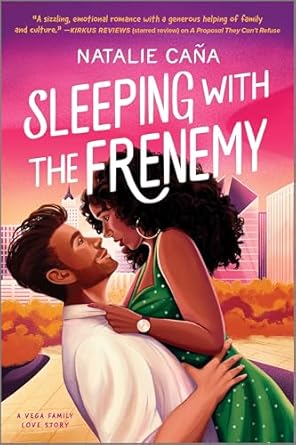
Book Excerpt: The Banned Books Club by Brenda Novak

“Wait…you’re not still running that book club you started in high school, are you?”

Gia Rossi had been shopping at her local grocer when her sister called. “I’ve never really stopped. Not

completely.” She switched her phone to her other ear, so she could use her more dexterous left hand to

steer her empty shopping cart across the parking lot to the reclamation point.

“Most of the members weren’t your friends. They were just people who blindly followed you no matter

what you did,” her sister pointed out drily.

Was there a hint of jealousy in that response? Margaret, who’d been known as Maggie when they were

kids but now called herself a more distinguished Margot, was only thirteen months younger than Gia, so

just one year behind her in school. Margot hadn’t been nearly as popular—but it was because she’d

never done anything exciting. She’d been part of the academic group, too busy excelling to be going out

having fun.

“A few of them were close friends,” Gia insisted. “Ruth, Sammie and a handful of others are still in the

book club with me, and we rotate picking a read.”

“Seriously? It’s been seventeen years since you graduated. I thought you left them and everything else

behind when you dropped out of college and took off for Alaska.”

Her sister never would’ve done something that reckless, that impulsive—or that ill-advised. Gia had

walked away from a volleyball scholarship at the University of Iowa, which was part of the reason her

family had freaked out. But she was glad she’d made that decision. She treasured the memories of

freewheeling her way through life in her twenties, learning everything she could while working on

crabbing and fishing boats and for various sightseeing companies. She wouldn’t have the business she

owned now, with a partner, if not for that experience. “No. We fell off for a bit, then we went back to it,

then we fell off again, and now we meet on Zoom to discuss the book we’re reading on the fourth

Thursday of every month.” She lowered her voice for emphasis. “And, of course, we make sure it’s the

most scandalous book we can find.”

Margot had never approved of the book group or anything else Gia did—and that hadn’t changed over

the years, which was why Gia couldn’t resist needling her.

“I’m sure you do,” Margot said, but she didn’t react beyond a slightly sour tone. She’d grown adept at

avoiding the kind of arguments that used to flare up between them, despite Gia sometimes baiting her.

“So seven or eight out of what…about sixty are active again?”

“For one month out of the year, the ratio’s quite a bit better than that,” she said as the shopping cart

clanged home, making her feel secure enough to walk away from it. “The rest of the group gets together

for an online Christmas party in December.”

“How many people come to that?”

Margot sounded as if she felt left out, but she’d never shown any interest in the book group. “Probably

fifteen or twenty, but it’s not always the same fifteen or twenty.” She opened the door to her red Tesla

Model 3, which signaled the computer to start the heater—something she was grateful for since she

hadn’t worn a heavy enough coat for the brisk October morning. Coeur d’Alene, Idaho, didn’t usually

turn this cold until November or December.

The car’s Bluetooth picked up the call as Margot asked, “Why haven’t you ever mentioned it?”

Now that they lived thirteen hundred miles apart, there were a lot of things she didn’t tell her sister. It

wasn’t until she’d left her hometown behind that she’d felt she could live a truly authentic life—one

without the constant unfavorable comparisons to her “perfect” sibling.

But that wasn’t why she hadn’t mentioned the book group. She’d assumed her sister wouldn’t want to

hear about it. Margot had been mortified when Gia challenged the gaggle of well-meaning but

misguided women from the PTA who’d descended on Room 23 on Back-to-School Night, insisting Mr.

Hart, head of the English department, drop The Catcher in the Rye, The Outsiders and The Handmaid’s

Tale from the Honors English reading list. Gia had expected her favorite teacher to stand up for the

books she loved by explaining why they were so important. She’d known how much he’d loved those

books, too. Instead, just to avoid a fight, he’d caved in immediately, which was what had incited her to

start a club that championed the books they’d targeted—as well as others.

That was the first time Mr. Hart had let her down, but it wouldn’t be the last. “If you’d ever joined the

club, you’d be on the email list,” she said as she backed out of the parking space.

“I would’ve, but you know me. I don’t really read.”

Her sister would not have joined. The Banned Books Club was far too controversial for Margot. It

would’ve required a bit of rebellion—something she seemed incapable of. And maybe she didn’t read

much fiction, but Gia knew her to consume the occasional self-help tome. That was probably how she

reassured herself she was still the best person she knew, because if there was anyone who didn’t need a

self-help book, it was Margot. Their parents’ expectations were more than enough to create her

boundaries.

“You should try reading along with us now and then. It might broaden your horizons.” As good as

Margot was, she had a mind like a steel trap—one that was always closed, especially when faced with

any information that challenged what she already believed. She lived inside a bubble of confirmation

bias; the only facts and ideas that could permeate it were those that supported her world view.

“I’m happy with my horizons being right where they are, thank you.”

“You don’t see the limitations?”

“Are you trying to offend me?” she asked.

Gia bit back a sigh. That was the difference between them. Margot would sacrifice anything to maintain

her position as their parents’ favorite child, to gain the approval of others, especially her husband, and

be admired by the community at large. Growing up, she’d kept her room tidy, gotten straight As and

played the piano in church. And these days, she was a stay-at-home mom with two children, someone

who made a “hot dish”—what most people outside the Midwest would call a casserole—for any

neighbor, friend or acquaintance who might be having surgery or suffering some kind of setback.

Her conventionalism was—in certain ways—something to be admired. As the black sheep of the family,

Gia knew better than to try to compete with Margot. That wasn’t possible for someone who couldn’t

take anything at face value. She had to question rules, challenge authority and play devil’s advocate at

almost every opportunity, which was why she was surprised that her sister had been trying, for the past

two weeks, to convince her to come home for the winter. Their mother’s health had been declining

since she’d been diagnosed with breast cancer. It was at stage four before they discovered it, and the

doctors had done what they could, but Ida hadn’t responded to treatment. Margot claimed their mother

wasn’t going to last much longer, that Gia should spend a few months with her before it was too late.

But Gia was surprised Margot would risk the peace and contentment they all seemed to enjoy without

her.

Gia wasn’t sure she could go back to the same family dynamic she found so damaging, regardless. She

and her business partner ran a helicopter sightseeing company for tourists and flew hunters and

fishermen in and out of the remote wilderness—but Backcountry Adventures was closed during the

coldest months, from November to February. She would soon have the time off, so getting away from

work wouldn’t be a problem. It was more that when she was in Wakefield, the walls seemed to close in

around her. It simply got too damn hard to breathe. “Fine,” she grumbled. “Don’t answer that question.

But speaking of limitations, how’s Sheldon?”

“Seriously, Gia? I’m going to assume you didn’t mean to ask about him in that way,” her sister stated

flatly.

There was no love lost between Gia and her brother-in-law. She hated the way he controlled Margot,

how he could spend money on hunting or fishing or buying a new camper, but her sister had to scrape

and bow for a new pair of jeans. Margot explained it was because he earned all the money, that he was

trying to be a good “manager” by giving her such a tight budget so the business would be successful and

they’d have money to retire in old age, but to Gia, it seemed that Margot was making all the sacrifices.

Stingy was stingy, and yet he was the one who wanted Margot at home, waiting for him with a hot meal

at the end of the day. Their boys, Matthew and Greydon, were eight and six, both in school. Margot

could work part-time, at least, establish something of her own, if Sheldon wasn’t calling all the shots.

“It was a joke.” Gia really didn’t want to cause problems in her sister’s marriage. Margot insisted she

was happy, although if that were her life, Gia probably would’ve grabbed her kids and stormed out of

the house—for good—long ago.

“He’s doing great. He’s been busy.”

“It’s deer hunting season. I assume he’s going.”

“Next week.”

And what will you do—stay home and take care of the kids and the house while he’s gone? Gia wanted

to ask, but this time she managed to bite her tongue. “He’s going to Utah again?”

“Yeah. They go there every year. One of his buddies grew up in Moab.”

“Last winter, Sheldon’s business slowed down a bit, so I’m surprised to hear you say he’s been busy.”

“That was the economy in general. All trucking companies took a hit. I don’t think the same thing’s going

to happen this year, though. He just bought two new semis and is hiring more drivers.”

“He’s quite the businessman.” Gia rolled her eyes at her own words. He hadn’t built the trucking

business; he’d inherited it from his parents, who remained heavily involved, which was probably what

saved it from ruin. But thankfully, Margot seemed to take her words at face value.

“I’m proud of him.”

He was proud of himself, could never stop talking about his company, his toys, his prowess at hunting or

four-wheeling or any other “manly” pursuit. Gia was willing to bet she could out-hunt him if she really

wanted to, but the only kind of shots she was willing to take were with her camera.

Still, she was glad, in a way, that her sister could buy into the delusion that Sheldon was a prize catch.

“That’s what matters,” she said as she pulled into the drive of her two-bedroom condo overlooking Mill

River. The conversation was winding down. She’d already asked about the boys while she was in the

grocery store—they were healthy and happy. She was going to have to ask about Ida before the

conversation ended, so she figured she might as well get it over with. “And how are Mom and Dad?”

Her sister’s voice dropped an octave, at least. “That’s actually why I called…”

Gia couldn’t help but tense; it felt like acid was eating a hole in her stomach. “Mom’s taken a turn for

the worse?”

“She’s getting weaker every day, G. I—I really think you should come home.”

Closing her eyes, Gia allowed her head to fall back against the seat. Margot couldn’t understand why Gia

would resist. But she’d never been able to see anything from Gia’s perspective.

“G?” her sister prompted.

Gia drew a deep breath. She could leave Idaho a few weeks before they closed the business. Eric would

cover for her. She’d worked two entire months for him when his daughter was born. She had the

money, too. There was no good excuse not to return and support her family as much as possible—and if

this was the end, say goodbye to her mother. But Gia knew that would mean dealing with everything

she’d left behind.

“You still there?”

Gathering her resolve, Gia climbed out of the car. “Sorry. My Bluetooth cut out.”

“Did you hear me? Is there any chance you’d consider coming home, if only for a few weeks?”

Gia didn’t see that she had any choice. She’d never forgive herself if her mother died and she hadn’t

done all she could to put things right between them. She wished she could continue procrastinating her

visit. But the cancer made it impossible. “Of course. Just…just as soon as I finish up a few things around

here.”

“How long will that take you?”

“Only a day or two.”

“Thank God,” her sister said with enough relief that Gia knew she couldn’t back out now.

What was going on? Why would having her in Wakefield matter so much to Margot?

“I’ll pick you up from the airport,” her sister continued. “Just tell me when you get in.”

“I’ll get back to you as soon as I’ve made the arrangements.”

Excerpted from THE BANNED BOOKS CLUB by Brenda Novak. Copyright © 2024 by Brenda Novak. Published by MIRA Books, an imprint of HarperCollins.

DID YOU ENJOY WHAT YOU JUST READ? IF YES, THEN SUBSCRIBE TO THE BLOG, GIVE THE POST A LIKE, OR LEAVE A COMMENT! NEW POSTS ARE UP EVERY TUESDAY & THURSDAY!
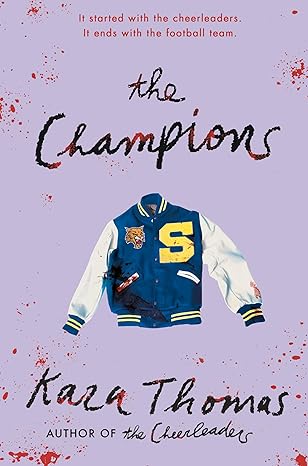
Book Excerpt: The Booklovers Library by Madeline Martin

PROLOGUE

Nottingham, England April 1931

JUST ONE MORE CHAPTER. Emma lingered in the storage area on the second floor of her father’s bookshop, Tower Bookshop, with Jane Austen’s Emma cradled in her lap. Sadly, not her namesake—her parents had named her Emmaline for an aunt she’d never met, who had died on Emma’s seventh birthday ten years ago.

Still, the book was one of Emma’s favorites.

“Emma.” Papa’s voice rose from somewhere in the bookshop, sharp with irritation.

She frowned. Papa was seldom ever cross with her.

Perhaps the smoke from the man who had come in with his cigar earlier still lingered in the shop.

She settled a scrap of paper into the spine of her book.

“Emmaline!” Something to that second cry snapped her to attention, a raw, frantic pitch.

Papa was never panicked.

She leaped up from the seat with such haste, the book dropped to the ground with a whump.

“I’m in the warehouse,” she called out, racing to the door.

The handle was scalding hot. She yelped and drew back. That’s when she saw the smoke, wisps seeping beneath the door, glowing in the stream of sunlight. 

Fire.

She put her skirt over her hand and twisted the knob to open the door. Thick plumes of smoke billowed in, black and choking.

She sucked in a breath of surprise, unintentionally inhaling a lungful of burning air. A cough racked her and she stumbled back, her mind reeling as her feet pulled her from the threat.

But to where? This was the only exit from the storeroom, save the second-floor window.

“Papa,” she shouted, terror creeping into her voice.

All at once, he was there, wrapping a blanket around them, the one she kept in the shop for cold mornings before the furnace managed to heat the old building.

“Stay at my side.” Papa’s voice was gravelly beneath the blanket where he’d covered the lower part of his face. Even as he led her away, a great cough shuddered through his lean frame.

Beyond the wall of smoke was a vision straight out of Milton’s Paradise Lost as fire licked and climbed its way up the towering stacks of books, devouring a lifetime of careful curation. Emma screamed, the sound muted by the blanket.

But Papa’s hand was firm at her back, pressing her forward. “We have to run.” Not slowing, he guided her to the winding metal staircase. She used to love clattering down it as a girl, hearing the metal ringing around her.

“It’s hot,” Papa cautioned. “Don’t touch it.”

Emma hugged against his side as they squeezed down the narrow steps that barely fit the two of them together. It swayed beneath their weight, no longer sturdy as it had once been. The blazing heat felt as though it was blistering Emma’s skin. Too hot. Too close. Too much.

And they were plunging deeper into the fiery depths.

The soles of Emma’s shoes stuck to the last two steps as rubber melted against metal.

What had once been rows of bookshelves was now a maze of flames. Even Papa hesitated before the seemingly impassable blaze.

But there was nowhere else to go.

The fire was alive. Cracking and popping and hissing and roaring, roaring, roaring so loud, it seemed like an actual beast.

“Go,” he shouted, and his grip tightened around her, pulling her forward.

Together they ran, between columns of fire that had once been shelves of books. An ear-shattering crack came from above, spurring them to the front as fire and sparks poured down behind them.

Emma ran faster than she ever had before, faster than she knew herself capable. Papa’s arm at her side yanked her this way or that, navigating through the fiery chaos. Until there was nowhere to go.

Papa roared louder than the fire beast and released her, running toward the blazing door. It flew open at the impact, revealing clean sunny daylight outside. He turned toward her even as she rushed after him and grabbed her around the shoulders, hauling her into the street.

Emma gulped in the clean air, reveling in the cool dampness washing into her tortured lungs. A crowd had gathered, staring up at the Tower Bookshop. Some came to Emma and Papa, asking in a frenzy of voices if they were hurt.

In the distance came the scream of emergency sirens. Sirens Emma had heard her entire life, but had never once needed herself.

There was need now. She held on to Papa’s hand and looked behind her at the building that had been in her family for two generations and was meant to become hers someday. Her gaze skimmed over the bookshop to the top two floors where their home had once been.

The fire beast gave a great heaving howl and the top floor crumpled.

Someone grabbed her from behind, dragging her back as the rest of the structure came down, ripping her hand from her father’s. She didn’t reach for him again, unable to move, unable to think, her eyes fixed on the building as it crashed in on itself in a fiery heap. Their livelihood. Their home.

All the pictures of her mother who had died after Emma was born, all the books she and her father had lovingly selected from bookshops around England on the trips they’d taken together, everything they’d ever owned.

Gone.

Emma choked on a sob at the realization.

Everything was gone.

“We need a doctor.” A man’s voice broke through her horror, pulling her attention to her father.

He lay on the ground, motionless. Soot streaked his handsome slender face, and his thick gray hair that had once been the same shade of chestnut as hers was now singed in blackened tufts.

“Papa?” She sagged to the ground beside him.

His eyes lifted to her, watery blue and filled with a love that made her heart swell. The breath wheezed from his chest like a kettle’s cry. “You’re safe.”

Once the words left his mouth, his body relaxed, going slack.

“Papa?” Emma cried.

This time his eyes did not meet hers. They looked through her. Sightless and empty.

She shuddered at how unnatural he appeared. Like her father, and yet not like her father.

“Papa?”

The wailing sirens were still too far-off.

“I’m a doctor.” A man knelt on the other side of her father. His fingers went to Papa’s blackened neck and the man’s sad brown eyes turned up to her.

“I’m sorry, love. He’s gone.”

Emma stared at the man, refusing to believe her ears even as she saw the truth.

It had always just been Emma and her father, the two of them against the world, as Papa used to say. They read the same books to discuss together, they worked every day at the bookshop together, friends and colleagues as much as they were father and daughter. Once Emma had completed her schooling, she’d even traveled with him, curating books like the first editions they were still waiting on to arrive from Newcastle.

Now that beautiful light that shone in his eyes had dulled. Lifeless.

It was no longer Papa and her against the world.

He was gone.

Their shop was gone.

Their home was gone.

Everything she knew and loved was gone.

Excerpted from THE BOOKLOVER’S LIBRARY by Madeline Martin, Copyright © 2024 by Madeline Martin. Published by arrangement with HTP Books, a Division of HarperCollins.

DID YOU ENJOY WHAT YOU JUST READ? IF YES, THEN SUBSCRIBE TO THE BLOG, GIVE THE POST A LIKE, OR LEAVE A COMMENT! NEW POSTS ARE UP EVERY TUESDAY & THURSDAY!

Spotlight: The Berlin Apartment by Bryn Turnbull

Berlin 1961: When Uli Neumann proposes to Lise Bauer, she has every reason to accept. He offers her love, respect, and a life beyond the strict bounds of the East German society in which she was raised — which she longs to leave more than anything. But only two short days after their engagement, Lise and Uli are torn violently apart when barbed wire is rolled across Berlin, splitting the city into two hostile halves: capitalist West Berlin, an island of western influence isolated far beyond the iron curtain; and the socialist East, a country determined to control its citizens by any means necessary. 

Soon, Uli and his friends in West Berlin hatch a plan to get Lise and her unborn child out of East Germany, but as distance and suspicion bleed into their lives and as weeks turn to months, how long can true love survive in the divided city?

DID YOU ENJOY WHAT YOU JUST READ? IF YES, THEN SUBSCRIBE TO THE BLOG, GIVE THE POST A LIKE, OR LEAVE A COMMENT! NEW POSTS ARE UP EVERY TUESDAY & THURSDAY!

Book Review: The Night Guest by Hildur Knútsdóttir

I have scratches on my thighs when I get out of bed the next morning.

PLOT SUMMARY:

Iðunn is in yet another doctor’s office. She knows her constant fatigue is a sign that something’s not right, but practitioners dismiss her symptoms and blood tests haven’t revealed any cause.

When she talks to friends and family about it, the refrain is the same ― have you tried eating better? exercising more? establishing a nighttime routine? She tries to follow their advice, buying everything from vitamins to sleeping pills to a step-counting watch. Nothing helps.

Until one night Iðunn falls asleep with the watch on, and wakes up to find she’s walked over 40,000 steps in the night . . .

What is happening when she’s asleep? Why is she waking up with increasingly disturbing injuries? And why won’t anyone believe her?

GRADE: A

REVIEW:

I don’t think I’ve ever read a book from an Icelandic author so I was curious about that going in. I love how the language used is direct and to the point, and the short chapters allow the story to move at a fast paced rhythm. The plot is very intriguing and mysterious, as you the reader, along with the protagonist have no idea what’s going on and what exactly is happening to her every time she falls asleep. Is she sleepwalking? Why is she waking up with bruises? Why does she feel like she has spent all night walking or lifting?

Iðunn doesn’t know what’s happening to her, and neither does the reader. It’s a dark, twisty journey and you can’t stop reading wanting to know exactly what’s going on. If you love short books, this may be exactly what you need, as it’s almost 200 pages.

The prose is sparse, but you get the feeling of loneliness and isolation that plagues Iðunn like a haunted specter. From the first page, you will be sucked into this dark tunnel of no return and yet you cannot stop, because you need to know.

I recommend this book if you love mysterious, quiet horror and enjoy short books and chapters.

*Thank you so much to NetGalley and Tor Nightfire for the digital copy of this book in exchange for an honest review!

DID YOU ENJOY WHAT YOU JUST READ? IF YES, THEN SUBSCRIBE TO THE BLOG, GIVE THE POST A LIKE, OR LEAVE A COMMENT! NEW POSTS ARE UP EVERY TUESDAY & THURSDAY!
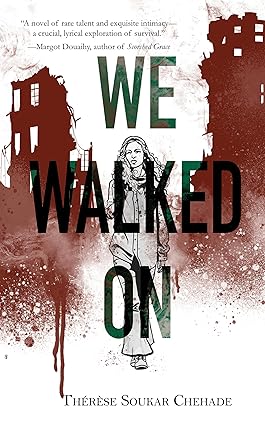
Book Review: American Rapture by C.J. Leede

We are all just dry tinder. And eventually we will all burn.

PLOT SUMMARY:

A virus is spreading across America, transforming the infected and making them feral with lust. Sophie, a good Catholic girl, must traverse the hellscape of the midwest to try to find her family while the world around her burns. Along the way she discovers there are far worse fates than dying a virgin.

GRADE: A

REVIEW:

American Rapture is a complete departure from Maeve Fly regarding protagonists. Maeve is violent and kinky while Sophie is a tender-hearted virgin. The apocalypse is here and it comes in the form of a virus that causes those infected to become sexually feral. Sophie goes on a wild road trip across the Midwest in search of her brother but also tries to outrun a virus that is infecting everyone. While the virus sounds horrific (because the person dies a few days later after being infected), the real horror is how Sophie was brought up. Sophie had a very strict Catholic upbringing that had her parents not allowing her to watch television or read books they didn’t approve of. Her descriptions of her upbringing – the constant fear, guilt, and shame are scary (and can understand why people decided to remove themselves from religion when that is what is being preached). I guess for me, despite being Catholic, I was raised very liberal and so never understood the restrictions some of my friends had (I’ve also noticed that Italian Catholics are more chill cause Roman paganism still hovers predominately over us). This is to say that the most horrific things that happen in this novel are caused by the religious cult and misogynistic men – which are very real horrors (and ones we deal with in our own lives). If you enjoyed movies like Zombieland, you will love this novel as the group of characters get to visit and stay in some really fun Midwestern locations (I was having a blast Googling and finding pix of these crazy but cool places!). This book will make you feel all the feelings – but there are enough horrific, gory scenes for the extreme horror lovers out there. I really loved reading this and going on this wild ride, and Leede always lands her endings in ways that are hard to beat. This is a phenomenal novel that is jam-packed with emotion and grit, and never a dull moment in sight.

I recommend this book if you love horror that leans on cults, conspiracy theories, pandemics, and zombies (although not entirely zombies, what happens to the infected is close enough).

*Thank you so much to NetGalley and Tor Nightfire for the digital copy of this book in exchange for an honest review!

DID YOU ENJOY WHAT YOU JUST READ? IF YES, THEN SUBSCRIBE TO THE BLOG, GIVE THE POST A LIKE, OR LEAVE A COMMENT! NEW POSTS ARE UP EVERY TUESDAY & THURSDAY!
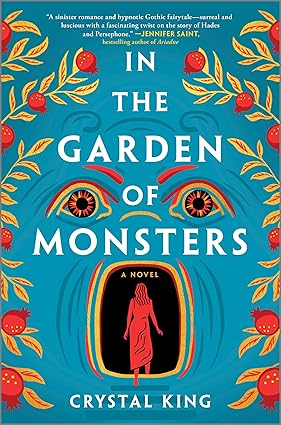
Book Excerpt: The Ghost Cat by Alex Howard

FIRST HAUNTING, 

APRIL 1909 

On the morning of his first haunting, Grimalkin felt supple and alive; more alive, in fact, than he’d ever felt as a sentient breathing Victorian cat. 

He had landed in 1909 with a thump. Rather than having to acclimatize his senses to the eerie, misty environment of Cat-sìth’s waterfall, the transition through time felt immediate, as if he had been dropped from a huge height. Suddenly, he was just there…sitting back on a fine oak table in the bay window of 7/7 Marchmont Crescent. With one turn of the head, he could see the whole street: there were the communal gardens opposite, tucked behind filigreed iron railings and sweeping off to the right as the street disappeared into a tree smudged infinity. It was clearly springtime as the trees opposite were bursting with taut little pods of pink blossom. Glimpsed at intervals along the street, the odd horse and carriage loitered while awaiting the emergence of passengers from tenement doors, their oil-painting-like stillness disturbed only when the horses tugged against the reins or stamped on the cobbles with an irritated clop. Above, purple clouds huddled tightly, their edges yellow where the sun tried its best to pierce through. The cobbles were dark with the wetness of a recent shower. Grimalkin knew these showers well, having often bolted in from the garden when they struck, only to stare longingly out of this very window as the Edinburgh sun burst out again, making steam rise off the carriage tops below. It was a familiar and heart-warming scene; one Grimalkin could happily gaze at for hours in Victorian times, particularly if it was mating season and the pigeons were out on the sandstone sill, cooing and clucking tantalizingly close, almost within swiping distance.

Well, nothing has changed! thought Grimalkin suddenly, with a pang of disappointment. That Cat-sìth charlatan has merely returned me to Victoria’s reign! Why, I have been duped! Ah…ah, ah steady on, wait… 

He turned his gaze back into the belly of the room. His eyes widened and his back fur prickled upward in shock. Here, everything was different. In place of the somber damask wallpaper of his Victorian youth, the walls had been painted a pure, apple-green. Rather than great mirrors and huge paintings, little artworks studded the walls in clusters. Most of them appeared to feature the same fairy-like woman in billowing white robes. French? Dutch? Grimalkin wasn’t sure. There was a soft hiss emanating from the room…somewhere on the wall? Somewhere above? Grimalkin’s ears twitched furiously. Yes, there! In the center of the ceiling, the chandelier had been removed. In its place there hung a little brass sconce that breathed out an orangey flame behind a smoked-glass lampshade. Above it, the formerly pristine ceiling rose had turned black with tarry soot and Grimalkin could feel the dryness of the gas-heated air rasp at his throat.

They think they’re being clever, he thought, eyeing the ceiling rose. They will struggle to beat a good coal fire for efficiency and comfort! 

Fancy bow-fronted armchairs, settees and cabinets squatted about the floor, upon which books and papers were piled up into dubious little towers. On a side table, a looking glass and moustache comb rested beside an open snuff box. Apart from the flicker of the blue flame, everything was perfectly still as if frozen by some kind of spell. 

Humph, apologies Cat-sìth… I see there HAS been a change… 

How can so much change in just seven years? Was Eilidh still tending the fires? It made Grimalkin feel eerie looking at it all: this room where he drew his final breaths had become a lens into the future. He was suddenly struck with the sense that this whole business of time travel might turn out to be rather more taxing on his brain than he’d initially thought. 

But something else was different—Grimalkin himself. As he stood on the table, his paws perfectly centered, he became suddenly aware of a complete absence of pain. The arthritic throb in his back and legs had vanished. His left rear leg and flank, always a focus of curiosity to Marchmont Crescent’s visitors owing to its bright marmalade hue, had lost its oily aged texture and become velveteen again, like a fox cub’s tail. Down at the point where his paw hinged from the base of his leg, the little bald patch that had so long been the recreation ground for a particularly stubborn army of fleas, was now smooth and itch-free. 

Could it be that my ghosting role has rid me of the pestilence? If so, praise be! 

Grimalkin rewarded the discovery with a wash. Gazing at the windowpane, he was shocked to discover he couldn’t see his reflection. However, as he rose and arched his back with ease, and felt the springiness of his ears as they pinged up each time he sent a damp paw across them, and glimpsed his perfectly pink toe pads, he could tell he had become young again. He couldn’t see his eyes, but were he able to, he would have guessed that they were no longer rheumy and grayish and that his whiskers were sharp and unjagged again. And he would have been right. 

My word, I’m veritably juvenile! he thought, stretching up his tail like a broom handle. A potent, virile pride washed across him: he was a looker again, an Adonis of cats…a youthful, muscular mouser whose iron claw had once commanded the envy and respect of all the cats in the neighborhood. He rose to his paws and turned a large vainglorious circle on the table, his ears pricked up into sharp triangles. He leaped onto the back of an armchair, his supernatural paws making no noise whatsoever as they landed on the polished oak. He felt positively ageless, neither kitten nor adult…with all the vim and energy of the former but with the latter’s acuity of mind. 

I feel in the most capital of moods! May I be a spirit-puss FOREVER MORE! 

Suddenly a noise. From over his shoulder there came the familiar creak of the living room door lock turning. Grimalkin spun around. A short, narrow-shouldered man entered the room in a silver-swirled Jacquard waistcoat. The man strode over to the bay window as if about to pull open the sashes, before turning back and making a sudden stop in the middle of the room, as if he’d been halted by a police constable. He then proceeded to bounce on the balls of his feet, his hands clenching and unclenching, and his eyes darting around the room frantically. At one point, he appeared to look directly in Grimalkin’s direction, though could see nothing of him of course. What caught Grimalkin’s feline attention most of all, however, was the perfect little mustache that crossed the man’s top lip, its ends waxed up into points, like a mouse’s tail. It seemed to jiggle in perfect time with the man’s nervous energy as he bounced up and down on the spot. Stiffly, the man flopped down on the settee, placing one leg over the other with a dandy-like flourish, the fingers on his right hand patting a little ditty on the settee cushion, in an ongoing attempt to calm himself. 

The man of the house? mused Grimalkin, for the man moved with the ease of a gentleman who knows he is unobserved in his own space; a rich man; an entitled man who has the wealth and means to live, by and large, as he pleases… 

The man closed his eyes and let out a big sigh through lips circled into an O-shape. 

There was a jumpiness to the way he moved around, which, along with his scruffy waistcoat, misaligned collar and limp bow tie, made up the sort of human that would put any cat ill at ease. His fingers were continually tap-tap-tapping, and Grimalkin was convinced he was the type who went about their business far too quickly as if there was a fire around every corner, or a bear careening up the stairwell, or a marauding army of Jacobites about to scale the tenement walls. This behavior was at odds with Grimalkin’s, who, like all Victorian cats, knew a thing or two about taking his time and tending to his appearance properly. It was like being around a jack-in-the-box… an awful spring-loaded human who could leap and surprise at any moment and positively ruin a good slumber. 

I wish he’d bally-well SLOW DOWN. Such unrestful behavior! 

It didn’t help matters that there appeared to be something on the man’s mind. Something important. 

A thought occurred to Grimalkin. He cannot see me, but I wonder if he can hear me? With that, he opened his mouth and let out a gentle, but concerted purr-mew. 

Prrrrrp? Prrrrrrrrrrrrrr—woaw? 

But the man did not respond. 

Silence briefly filled the space between cat and man as the gentleman took a pipe from his breast pocket. Drumming his fingers, he plucked a tin from a little adjacent table from which he extracted a healthy amount of stringy tobacco and a box of matches. Striking one of the matches, he guided the flame to the two gas lamps that curled out from the mantelpiece like the necks of swans. Blue-yellow flames leaped out from the sconces as the lit match approached, spurting like fiery dragon breath, and reflecting for a moment on the man’s forehead. 

“Heavens Archie, man, pull yourself together!” blurted the gentleman to himself, tossing his tobacco box back on the side table. “You’re a publisher, for God’s sake. He should fear you if anything. Just be civil. J. M. Barrie. Humph! So, he’s started doing well for himself. Well, who hasn’t in this day and age? The whole world’s on the make what with motorcars and electric lights and God knows what else! J. M. Barrie? Why, he’s just like everybody else! And I need not fear him; you hear that Archie, ol’ bean? You need not fear him.” The man fell silent for a moment. Grimalkin scrutinized his brow to see if any secrets of his character lurked there.

Prrrrrpppppppp…” said Grimalkin, this time a little louder. No, he cannot hear me. For three he stays, for three he strays, for three he plays. I am only meant to observe in this age…with no poltergeist capabilities, and perhaps no power to roam beyond this flat either. This gentleman and I shall have to get better acquainted. 

Unseen observation felt exciting to Grimalkin: the thrill of the gaze, unthreatened, with the only prospect of pain being that which is emotional, rather than physical…the chance to witness the unvarnished truth of the ages! He wanted to find out what happened and who this J. M. Barrie character was. Evidently, he was a writer of some sort, though not one Grimalkin had ever heard of during Queen Victoria’s reign. There had been piles of books he’d slept on and, occasionally, perused, back in the 19th century; but they had all been written by a certain Robert Louis Stevenson who was preoccupied with lighthouses, or Elizabeth Gaskell, who was obsessed with wizened old clerks and long descriptions of dirty mills that, frankly, made Grimalkin’s whiskers droop. 

With a moody burst of energy, the man procured a walking cane from underneath the settee which he used to jab a wooden button, mounted just to the right of the fireplace. On pushing this, a bell chimed down the hall. There followed a padding of feet. And from those feet alone, Grimalkin could tell who was approaching…the mere dance of that noise into his ears made him slowblink in fondness. Eilidh. 

The doorknob turned, and in came Eilidh herself, the same boar-bristle brush in her hand, and the same flushed face, like a little rosy moon, under the same white headdress. Unchanged. She smiled and turned to the master. 

“Yes, sir? Can I help ye?” 

A delicious scent came with her into the room: one of her famous pies was in the oven, known throughout Edinburgh for its exquisite taste. She breathed heavily. It was then Grimalkin noticed the first signs of age: she was a little wider about the shoulders and her eyes, though still sparkling, had lost their youthful, girlish twinkle. The pompadour hairstyle had gone; instead, her hair was pulled back in a matronly style that Grimalkin suspected offered maximum practicality for her work and nothing else. Her skin had become thicker, too, and those once perfectly pink cheeks had lost some of their porcelain tautness. But Eilidh’s hands were perhaps the biggest change—the skin was cracking about the knuckles, which had clearly become arthritic, and the undersides were so red that Grimalkin suspected they must bleed often. Despite this, her fingernails remained scrupulously clean, the progress of years clearly doing nothing to her habit of scrubbing them free of coal dust after each shift. Oh, Eilidh! The same sweet maid who found Grimalkin in Thirlestane Lane stables, and tended to him throughout his young life, right up to his dying day in 1902! 

Excerpted from The Ghost Cat by Alex Howard, Copyright © 2024 by Alex Howard. Published by Hanover Press.

DID YOU ENJOY WHAT YOU JUST READ? IF YES, THEN SUBSCRIBE TO THE BLOG, GIVE THE POST A LIKE, OR LEAVE A COMMENT! NEW POSTS ARE UP EVERY TUESDAY & THURSDAY!

3 Books on my current TBR

AMERICAN RAPTURE by C.J. LEEDE

A virus is spreading across America, transforming the infected and making them feral with lust.

Sophie, a good Catholic girl, must traverse the hellscape of the midwest to try to find her family while the world around her burns. Along the way she discovers there are far worse fates than dying a virgin…

The end times are coming.

BURY YOUR GAYS by CHUCK TINGLE

Misha knows that chasing success in Hollywood can be hell.

But finally, after years of trying to make it, his big moment is here: an Oscar nomination. And the executives at the studio for his long-running streaming series know just the thing to kick his career to the next level: kill off the gay characters, “for the algorithm,” in the upcoming season finale.

Misha refuses, but he soon realizes that he’s just put a target on his back. And what’s worse, monsters from his horror movie days are stalking him and his friends through the hills above Los Angeles.

Haunted by his past, Misha must risk his entire future—before the horrors from the silver screen find a way to bury him for good.

EVIL IN ME by BROM

Aspiring musician Ruby Tucker has had enough of her small rural town and dysfunctional family. But a falling out with her best friend and bandmate has killed her dreams of escaping and making it big in the Atlanta punk scene.

While helping her eccentric neighbor organize his religious artifacts, an ancient ring clamps down on her finger—possessing her with the spirit of a blood-thirsty demon. There’s no exorcizing it unless hundreds of people chant a spell to set Ruby free. And what’s worse, the ring is a beacon for evil, drawing an unimaginably wicked mob straight to Ruby, hungry for her flesh.

If Ruby can get her band back together, she has a shot at salvation. It’s time for her to face the music and put her whole soul into a song—one powerful enough to raise some Hell.

Are any of these books on your current TBR? Which books do you have?

DID YOU ENJOY WHAT YOU JUST READ? IF YES, THEN SUBSCRIBE TO THE BLOG, GIVE THE POST A LIKE, OR LEAVE A COMMENT! NEW POSTS ARE UP EVERY TUESDAY & THURSDAY!
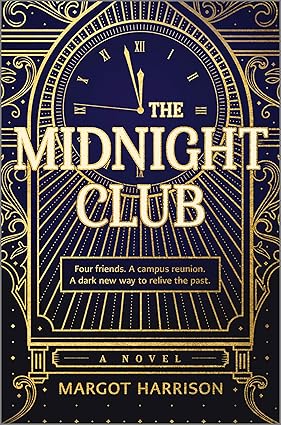
House of Bone and Rain by Gabino Iglesias: A Tale of Grief and Vengeance

Every story is a ghost story.

PLOT SUMMARY:

For childhood friends Gabe, Xavier, Tavo, Paul, and Bimbo, death has always been close. Hurricanes. Car accidents. Gang violence. Suicide. Estamos rodeados de fantasmas was Gabe’s grandmother’s refrain. We are surrounded by ghosts. But this time is different. Bimbo’s mom has been shot dead. We’re gonna kill the guys who killed her Bimbo swears. And they all agree.

Feral with grief, Bimbo has become unrecognizable, taking no prisoners in his search for names. Soon, they learn Maria was gunned down by guys working for the drug kingpin of Puerto Rico. No one has ever gone up against him and survived. As the boys strategize, a storm gathers far from the coast. Hurricanes are known to carry evil spirits in their currents and bring them ashore, spirits which impose their own order.

Blurring the boundaries between myth, mysticism, and the grim realities of our world, House of Bone and Rain is a harrowing coming of age story; a doomed tale of devotion, the afterlife of violence, and what rolls in on the tide.

GRADE: A

REVIEW:

I’ve read Gabino Iglesias’ Bram Stoker-winning debut novel and enjoyed it very much. So I was very excited when I received an ARC for his latest novel. I decided to go in blind, not reading the plot summary because I feel like his books are a real treat if you experience them as the protagonist does, learning on the way. In House of Bone and Rain, Gabe gets lured into avenging the death of his best friend Bimbo’s mother, Maria. Coincidentally, the hurricane that’s approaching Puerto Rico is also named Maria. Residents of Puerto Rico have a lot of trauma when it comes to hurricanes, as mentioned in the book, it devastates whole populations, kill so many, and keeps the island without electricity and water for months.

Prior to the hurricane, Gabe along with his friends Tavo, Paul, and Xavier helped Bimbo gain more info about who killed his mother – but someone is now targeting the friend group, and it looks like Gabe might be next. The horrors of the book are both real and supernatural, as they intermingle and you can’t decide what’s worse, the horror done by humans or the ones brought by the supernatural, because they’re both equally horrifying.

This is a tale of grief, processing colonialism and racism, and coming of age. I love how Gabino writes his characters and how they act how one realistically would, meaning that there isn’t a character that is only good and one that is only bad, they all have good traits but also are heavily flawed because of their loyalty to each other (which I can’t blame them because a strong friendship won’t have you bailing when things get tough). Although this book is fiction, I feel like there are a lot of living situations that the writer experienced himself and it shows, which makes the book even more poignant and powerful.

I recommend this book for those who love fast-paced thrillers with supernatural elements woven into the plot.

*Thank you so much to NetGalley and Mulholland Books for the digital copy of this book in exchange for an honest review!

DID YOU ENJOY WHAT YOU JUST READ? IF YES, THEN SUBSCRIBE TO THE BLOG, GIVE THE POST A LIKE, OR LEAVE A COMMENT! NEW POSTS ARE UP EVERY TUESDAY & THURSDAY!

Poetry: An Ode to Fearless Women by Nikita Gill

Defined by no man, you are your own story,

blazing through the world, turning history into herstory.

And when they dare to tell you about

all the things you cannot be,

you smile and tell them,

“I am both war and woman and you cannot stop me.”

DID YOU ENJOY WHAT YOU JUST READ? IF YES, THEN SUBSCRIBE TO THE BLOG, GIVE THE POST A LIKE, OR LEAVE A COMMENT! NEW POSTS ARE UP EVERY TUESDAY & THURSDAY!
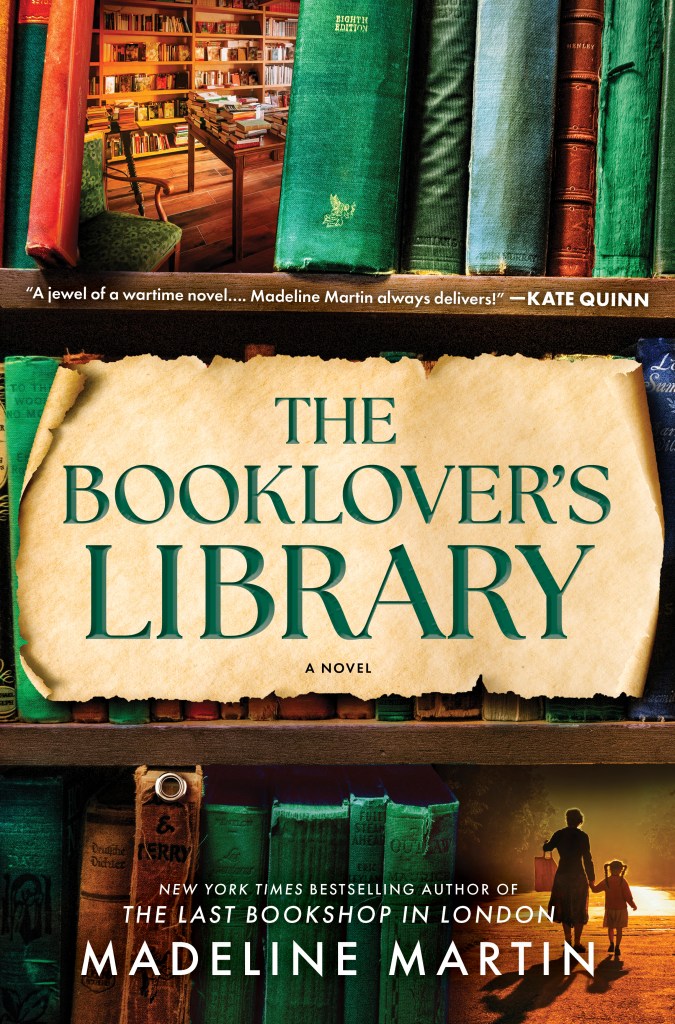
Throwback Thursday: Rediscovering the Vampire Chronicles – A Journey into Anne Rice’s Immortal World

Drink from me and live forever.

During my teens, I read this novel several times and even made a little skit to perform for my high school’s Drama Fest. I saw the movie more times than I can count, and those intense teenage years, were filled with the Vampire Chronicles. I read the new installment of Price Lestat a few years ago, and it felt like revisiting an old friend. I was devastated when Anne Rice passed away as she was my favorite living author.

With the series Interview with the Vampire, my love for the characters resurfaced, and I decided to revisit the original novel. I instantly fell in love with the world that Rice created and its three central characters, Louis, Lestat, and Claudia. Only this time, I didn’t find myself sympathetic towards Louis as I always was in the past. This time, I felt like he was always placing the blame on Lestat when it was obvious that some of the terrible choices he made were his and his alone.

New Orleans is as much as a character in the book as the characters themselves, with its lush vegetation, Spanish houses, churches, mausoleums, and jasmines. I loved reading about Louis’s encounter with Lestat who proposes to him a better life and offers him the gift of immortality (although Louis sees this more as a curse). Claudia, a young child who cannot grow up is by far the most interesting and complex character. She has reasons to detest the ones who made her, and yet, like Louis she places the blame only on Lestat when they both share this blame.

Lestat, the charismatic maker who later becomes the protagonist of the Vampire Chronicles is depicted as violent, ill-tempered, a spend thrift, and arrogant vampire. But as we later learn in the books that follow, Louis’ interpretation of events were not always correct.

I absolutely loved revisiting this vampire world and it also reminded me that the new TV series follows the events of the novel much more faithfully than the movie ever did (although some things were altered for the series).

Anne Rice created a lush, alluring world with characters that are worth loving (and disliking sometimes, like Armand!) but ultimately remain in your heart forever.

DID YOU ENJOY WHAT YOU JUST READ? IF YES, THEN SUBSCRIBE TO THE BLOG, GIVE THE POST A LIKE, OR LEAVE A COMMENT! NEW POSTS ARE UP EVERY TUESDAY & THURSDAY!