Margaret’s rare autoimmune condition has destroyed her life, leaving her isolated and in pain. It has no cure, but she’s making do as best she can—until she’s offered a fully paid-for spot in an experimental medical trial at Graceview Memorial.
The conditions are simple, if grueling: she will live at the hospital as a full-time patient, subjecting herself to the near-total destruction of her immune system and its subsequent regeneration. The trial will essentially kill most of, but not all of her. But as the treatment progresses and her body begins to fail, she stumbles upon something sinister living and spreading within the hospital.
Unsure of what’s real and what is just medication-induced delusion, Margaret struggles to find a way out as her body and mind succumb further to the darkness lurking throughout Graceview’s halls.
GRADE: B-
REVIEW:
The Graceview Patient was marketed as Invasion of the Body Snatchers meets Misery, and since I love both, I went in expecting this to be right up my alley. And in many ways, it was. That said, experiencing it as an audiobook added an extra layer of surreal intensity—especially since it’s narrated by Xe Sands, who also read Spread Me. Her voice turned an already disorienting story into a full-blown fever dream.
Meg has lived for years with a rare autoimmune disease that has slowly stripped away her relationships, her career, and any sense of normalcy. When she’s offered a spot in an experimental medical trial—one that will completely destroy her immune system before rebuilding it—she agrees. After all, she feels she has nothing left to lose (and getting paid doesn’t hurt). But as the treatment progresses, unsettling things start happening, and Meg begins to suspect that the experiment isn’t quite what she was told. Something else may be using her body as its test subject.
This is a deeply trippy, slow-burn descent into medical horror. If you enjoy unsettling atmosphere, creeping paranoia, and stories that blur the line between reality and hallucination, this one’s worth your time. Just be warned: if you’re not into slow burns, it may feel overly repetitive or too dreamlike to fully click.
*Thank you so much to NetGalley & Dreamscape Media for the audiobook copy of this book in exchange for an honest review!
DID YOU ENJOY WHAT YOU JUST READ? IF YES, THEN SUBSCRIBE TO THE BLOG, GIVE THE POST A LIKE, OR LEAVE A COMMENT! NEW POSTS ARE UP EVERY TUESDAY & THURSDAY!
VOICEOVER: ‘Maple Gold is here for endings and new beginnings . . .’
The scene opens with a young woman, Greta, standing on the pavement, waving as a car pulls away. She’s holding a small cardboard box.
GRETA (WHISPERING): ‘Bye Mum.’
She turns to face a pretty white house, straightens her back and smiles bravely. She’s ready to enter a new phase of her life—moving into her first home.
The front door is ajar, and she enters a hallway, then a sitting room. We can see there are more, bigger boxes sitting around the place, sealed and ready to unpack.
VOICEOVER: ‘It’s here for the good times and the even better ones . . .’
Greta looks apprehensive but takes a moment to take in her new surroundings. She switches on the kettle and opens a cupboard, disappointed to find it empty.
She spies her name written on the side of the box she carried in and opens it. Inside is her old teddy bear and a jar of Maple Gold coffee, a gift from her mum. Greta takes the jar out, becoming misty-eyed as she makes herself a cup of coffee. Wrapping her fingers around the cup helps her to feel more at home.
The doorbell rings, and she opens the door to find a group of her new neighbors gathered outside. They present Greta with flowers and another jar of coffee as a welcome present. It’s Maple Gold, of course.
They all laugh, and she invites them inside for coffee.
A CAPPELLA GROUP (SINGING): ‘You’re always at home with Maple Gold.’
Chapter 1
Present Day
GRETA PERKS LOVED three things in life more than anything—her family, the thrill of performing, and a fine cup of coffee. When she could combine all three, it was as satisfying as a frothy cappuccino on a cold day. But recently, a happy home life and sparkling career seemed to be slipping through her fingers.
‘I wish you could stay longer,’ she said, glancing between her husband, Jim, and their daughter, Lottie, as coffee cups clattered in the background. ‘Tonight’s important to me.’
She’d volunteered to be the guest speaker at Brewtique’s monthly Coffee Lover’s Night Out, talking about her acting career. It had been a while since she’d last performed in public, and her nerves were jumping around like frogs in a pond.
Jim offered her a smile. ‘I wish we could, too. But I promised Lottie I’d get her back to school.’ He passed Greta a shopping bag like it was a peace offering. ‘Just brought a few things you might need . . .’
‘Talent show rehearsal,’ Lottie muttered, not looking up from her phone. ‘Total waste of time.’
Greta and Jim shared a glance, a silent understanding of the challenges of raising a fifteen-year-old together while living apart.
‘A talent show? Sounds fun.’ Greta gave Lottie’s arm a quick reassuring rub. ‘What are you doing? A show tune, or a monologue? Perhaps even a Shakespeare sonnet?’
Lottie shrugged a disinterested shoulder.
Greta’s spirits dipped a little. ‘Well, whatever you do, I bet you’ll be great,’ she said.
‘We’ll grab a burger afterward, then I’ll drop her back at your place.’ Jim opened his mouth slightly, as if wanting to say something more. ‘Stay safe returning to your car tonight, okay?’
Greta nodded, hoping for a word of encouragement, perhaps a ‘good luck,’ ‘break a leg,’ or even a quick hug. But Lottie was already heading toward the door.
Jim’s fingers lightly brushed Greta’s arm, but didn’t linger.
Then he turned and followed their daughter outside.
Through the window, Greta watched as her family dashed across the road without her. She smiled brightly and waved, even though her stomach was twisting.
‘Drop her back at your place.’ The words stung like a paper cut.
She and Jim were over four months into a trial separation, with just a few weeks left until their self-imposed New Year’s Eve deadline. At that point they’d agreed to make a final call on the future of their marriage.
It didn’t seem as clear-cut as Greta had hoped. What had once felt like a simple decision—to try to rebuild their marriage or let it go—now felt tangled with uncertainty. After almost twenty years together, was she still in love with Jim? Was he still in love with her?
Greta peeked inside the bag, her mood lifting when she saw Jim had brought her herbal throat lozenges, a new notebook, and a spare pen.
Outside, the wet, grey pavement was the same color as the inky November sky, and she suddenly craved a rich mocha.
Greta turned to face the room. In half an hour, the place would hopefully be buzzing with people. She was determined to deliver an entertaining talk, even if it wasn’t exactly her kind of coffee shop.
She preferred cozy spaces where she could curl up with a good book, sipping coffee from mugs the size of plant pots. The type of place that served homemade rocky road and had a corner dedicated to board games.
Brewtique, on the other hand, had industrial-style light- bulbs and blackboards showcasing quirky concoctions, such as rhubarb and custard lattes. A pink neon coffee cup on the wall cast an eerie pink glow on her face. The spindly branches of a Christmas tree on the counter looked like they’d been pecked by crows.
Her long-time agent, Nora, had applauded Greta for spotting Brewtique’s Facebook post asking for local speakers. ‘Putting yourself forward shows brilliant initiative, darling. Well-done,’ Nora had gushed. ‘You never know who might be in the audience. Any exposure could help give your career a little boost. Plus, it’s a great way to plug your acting classes.’
A boost? Greta knew her career needed a defibrillator. If one human year equals seven dog years, the same rule definitely applied to actors out of the spotlight. She felt like her career had been on pause for too long, and she was ready to hit Play again.
Greta missed the camaraderie on set, filming the iconic Maple Gold coffee commercials she’d starred in with Jim and Lot- tie a decade ago. Nothing compared to the soar of her senses when the director called, ‘Action,’ and everything clicked into place. She longed to find that spark again, not just for herself, but in the hope of pulling her family back together again.
If Greta was honest, she also missed the attention. Champagne on ice in a silver bucket, fans queuing around the block for her autograph, and the occasional limousine whisking her to grand events had been cherries on top of the cake. Those memories felt almost unreal now, as if they belonged to someone else.
The students she’d coached since then seemed to enjoy her acting classes, but it wasn’t the same. Guiding nervous amateurs through voice projection techniques or stage presence didn’t give her the same buzz as stepping in front of a camera or an audience. Hopefully, tonight would rekindle some of that feeling, proof she still had something to offer.
The sound of dropped cutlery pulled her out of her thoughts. Greta turned to see Brewtique’s owner, Josie, rushing around, a dusting of flour in her hair. Meanwhile, her young pink-haired assistant, Maisie, dawdled in a corner, glued to her phone.
‘Need a hand with anything?’ Greta called out.
‘Oh gosh, no.’ Josie shook her head frantically. ‘You’re the talent. I’m just running a bit late with everything . . .’
‘Are you sure? I’ve already prepped for my talk.’
Josie bit her lip, tempted. ‘Well . . . setting up the refreshment table would be helpful, while I get changed. I’ve just popped fresh brownies in the oven. Maisie knows to keep an eye on them.’ She gave Greta a pointed look. ‘She’s new here.’
‘Sure,’ Greta said, catching her drift. ‘Leave it to me.’
Greta set out coffee cups with vigor, arranged cookies on plates, and laid out napkins. Her pulse quickened when she saw the time. ‘Maisie!’ she called out. ‘We need to hurry. There’s only fifteen minutes left until showtime.’
The young woman barely raised her eyes. ‘Didn’t your family once star in some coffee ads or something?’ she asked. ‘One day, I’ll get discovered like that. Want to see my latest TikTok audition?’ She held out her phone.
‘Yes, we starred in them.’ Greta briskly polished a spoon on her apron. ‘I’ll look at your clip later. Now, please check all the glasses. Some of these are scratched, and Josie said you’re in charge of the brownies…’
When Josie reappeared wearing fresh clothes, she glanced out of the window and sighed. ‘Looks like we’ve got a smaller crowd than usual.’
‘How many are you expecting?’ Greta asked, joining her. ‘Six or seven. I’ve just checked my messages and had quite a few cancellations. Christmas is coming, and it’s the Strictly Salsa final on TV tonight.’
Greta chewed her lip. Disappointment was part of an actor’s life—the rejections, the scathing reviews, and the occasional inappropriate behavior from a director she’d once respected. She hadn’t expected a theatre-sized crowd, but six?
‘An intimate gathering,’ she said with a nod. ‘I’ll make it work.’
Josie welcomed the guests inside. When they were settled down around tables with coffee and cake, she launched into her introduction.
‘Welcome to the monthly Brewtique Coffee Lover’s Night Out. We’ve been fortunate to hear some incredible stories from our speakers this year—conquering Mount Everest, training guide dogs for the blind, and a brain surgeon who worked in war-torn countries. And tonight we’ve got the former star of the Maple Gold coffee commercials. Let’s bid a warm welcome to our special guest, Greta Perks.’
No pressure, Greta thought, smiling brightly as she stepped forward.
‘G . . . good evening, everyone,’ she started, feeling woefully out of practice. ‘Thanks for coming.
‘I’m going to tell you a story about how I became the face of the Maple Gold coffee commercials. Yes, for ten years, I was the lady who made you believe coffee could make your life perfect.’
A few chuckles rang out, and Greta soon found her flow. She paced up and down, commanding the little coffee shop as if starring in a West End theatre production.
‘Did you know that Maple Gold was born in 1950, as a humble roastery in the back streets of London? Over the years, it became a household name, beloved for its delicious blends and vintage appeal.’ She leaned in, as if sharing a secret. ‘And who wouldn’t want to live in Mapleville, the idyllic town from the commercials? The sun always shone, the grass was emerald green, and the whole town thrived on cups of Maple Gold.’
She took out her phone and played the jingle.
When you wake at sunrise,
and open your eyes.
You’re ready to start your day, the Maple Gold way.
You’re always at home with Maple Gold.
From the faraway looks on a few faces, it seemed like nostalgia was working.
‘I locked eyes with my love interest, Jim, when he painted my garden fence in the commercial, and things went a bit further off-camera,’ Greta said with a wink. ‘We got married and then had Lottie, our own little star. We were such a happy family, on-screen and off . . .’
She paused as a twinge of sadness crept in, like how bitter- ness stays on the tongue after an espresso. A screech of metal chair legs against wooden floorboards made her flinch.
A woman in the audience called out, uninvited. ‘Are you guys still working?’
Greta blinked, the question taking her by surprise. ‘Yes, everything’s going wonderfully,’ she said, feeling guilty at embellishing the truth. ‘Jim’s still gracing the stage and screen,
Lottie’s currently rehearsing for a school Christmas talent show, and as for me . . . well . . . I run some excellent acting classes, if anyone is interested?’
A few seconds of silence followed before more questions flew at her like arrows.
‘How’s Lottie?’
‘Where’s Jim?’
‘How do you feel about Maple Gold replacing you with a different family?’
‘Does Lottie resent you putting her on-screen at such a young age?’
‘Those are some great, um, deep questions,’ Greta said with a swallow. She grabbed her notes, hurriedly trying to recover her thread. ‘I think my talk will cover most of them . . . Now, where was I?’
Then, suddenly, the shrill scream of the smoke alarm pierced the moment. Greta jumped and spun around to see smoke billowing from the oven.
Josie shouted out over the bleeping alarm. ‘Maisie. Did you forget about the brownies?’
Maisie’s head snapped up, her eyes widening when she noticed the grey clouds. ‘Oops.’
A flurry of activity broke out.
Maisie darted behind the counter and yanked open the oven door, waving her arms as the grey smoke curled out. ‘It’s fine. Totally under control.’
Josie grabbed her oven gloves and pulled out the tray. The burnt brownies looked like steaming lumps of coal, and she tossed them into the sink.
Greta rushed over to help, spinning on the tap so the brownies spat and sizzled. She threw open the front door to let in some fresh air, then grabbed a tea towel and wafted it in front of the smoke alarm until it stopped. ‘Is everyone okay?’ she called out.
An elderly couple had already put on their coats and scuttled outside. The remaining four guests had drifted toward the buffet table, their focus now on cake rather than conversation. Greta followed them, trying to salvage what was left of the evening.
One man wrapped cake into a napkin and slipped it into his pocket. A couple of women wearing matching blue anoraks conversed loudly.
‘I didn’t recognize Greta at first, did you? She’s put on quite a bit of weight,’ one said.
‘I know. Age isn’t kind to some ladies,’ her friend replied. ‘Ahem.’ Greta stood beside them and picked up a cookie.
‘I’m forty-five and proud of it,’ she said, biting it into it. ‘Worth every extra pound, don’t you think?’
The women paused with their cakes suspended mid-air, before nodding sheepishly.
Greta attempted to spark interest in her acting classes, but the attention was elsewhere, mostly on the kitchen, which looked like it had been trampled by a herd of buffalo.
She joined Josie at the door, wearily bidding goodnight to the guests as they filtered out.
‘Sorry everything didn’t go to plan. I can’t thank you enough,’ Josie said. She handed Greta a brown envelope containing her small fee. ‘I’m not sure I’m cut out to run a coffee shop . . .’
Greta mustered a tired smile. After tonight, she felt the same way about performing in public.
She said goodnight, then called Lottie while trudging to her car, leaving a message on her voicemail. ‘Hi, sweetheart. I’ll be home soon. Hope your rehearsal went well.’
Rain pelted down, and Greta hunched her shoulders against the cold. The streets were empty and quiet, and icy droplets snaked down her neck, making her shiver. In the dark, she noticed a hunched figure approaching, and Jim’s warning about staying safe echoed in her mind. She tried to swerve, but the person bumped her arm.
Startled, Greta dropped her car keys and stooped to pick them up. When she looked up, a woman in a long, dark coat stood over her. Her face was part hidden by a voluminous hood, and long tendrils of her damp white hair hung down. With a quick muttered apology, the stranger handed a piece of paper to Greta and hurried across the road.
As she stood up, Greta’s heart thudded in her chest. Under the dim street lamp, she uncurled her fingers and glanced at the flyer. It was probably just a pizza menu, but the vintage-style design caught her eye. It featured an illustration of a white rabbit and the words ‘Looking for the Perfect Blend?’ Beneath it was an image of a jar with the label ‘Drink Me.’
She gripped the flyer tighter, unsure what it was even promoting. A strange feeling of curiosity rippled through her body. Looking for the perfect blend? In her life, she most certainly was.
She climbed into her car and tossed the flyer onto the passenger seat. Sitting there for a moment, she flopped her head against the steering wheel as the evening’s events raced through her mind. Was she ever going to get her life back on track?
With a deep sigh, Greta turned the key in the ignition and waited for the engine to rumble to life. The light from the street lamps twinkled orange in the raindrops on the wind- screen, and she released the handbrake.
It was probably just a trick of the light, but as Greta pulled off the car park, she could have sworn the white rabbit on the flyer gave her a wink.
DID YOU ENJOY WHAT YOU JUST READ? IF YES, THEN SUBSCRIBE TO THE BLOG, GIVE THE POST A LIKE, OR LEAVE A COMMENT! NEW POSTS ARE UP EVERY TUESDAY & THURSDAY!
Jerry Baugh didn’t see the ship. He didn’t notice the red warning on the screen. He was, in fact, cozied up in the cockpit of his Dyer 29 lobster boat, feet propped between the rungs of the helm and hands stacked on his belly.
Jerry’s day of deep-sea fishing had been successful—a sailfish bill, broken at the hilt, currently stuck out of his bomber jacket pocket—and he was thinking about whether the meat
should be marinated in lemon juice or just plain old butter.
He was too distracted to detect the boat in his path—white and gleaming, suspended between the black water of the Atlantic and the starless, moonless sky with the same sinister beauty of an iceberg.
Or a ghost.
When the boat alarm went off, Jerry jolted in his seat, sending his Bass Pro Shops cap tumbling down his chest. A single drop of sailfish blood had, at some point, fallen onto the face of his watch, which read nine minutes after midnight.
He detangled his feet from the helm and peered at the radar. He was heading two hundred and fifty-eight degrees toward Hallandale Marina. The strange white sailboat blocked
his way.
Jerry switched off the autopilot and eased the throttle to slow down, his heart thumping soundly in his chest. If the alarm hadn’t sounded, he might have shipwrecked them both.
This sent a surge of anger through him. Why hadn’t the captain of the sailboat moved out of his way? Sheila 2.0 wasn’t subtle, her engine making an ugly chewing noise not unlike a trash compactor. They should have heard her coming.
Jerry allowed his boat to chug closer before he killed the engine and processed what on the devil’s blue sea he was looking at.
It was a sailboat, yes, but not like the rust-laced ones that docked near Sheila 2.0 in the Hallandale Marina.
This boat was mesmerizing.
It had twin aluminum masts, a wood-finished deck, and sunbathing mattresses laid out on the chart house. The body of the boat was a blinding white, smooth, curvaceous. The cap
rails were teak and coated with a glittering crust of sea salt. No one had cleaned them in some time. Cursive lettering on the side spelled out the boat’s name.
The Old Eileen
Jerry stared, a bit starstruck. Boats like Sheila 2.0 were made to choke marine diesel oil and seawater until they finally died twitching in a harbor like a waterlogged beetle on its back.
Boats like The Old Eileen were made to be beautiful.
Jerry found his radio, hooked to his waistband, and cleared
his throat before speaking into it.
“Eileen, Eileen, Eileen, this is Sheila, Sheila, Sheila, over.”
He waited.
There was a time when Jerry was younger (and a good bit stupider) that he wanted to buy a sailboat instead of a motorboat. It was romantic, the idea of harnessing the wind to travel
the world. But in the end, it was those same winds that terrified him. Wind could overpower him, seize control of the boat and bend its course. Jerry would have had to accept that possibility. He would have had to bare his throat to the mercy of the sea.
A mercy, he had come to understand, that did not exist.
“Eileen, Eileen, Eileen!” Jerry repeated into the radio.
They must be asleep. Jerry leaned forward and sounded his horn—five short blasts to signal danger. He waited for the radio to crackle to life, for a silver-spooned captain to sputter
apologies, or maybe for an underpaid deckhand to rush up top and get the boat moving once more.
There was only the sound of the luffing, useless sails, and the ever-shifting sea.
Jerry frowned and fiddled with the fish bill in his pocket.
He should leave.
He fumbled in the dark to switch the engine back on. He would report what he’d seen to the coast guard, get the captain in trouble for being so reckless. He’d be back in Florida by dawn.
But Steve . . .
Jerry glanced at his dash where he had taped up a photograph of himself with his younger brother. It was the last picture taken of Steve before he died. Jerry closed his eyes for a moment. He would have traded his boat, his bait, and everything he owned if someone had stopped that night to help Steve.
“Well, shit.” Jerry rubbed at his clavicle and swallowed hard. He would be in and out. Just to make sure all was well.
Jerry moved across the deck, aware of every sound his shuffling feet made. He rummaged through his fishing equipment, eyes never leaving The Old Eileen. His calloused, practiced
hands fit right around the harpoon gun, and he felt a measure of reassurance with a weapon in his grasp. He wasn’t scared, he was too old for that, but there was nothing quite like a creaking, old ship on the ocean at night to make a man into a boy again.
He tucked the harpoon gun under one arm and set to work
lowering his tiny dinghy. He’d take one moment to wake
whoever was on board, then get right back on his boat. Good
deed done for the day. Maybe the decade.
Jerry grunted as he climbed up the Eileen’s porthole and over the rail. The deck was empty save for an orange life preserver tied to the stern, the boat’s name written in black on the top and a slogan in italics around the bottom.
Unwind Yachting Co.
Safe to sail in any gale!
With no one in sight, Jerry located the companionway stairs that led down beneath the cockpit and gave one last scan of the deck before going below.
Downstairs, the chart house was neat and captainless, but the ship’s manifest was sitting in the center of the table, open to the first page.
SHIP’S MANIFEST—THE OLD EILEEN
SKIPPER—Captain Francis Ryan Cameron (55)
MATE—MJ Tuckett (67)
CREW—Alejandro Matamoros (54), Nicolás de la Vega (22)
Seven souls. Seven souls aboard The Old Eileen, and not a single one had answered the radio, which lay next to the manifest like an amputated limb. Jerry picked it up and felt an ice-cold trickle of sweat on the back of his neck.
The cord had been cut.
Jerry’s knuckles went white against the harpoon gun. Bad things happen at sea. Storms kill and brothers drown.
But the radio cord hadn’t been severed by the ocean.
Jerry crept through the luxurious salon and to a door that must lead to a cabin. He let his trigger hand slip down for a moment so he could turn his radio to 16—the international maritime emergency channel.
Just in case.
He opened the door to the cabin.
The master bedroom. King-size bed with an indigo comforter and cream sheets. Velvet couch molded to fit the tight corner. A woman’s lipstick lay open on one bedside table, rolling back and forth as the boat rocked.
There was no one there. No sleeping captain, no apologetic deckhands, no life whatsoever. Had they just . . . left?
Jerry checked the next room. This one held two twin beds with identical navy bedspreads. One bed was unmade, with a variety of books scattered at its foot. The bedclothes on the other were tucked in, military-style.
A sketchbook was half hidden by the pillowcase, open to an illustration of some kind of monster.
Jerry mopped his brow with a rag he kept in his shirt pocket, not caring that it had dried sailfish blood caking the edges. He should have motored on by and called the damn guard.
He forced himself to concentrate. He was doing the right thing. The captain could be out cold and in need of help.
There were only a few more rooms.
But the last cabin was just as quiet.
Jerry peeked into the galley and the bilges, running out of places to check.
The heads. Each of the three cabins must have its own personal bathroom, and he hadn’t yet tried any of them. Hands slick with sweat around the harpoon gun, Jerry retraced his steps, checking first in the crew members’ head, then the master suite’s, then back to the room with the twin beds and the drawing of the monster.
He nudged open the last bathroom door and looked inside.
In the mirror, his own ref lection stared back at him, interrupted only by a string of crimson words that had been written on the glass.
A weight dropped anchor inside his stomach, flooding Jerry with a kind of dread he had avoided for thirty years. The harpoon gun slipped from his hands, and he reached for his radio, unable to peel his gaze from the message on the mirror.
Save yOur Self
The Convey
OPINION: The Ocean Is Our Great Equalizer (why the newest Atlantic disaster seems to
spell K-A-R-M-A for the one percent)
MIKE GRADY
The Camerons—a family of four headed by television darling Lila Logan and business tycoon Francis Cameron—have been reported missing after their multimillion-dollar sailing yacht turned up eighty miles offshore without a single person onboard early in the morning of June 9. Authorities and reporters have leaped into extensive action. The Atlantic has already been tempestuous at the beginning of this year’s hurricane season. Potential upcoming storms have given the search a dangerous time component in an investigation reminiscent of the Titan, the infamous submersible that imploded with five passengers aboard on its way to see the Titanic wreck. The world had plenty to say about the Titan and its affluent victims, and this latest oceanic mystery has the potential to play out the same. Francis and Lila Cameron both had modest childhoods, but thanks to the entertainment industry, the business world, and the good old American dream, they have skyrocketed into the fraction of Americans who own multiple homes (Palm Beach villa, LA bungalow, and a sleek Aspen chalet, if anyone’s wondering), not to mention the multimillion-dollar sailing yacht that came up empty in the early hours of yesterday morning. While I’m not necessarily here to say that the Atlantic Ocean is doing a better job than God or taxes to rid us of the elite, I do want to pose a big-picture question while authorities are sussing out the how did this happen? and where did they go? Of it all. My question instead to you, dear reader, is this: Why the Camerons?
DID YOU ENJOY WHAT YOU JUST READ? IF YES, THEN SUBSCRIBE TO THE BLOG, GIVE THE POST A LIKE, OR LEAVE A COMMENT! NEW POSTS ARE UP EVERY TUESDAY & THURSDAY!
I would inherit the power of the Heavens, Uma had said so.
But my power was a curse, this she did not have to say. Like any great legend, my tale began with tragedy.
In the stories later recounted from my maternal uncle, my uma had a glad-tiding the night of my birth, as all mothers of gifted children did. It was near the winter solstice in the year 495, she dreamt of light emanating from my infant body, bathing her in a cool glow. She knew the Divine had shown the power I would come to inherit: nūr, cold Heavenly light, the same spiritual power that flows through the firebird.
But that night when I sprang free of Uma’s womb, our chieftains dreamt of a world of darkness. War and destruction. She is an omen, the tribe murmured, despite my uncle the khan reprimanding their frivolous superstitions. Her mother refuses to name her,nor does her father, the Great Emperor, accept her. With his many wivesand heirs, this child is but one of many. But Uma knew in her heart that blessings came with a little suffering, that was the Divine’s way. My childis neither cursed nor omen. She has the affinity of light. Uma liked her secrets. This one she tucked close to her chest.
In the spring pastures of our valley Tezmi’a, that year brought a drought that starved the lands, killing portions of herd. Other peculiar happenings sowed fear in the tribe: more raids, more deaths. When Uma suckled me, wild birds would encircle the yurt before flapping into the felt tents, spilling dried meat, spoiling the yak milk and provoking our hunting birds.
‘The girl is cursed,’ my clansmen argued.
‘The girl is simply a girl. And we are God-fearing men,’ my uncle would reprimand. ‘We blame misfortune on no one but our own sins.’
‘But the birds,’ the tribe would insist, ‘they surround the babe. She is unnatural!’ It was true – wherever I was carried there was the sweep of wings above, and birdsong from the trees.
Swaddling me close, the khan’s most favoured wife spoke. Babshah Khatun. To her, not one dared argue. ‘Enough, you superstitious fools. She is a blessing who has brought forth more birds for hunting. She is unusual; but, unusual children bear the greatest gifts. However I hear your fear. The chief folkteller has the hearts of their kinsmen, for they carry the histories of our sorrows. As your folkteller, Divine as my witness, I will make this babe my apprentice. She will carry with her the tales of your greatest joys and fears until the end of her days.’
The stern lady, though young, never broke her oaths. In irony, her oath became my curse.
In the winter quarters, the best pastures were south of the alpine lake. That year, the khan’s tribe erected their yurts and herded thousands of yaks, wild mares and lambs at the base of the harsh snow-capped mountains, amongst the rolling green alpine meadows, thin grass growing above cold dirt. From the lake, icy streams broke through the rocky grasslands of Tezmi’a.
It was my seventh Flood Festival, commemorating the day Nuh left the ark after the Great Flood. That morning, the children competed, to see whose prized hunting bird would find the keenest prey. Before long, the khan’s favoured wife interrupted and led the children up the pastures until they reached the end of the settlement of tents, toward the thick woodland.
Some of the tribe’s warriors, who’d escorted goods and cattle across the mountain pass for the emperor’s merchants, rested against the boundary of trees, waxing their compound bows. Others sipped apricot tea to fling back the wet chill, nodding to us in greeting. The khan sat with them, my uma – his sister – beside him. When she spotted our group, Uma scowled and stalked toward us.
‘O, Babshah, what senseless idea do you have now?’
Babshah Khatun merely smiled in silence. Uma placed a hand against my back, staring at the hunting birds cowing upon my shoulder. She warned, ‘Do not go too south of the mountain pass. There are patrols from the enemy clans who snatch away children like her.’
Still Babshah Khatun continued deep into the womb of the valley, past protruding boulders, and clumps of elm, into the tall deep grasses that fattened the wild onagers. Trails where humans rarely ventured, and the jinn-folk still reigned. The wind whispered into the children’s hair. The entombed roots of wizened trees sprawled through the woodlands, and whizzing sprites, those mischievous little apprentices to the long-passed fae of these lands, showered seeds to pollinate the flora. A deceivingly drowsy day for the violence that it promised. A place where the old ways still mattered and the Divine-made boundary between jinn-folk and human blurred.
Determined, I tripped along next to Babshah, resisting the urge to clasp the long end of her yak leather tunic, lest she think me not brave. Even my hunting buzzards on my shoulders canted their heads, curious.
Babshah sat squat and brushed her pale hand across the dirt. Her black hair swung with the wind, a dozen thin braids clasped in silver beads and an array of hawk feathers, not dissimilar to my own. The only difference was a camel-skin cord around her temple with a blue wooden block indicating her status as a wife of the khan.
‘Today, we will do a new type of hunt,’ Babshah declared. ‘Hunting by folktelling.’
The children murmured amongst themselves, but Babshah did not elaborate. Instead, she latched on to my hand – ‘Prepare yourself, my apprentice’ – before continuing along the fir path.
When we stopped, and it came time for our hunting pairings, my milk-sibling Haj refused to take me as a partner. He was ten years old, only three years my senior, but the gap was large enough to fuel his arrogance. He took his complaints to Babshah.
‘My uma says to stay away from her, else she will curse my bird’s game! I train with a spotted sparrowhawk. The girl trains with a pair of sooty buzzards. Smaller and useless, just like her. With all the birds that follow her, she will scare away the prey.’
‘I may be Ayşenor’s only child, but I am not useless,’ I muttered, keeping my lip from trembling.
DID YOU ENJOY WHAT YOU JUST READ? IF YES, THEN SUBSCRIBE TO THE BLOG, GIVE THE POST A LIKE, OR LEAVE A COMMENT! NEW POSTS ARE UP EVERY TUESDAY & THURSDAY!
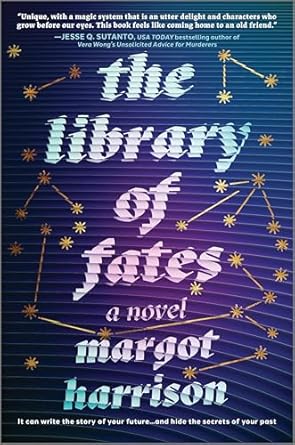
The Library of Fates lived tucked under the mansarded roof of a tall, charcoal- gray building in Harvard Yard. To a casual visitor, it was like any other library, lined with shelves for hours of pleasantly aimless browsing. But every student knew that if you came to the Library of Fates and asked for a book to guide you safely through turbulent times, the librarian would go straight to the shelf and put a book in your hands. And that book would change your life.
Eleanor Dennet was that librarian now, but the knowledge felt hollow. Her predecessor, Odile Vernet— her mentor, her guiding star, her best friend— had died suddenly three days ago, and she could barely process it.
Her throat still raw from crying, her brain still woozy from too much vodka, she stepped over the threshold of the library that had been her refuge for most of the past twenty-four years. On the surface, everything seemed the same: the dark oak paneling and moss- green area rugs and accents; the pearly glow that came through the recessed skylight; the sweet, faintly musty smell. The custodian had opened the curtains and blinds of the nine bay windows on each long side of the room. Sunlight bathed the books in a greenish haze and washed over the varnished seminar table and armchairs. The mural on the ceiling evoked the magic of stories.
But something felt different here. Something was wrong.
Then Eleanor saw him.
From his seat in a green brocade armchair angled toward the window, he didn’t seem to have noticed her entrance. Barely daring to breathe, she took in black hair sprinkled with gray on the headrest and long lashes outlined on his cheek as he gazed down at a sheaf of papers in his hand.
Daniel Vernet, Odile’s son.
The last time they’d seen each other, in 1995, they’d been standing here in the library. Eleanor’s view of Daniel had been clouded by tears, but she would never forget his dark eyes gazing back as if she were a stranger. The bland way he’d smiled, as if she meant nothing to him after everything they’d been through.
And here were more damned tears, rising and choking her. She would have to face Daniel eventually, to give condolences and make arrangements for his mother’s memorial. But not yet. She wasn’t ready for that. She darted to the window bay farthest from his chair, silent on the thick carpet, and slipped behind the floor-length curtain.
Daniel sighed heavily. The papers crackled. Frozen in place, Eleanor watched through a gap as he stood up. He didn’t look his age, the lines of his chin and cheekbones still firm.
A sharp click- clack of heels sounded on the stairs behind them. “Ready, Daniel?” asked a slightly accented voice that Eleanor recognized as Liliana, Odile’s housekeeper and close friend.
Daniel nodded, but his gaze was still on the papers. “What the hell is this?” he asked. “What the hell?”
As the older woman put a soothing hand on Daniel’s shoulder, Eleanor saw his body heave. Was he grieving his mother, then? Their relationship had never been smooth. Though Odile visited her son in Europe on occasion, it had taken her death to bring him back to the States for the first time in decades.
Liliana gave Daniel a hug and led him toward the door. “Everything will work out. You’ll see. We don’t want to be late for our appointment.”
“I’m just so confused!” Eleanor heard him still exclaiming as their feet thudded down the stairs.
She emerged from behind the curtain and stood very still, waiting for the tension to dissipate and the atmosphere to settle. Listening for a faint but steady thrum on the edge of her awareness, a rumble that was neither pipes nor heating. Like Odile, Eleanor was attuned to the library’s vibrations, inaudible to most people.
But now, standing dead center in the library, straining her senses in the stillness, she detected no reassuring thrum. Nothing. As if the library were an immense machine that had stopped running.
Panic gripped her. It can’t be.
She hurried to the oak door at the far end of the room and unlocked it with trembling fingers. Here in the librarian’s small office, The Book of Dark Nights was kept, secure in a safe, its pages alive with the power of the secrets trapped inside, for the library drew its power from the Book. As long as the Book remained there, the library would function.
On top of the safe, she found a sticky note in Odile’s strong cursive:
A place of pages,
A subterranean secret,
Where love is shared.
One book brought you together.
Start from there.
Eleanor stared at it for a dazed second. Odile often left literary quotes on sticky notes, but this didn’t seem like the style of poetry she would read— or write, if Odile had been a poet.
Then she knelt beside the safe to type in the code. Fumbling in her urgency, she had to enter it twice before the light turned green and she could swing the door open. Eleanor closed her eyes and said a silent prayer: Please let it be here.
The Book had been stolen only once, and the results had been disastrous. Eleanor tried not to think about them as she reached into the safe for the cracked calfskin of the Book’s binding, bracing herself to feel the usual tingle as her fingers made contact. Needing to experience that uncanny suggestion that the Book was alive. To know that it was only Daniel’s presence that had made the library feel wrong.
But there was nothing.
She knew people saw her as Odile’s mousy, adoring acolyte, hidden away in the library like a relic herself. A perennial student who had never even finished her PhD. A wan spinster, a living history display. Here in the library was the one place Eleanor mattered. In these books is your future, Odile had told her long ago. In these books are all the tools you need to live your life to the fullest. But all that depended on the magic.
And as she ran shaky fingers from corner to corner of the steel compartment, she found only shadows and a fine, powdery dust that came off on her fingertips.
DID YOU ENJOY WHAT YOU JUST READ? IF YES, THEN SUBSCRIBE TO THE BLOG, GIVE THE POST A LIKE, OR LEAVE A COMMENT! NEW POSTS ARE UP EVERY TUESDAY & THURSDAY!
They particularly do not want to visit an abandoned coal mine in West Virginia with a reputation for being haunted.
But when their old friend Dr. Denton summons them to help find his lost cousin—who went missing in that very mine—well, sometimes a sworn soldier has to do what a sworn soldier has to do…
GRADE: A
REVIEW:
This third installment in the Sworn Soldier series delighted me from the start—especially with its eerie West Virginia setting. One of the things I adore about Kingfisher’s work is how she blends dark, gnarly horror with just the right amount of humor, and this book is no exception.
Like the previous entry, What Stalks the Deep introduces a cast of quirky, compelling characters and builds a mystery that pulls you in deeper with every chapter. Following Alex Easton on another wild adventure was a blast, and the shift into the claustrophobic world of the mines adds an extra layer of tension. Mines are unsettling on their own—add Kingfisher’s imagination, and they become downright terrifying.
The audiobook deserves special praise. The performance brings the atmosphere, characters, and creeping dread vividly to life. Honestly, I think it may be the best way to experience this story.
If you’ve enjoyed the earlier books in the series, this is an absolute must-read. It expands the world in exciting ways, leans into cosmic horror with a hint of sci-fi, and delivers another gripping, weird, wonderful journey with Easton at the helm.
*Thank you so much to NetGalley & Macmillan Audio for the audiobook copy of this book in exchange for an honest review!
DID YOU ENJOY WHAT YOU JUST READ? IF YES, THEN SUBSCRIBE TO THE BLOG, GIVE THE POST A LIKE, OR LEAVE A COMMENT! NEW POSTS ARE UP EVERY TUESDAY & THURSDAY!
Kinsey has the perfect job as the team lead in a remote research outpost. She loves the solitude, and the way the desert keeps her far away from the temptations teeming out in the civilian world.
When her crew discovers a mysterious specimen buried deep in the sand, Kinsey breaks quarantine and brings it into the hab. But the longer it’s inside, the more her carefully controlled life begins to unravel. Temptation has found her after all, and it can’t be ignored any longer.
One by one, Kinsey’s team realizes the thing they’re studying is in search of a new host—and one of them is the perfect candidate….
GRADE: B-
REVIEW:
This book is definitely one for the freaks—in the best possible way—as it boldly fuses horror with erotica. Imagine The Thing, but trade the Arctic ice for scorching desert sand. Kinsey’s research team stumbles upon a bizarre creature buried in the dunes and, against all common sense, brings it inside to study. That’s when the infection starts… and when the story takes its turn into unsettling, seductive territory.
Kinsey herself harbors a strange fetish: she craves the idea of being overtaken by a virus, of something alien curling its way inside her. As the infection spreads through the team, she finds herself terrifyingly close to getting exactly what she’s always fantasized about—if she’s willing to surrender to it.
It’s a weird, wild ride. I enjoyed the characters and the sheer audacity of the premise, but this is definitely not a universal crowd-pleaser. If you like your erotica served with a generous splash of body horror, this one might be right up your alley. Otherwise, consider yourself warned.
*Thank you so much to NetGalley & Macmillan Audio for the audiobook copy of this book in exchange for an honest review!
DID YOU ENJOY WHAT YOU JUST READ? IF YES, THEN SUBSCRIBE TO THE BLOG, GIVE THE POST A LIKE, OR LEAVE A COMMENT! NEW POSTS ARE UP EVERY TUESDAY & THURSDAY!
Two 30-something singles stuck in a time loop are forced to relive the worst days of their lives, so they team up to find a way to break the cycle. For fans of Palm Springs and Oona Out of Order, NOT YOU AGAIN offers a fresh new take on the Groundhog Day story.
In Julian, California, every day is April 22. Most people have accepted the loop—after all, reliving the same day every day, there’s nothing to lose. Day drinking until you pass out? Yes. Partner swapping? Why not.
But Carly has woken up at her dad’s funeral exactly 238 times, and she wants out. She doesn’t want to waste her life away reliving the worst day ever in the small town she always hated visiting. Carly wants to go back to writing film scripts in LA; she’s determined to find a way to break the cycle.
She discovers an unexpected kindred spirit in Adam, the mortician she met at her dad’s funeral. April 22 was also one of the worst days of his life: his fiancée admitted to cheating on him with his best friend. Every day Adam wakes up on April 22 to his ex-fiancée’s admission, starting each day with a breakup. April 22 was supposed to be his last day working for his parents at the funeral home, and the start of his new life as an astronomer. Adam is a man of science, and like Carly, he believes there must be a way out of the time loop.
Together, Carly and Adam team up to find out what’s causing the time loop. And in trying to find a way out, they also find their way to each other.
DID YOU ENJOY WHAT YOU JUST READ? IF YES, THEN SUBSCRIBE TO THE BLOG, GIVE THE POST A LIKE, OR LEAVE A COMMENT! NEW POSTS ARE UP EVERY TUESDAY & THURSDAY!
Well, if I’m being exceedingly honest with you – and I am trying – I was nothing at all, to begin with. Then I was my father’s testicles. Then the weaver of Fate itself, which is when the lying started. After that, it all got a bit complicated.
I was the daughter of Ouranos. The daughter of Zeus. The daughter of no one at all. A winner, a loser, though never much in between. The world standard of beauty and a crone, both. Olympus’ very own it-girl. Maybe the worst wife in all of history. A lover, a friend, a co-conspirator. A snitch. Selfless – once or twice. A bitch – more than twice. A monster, a villain, a victim – if you must. A good mother, a bad mother, a really bad mother. Lonely and famous and beloved and alone. Precious and worthless. A rival, a cheat. Afraid, often, and terrifying, also often. Oh, and I started a war. That’s very important.
The goddess Aphrodite. I was that too. I don’t think I am
anymore. Look, it’s all very knotted. Maybe I should start from the beginning.
First, there was Chaos, which meant something different then to what it does now. The time of Chaos was empty. It was a blank canvas for the optimists and an endless sinkhole for the pessimists. It was a time of absolutely nothing. I suppose I was nothing then, but we all were, so I won’t hold that against her.
Chaos was empty, until she met Nyx. I like to think that the two of them were in love, but I’ve never met my grandmothers, so I can’t say for certain. The two of them created the earth and the seas and the sky, and they had three children to gift them to.
Their daughters received the sea and the earth, and they were happy with them.
Their son wasn’t, as is the way of youngest children. He wanted to be the king of a world consisting of only five people, so they let him.
My father, given the world like a toy so he’d play nicely with his sisters. I suspect he was spoiled rotten, but then I quite like being spoiled, myself. And he did ask, before he took. He spoke with such conviction about the glittering future he would bring, the life he would spread across this world, that they believed him.
Ouranos became the first king of this world. He took his sister to be his wife and he made good on his promises. Together – let’s not give him all the credit; he didn’t carry their children – they filled the world with life. They brought forth the Titans, beings more powerful than even they were, who could control the elements around them more easily than breathing. And they brought forth the Cyclopes, and the Hecatonchires – the hundred-handed ones – who Gaia loved and who did not ask for power, only a life, which meant Ouranos did not respect them. He thought them irrelevant to the world, because they didn’t demand to own it. They lived between the oceans and created beautiful wonders with all the energy they saved from fighting.
I don’t know how many children they had together. It doesn’t matter. All that really matters is it was one child too many.
It’s always the youngest son who has the most to prove.
Their youngest was a Titan, Cronus. He wanted to be king too, only Ouranos wasn’t like his mothers. He didn’t want to give up what was his.
Cronus asked for power; his father said no. Cronus did not ask a second time.
So the world came to know a new word: war.
It didn’t last long, that first war. It couldn’t. All the Titans could be counted on fingers and toes.
Cronus armed himself. He went to the Cyclopes and asked for their support. He promised them positions in his new order, new lives beneath the sun instead of deep below the sea. He told them he would respect them as their father never did. And he let their conversation be heard just enough to build fear in his father.
It’s a bold strategy, to tell your enemy that you’re coming, but it works well with the men in my family. They’re so afraid of it, it eats away at them, into their very bones, and they forget that they’re anything other than the position they hold.
Ouranos ordered the Cyclopes sent to Tartarus, a prison in the underworld he’d had to create personally, because one had never been needed before.
(It’s a problem when you’re an immortal fighting other immortals. You have to be careful about who you piss off because there’s no getting rid of them. They’ll be there, hating you. Forever.)
How Cronus himself escaped being tied up in proto-damnation is beyond me, but he did. I suspect his mother helped. He promised her – how they promise! – he would free her sons, bring them to the power they deserved. When Cronus was king, everyone would live equally in a utopia, just below him.
He had his people behind him. He had his shining vision for the future. He had the weapons and the belief. It was only a matter of time.
He followed his father across the land, over the oceans, waited for the perfect storm to be whipping around them, for winds too loud for words – I know that for certain. I made my entrance soon enough.
I think it’s unlikely they’d have had much to chat about, anyway. When you get to weapons at dawn, what do you say?
I want power!
No, me!
No, me!
They were both armed, but Cronus’ reach was longer. That’s been true of every new generation I’ve seen, that they’re just a little bigger than their parents, trying to prove they’re better in the most
pointless of ways.
Cronus carried a sickle. I don’t know what my father’s weapon was. He lost.
There was no point in aiming to kill. There never has been, for us. Instead, Cronus thought of the worst shame he could possibly imagine, and he castrated his father.
Chopped his balls off.
De-testicled him.
I’ve heard every possible variation of the phrase, some with great solemnity and some with a snigger, and I’ve never been able to explain why I’m not laughing.
I can tell you now, though.
Those balls were me.
I grew from them. I was born from them. They were me and I am them and that will always be the truth. That is my beginning.
I made my debut at the end of the first great war, in a storm unlike any other, as the world turned itself upside down trying to find its way in the new order. All of this is true, yet my birth is reduced to a punchline.
I hid it for so long, not wanting my entire existence to be reduced to one man’s shame, but I’m over that now. I’m much more famous than him, after all.
I’ve always wondered how Cronus managed to castrate him so neatly. It was only my father’s testicles that made me – call my knowing that feminine intuition, if you want – but Cronus used a sickle.
How? Were they hanging so low? Was Ouranos’ stance so wide because he needed the world to see his mighty balls? What possible physical arrangement leads to one man being able to castrate another with a weapon made for cutting wheat?
Cronus would have had to practise, but he can’t have. Surely he had better things to do in the war, and I’ve met some of his generals. I can’t imagine them offering themselves up for the chop.
That one is a mystery for the ages, I’m afraid, but it doesn’t matter, because now I’m here. That’s it. All of the relevant history before I arrived. Done.
Cronus lifted his arms in mighty victory and bellowed so that all around him could cheer and crown him the new king of everything. Like his father, he went home and married his sister, ready to fill the world with people who looked just like him.
Ouranos, newly ball-less, gave an anguished cry.
‘You think yourself so smart, so powerful, but one day you will be just like me, dethroned by your own children.’
Cronus looked at his father’s crotch. ‘I will never be just like you, will I?’
He ordered Ouranos tied and bound in Tartarus, that prison of his own making, never to be seen again.1
So distracted were they by their respective shouting that the testicles fell into the ocean, instantly swallowed by the swells of the waves, pulled down into utter blackness, presumed lost.
Wrong.
1 For a certain value of never. We are immortals, after all. —A
DID YOU ENJOY WHAT YOU JUST READ? IF YES, THEN SUBSCRIBE TO THE BLOG, GIVE THE POST A LIKE, OR LEAVE A COMMENT! NEW POSTS ARE UP EVERY TUESDAY & THURSDAY!
Madeline and Wes Drake have invited two hundred of their closest friends and family to their sprawling horse ranch for the most anticipated event of the year: a “pistols and pearls” gender reveal party so sensational it is sure to make headlines. But the party descends into chaos when the celebratory explosive misfires, leaving one woman dead and a trail of secrets.
As the aftershocks of the bloody party ripple across the small town, Agent Jamie Saldano is brought on the scene to investigate. Battling his own demons from the past, Saldano unearths a web of deceit spun around the Drakes. The appearance of some unexpected houseguests only deepens the mystery. And as tensions mount, it becomes clear that the explosion wasn’t just an unlucky accident. But who was the target, and why? As the shadow of a killer looms, the happy parents-to-be must unravel the truth before it’s too late.
DID YOU ENJOY WHAT YOU JUST READ? IF YES, THEN SUBSCRIBE TO THE BLOG, GIVE THE POST A LIKE, OR LEAVE A COMMENT! NEW POSTS ARE UP EVERY TUESDAY & THURSDAY!






 The Inkblotters