
Excerpt: The Wishing Bridge by Viola Shipman

December 7

I hit the brakes, my car fishtailing on the slippery road. I come to a stop just inches from the car before me.

Ah, the hazards of winter in Michigan and Detroit drivers who think snow is a reason to hit the gas.

I cock my head and see an accident just a few cars in front of me. A man is out of his car, screaming into the window of the car he hit.

Merry Christmas!

I take a breath, sip my coffee—which miraculously didn’t spill—hit my blinker and wait to merge into the next lane.

That’s when I notice it: the abandoned house I drive by every day to work.

There are many abandoned homes in many forgotten neighborhoods in this proud city whose shoulders were slumped by the mortgage crisis, layoffs in the auto industry and never-ending

winters that used to be as brutal and mind-numbing as a Detroit Lions football season.  Neighborhoods stand like ghost towns, and, in winter, they look even sadder, the grass dead, the green gone, broken glass shimmering in the sun before the snow arrives to cover their remains.

This particular home is a three-story redbrick beauty that looks like a castle. The windows are broken, the walls are collapsing and yet the wooden staircase—visible to the world— remains intact. I slow down just enough every day to admire the finials, worn and shining from the hands that have polished them over the years. 

There is a line of shattered windows just above the ground, and as you pass by, you catch a glimmer of red in the basement. Coming the opposite way, you swear you can see a man smiling. 

I stopped years ago to investigate. I parked, careful to avoid nails, and wound my way in high heels through the weeds to the broken window. I knelt and peeked into the basement.

Santa!

A plastic molded Santa smiled at me. It was a vintage mold—like the one my grandparents centered in the middle of a wreath on their front door every year—of a cheery Santa with red cheeks, blue eyes, green gloves, holding a candy cane tied in a golden bow.

I scanned the basement. Boxes were still stacked everywhere.

Tubs were marked Christmas!

In the corner of the basement sat a sign overrun with cobwebs that read Santa’s Toy Shop!

December 1975

“They’re here! They’re here!”

My voice echoed through my grandparents’ house. I ran to the front door, grabbed the first catalog, which seemed to weigh nearly as much as I did, and tottered down the steep basement stairs. Back up I went to retrieve the next one from Mr. Haley, the postman, who looked exactly like Captain Kangaroo.

“Don’t move!” I said, disappearing and returning moments later.

Then back down the stairs I scrambled once again.

Mr. Haley laughed when I returned the final time, out of breath.

“Last one,” he said. “Oh, and a bunch of Christmas cards for your grandmother.”

I bent over, panting, as if I’d just done wind sprints on the track.

“Tired?” he asked.

I shook my head. “No! Think of what Santa carries! Not to mention what you carry every day!”

“You got me there,” he said. “Here’s the cards. I’ll see you tomorrow. Merry Christmas!”

I watched him trudge through the freshly fallen snow, just enough to dust the world in white. If there’s one thing we never had to worry about in our town of Frankenmuth, it was a white Christmas. My dad said it was one of the gifts of living in a Christmas wonderland.

“Merry Christmas, Mr. Haley!” I yelled, my breath coming out in puffs.

I shut the door, tossed the cards on the telephone desk sitting in the foyer and hightailed it back down to the basement.

I looked at the catalogs where I’d set them on the shag carpet and ran around them in a happy circle doing a little jig.

I turned on the electric fireplace. It was so cool, fake brick, and it just faded into the Z-BRICK walls. The flames seemed

to dance, even though they weren’t real.

I went over to the card table where my grandparents played games—bridge, canasta, hearts—and I grabbed my marker from a cup.

The red one.

The one I used every year.

The one Santa would recognize.

I took a seat on the orange shag and arranged the catalogs in a semicircle around me: the Christmas catalogs from JCPenney and Monkey Wards, and my favorite, the Sears Wish Book.

The catalogs were heavy and thick, big as the Buick my grandpa drove. They were brand-new and all mine. I began to f lip through the crisp pages, turning quickly to the ones that showed all the toys, clothes and games I wanted for Christmas.

I was lost for hours in the pages, dreaming, hoping, wishing. “Yes, yes, yes!” I said, my marker in constant motion.

“Are you using a red marker so Santa will see?”

I looked up, and my dad was standing over me. He was tall, hair as fair as mine. He had just gotten off work. He was an accountant at a car dealership, and he never seemed happy when he got home from work.

Until he came down to my grandparents’ basement. 

“Of course!” I said. “Finn gets green. I use red!”

“So what do you want Santa to bring you this year?”

 I patted the carpet, and my dad took a seat next to me. I began showing him all the things I’d marked in the wish catalogs.

 “I want this eight-room dollhouse, and, oh! this Shaun Cassidy phono with sing-along microphone and this battery-operated sewing machine! It’s the first ever like this!” I stopped,

took a deep breath and continued, “And this dress, and this Raggedy Ann doll, but—” I stopped again, flipping through pages as quickly as I could “—more than anything I want this

game called Simon. It’s computer controlled, Daddy! It’s like Simon Says, and you have to be really fast, and…”

“Slow down,” he said, rubbing my back. “And what about your brother?”

“What about him?”

“What does he want?”

“He’ll want all the stupid stuff boys like,” I said. “Stars Wars figurines, an erector set, a Nerf rocket and probably a drum set.”

My father winced at the last suggestion.

“Maybe a scooter instead,” my dad suggested. “What do you think?”

“Good idea, Daddy.” I placed my hands over my ears. 

He laughed and stood up.

“Hey?” I asked. “What do you want for Christmas?”

My dad headed over to the workshop he had on the other side of the basement. We lived in a small ranch house on the other side of town that didn’t have a basement, much less any extra room. My grandparents let my father convert this space a few years ago so he could pursue a second career and his true passion: Christmas.

“You know what I want,” he said with a smile.

My dad picked up a sign and turned it my way. It was a handcarved wooden sign that read Frohe Weihnachten! Frankenmuth is a Bavarian town filled with all things German: a wooden bridge flowing over a charming river, a glockenspiel that—on the hour—played the Westminster chimes followed by an entire show complete with dancing figurines,

a cheese haus and competing chicken-and-noodle restaurants. I was named Henrietta, my father Jakob, my brother, Finn. Only my mother, Debbie, escaped the German name game with the

very American moniker.

“What’s this mean, Henri?” my dad asked.

“Merry Christmas,” I said.

“And what do I want?”

“Christmas all year long.”

“Exactly,” he said. “Just like you. Except as a grown-up.” He looked at his sign. “That’s my Christmas wish.”

For a long time, everyone thought this was just a hobby of my father’s, sort of like other dads tinkered on car engines, went fishing or coached baseball. For an even longer time, people thought my dad was nuts.

Why would a man spend all of his time creating Christmas signs in July, or designing ornaments in March?

They didn’t know my dad.

They didn’t how serious he was, that he often worked until three in the morning from October through December and countless weekends the rest of the year.

“You have a good job, Jakob,” friends would tell him. “Don’t ruin your life over some silly notion.”

But my mom and grandparents believed in him just as much as I believed in Santa.

I watched my father work. As he did, he began to whistle Christmas tunes.

The world was finally catching up with my father’s dream.

He was now creating window displays for two of the biggest stores in town: Shepherd Woolen Mill and Koch’s Country Store.

Excerpted from The Wishing Bridge. Copyright © 2023 by Viola Shipman. Published by Graydon House, an imprint of HarperCollins.

DID YOU ENJOY WHAT YOU JUST READ? IF YES, THEN SUBSCRIBE TO THE BLOG, GIVE THE POST A LIKE, OR LEAVE A COMMENT! NEW POSTS ARE UP EVERY TUESDAY & THURSDAY!

Excerpt: The Girl in the Vault by Michael Ledwidge

PART ONE: SUMMER IN THE CITY

In New York City near the southwest corner of 63rd Street and Madison Avenue, there is a restaurant called Stella’s and when everything started, I was sitting in one of its coveted lime-green velvet booths.

It was coming on ten at night, and I was drinking a lemongrass daiquiri. In all my years on the planet up to that point, I’d never touched lemongrass or daiquiris. Until that summer. That summer it seemed like it’s all I drank.

“Should I get you ladies started on a new one?” asked our waiter.

Our waiter was named Tommy, and he was a fortysomething Italian guy with slicked back hair who had the vaguely menacing solemn look of a Sopranos extra. But intimidating demeanor aside, he was always exceptionally nice to us. And when I say us, I mean my work cubicle mate, Priscilla Hutton, who was sitting across from me.

Priscilla and Tommy were actually old pals as she had been partying here at Stella’s since her Birch Wathen Lenox private high school days.

I did some high school partying myself back in my small town in Kentucky. Just never at a place that had nine-thousand-dollar bottles of champagne on the menu and a VIP room described in New York magazine as “Hollywood East.”

“The answer to that is yes, Tommy,” Priscilla said. “My friend and I need two fresh jolts stat. If that’s okay with you, Faye.”

Sometimes I wonder about that question. I wonder about what would have happened if I’d gone back to my apartment instead of accepting.

Or even more importantly, about what wouldn’t have.

“I’m game if you are,” I said, smiling.

The second drink order surprised me. We usually had only one polite drink at the end of the week here, down the street from our job, and then parted ways.

It was part of our unspoken deal. I hooked up Priscilla by handling all of our incredibly high-pressure work stuff, and Priscilla hooked me up by letting me hang out with her a little.

Even though I was totally carrying her, it was a good deal on both ends because Priscilla was gorgeous and rich and knew everyone in New York. She’d actually been in society pages like Avenue magazine ever since high school, each time tan and perfect in an effortlessly stylish outfit that she just threw on after a day spent surfing or skiing or at the spa.

Priscilla was also one of those people who had that voice, that eastern establishment rich person voice, that some call Transatlantic or Boston Brahmin or Locust Valley lockjaw. Not a ton of it, not a pretentious amount, just a sophisticated hint, an elegant tinge, just enough.

It made her sound like a young Lauren Bacall or Bette Davis or someone. I loved just listening to her. It made you feel a little special just to hear her confide in you, as if only for a few moments, you were in the privileged people club, too.

I really didn’t even know why Priscilla had applied for, let alone accepted, our summer internship. It was extremely hard work, and she was kind of a ditz, so why not just take the Instagram influencer route? I often wondered.

I think it had something to do with her father’s business, some defense contractor aerospace company in Connecticut that made airplane parts. Maybe she needed some finance experience to become an executive there? Not that she had told me any of this, but I did have internet access.

She even pretended to be my friend. She shared fashion advice with me, which was a sorely needed lesson. And she also told me all these incredible stories about her days in prep school and Yale and Palm Beach and the Hamptons.

At least at the office. When she was in the mood.

“But another?” I said as Tommy left. “That’s okay, Priscilla. I know you have things to do. I should be going.”

“No, not yet. I owe you big time, Kemosabe. If you hadn’t remembered to recheck the Westland account for me before it went to the treasury team, that Aiken would have dragged me up the stairs of the boiler room by the scruff of my neck.”

It was true. She had screwed up big time. One of our biggest hedge fund clients wanted $130 million wired into their Cayman account, but Priscilla had boneheadedly put in the account numbers of a completely different fund instead. Getting a number wrong here and there wasn’t a problem. Sending money into another fund’s account was. If it had gone through, the money could have instantly disappeared without a trace with no way to unwind it, and our client could have been out $130 million.

“Oh, that,” I said. “Don’t mention it. Anytime. I was looking for something to do anyway.”

That’s when Priscilla looked at me, and we both completely lost it.

Oh, we laughed then all right. Practically until the lemongrass came from our nostrils.

Looking for something to do, I thought, shaking my aching head.

That was a phrase I used way back in the normal life I led before I accepted the summer internship at the venerated Wall Street private investment bank, Greene Brothers Hale, nearly three months before.

Our musty-smelling windowless basement office a few blocks down Madison Avenue really did look like a boiler room or maybe something out of a Dickens poorhouse. Only with computers and phones on our cheap desks instead of dusty ledger books.

And out of these electronic torture devices, all day—for pretty much twelve hours straight from eighty-seven different pissed-off, stressed-out directions at once—came numbers.

The stress and anger directed our way was due to the fact that the numbers represented money. Profoundly massive amounts of money from hedge funds or institutional investors or just really, really rich people. This money either needed to be placed into our bank’s fat cat VIP client accounts or taken out of them and sent other places, places like the Cayman Islands or Switzerland.

You’d think this given task was simple enough like we were mere bank tellers, just moving around much larger sums.

But you would be wrong.

Each incoming or outgoing bank transfer had to be placed in its proper slot. Each one processed through a verification process wrapped in an amount of red tape to make your eyes bleed. Emails with these numbers had to go to the proper people for due diligence verifications. All in the proper order. Yesterday. Or else.

It was the volume of the orders. It was staggering. The air traffic controllers out at Kennedy airport had less to juggle.

Or maybe it was the unhinged wrath of the psychopathic traders and other finance people on the upper floors of our building who kept calling down to see if the transfers had cleared.

Where the hell was the money? they wanted to know. What the hell was wrong with us? Did they actually have to f-ing come down there?

Every morning when I sat down and looked at my newly filled inbox of waiting orders, I thought about the Greek hero, Sisyphus, cursed to eternally roll his rock up that hill.

In envy.

Was he a summer Wall Street intern, too? I would wonder.

And did I mention all of this labor and misery was being extracted from me gratis?

That was the kicker. Since it was an unpaid internship, we were only doing it for the possibility of maybe getting a full-time entry level job as a junior investment analyst.

My skin was being flayed for free.

As I sat there that Friday, attempting to cool my smoking brain with rum and lemongrass syrup, I couldn’t help feeling like I’d been duped.

Because I thought I was going to be a swashbuckling Wall Street pirate.

Instead, I’d been shanghaied and thrown into the slave galley to row.

Excerpted from The Girl in the Vault. Copyright © 2023 by Michael Ledwidge. Published by Hanover Square Press, an imprint of HarperCollins.

DID YOU ENJOY WHAT YOU JUST READ? IF YES, THEN SUBSCRIBE TO THE BLOG, GIVE THE POST A LIKE, OR LEAVE A COMMENT! NEW POSTS ARE UP EVERY TUESDAY & THURSDAY!
Excerpt: Today Tonight Forever by Madeline Kay Sneed

ATHENA

The best day of someone’s life is always the worst day of somebody else’s. This is especially true at a wedding—even more so when you’re separated.

Since her college graduation, Athena had been a bridesmaid in seventeen weddings. Twenty, if you count being in the house party, which Athena never did since it was the same as making it onto the junior varsity team, a consolation prize, an afterthought. Not bad, but not good enough for the big time.

For most of her twenties, she’d done the whole hog, Katherine Heigl, 27 Dresses. An overpriced and cheaply made gown for every wedding she’s been in, except for the one right after she came out, where the bride insisted Athena wear a tux so that the bride could showcase her acceptance and allyship to the one lesbian she’d ever known.

Now, at thirty-three—her Jesus year, as her mother so constantly reminds her—Athena drives down a Floridian highway full of billboards advertising Heaven and Hell to be a bridesmaid in her eighteenth wedding. Her longtime family friend, Daisy, is getting married in Watercolor, Florida, a sprawling beachside resort with large, spaced-out, two-story vacation homes, each painted in a distinct pastel color, like, as the name suggests, a watercolor palette. The wedding party had made their mantra for the weekend: Best Wedding Ever in the History of Weddings.

Athena knew that, for her, this could never be true. The best wedding Athena had been in was her own. To Sydnee. The great light of her life.

It was nothing like the other weddings, with their churches and their pomp and circumstance. It was small and full of lights that twinkled from tree branches and wrapped around columns on the back porch of Athena’s parents’ house. They didn’t need a priest, they had their best friend, Deacon, marry them, and he recited Dickinson instead of Second Corinthians, and they danced on the grass in bare feet until the neighbors complained about the noise. There was no prayer, but they still felt blessed.

It was the happiest day of Athena’s life.

Now, after six years, they are divorcing. The papers are due in the mail next week. They have been separated for eight months, and soon it will be official.

Divorce does not suit Athena. She’s been too busy burying herself in work to do anything about it. It’s as if she believes that sorting through the fragments of Emily Dickinson’s envelope poems in her tiny, dimly lit cubicle at the University of Houston can help heal her heartbreak without her ever having to face it straight on.

There’s always a snag, though, some little reminder of Sydnee, who never particularly liked literature. She did, however, love Athena and how much she loved Dickinson, so she had a few favorite poems of her own: Split the Lark—

and you’ll find the Music—was a much-loved line between the two of them.

“I like the way it sounds,” Sydnee explained. “It’s weird. Twisted.”

“Unnecessary bloodshed, uncanny music,” Athena said after they first moved into their house in Montrose when they settled down in Houston, a few months before their marriage. Athena was organizing her books and flipping through the pages of the poet’s collection. “I don’t think I’ll ever get tired of her.”

“And me?” Sydnee rested her head in her hand, her hair swaying to one side, a curtain of darkness.

“Maybe after seven lifetimes, I’ll start to get bored,” Athena said, and Sydnee smiled, and they came together like Athena thought they would continue to do for the rest of their lives.

When she comes across the line, or anything similar (I split the dew—But took the morn), her heart cleaves, an open wound. She tries to hide from it, but it always finds her eventually. Not even her most sacred pleasures are safe from the pain of separation.

As Athena drives, she imagines her mother would tell her to snap out of the past and keep her eyes peeled on the present. It’s your Jesus year, Thene, she could almost hear her mother saying through a jaw tensed with superstition. Her mother is obsessed with the concept and terrified of it, too. Thirty-three was Jesus’s age when he was crucified, betrayed by his friends, strung up for all the world to see. It feels like a warning to her. Nothing good can come from thirty-three. And your Jesus year? her mother would say. It’s trying to kill you.

Athena grips the steering wheel tight, closing her eyes for a moment, exhaling, before jolting back into awareness as she swerves slightly into the other lane.

Not today, Jesus year.

A gulp of coffee. A turned-up stereo. Athena slaps her cheek and drives on. In the rearview mirror, the horizon blares bright and blue with the high noon sun doing its best to heat up the unseasonably chilly November day. If the cold stays at bay, it’s going to be a beautiful weekend for a wedding.

After half an hour of nothing but pine trees and billboards, Athena finally exits the highway, passes the Publix, and finds herself in the strange, beautiful, pristine, idyllic world of Watercolor, Florida.

Athena and her brother used to join Daisy’s family on their weeklong trips to the resort during the summers in middle school and high school. It hasn’t changed much since then. It’s expanded, but otherwise remains timeless. People cruise down the paved roads in their three-row golf carts or beach cruiser bikes with baskets on the front, going from their homes, to the Publix down the road and to the beach club across the highway. The sidewalks are manicured and lined with pine trees and magnolias, the needles and leaves of which are finely collected on the sides of the paved walkways, never a twig out of place, giving the residents and guests a taste of nature without all the messiness it brings.

Back then, Athena loved the sun-soaked days at the beach, salt water settling into her hair, making it coarse and curly and wild. They spent summer nights riding up and down the streets on their bikes, going on ice cream and soda runs until their stomachs got sick. Life was simple then. Athena had been happiest here, after days spent diving into the crashing waves, riding their force toward the shore, her belly scraping the shallow sand once the wave died out and deposited her back where she belonged.

It’s November now. Too cold for waves, and she’s too old to ride them, anyway. Her back might tweak or her knee might shift in the tide at the wrong enough angle, leaving her sore for weeks. The world had seemed so open when she was young. She realized now the scope was much smaller. Caution cursed her every step because she had known consequences and understood they could come when you least expected it.

Athena’s father used to say that age gave you double vision. You see the world both as it is and as it was before. It’s like your friend says, he’d say, always referring to Emily Dickinson in this way, “the past is such a curious creature!”

She wonders what her father would think now. About Daisy’s wedding, about her own divorce. He’s been dead three years, and still, every day, she wonders what he’d say. Three years of questions. Three years without answers.

Athena blinks away the thought as she turns off the 30A highway into the massive, sprawling beach resort, circling past the bustling beach club before finally finding the towering town house where Daisy and the other bridesmaids will spend the night after the rehearsal dinner and then spend tomorrow getting ready for the wedding. It’s blindingly white, exactly like the row of townhomes it stands beside, with two decks that overlook the white sand beach and emerald coast of the Gulf of Mexico. Behind it, the midafternoon waves swell and crash onto the coast, the sun starting to sparkle in the water. All nature, no artifice.

Once she cuts the engine, Athena slowly gets out of the car, relishing her last moments of silence before the chaos of the wedding begins. The air is thick with humidity. She savors the smell of salt air and pine needles, happy to have the sun on her cheeks. She’s spent so many hours inside her office and classroom these past eight months. She hadn’t realized how much she missed the world—the natural, reviving tonic of fresh air and warmth.

“There she is,” a voice calls from the front door. “The divorcée.”

Deacon steps out from the house, an enormous grin stretched across his face. Tall, lean, and shirtless as always, he leans against the doorframe, two cups of coffee in his hands, his board shorts sagging slightly. He sets the coffees down and tugs up his shorts before walking over to Athena, his arms outstretched. His blond hair sticks up straight at the back, like he’s just woken up from a nap, and he traces the now faint and faded scars underneath his pecs, a habit he’d kept up for over a decade since he got them. Athena embraces her best friend, burying her face in his chest, the tufts of blond chest hair tickling her cheek.

“So,” Deacon says, pulling her away from him so that he can look at her. “How is the divorcée?”

“I told you that’s not funny yet.” Athena smiles despite herself.

“I guess I’ll keep doing it until it is,” Deacon says as he takes her arm in his. “Come on. I’ll show you to your designated chambers.”

They walk through the house, steering clear of the rest of the bridesmaids for the time being, and make their way to Athena’s room, which has one tiny twin bed.

“Doesn’t seem like Daisy has any faith that you’ll be hooking up at this wedding,” Deacon says, gesturing to the bed.

“What else is new.” Athena sets her bag down at the foot of the bed before taking the hot cup of coffee from Deacon. It’s strong, with a hint of vanilla and cinnamon. “What are the other dudes doing?”

“Getting ready for the rehearsal dinner.” Deacon checks his watch. “Still got a few hours, but Chad wants to experiment with gel in his hair. Doesn’t want to take a chance in case it’s terrible—which it will be—and he has to start over.”

“At least he’s thinking ahead,” Athena says. She pulls out her suit for the dinner and tugs at her messy bun. “Wish I could just gel this mess. My hair is driving me bonkers.”

“Shave it off,” Deacon says, digging through Athena’s bag. He removes a pair of her white sneakers and tries them on. “Can I borrow these tonight?”

“I can’t shave it, I have an egg-shaped head, we’ve discussed this,” Athena says. “And no, I’m wearing them.”

“More like a bowling pin.”

“Any cone-shaped object will do.” Athena points at the bridesmaid dress she will wear tomorrow. The lavender silk will hug every curve and constrict her breathing so badly she worries it will induce a semi—panic attack. “Wish Daisy would have let us choose our dresses.”

“She’s an influencer, Athena,” Deacon says, running the fabric of the dress through his hands. “The only thing that matters are the pictures, tagging her designer sponsor and making sure that everyone seems the same, and by same, I of course mean not quite as good as Daisy.”

“So I’m getting punished because she has half a million followers she needs to impress?”

“Dude, you’re going to look good, a real heartbreaker.” Deacon walks around in Athena’s sneakers, checking them in the mirror. “I’ll catcall you when you walk down the aisle if that makes you feel better.”

“Exactly what I need at all times, a mobile fan club, thank you very much for understanding.” Athena points at the sneakers and gestures toward her suit, trying to get him to take them off. “What about you? You getting ready with us tomorrow?”

“Bride’s orders.” Deacon nods as he takes off the shoes and puts them under Athena’s suit. “She wants me by her side every step of the way. Until the actual wedding. A guy standing with the bridesmaids would ruin the aesthetic. At this wedding, gender is very much a binary.”

“Why push boundaries when you could just reinforce them, right?” Athena says.

“Well, she’ll have plenty of pictures to post for all the trans awareness, appreciation, whatever-the-fuck hashtag weeks they come up with.”

“Gotta feed the followers.”

“Name of the game.” Deacon rubs his forearm slowly, tracing the tips of his fingers over his bluebonnet tattoo. “Talked to Sydnee recently? We’ll see her tomorrow. At the wedding.”

A jolt rushes through Athena. It happens every time she hears her name. When they first started dating, she’d get a similar flood of electricity. It is still a marvel: the dread, excitement, giddy joy contained in one name. The thought of her face is instinctual. The dark hair, curly when left untouched, hanging just above her shoulders. Her easy smile, her eyes, green unless in sunlight, when they transformed into an almost translucent blue. Her hands were always in motion, when she talked and when she was silent, where they’d move from the back of her neck to the front of it, fiddling with the crucifix necklace she wore every day, a reminder of her family and the Catholicism of her youth. She called it a bad habit, but Athena had always known that the comfort of home could take many forms.

“We’ve talked a bit,” Athena says, trying to play it cool. “You know lesbians and their exes. Always staying best friends.”

“Don’t bullshit a bullshitter.” Deacon opens his mouth to say more, but hesitates, tugging on the thin wisps of hair at the end of his chin instead. “I gotta shave or Daisy will kill me.”

“What is it?” A flush of panic heats through her. She’d dreaded this possibility so much it almost felt prescient, like she could sense Sydnee’s shifting heart, moving on from her to someone else without having seen her since she asked for the divorce. “She’s dating. Her. Isn’t she?”

“I thought you weren’t on social media anymore.”

“I knew it,” Athena says, kicking herself for talking through lawyers instead of staying in the loop. There is no dignity in silence. Knowing is always better than being blindsided. “I knew it was more than just sex.”

“I don’t think it’ll last…” Deacon trails off. He bites his lower lip. “It’s hard.”

“Staying faithful shouldn’t be hard.”

“I mean for me.” He clears his throat, his voice dropping in the hollow sort of way that means he’s telling the truth. “Y’all are both my friends…”

“Let’s just not talk about it,” Athena says quickly, going back to her suitcase and unpacking her pajamas. She gets up and puts them in the mahogany chest in the corner, her back to Deacon.

Athena is not willing to listen to other people talk about how her divorce has affected them. It is her pain, her isolation. She doesn’t want to be miserable, but she’s settled into her misery in such a way that it’s now become a part of her. Every step she takes is steeped in the stuff. No one can top her in terms of agony. Her father is dead. Her wife left her. There is nothing else that matters.

Deacon clears his throat. She senses his frustration, but does nothing to ease it. It’s not his fault that her marriage ended. Outside of her mom and brother, Deacon is the only person she’s willingly let into her life during this period of upheaval. He’s shown up for her. During their weekly meetups at their favorite pub, he chomps on fries as she regales him with all the reasons she should have seen the divorce coming. He never complains. He rarely talks about himself. He sits, and he listens, and Athena does nothing to change that. She does wonder, sometimes, when she’s alone and she can’t sleep, why he doesn’t stop her, why he always sits and takes it, all her anger, and all her frustration, and all of her grief. It’s a purgatory with an open exit that he never seems to take.

“Put down the coffee,” Deacon says before Athena can reflect further. “And get your tennis shoes.”

“What?” She puts her suitcase under the bed and clutches her coffee closer, not ready to leave so shortly after her arrival.

“We’re going for a run.”

“The rehearsal dinner’s in a few hours.”

“Just a quick one.” He fishes through Athena’s bag to find her running shoes and throws them at her. “Come on. Lace up. We need it.”

Excerpted from Today Tonight Forever by Madeline Kay Sneed. Copyright © 2023 by Madeline Kay Sneed. Published by arrangement with Harlequin Books S.A.

DID YOU ENJOY WHAT YOU JUST READ? IF YES, THEN SUBSCRIBE TO THE BLOG, GIVE THE POST A LIKE, OR LEAVE A COMMENT! NEW POSTS ARE UP EVERY TUESDAY & THURSDAY!

3 Witchy Novels to Read During Halloween

THE YEAR OF THE WITCHING BY ALEXIS HENDERSON

In the lands of Bethel, where the Prophet’s word is law, Immanuelle Moore’s very existence is blasphemy. Her mother’s union with an outsider of a different race cast her once-proud family into disgrace, so Immanuelle does her best to worship the Father, follow Holy Protocol, and lead a life of submission, devotion, and absolute conformity, like all the other women in the settlement.

But a mishap lures her into the forbidden Darkwood surrounding Bethel, where the first prophet once chased and killed four powerful witches. Their spirits are still lurking there, and they bestow a gift on Immanuelle: the journal of her dead mother, who Immanuelle is shocked to learn once sought sanctuary in the wood.

Fascinated by the secrets in the diary, Immanuelle finds herself struggling to understand how her mother could have consorted with the witches. But when she begins to learn grim truths about the Church and its history, she realizes the true threat to Bethel is its own darkness. And she starts to understand that if Bethel is to change, it must begin with her.

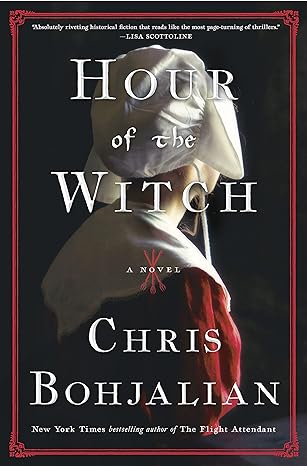
HOUR OF THE WITCH BY CHRIS BOHJALIAN

Boston, 1662. Mary Deerfield is twenty-four-years-old. Her skin is porcelain, her eyes delft blue, and in England she might have had many suitors. But here in the New World, amid this community of saints, Mary is the second wife of Thomas Deerfield, a man as cruel as he is powerful. When Thomas, prone to drunken rage, drives a three-tined fork into the back of Mary’s hand, she resolves that she must divorce him to save her life.

But in a world where every neighbor is watching for signs of the devil, a woman like Mary—a woman who harbors secret desires and finds it difficult to tolerate the brazen hypocrisy of so many men in the colony—soon becomes herself the object of suspicion and rumor. When tainted objects are discovered buried in Mary’s garden, when a boy she has treated with herbs and simples dies, and when their servant girl runs screaming in fright from her home, Mary must fight to not only escape her marriage, but also the gallows.

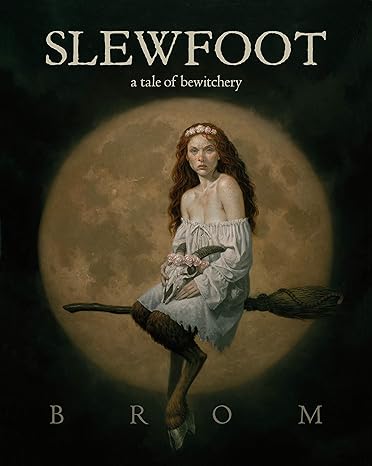
SLEWFOOT: A TALE OF BEWITCHERY BY BROM

Connecticut, 1666: An ancient spirit awakens in a dark wood. The wildfolk call him Father, slayer, protector.

The colonists call him Slewfoot, demon, devil.

To Abitha, a recently widowed outcast, alone and vulnerable in her pious village, he is the only one she can turn to for help.

Together, they ignite a battle between pagan and Puritan – one that threatens to destroy the entire village, leaving nothing but ashes and bloodshed in their wake.


DID YOU ENJOY WHAT YOU JUST READ? IF YES, THEN SUBSCRIBE TO THE BLOG, GIVE THE POST A LIKE, OR LEAVE A COMMENT! NEW POSTS ARE UP EVERY TUESDAY & THURSDAY!
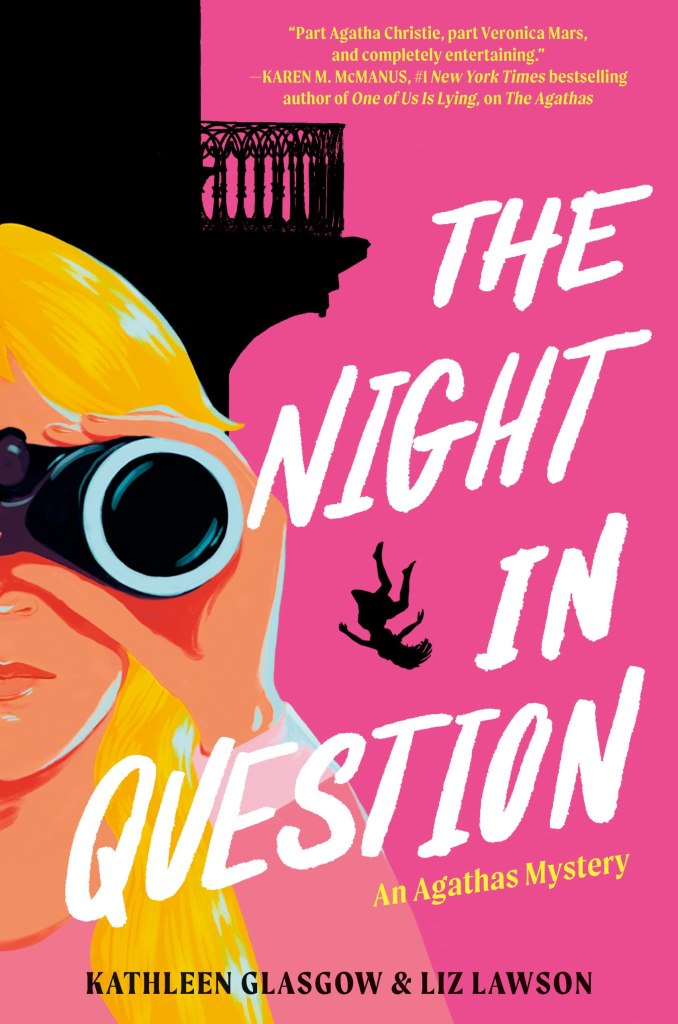
Book Review: The Night in Question by Kathleen Glasgow and Liz Lawson

All leads will be followed. But you and Alice Ogilvie didn’t do that. Just like before, you went full steam ahead on your own, and now look where you are.”

PLOT SUMMARY:

How do you solve a murder? Follow the lessons of the master—Agatha Christie! Iris and Alice find themselves in the middle of another Castle Cove mystery in the sequel to New York Times bestseller The Agathas, by powerhouse authors Kathleen Glasgow and Liz Lawson.

Alice Ogilvie and Iris Adams became the talk of Castle Cove when they cracked the biggest case of the fall: the death of Brooke Donovan. Together, the Agathas put Brooke’s killer away for good, and since then things around town have been almost back to normal. Quiet, even.

But if Alice and Iris know anything, it’s that sometimes quiet is just the calm before the storm. The truth is, Brooke’s disappearance wasn’t the first mystery to rock Castle Cove, and it won’t be the last. So when their school dance at the infamous Levy Castle—the site of film starlet Mona Moody’s unsolved death back in the 1940s—is interrupted by a violent assault, Iris and Alice pull out their murder boards and get back to work.

To understand the present, sometimes you need to look into the past. And if the Agathas want a chance at solving their new case, that’s exactly where they’ll need to start digging. Only, what they uncover might very well kill them.

GRADE: A

REVIEW:

The Night in Question is the highly anticipated sequel of The Agathas that features Agatha Christie aficionado Alice Ogilvie and her unlikely partner in sleuthing Iris Adams. This time Alice and Iris have to try to figure out who assaulted one of their classmates during the Sadie Hawkins dance and what truly happened to famed film star Mona Moody in the 40’s when she accidentally fell off of the balcony at Levy Castle.

This was very fast-paced and read like a cozy mystery, although terrible/violent things did happen! I also liked that Glasgow and Lawson kept their teen detectives credible in what they could manage to find out and how. This sequel was jam-packed with mysteries and reveals and I loved how everything tied up at the end. I also liked that they didn’t necessarily get a happy ending, making this more realistic, but also kind of setting up for another book (I’d love a book three!).

The Levy Castle setting and old Hollywood link to it was part of the allure of this book, not to mention that I loved Alice and Iris’s friendship and how well they work together as wannabe Veronica Mars. But I also like how Glasgow and Lawson show how much trouble the two teens could actually get into if they actually try to help and how law enforcement barely acknowledges them whenever they actually crack a case.

This is a fun read and I recommend this if you’re a fan of teen detectives and cozy mysteries.

*Thank you so much to NetGalley and Delacorte Press for the digital copy of this book in exchange for an honest review!

DID YOU ENJOY WHAT YOU JUST READ? IF YES, THEN SUBSCRIBE TO THE BLOG, GIVE THE POST A LIKE, OR LEAVE A COMMENT! NEW POSTS ARE UP EVERY TUESDAY & THURSDAY!
Poetry: Elena Doesn’t Breathe

I drink your favourite cocktail

Thinking that maybe I can taste you.

I wander around London, looking for you, I fail.

Yearning to kill my emotions—aspiring for something new.

Laying on the floor completely drained

Of any feeling to go on.

Cut my hair to disguise my former self.

But my love for you keeps me forever chained.

Staring like an idiot at a blank TV screen

I conjure up your image in my dreams.

And I wish I could just blot you out

But instead I keep on wanting you.

You never seem to accidentally bump into me

I’ll bet you keep yourself protected from me.

If only you’d understand the effect

Your lack of affection has had on me.

Yes, I’ve stopped eating again

An anorexic pin-up girl is what I’ve become.

Smoking makes me hide

And so I feel less pain inside.

Do you think I’m pathetic?

Do you feel any remorse?

Hitting walls out of frustration dilutes the strain

Nothing on the sheets but solitary blood stains.

And I know you love me.

If you’d only comprehend

I’m not trying to force you

But I know you want me.

Wrapping satin sheets around me

Your scent still clings to them.

Bastard night! I detest you because

You make me feel more lonely when you fall.

So even if you hate me

I don’t want to hear it.

I only want you here beside me.

Photo by NEOSiAM 2021 on Pexels.com

DID YOU ENJOY WHAT YOU JUST READ? IF YES, THEN SUBSCRIBE TO THE BLOG, GIVE THE POST A LIKE, OR LEAVE A COMMENT! NEW POSTS ARE UP EVERY TUESDAY & THURSDAY!

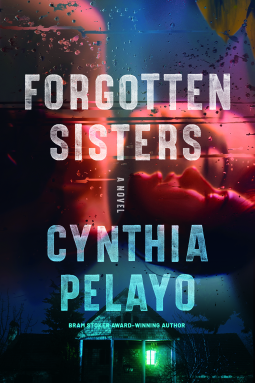
Book Review: Forgotten Sisters by Cynthia Pelayo

Sorrow will be my constant, because they died.

PLOT SUMMARY:

Sisters Anna and Jennie live in a historic bungalow on the Chicago River. They’re tethered to a disquieting past, and with nowhere else to go, nothing can part them from their family home. Not the maddening creaks and disembodied voices that rattle the old walls. Not the inexplicable drownings in the area, or the increasing number of bodies that float by Anna’s window.

To stave off loneliness, Anna has a podcast, spinning ghostly tales of Chicago’s tragic history. But when Anna captures the attention of an ardent male listener, she awakens to the possibilities of a world outside.

As their relationship grows, so do Jennie’s fears. More and more people are going missing in the river. And then two detectives come calling.

They’re looking for a link between the mysteries of the river and what’s housed on the bank. Even Anna and Jennie don’t understand how dreadful it is—and still can be—when the truth about their unsettled lives begins to surface.

GRADE: A

REVIEW:

When I read The Shoemaker’s Magician earlier this year, I thought that it definitely was one of my fave horror thrillers because it had everything I loved rolled into one novel – however, with Forgotten Sisters Pelayo taps into other things I absolutely love – The Little Mermaid, historical tragedies, and a mysterious killer on the loose. Some authors are linked to their location, such as Anne Rice with New Orleans, or Stephen King with Maine, and whenever I think of Pelayo and her writing I link her to Chicago – and love discovering and learning more about this city through her novels.

This novel is a modern retelling of The Little Mermaid but it’s also a ghost story of sorts (I don’t want to delve too much into detail because I think it’s important to find out on your own). But it’s also about the strength of sisterly love since the novel mostly focuses on the relationship between Anna and Jennie. The house they live in is next to a river, and soon both the house and river become important characters within the world of the novel as the people who inhabit it. A lot of this novel reads like a Gothic novel in regards to the two sisters spending most of their time indoors whilst being burdened by ghosts and odd noises. Young men have begun to go missing and show up dead in the river weeks and months later, sparking thoughts of a serial killer, although the police wish to not acknowledge that they may be dealing with one for fear of alarming the public.

A lot of the book is read like a poetic fever dream and works well in regards to its fairytale roots, so it never bothered me that the two sisters spoke like they were Dickensian characters (once you reach the end you’ll understand why). I know some may think that the love that blossomed between Anna and Peter was what some readers would call “insta-love” but really – I felt that it was possible for the two of them to fall for each other as quickly as they did when they had spent so much time exchanging emails prior (I’ve always been a sucker for long emails and letters between people I’m fond of and understand how a relationship can evolve from that rather quickly).

This novel was unique as it was an amalgamation of thriller, horror, crime, history, and fantasy all rolled into one unique story. I recommend this for those who lean towards Gothic atmospheres in their books and enjoy a slower-paced murder mystery.

*Thank you so much to NetGalley & Thomas & Mercer for the digital copy of this book in exchange for an honest review!

DID YOU ENJOY WHAT YOU JUST READ? IF YES, THEN SUBSCRIBE TO THE BLOG, GIVE THE POST A LIKE, OR LEAVE A COMMENT! NEW POSTS ARE UP EVERY TUESDAY & THURSDAY!
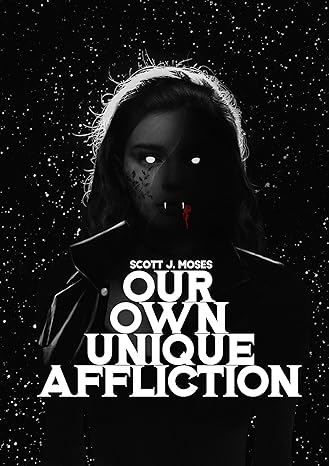
Book Review: Our Own Unique Affliction by Scott J. Moses

We’re each dealt our own unique affliction, Alice. Ours is death. Yours? Yours is life.”

PLOT SUMMARY:

Our Own Unique Affliction is the story of Alice Ann, a dejected immortal who longs for her life in the sun. Navigating guilt, loss, family, meaning, murder, and all that comes with the curse of living forever. An existential bleak, quiet until it’s not, hallucination on duality, rife with fangs, empathy, blood, and grief.

GRADE: A-

REVIEW:

Full disclosure, vampires are my favourite supernatural creature, but since they are my favourite, I usually don’t watch or read many books or movies that feature them because I am personally picky when it comes to vampires. My biggest gripe with most vampire books is the author leans too much on making them romantic heroes that they tend to forget or downplay the monstrous aspects that make these creatures absolutely terrifying. Alice Ann is no such vampire. Yes, she holds some smidgen of humanity but she’s also a brutal monster – and it’s a perfect balance. Alice Ann yearns for a life under the sun – and her memories of her family when she was human are viscerally moving and sad – especially when she sees immortality as a curse. I wasn’t too drawn to the human that essentially drove her and her sister around in a truck everywhere (I’m always iffy about humans that work for vampires or vampires relying on humans – it always seems like an odd relationship that will end up derailing at some point – and in the case of this novella it did just that). Usually, book endings are something that I don’t always like because most are lackluster even when the story has been amazing – however, Moses lands the perfect ending for this book – and it couldn’t have been better.

Read this if you like vampires, philosophical musings about mortality, and grief horror.

DID YOU ENJOY WHAT YOU JUST READ? IF YES, THEN SUBSCRIBE TO THE BLOG, GIVE THE POST A LIKE, OR LEAVE A COMMENT! NEW POSTS ARE UP EVERY TUESDAY & THURSDAY!

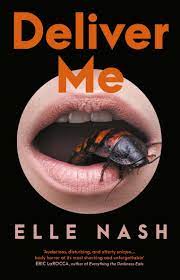
Book Review: Deliver Me by Elle Nash

I’m drawn to him because of this lingering ferocity I see in men- the possibility of violence.

PLOT SUMMARY:

At a meatpacking facility in the Missouri Ozarks, Dee-Dee and her co-workers kill and
butcher 40,000 chickens in a single shift.  The work is repetitive and brutal, with each
stab and cut a punishment to her hands and joints, but Dee-Dee’s more concerned with
what is happening inside her body. After a series of devastating miscarriages, Dee-Dee
has found herself pregnant, and she is determined to carry this child to term.

Dee-Dee fled the Pentecostal church years ago, but judgment follows her in the
form of regular calls from her mother, whose raspy voice urges Dee-Dee to quit living
in sin and marry her boyfriend Daddy, an underemployed ex-con with an insect
fetish. With a child on the way, at long last Dee-Dee can bask in her mother’s and
boyfriend’s newfound parturient attention. She will matter. She will be loved. She
will be complete.

When her charismatic friend Sloane reappears after a twenty-year absence, feeding her insecurities and awakening suppressed desires, Dee-Dee fears she will go
back to living in the shadows. Neither the ultimate indignity of yet another miscarriage nor Sloane’s own pregnancy deters her: she must prepare for the baby’s arrival. 

GRADE: A

REVIEW:

If this book were a series, it’d be “bingeable.” Once you begin reading about Dee-Dee and her insect-obsessed boyfriend, Daddy, you can’t stop. The prose is raw and intimate in ways that will hit you emotionally at the core. Full disclosure, I have a phobia when it comes to insects, so the description of insects being placed on body parts was absolutely terrifying for me. But Nash also had me feeling sorry for these same insects later on in the novel, so that goes to show her deftness in being able to conjure pity even for creatures that I’d rather not have anywhere near me.

Dee-Dee becomes fixated with wanting to be pregnant, and this fixation leads her to tell her partner, Daddy that she’s indeed pregnant, despite her not actually being it. Her life begins to derail once her high school friend and fellow member of a church they both went to begins to live upstairs from her. Dee-Dee is convinced that Sloane wants to steal Daddy from her and that she’s trying to conspire against her. The book flashes between the present and the past, and in both places you can’t help but to feel sorry for Dee-Dee, especially in her present where she’s physically and emotionally exhausted by an occupation and relationship that suck so much out of her, without really feeling gratified by either.

Dee-Dee is a sympathetic character, and you can’t help but to root for her, despite her misgivings and the fact that the reader can sense that there’s a tragedy afoot and you’re sitting on pins and needles waiting to see just how much more terrible her life can really get.

I know this is categorized as horror by some people, but I wouldn’t necessarily say that it’s horror in the way that people define horror – rather it’s horrific in its realness and that can be much scarier than anything supernatural ever could. I recommend this book if you enjoy dark lit, twisted relationships/friendship, and true crime.

*Thank you so much to the author for the digital copy of this book in exchange for an honest review!

DID YOU ENJOY WHAT YOU JUST READ? IF YES, THEN SUBSCRIBE TO THE BLOG, GIVE THE POST A LIKE, OR LEAVE A COMMENT! NEW POSTS ARE UP EVERY TUESDAY & THURSDAY!
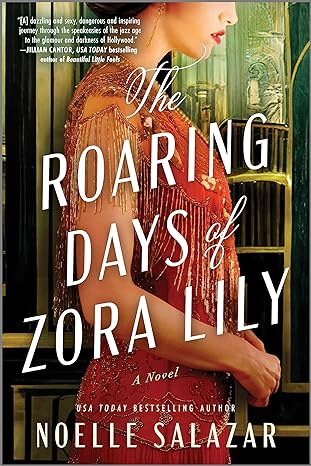
Excerpt: The Roaring Days of Zora Lily by Noelle Salazar

Washington, DC, 2023

The fluorescent lights blinked on in a domino effect, one after the other, a faint buzzing sound filling the room as I stood squinting in the unnatural light.

I inhaled, taking in my small slice of heaven within the storied walls of the Smithsonian National Museum of American History. The long room with its high ceiling, soothing taupe walls, and wood floors—weathered in spots from years of conservators standing and pacing as they labored over the works of great minds—brought a sense of peace as soon as I stepped inside.

The museum had been my happy place since I was a little girl, when my mother would walk with me from our baby blue–painted row house on Capitol Hill, her slender fingers wrapped around my pudgy ones. We’d wander past sprawling parks, melancholy monuments documenting history, to the austere but magical facade housing wonders my six-year-old eyes could barely comprehend. By the age of eight I knew all the regular exhibits like the back of my hand, and waited anxiously for the monthly newsletter that arrived in our mailbox, telling us what traveling exhibits we could expect next. It was one such exhibit, a gallery of gowns worn by British royalty, that had burrowed itself inside me in such a way that a dream was born. 

“I’m going to work here one day,” I’d told my mother, pushing back a strand of dirty-blond hair as I stared up at a jewel-colored gown once worn by Queen Elizabeth the Second. 

I was twelve. 

I wanted to exist within these walls. It was my church, and I believed in its teachings wholeheartedly. I had drunk the water. Read the great books. And prayed to the gods of knowledge and creativity. I wanted to be part of whatever it took to bring history to life for others. And for the past nine years…that’s exactly what I’d done. 

I stared at the scene sprawled out before me. 

“Sanctuary,” I whispered, tucking a blond-highlighted strand of hair behind my ear. 

Gleaming table after gleaming table sat covered in silk, satin, lace, and velvet. Gowns and dresses and blouses previously only seen on movie screens and in photographs now lay delicately in wait of tending to, their sparkle and sinew in contrast to the stark lights and tepid surroundings. Mannequins, my constant companions, stood at the ready, waiting for their moment. 

Thread in every color imaginable, like a rainbow of rotund spool soldiers on a rolling rack, waited to be chosen. Needles in pincushions, strips of bias tape, shimmering appliqués, ribbons, seam rippers, clear drawers filled with buttons and clasps and snaps, and boxes upon boxes of straight pins, their colorful heads a happy bouquet of tiny plastic globes, were scattered across every surface, peeking from where they’d fallen to the f loor, rolled beneath furniture, and stuck—I bent to pull a pink-headed pin from the rug beneath my feet—in a variety of inconvenient places. 

The door clicked open behind me and I smiled. 

“Good morning, Sylvia,” a familiar voice said.

“Morning, Lu,” I said to the one member of my team who, like me, couldn’t wait to get to work. 

Every day, my friend and fellow fashion-obsessed cohort, Lu Huang, and I arrived within minutes of one another, and a full half hour before anyone else. Working as conservators for the museum was a coveted get for us. A dream job that every morning caused us to rush from our respective homes, grabbing an insufficient breakfast on our way out the door, and wondering hours later why we were so hungry. We lost track of time constantly, surviving on coffee and bags of chips from the vending machine, and leaving friends and family waiting on us as we turned up late to holiday parties, dinners, and events we’d implored others to attend but couldn’t possibly get to on time, and having forgotten to blend the concealer we’d hurriedly dotted on in the train, with paint under our nails and bits of thread or glue on our jacket cuffs. 

In Lu I’d found not only the perfect work companion, but a kindred spirit. Over the nine years we’d worked together, we’d enjoyed laughing over our shared love of no-nonsense ponytails, and waxing poetic about old films and vintage fashion. We sat in her living room or mine, rewatching the movies that had shaped us and sharing stories of our schoolgirl walls plastered with images of iconic women of the silver screen, while our schoolmates favored posters of half-clothed men. So, when the idea for the newest exhibit started floating around our superiors’ offices upstairs, we’d spent many a night poring over which films we’d choose if asked, and then deliberated, scrapped, and chose again until we had the perfect array. 

Out of curiosity, we began to inquire with movie studios about the costumes we’d be interested in displaying, running into new obstacles with each call we made. Several times we chose a beloved film only to find half the costumes had been lost in a fire, were part of a decades-long legal battle, or were just plain lost—a travesty over which we consoled ourselves with a huge plate of nachos and a pitcher of margaritas. Eventually, the decisions about which movies to include boiled down to three simple things: Where were the costumes we’d need? Would they be available to us for the time required? And what kind of shape were they in? 

Once we’d gotten the green light that the exhibit was on, we finalized our list, made the calls, gathered confirmations, and began the design for the wing the costumes would be shown in. And then we waited, barely able to contain ourselves as one by one the garments that would be featured in The Hollywood Glamour Exhibition arrived. 

We chose two movies per decade, going back one hundred years to the 1920s. Every piece that had been worn by the female lead was sent to us from studios, museums, or estates. Once in our possession, my job as costume curator, along with my staff of seven, was to remove each gown or outfit from its protective garment bags or boxes, and go over it with a fine-tooth comb, looking for tears, stains, missing buttons, and the like. We’d been working for months. Some of the more intricate gowns needed extensive rebeading or sequin replacement, and many of the older pieces needing patching inside to hold the outside fabric together. In two cases we’d had to sew exact replicas of the linings, and then carefully fit them inside the original, giving it something to cling to, extending its life. 

A pantsuit from the forties had lost an outside pocket and matching the fabric had been hell. The brim of an iconic straw hat that belonged to another outfit had been scorched by a cigarette and needed to be patched. Each garment presented its own set of unique problems, and we were giddy as we worked to solve each puzzle. 

With our intention for each item to be viewed from all sides, it was crucial they looked as flawless as possible. Thankfully, my team were experts in their field, and excited at the opportunity to handle costumes worn by some of the most famous women in film history. 

“Can’t believe we’re down to the final film,” Lu said, running a finger over a strip of fringe hanging from a black evening gown. “I think this batch is my favorite.” 

I nodded, taking in the room of costumes from the 1928 film The Star. Each piece had been worn by the iconic Greta Garbo and was the epitome of elegance and class. And a notable diversion from the designer’s usual style. 

“It’s so odd Cleménte changed her MO for this one film,” I said, tilting my head as I took in the distinct wide neckline featured in each of the eight pieces. Even a blouse and jacket had been designed to show off the actress’s collarbones. The pieces were alluring, but Cleménte had always been known for a more modest style. 

Michele Cleménte had been a well-known designer in the ’20s and ’30s, her signature style demure, with higher necklines and longer hems. But for this movie, she’d completely diverged. 

“It is strange,” Lu said, frowning. “The studio must’ve wanted something exact.” 

“Then why hire her?” I asked. “Not that she didn’t do a lovely job. The clothing is exquisite. I’d wear them all now.” 

“And look fab doing it.” 

I felt myself blush with pleasure at the compliment. Being tall and willowy had its advantages. Unfortunately for me, I had neither the opportunity nor the bank account to wear clothes as fine as the ones before us. 

“Thanks, Lu,” I said, bending to peer closer at the large white beaded star on the white satin gown that was to be the centerpiece for the entire show. 

Aside from the star, the rest of the fabric had been left unadorned, letting the beaded element shine before one’s eye went to the skirt, which fell in soft overlapping layers to the floor. It was a stunning piece of art. But a confusing one. Because it 

had no resemblance to any piece ever sewn before by Cleménte. At least not any piece I’d seen in my years of studying the different famous designers. It didn’t have her specific way of hand sewing or her distinctive technique of tying off a knot, or even her tendency toward geometric shapes. But it was the neckline that really threw me off. Cleménte had preferred to leave a lot to the imagination. It was her calling card during a time when everyone else was showing more skin. And yet for these, she’d completely gone off-script. 

The rest of the crew arrived at nine on the dot and the quiet of the room rose to a dull roar as individual desk lights were turned on, loupes donned to scrutinize the tiniest details, and we all began to sew, glue, and chat our way through the day. 

“Syl?” 

I glanced up and winced as my back protested from having been bent over a table for the past hour. Lu stood, her coat over her arm, by the door. Everyone else had vanished. 

“What time is it?” I asked. 

“Nearly seven.” 

“Shit. How does that always happen?” I pulled the loupes from my head. 

“You happen to be in love with a dress,” Lu said. “That’s how.” 

“Story of my life.” 

“Explains so much.” 

“Does it?” 

“I mean, it definitely explains why you haven’t had a date with a real live human in a while. Only—” She gestured to the mannequin beside me. 

We laughed. She wasn’t wrong. 

Lu was the only person who truly understood me. The only person besides my sister who I’d ever allowed to see inside my guest room closet where dozens of scavenged vintage dresses, trousers, jackets, and hats hung, waiting to be delicately cared for like the ones I lovingly handled at work.

“You gonna stay?” Lu asked, watching me as I looked back at the dress spread out before me. 

I rubbed my eyes and stared at the tiny white beads I’d been replacing. We’d named the dress The Diaphanous Star, and I’d been carefully sewing on one bead at a time for the past two hours. It was a delicate task as the fabric they clung to was nearly one hundred years old. I had to work slowly and thoughtfully to keep from shredding it. 

“Yeah,” I said, rotating my head. “I want to get this star done. How’d you do today?” 

I glanced over at the black evening gown she was working on. 

“I’m close,” she said. “You can barely see the snag in the back now, and I should be able to replace the bit of fringe that’s missing tomorrow.” 

“Perfect,” I said, reaching over to wake my laptop and clicking on the calendar. “We are ahead of schedule, which bodes well should we have any catastrophes.” 

Lu knocked a small wooden box holding scissors inside it. 

“Don’t jinx us,” she said and then waved. “See you B and E.” 

“See you B and E,” I said. 

B and E. Bright and early. We’d made it up one day after the youngest woman in our group rattled off a bunch of acronyms as if the rest of us should know what they mean. We used it constantly. She didn’t think it was amusing. This of course made it that much funnier. 

I pulled my loupes back down and resumed placing the beads that formed the shimmering star. Thirty minutes later I sat up, set the magnifying glasses on the table, and arched my back in a well-deserved stretch. 

“Okay, you,” I said to the dress. “Time to get you on a mannequin.” 

Sliding my arms beneath the gown, I lifted it carefully and carried it to the far end of the table where a mannequin with roughly Greta Garbo’s 1927 torso measurements stood in wait, 

minus its arms which would be attached once I got the dress on it. 

Unfortunately, the wide neckline made it hard to secure. 

“You’re pretty,” I muttered, trying to keep the dress from slipping to the floor while I reached for one of the arms. “But a pain in my ass.” 

I clicked an arm into place, moving the capped sleeve over the seam where the appendage attached to the shoulder, and making sure the hand was resting just right on the mannequin’s hip. Satisfied, I reached for the other arm and did the same on the other side. 

“Not bad, headless Garbo,” I said, straightening the gown and smiling at the beaded star glimmering under the lights. 

I grabbed my notepad and made my way around the dress, writing down problems that still needed to be addressed. Loose threads, the unraveling second tier of the skirt, and a bit of fabric that looked like it had rubbed against something and was scuffed. There was a stain on the hem in back, and one of the capped sleeves sagged, leading me to investigate and find a spot inside where the elastic was stretched out of shape. 

My eyes moved along every inch of fabric, bead, and thread, my fingers scribbling notes as I took in what was easier to see with the dress hanging rather than sprawled on a tabletop. As I scrutinized the neckline in back, I noticed the tag was exposed and reached up to tuck it in. But as I pulled the material back, the tag fluttered to the floor. 

With a sigh, I bent to pick it up. I could leave the fix until morning, but as I had nothing but an empty apartment waiting for me, I began the task of detaching the arms of the mannequin and sliding the dress back off and onto the table. 

“Always something with you ladies,” I said, grabbing a needle and thread. “Can’t complain, I guess. Hottest date I’ve had in a while.” 

But as I turned my attention to the spot the tag had fallen 

from, I frowned and pulled the dress closer, peering at a small, elegant stitch no longer than the length of the tag that had covered it. 

“Is that…” 

I grabbed my loupes and looked again, the stitching now magnified and leaving zero doubt that beneath the tag, in white thread and a beautiful freehand stitch, was a name—and it wasn’t Cleménte’s. 

Sitting back, I removed my glasses and stared at the gorgeous dress with its beautiful wide neckline and capped sleeves, the beaded star, the tiered skirt that was so unlike Cleménte in style, and wondered aloud to the empty room— 

“Who the hell is Zora Lily?”

From THE ROARING DAYS OF ZORA LILY by Noelle Salazar. Copyright © 2023 by Noelle Salazar. Published by MIRA, an imprint of HarperCollins.

PURCHASE BOOK HERE

DID YOU ENJOY WHAT YOU JUST READ? IF YES, THEN SUBSCRIBE TO THE BLOG, GIVE THE POST A LIKE, OR LEAVE A COMMENT! NEW POSTS ARE UP EVERY TUESDAY & THURSDAY!