In the lands of Bethel, where the Prophet’s word is law, Immanuelle Moore’s very existence is blasphemy. Her mother’s union with an outsider of a different race cast her once-proud family into disgrace, so Immanuelle does her best to worship the Father, follow Holy Protocol, and lead a life of submission, devotion, and absolute conformity, like all the other women in the settlement.
But a mishap lures her into the forbidden Darkwood surrounding Bethel, where the first prophet once chased and killed four powerful witches. Their spirits are still lurking there, and they bestow a gift on Immanuelle: the journal of her dead mother, who Immanuelle is shocked to learn once sought sanctuary in the wood.
Fascinated by the secrets in the diary, Immanuelle finds herself struggling to understand how her mother could have consorted with the witches. But when she begins to learn grim truths about the Church and its history, she realizes the true threat to Bethel is its own darkness. And she starts to understand that if Bethel is to change, it must begin with her.
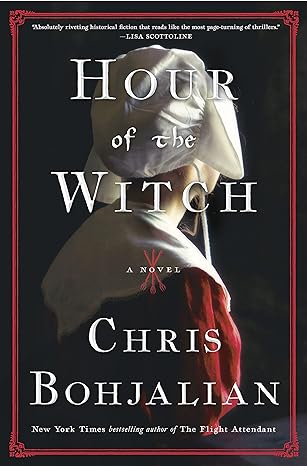
HOUR OF THE WITCH BY CHRIS BOHJALIAN
Boston, 1662. Mary Deerfield is twenty-four-years-old. Her skin is porcelain, her eyes delft blue, and in England she might have had many suitors. But here in the New World, amid this community of saints, Mary is the second wife of Thomas Deerfield, a man as cruel as he is powerful. When Thomas, prone to drunken rage, drives a three-tined fork into the back of Mary’s hand, she resolves that she must divorce him to save her life.
But in a world where every neighbor is watching for signs of the devil, a woman like Mary—a woman who harbors secret desires and finds it difficult to tolerate the brazen hypocrisy of so many men in the colony—soon becomes herself the object of suspicion and rumor. When tainted objects are discovered buried in Mary’s garden, when a boy she has treated with herbs and simples dies, and when their servant girl runs screaming in fright from her home, Mary must fight to not only escape her marriage, but also the gallows.
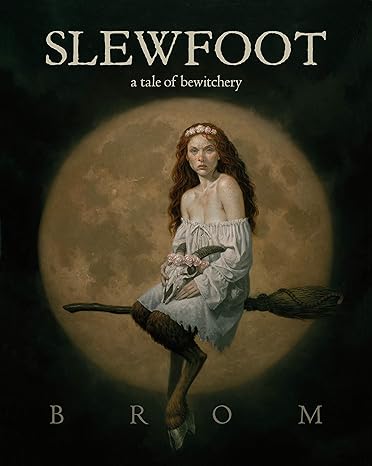
SLEWFOOT: A TALE OF BEWITCHERY BY BROM
Connecticut, 1666: An ancient spirit awakens in a dark wood. The wildfolk call him Father, slayer, protector.
The colonists call him Slewfoot, demon, devil.
To Abitha, a recently widowed outcast, alone and vulnerable in her pious village, he is the only one she can turn to for help.
Together, they ignite a battle between pagan and Puritan – one that threatens to destroy the entire village, leaving nothing but ashes and bloodshed in their wake.
DID YOU ENJOY WHAT YOU JUST READ? IF YES, THEN SUBSCRIBE TO THE BLOG, GIVE THE POST A LIKE, OR LEAVE A COMMENT! NEW POSTS ARE UP EVERY TUESDAY & THURSDAY!
Check out The Inkblotters for more posts like this, on everything from skincare to healthy living!
In an extroverted world, introverts are often drawn to quiet, solitary careers, such as writing. As an introvert who is happy spending plenty of time alone, especially one who works remotely as a writer, it can be easy to neglect self-care. Plus, introverts tend to struggle with overthinking, perfectionism, and a reluctance to seek help, all of which can lead to overwork, burnout, and chronic stress. In this article, we’ll discuss how you can strike a harmonious balance between nurturing your body and mind and harnessing your unique creative strengths as a writer!
Pursue Fulfilling Career Goals
Setting career goals is a great way to give your mental health a boost. According to Positive Psychology, goal-setting can help you align your focus and promote a sense of self-mastery. If you’d like to take your writing career further, think about how you can use your skills in other
positions. For example, you could work in education as a creative writing teacher. Keep in mind that this might mean going back to school and getting a bachelors od education. Online universities can be a great option for introverts! Look for accredited online schools that offer bachelor’s education degrees at competitive tuition rates.
When it comes to hunting for your next job, be prepared to step out of your comfort zone. You’ll interact with several people during your job search. Writing a cover letter is a great way to break the ice and increase your chances of landing an interview. To write an engaging cover letter, be sure to research the company you’re applying to and mention any connections you have.
Avoid Unhealthy Coping Behaviors
Due to their contemplative nature, introverts are prone to stress. Introverts also tend to face more anticipatory anxiety, which means your stress response is constantly firing. While alcohol can offer temporary relief from stress and anxiety, this coping behavior can have long-term negative effects and even increase your anxiety levels over time. If you’re struggling to cut back on drinking, consider finding treatment help nearby. Choose a rehab center that offers the type of treatment you need. If cost is an issue, look for facilities that offer free treatment services through government health programs.
Embrace Self-Compassion
Introverts are highly self-reflective. While this introspection can fuel your creativity, it can also lead to you to become overly self-critical. Introverts frequently set exceptionally high standards for themselves and can be relentless in their pursuit of perfection. This self-imposed pressure can result in feelings of inadequacy and anxiety. Embracing self-compassion is crucial! Psychology Today suggests looking for reasons to be proud of your introversion. Leaning into your strengths, such as your creativity, listening skills, and outside-the-box thinking can help you be more forgiving of your perceived flaws.
Set Boundaries
Setting boundaries is of utmost importance if you’re an introvert, as this allows you to safeguard your alone time and recharge when needed. Without clear boundaries, you may find yourself overextending, both in your social life and your professional life as a writer. This can lead to burnout and a decline in the quality of your work. Establish limits with friends, family members, and even your freelance clients to preserve your energy and communicate your needs to others. This process can also be incredibly empowering and provide a boost to your confidence!
Introverted or extroverted, self-care should be at the top of everyone’s priority list. Introverts, in particular, need regular self-care to manage the overwhelm of existing in a world that values extroversion. By pursuing your career goals through online education, seeking help for negative coping behaviors like drinking, and learning how to forgive yourself and advocate for your needs, you can nurture your creativity as a writer while forging a path to greater well-being.
Guest blog post by Stephanie Haywood, read her previous guest blog post HERE and HERE or visit her website: MY LIFE BOOST.
DID YOU ENJOY WHAT YOU JUST READ? IF YES, THEN SUBSCRIBE TO THE BLOG, GIVE THE POST A LIKE, OR LEAVE A COMMENT! NEW POSTS ARE UP EVERY TUESDAY & THURSDAY!
“All leads will be followed. But you and Alice Ogilvie didn’t do that. Just like before, you went full steam ahead on your own, and now look where you are.”
PLOT SUMMARY:
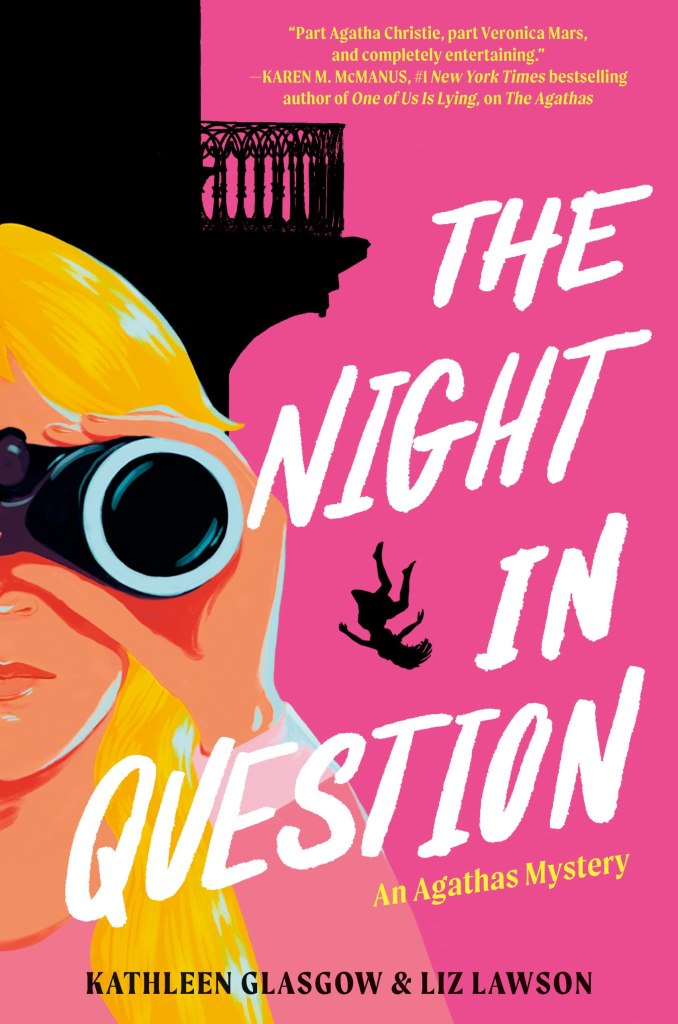
How do you solve a murder? Follow the lessons of the master—Agatha Christie! Iris and Alice find themselves in the middle of another Castle Cove mystery in the sequel to New York Times bestseller The Agathas, by powerhouse authors Kathleen Glasgow and Liz Lawson.
Alice Ogilvie and Iris Adams became the talk of Castle Cove when they cracked the biggest case of the fall: the death of Brooke Donovan. Together, the Agathas put Brooke’s killer away for good, and since then things around town have been almost back to normal. Quiet, even.
But if Alice and Iris know anything, it’s that sometimes quiet is just the calm before the storm. The truth is, Brooke’s disappearance wasn’t the first mystery to rock Castle Cove, and it won’t be the last. So when their school dance at the infamous Levy Castle—the site of film starlet Mona Moody’s unsolved death back in the 1940s—is interrupted by a violent assault, Iris and Alice pull out their murder boards and get back to work.
To understand the present, sometimes you need to look into the past. And if the Agathas want a chance at solving their new case, that’s exactly where they’ll need to start digging. Only, what they uncover might very well kill them.
GRADE: A
REVIEW:
The Night in Question is the highly anticipated sequel of The Agathas that features Agatha Christie aficionado Alice Ogilvie and her unlikely partner in sleuthing Iris Adams. This time Alice and Iris have to try to figure out who assaulted one of their classmates during the Sadie Hawkins dance and what truly happened to famed film star Mona Moody in the 40’s when she accidentally fell off of the balcony at Levy Castle.
This was very fast-paced and read like a cozy mystery, although terrible/violent things did happen! I also liked that Glasgow and Lawson kept their teen detectives credible in what they could manage to find out and how. This sequel was jam-packed with mysteries and reveals and I loved how everything tied up at the end. I also liked that they didn’t necessarily get a happy ending, making this more realistic, but also kind of setting up for another book (I’d love a book three!).
The Levy Castle setting and old Hollywood link to it was part of the allure of this book, not to mention that I loved Alice and Iris’s friendship and how well they work together as wannabe Veronica Mars. But I also like how Glasgow and Lawson show how much trouble the two teens could actually get into if they actually try to help and how law enforcement barely acknowledges them whenever they actually crack a case.
This is a fun read and I recommend this if you’re a fan of teen detectives and cozy mysteries.
*Thank you so much to NetGalley and Delacorte Press for the digital copy of this book in exchange for an honest review!
DID YOU ENJOY WHAT YOU JUST READ? IF YES, THEN SUBSCRIBE TO THE BLOG, GIVE THE POST A LIKE, OR LEAVE A COMMENT! NEW POSTS ARE UP EVERY TUESDAY & THURSDAY!
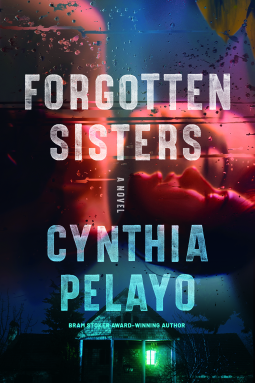
Sisters Anna and Jennie live in a historic bungalow on the Chicago River. They’re tethered to a disquieting past, and with nowhere else to go, nothing can part them from their family home. Not the maddening creaks and disembodied voices that rattle the old walls. Not the inexplicable drownings in the area, or the increasing number of bodies that float by Anna’s window.
To stave off loneliness, Anna has a podcast, spinning ghostly tales of Chicago’s tragic history. But when Anna captures the attention of an ardent male listener, she awakens to the possibilities of a world outside.
As their relationship grows, so do Jennie’s fears. More and more people are going missing in the river. And then two detectives come calling.
They’re looking for a link between the mysteries of the river and what’s housed on the bank. Even Anna and Jennie don’t understand how dreadful it is—and still can be—when the truth about their unsettled lives begins to surface.
GRADE: A
REVIEW:
When I read The Shoemaker’s Magician earlier this year, I thought that it definitely was one of my fave horror thrillers because it had everything I loved rolled into one novel – however, with Forgotten Sisters Pelayo taps into other things I absolutely love – The Little Mermaid, historical tragedies, and a mysterious killer on the loose. Some authors are linked to their location, such as Anne Rice with New Orleans, or Stephen King with Maine, and whenever I think of Pelayo and her writing I link her to Chicago – and love discovering and learning more about this city through her novels.
This novel is a modern retelling of The Little Mermaid but it’s also a ghost story of sorts (I don’t want to delve too much into detail because I think it’s important to find out on your own). But it’s also about the strength of sisterly love since the novel mostly focuses on the relationship between Anna and Jennie. The house they live in is next to a river, and soon both the house and river become important characters within the world of the novel as the people who inhabit it. A lot of this novel reads like a Gothic novel in regards to the two sisters spending most of their time indoors whilst being burdened by ghosts and odd noises. Young men have begun to go missing and show up dead in the river weeks and months later, sparking thoughts of a serial killer, although the police wish to not acknowledge that they may be dealing with one for fear of alarming the public.
A lot of the book is read like a poetic fever dream and works well in regards to its fairytale roots, so it never bothered me that the two sisters spoke like they were Dickensian characters (once you reach the end you’ll understand why). I know some may think that the love that blossomed between Anna and Peter was what some readers would call “insta-love” but really – I felt that it was possible for the two of them to fall for each other as quickly as they did when they had spent so much time exchanging emails prior (I’ve always been a sucker for long emails and letters between people I’m fond of and understand how a relationship can evolve from that rather quickly).
This novel was unique as it was an amalgamation of thriller, horror, crime, history, and fantasy all rolled into one unique story. I recommend this for those who lean towards Gothic atmospheres in their books and enjoy a slower-paced murder mystery.
*Thank you so much to NetGalley & Thomas & Mercer for the digital copy of this book in exchange for an honest review!
DID YOU ENJOY WHAT YOU JUST READ? IF YES, THEN SUBSCRIBE TO THE BLOG, GIVE THE POST A LIKE, OR LEAVE A COMMENT! NEW POSTS ARE UP EVERY TUESDAY & THURSDAY!
“We’re each dealt our own unique affliction, Alice. Ours is death. Yours? Yours is life.”
PLOT SUMMARY:
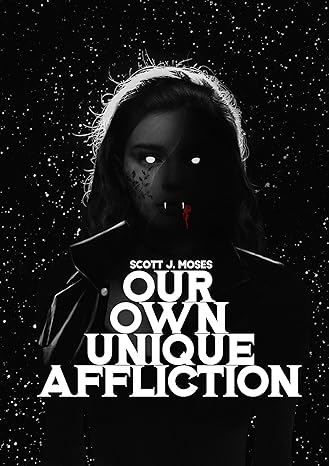
Our Own Unique Affliction is the story of Alice Ann, a dejected immortal who longs for her life in the sun. Navigating guilt, loss, family, meaning, murder, and all that comes with the curse of living forever. An existential bleak, quiet until it’s not, hallucination on duality, rife with fangs, empathy, blood, and grief.
GRADE: A-
REVIEW:
Full disclosure, vampires are my favourite supernatural creature, but since they are my favourite, I usually don’t watch or read many books or movies that feature them because I am personally picky when it comes to vampires. My biggest gripe with most vampire books is the author leans too much on making them romantic heroes that they tend to forget or downplay the monstrous aspects that make these creatures absolutely terrifying. Alice Ann is no such vampire. Yes, she holds some smidgen of humanity but she’s also a brutal monster – and it’s a perfect balance. Alice Ann yearns for a life under the sun – and her memories of her family when she was human are viscerally moving and sad – especially when she sees immortality as a curse. I wasn’t too drawn to the human that essentially drove her and her sister around in a truck everywhere (I’m always iffy about humans that work for vampires or vampires relying on humans – it always seems like an odd relationship that will end up derailing at some point – and in the case of this novella it did just that). Usually, book endings are something that I don’t always like because most are lackluster even when the story has been amazing – however, Moses lands the perfect ending for this book – and it couldn’t have been better.
Read this if you like vampires, philosophical musings about mortality, and grief horror.
DID YOU ENJOY WHAT YOU JUST READ? IF YES, THEN SUBSCRIBE TO THE BLOG, GIVE THE POST A LIKE, OR LEAVE A COMMENT! NEW POSTS ARE UP EVERY TUESDAY & THURSDAY!
The fluorescent lights blinked on in a domino effect, one after the other, a faint buzzing sound filling the room as I stood squinting in the unnatural light.
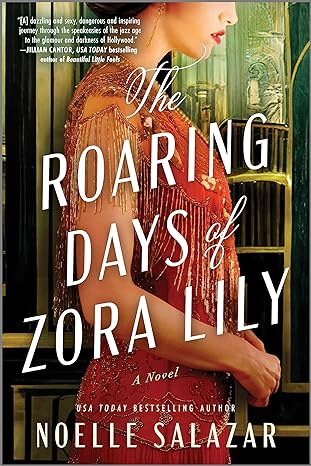
I inhaled, taking in my small slice of heaven within the storied walls of the Smithsonian National Museum of American History. The long room with its high ceiling, soothing taupe walls, and wood floors—weathered in spots from years of conservators standing and pacing as they labored over the works of great minds—brought a sense of peace as soon as I stepped inside.
The museum had been my happy place since I was a little girl, when my mother would walk with me from our baby blue–painted row house on Capitol Hill, her slender fingers wrapped around my pudgy ones. We’d wander past sprawling parks, melancholy monuments documenting history, to the austere but magical facade housing wonders my six-year-old eyes could barely comprehend. By the age of eight I knew all the regular exhibits like the back of my hand, and waited anxiously for the monthly newsletter that arrived in our mailbox, telling us what traveling exhibits we could expect next. It was one such exhibit, a gallery of gowns worn by British royalty, that had burrowed itself inside me in such a way that a dream was born.
“I’m going to work here one day,” I’d told my mother, pushing back a strand of dirty-blond hair as I stared up at a jewel-colored gown once worn by Queen Elizabeth the Second.
I was twelve.
I wanted to exist within these walls. It was my church, and I believed in its teachings wholeheartedly. I had drunk the water. Read the great books. And prayed to the gods of knowledge and creativity. I wanted to be part of whatever it took to bring history to life for others. And for the past nine years…that’s exactly what I’d done.
I stared at the scene sprawled out before me.
“Sanctuary,” I whispered, tucking a blond-highlighted strand of hair behind my ear.
Gleaming table after gleaming table sat covered in silk, satin, lace, and velvet. Gowns and dresses and blouses previously only seen on movie screens and in photographs now lay delicately in wait of tending to, their sparkle and sinew in contrast to the stark lights and tepid surroundings. Mannequins, my constant companions, stood at the ready, waiting for their moment.
Thread in every color imaginable, like a rainbow of rotund spool soldiers on a rolling rack, waited to be chosen. Needles in pincushions, strips of bias tape, shimmering appliqués, ribbons, seam rippers, clear drawers filled with buttons and clasps and snaps, and boxes upon boxes of straight pins, their colorful heads a happy bouquet of tiny plastic globes, were scattered across every surface, peeking from where they’d fallen to the f loor, rolled beneath furniture, and stuck—I bent to pull a pink-headed pin from the rug beneath my feet—in a variety of inconvenient places.
The door clicked open behind me and I smiled.
“Good morning, Sylvia,” a familiar voice said.
“Morning, Lu,” I said to the one member of my team who, like me, couldn’t wait to get to work.
Every day, my friend and fellow fashion-obsessed cohort, Lu Huang, and I arrived within minutes of one another, and a full half hour before anyone else. Working as conservators for the museum was a coveted get for us. A dream job that every morning caused us to rush from our respective homes, grabbing an insufficient breakfast on our way out the door, and wondering hours later why we were so hungry. We lost track of time constantly, surviving on coffee and bags of chips from the vending machine, and leaving friends and family waiting on us as we turned up late to holiday parties, dinners, and events we’d implored others to attend but couldn’t possibly get to on time, and having forgotten to blend the concealer we’d hurriedly dotted on in the train, with paint under our nails and bits of thread or glue on our jacket cuffs.
In Lu I’d found not only the perfect work companion, but a kindred spirit. Over the nine years we’d worked together, we’d enjoyed laughing over our shared love of no-nonsense ponytails, and waxing poetic about old films and vintage fashion. We sat in her living room or mine, rewatching the movies that had shaped us and sharing stories of our schoolgirl walls plastered with images of iconic women of the silver screen, while our schoolmates favored posters of half-clothed men. So, when the idea for the newest exhibit started floating around our superiors’ offices upstairs, we’d spent many a night poring over which films we’d choose if asked, and then deliberated, scrapped, and chose again until we had the perfect array.
Out of curiosity, we began to inquire with movie studios about the costumes we’d be interested in displaying, running into new obstacles with each call we made. Several times we chose a beloved film only to find half the costumes had been lost in a fire, were part of a decades-long legal battle, or were just plain lost—a travesty over which we consoled ourselves with a huge plate of nachos and a pitcher of margaritas. Eventually, the decisions about which movies to include boiled down to three simple things: Where were the costumes we’d need? Would they be available to us for the time required? And what kind of shape were they in?
Once we’d gotten the green light that the exhibit was on, we finalized our list, made the calls, gathered confirmations, and began the design for the wing the costumes would be shown in. And then we waited, barely able to contain ourselves as one by one the garments that would be featured in The Hollywood Glamour Exhibition arrived.
We chose two movies per decade, going back one hundred years to the 1920s. Every piece that had been worn by the female lead was sent to us from studios, museums, or estates. Once in our possession, my job as costume curator, along with my staff of seven, was to remove each gown or outfit from its protective garment bags or boxes, and go over it with a fine-tooth comb, looking for tears, stains, missing buttons, and the like. We’d been working for months. Some of the more intricate gowns needed extensive rebeading or sequin replacement, and many of the older pieces needing patching inside to hold the outside fabric together. In two cases we’d had to sew exact replicas of the linings, and then carefully fit them inside the original, giving it something to cling to, extending its life.
A pantsuit from the forties had lost an outside pocket and matching the fabric had been hell. The brim of an iconic straw hat that belonged to another outfit had been scorched by a cigarette and needed to be patched. Each garment presented its own set of unique problems, and we were giddy as we worked to solve each puzzle.
With our intention for each item to be viewed from all sides, it was crucial they looked as flawless as possible. Thankfully, my team were experts in their field, and excited at the opportunity to handle costumes worn by some of the most famous women in film history.
“Can’t believe we’re down to the final film,” Lu said, running a finger over a strip of fringe hanging from a black evening gown. “I think this batch is my favorite.”
I nodded, taking in the room of costumes from the 1928 film The Star. Each piece had been worn by the iconic Greta Garbo and was the epitome of elegance and class. And a notable diversion from the designer’s usual style.
“It’s so odd Cleménte changed her MO for this one film,” I said, tilting my head as I took in the distinct wide neckline featured in each of the eight pieces. Even a blouse and jacket had been designed to show off the actress’s collarbones. The pieces were alluring, but Cleménte had always been known for a more modest style.
Michele Cleménte had been a well-known designer in the ’20s and ’30s, her signature style demure, with higher necklines and longer hems. But for this movie, she’d completely diverged.
“It is strange,” Lu said, frowning. “The studio must’ve wanted something exact.”
“Then why hire her?” I asked. “Not that she didn’t do a lovely job. The clothing is exquisite. I’d wear them all now.”
“And look fab doing it.”
I felt myself blush with pleasure at the compliment. Being tall and willowy had its advantages. Unfortunately for me, I had neither the opportunity nor the bank account to wear clothes as fine as the ones before us.
“Thanks, Lu,” I said, bending to peer closer at the large white beaded star on the white satin gown that was to be the centerpiece for the entire show.
Aside from the star, the rest of the fabric had been left unadorned, letting the beaded element shine before one’s eye went to the skirt, which fell in soft overlapping layers to the floor. It was a stunning piece of art. But a confusing one. Because it
had no resemblance to any piece ever sewn before by Cleménte. At least not any piece I’d seen in my years of studying the different famous designers. It didn’t have her specific way of hand sewing or her distinctive technique of tying off a knot, or even her tendency toward geometric shapes. But it was the neckline that really threw me off. Cleménte had preferred to leave a lot to the imagination. It was her calling card during a time when everyone else was showing more skin. And yet for these, she’d completely gone off-script.
The rest of the crew arrived at nine on the dot and the quiet of the room rose to a dull roar as individual desk lights were turned on, loupes donned to scrutinize the tiniest details, and we all began to sew, glue, and chat our way through the day.
“Syl?”
I glanced up and winced as my back protested from having been bent over a table for the past hour. Lu stood, her coat over her arm, by the door. Everyone else had vanished.
“What time is it?” I asked.
“Nearly seven.”
“Shit. How does that always happen?” I pulled the loupes from my head.
“You happen to be in love with a dress,” Lu said. “That’s how.”
“Story of my life.”
“Explains so much.”
“Does it?”
“I mean, it definitely explains why you haven’t had a date with a real live human in a while. Only—” She gestured to the mannequin beside me.
We laughed. She wasn’t wrong.
Lu was the only person who truly understood me. The only person besides my sister who I’d ever allowed to see inside my guest room closet where dozens of scavenged vintage dresses, trousers, jackets, and hats hung, waiting to be delicately cared for like the ones I lovingly handled at work.
“You gonna stay?” Lu asked, watching me as I looked back at the dress spread out before me.
I rubbed my eyes and stared at the tiny white beads I’d been replacing. We’d named the dress The Diaphanous Star, and I’d been carefully sewing on one bead at a time for the past two hours. It was a delicate task as the fabric they clung to was nearly one hundred years old. I had to work slowly and thoughtfully to keep from shredding it.
“Yeah,” I said, rotating my head. “I want to get this star done. How’d you do today?”
I glanced over at the black evening gown she was working on.
“I’m close,” she said. “You can barely see the snag in the back now, and I should be able to replace the bit of fringe that’s missing tomorrow.”
“Perfect,” I said, reaching over to wake my laptop and clicking on the calendar. “We are ahead of schedule, which bodes well should we have any catastrophes.”
Lu knocked a small wooden box holding scissors inside it.
“Don’t jinx us,” she said and then waved. “See you B and E.”
“See you B and E,” I said.
B and E. Bright and early. We’d made it up one day after the youngest woman in our group rattled off a bunch of acronyms as if the rest of us should know what they mean. We used it constantly. She didn’t think it was amusing. This of course made it that much funnier.
I pulled my loupes back down and resumed placing the beads that formed the shimmering star. Thirty minutes later I sat up, set the magnifying glasses on the table, and arched my back in a well-deserved stretch.
“Okay, you,” I said to the dress. “Time to get you on a mannequin.”
Sliding my arms beneath the gown, I lifted it carefully and carried it to the far end of the table where a mannequin with roughly Greta Garbo’s 1927 torso measurements stood in wait,
minus its arms which would be attached once I got the dress on it.
Unfortunately, the wide neckline made it hard to secure.
“You’re pretty,” I muttered, trying to keep the dress from slipping to the floor while I reached for one of the arms. “But a pain in my ass.”
I clicked an arm into place, moving the capped sleeve over the seam where the appendage attached to the shoulder, and making sure the hand was resting just right on the mannequin’s hip. Satisfied, I reached for the other arm and did the same on the other side.
“Not bad, headless Garbo,” I said, straightening the gown and smiling at the beaded star glimmering under the lights.
I grabbed my notepad and made my way around the dress, writing down problems that still needed to be addressed. Loose threads, the unraveling second tier of the skirt, and a bit of fabric that looked like it had rubbed against something and was scuffed. There was a stain on the hem in back, and one of the capped sleeves sagged, leading me to investigate and find a spot inside where the elastic was stretched out of shape.
My eyes moved along every inch of fabric, bead, and thread, my fingers scribbling notes as I took in what was easier to see with the dress hanging rather than sprawled on a tabletop. As I scrutinized the neckline in back, I noticed the tag was exposed and reached up to tuck it in. But as I pulled the material back, the tag fluttered to the floor.
With a sigh, I bent to pick it up. I could leave the fix until morning, but as I had nothing but an empty apartment waiting for me, I began the task of detaching the arms of the mannequin and sliding the dress back off and onto the table.
“Always something with you ladies,” I said, grabbing a needle and thread. “Can’t complain, I guess. Hottest date I’ve had in a while.”
But as I turned my attention to the spot the tag had fallen
from, I frowned and pulled the dress closer, peering at a small, elegant stitch no longer than the length of the tag that had covered it.
“Is that…”
I grabbed my loupes and looked again, the stitching now magnified and leaving zero doubt that beneath the tag, in white thread and a beautiful freehand stitch, was a name—and it wasn’t Cleménte’s.
Sitting back, I removed my glasses and stared at the gorgeous dress with its beautiful wide neckline and capped sleeves, the beaded star, the tiered skirt that was so unlike Cleménte in style, and wondered aloud to the empty room—
DID YOU ENJOY WHAT YOU JUST READ? IF YES, THEN SUBSCRIBE TO THE BLOG, GIVE THE POST A LIKE, OR LEAVE A COMMENT! NEW POSTS ARE UP EVERY TUESDAY & THURSDAY!
Anna Alcott is desperate to have a family. But as she tries to balance her increasingly public life as an indie actress with a grueling IVF journey, she starts to suspect that someone is going to great lengths to make sure that never happens. Crucial medicines are lost. Appointments get swapped without her knowledge. Cryptic warnings have her jumping at shadows. And despite everything she’s gone through to make this pregnancy a reality, not even her husband is willing to believe that someone is playing twisted games with her.
Then her doctor tells her she’s had a miscarriage―except Anna’s convinced she’s still pregnant despite everything the grave-faced men around her claim. She can feel the baby moving inside her, can see the strain it’s taking on her weakening body. Vague warnings become direct threats as someone stalks her through the bleak ghost town of the snowy Hamptons. As her symptoms and sense of danger grow ever more horrifying, Anna can’t help but wonder what exactly she’s carrying inside of her…and why no one will listen when she says something is horribly, painfully wrong.
GRADE: A-
REVIEW:
Full disclosure, I’ve read many of Danielle Valentine’s YA novels (under the name Danielle Vega), her Merciless series being one of the most popular ones. So, I was curious what this author would do in an adult horror novel. I also was curious to read this because the new season of American Horror Story, a series that I really love and watch every year, is going to be based off of this book – and I wanted to read the book prior to viewing the series.
This book explores many things that deal with womanhood and motherhood, and the craziest thing is that what one would think are the horror elements, aren’t really as terrifying as the true elements of the novel. I think I was more horrified by the amount of physical pain and stress the protagonist submitted to during the IVF treatments than when she began having strange cravings (and when I say strange – the cravings are pretty brutal). The men in this novel are mostly trash – so it’s no surprise that they didn’t take any of Anna’s concerns about her body seriously.
This novel is full of twists and turns, and I liked the direction it went rather than going for the tired trope of “evil baby.” I am very curious to see how this book will be adapted in AHS: Delicate and hope that they keep Valentine’s powerful message.
I recommend this book to those who love feminist horror novels that subvert genre expectations.
*Thank you so much to NetGalley and Sourcebooks Landmark for the digital copy of this book in exchange for an honest review!
DID YOU ENJOY WHAT YOU JUST READ? IF YES, THEN SUBSCRIBE TO THE BLOG, GIVE THE POST A LIKE, OR LEAVE A COMMENT! NEW POSTS ARE UP EVERY TUESDAY & THURSDAY!
“Seventy percent of the planet is water. Most of that water is deep ocean. The origin of everything. Less than 5 percent of the deep ocean is mapped. Humans know more about Mars. Anything could be down there. Therefore, everything is.”
PLOT SUMMARY:
Jay Gardiner has given himself a fool’s errand—to find the remains of his deceased father in the Pacific Ocean off the coast of Monastery Beach. He knows it’s a long shot, but Jay feels it’s the only way for him to lift the weight of guilt he has carried since his dad’s death by suicide the previous year.
The dive begins well enough, but the sudden appearance of a giant squid puts Jay in very real jeopardy, made infinitely worse by the arrival of a sperm whale looking to feed. Suddenly, Jay is caught in the squid’s tentacles and drawn into the whale’s mouth where he is pulled into the first of its four stomachs. He quickly realizes he has only one hour before his oxygen tanks run out—one hour to defeat his demons and escape the belly of a whale.
GRADE: A
REVIEW:
I absolutely loved this book – which in a way almost felt like it was two novels in one. One novel is Jay’s battle to escape the various stomachs of the sperm whale he finds himself in, whilst the second novel is Jay’s guilt over his father’s suicide because the two always had a very difficult relationship that only got worse during his father’s cancer – and Jay spent his father’s last few months in life, not living with him or communicating with him. This novel runs against the clock as each chapter notes how much oxygen remains in Jay’s tank, and he’s got very little time to get back out of the whale and up on land before he dies. What I loved about this novel is that it had fast-paced short chapters so reading it was a breeze, but at the same time, it was rich with so many emotions. The reader can’t help but cheer Jay on, wanting him to be freed from the whale, but at the same time, you also hope that Jay can also be freed of his guilt. The novel explores both and I liked the way it ended. I won’t say anything more about it because I think you need to go into this novel blind and experience this journey with Jay.
I recommend this book if you love marine life adventures and character-driven thrillers. I love the ocean so this novel was right up my alley. I’d really love to see this become a film because it would make for an excellent survivalist thriller.
*Thank you so much to NetGalley and Atria and MTV Books for the digital copy of this book in exchange for an honest review!
DID YOU ENJOY WHAT YOU JUST READ? IF YES, THEN SUBSCRIBE TO THE BLOG, GIVE THE POST A LIKE, OR LEAVE A COMMENT! NEW POSTS ARE UP EVERY TUESDAY & THURSDAY!
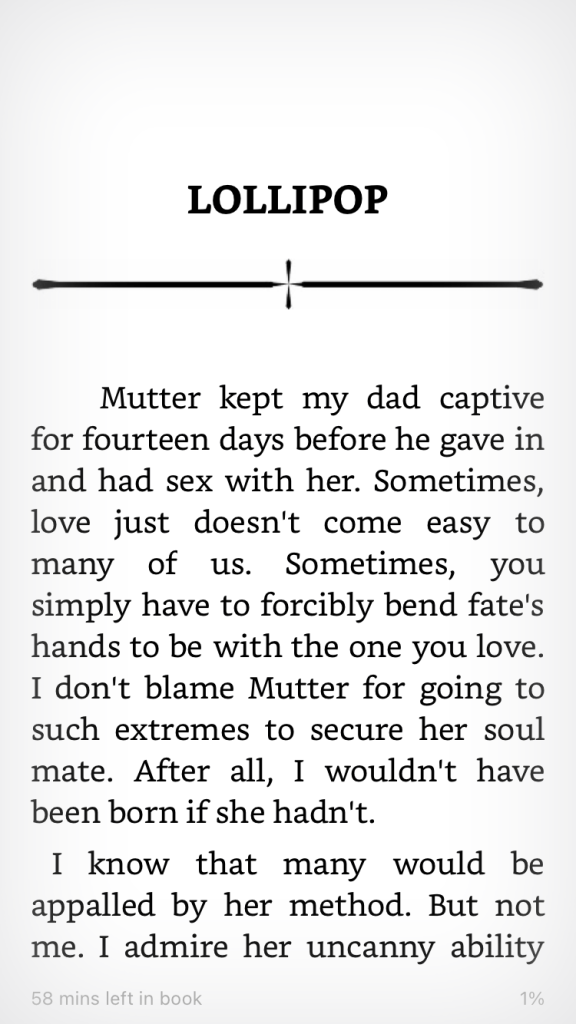
Hidden away in an old, dilapidated Victorian home, the Dresden witches have been making their prized candies for years. Their secret ingredient would make most people squeamish, but for Lollipop it’s just another typical day at home. Lolli spends her days making candies and longing for her classmate Stella. As her infatuation for Stella deepens, Lollipop begins to question her loyalty to her family. Will she choose love or will she do anything it takes to preserve the Dresden legacy at any costs? Does she have what it takes to be the next head witch or will her powers never be strong enough?
Stella Morris has recently moved to Arcana, California after a tragic incident involving her mother. Stella is both beautiful and popular, but she harbors a darkness in her that threatens to make her whole world come undone.
This coming-of-age queer romance is drenched in blood and sugar.
DID YOU ENJOY WHAT YOU JUST READ? IF YES, THEN SUBSCRIBE TO THE BLOG, GIVE THE POST A LIKE, OR LEAVE A COMMENT! NEW POSTS ARE UP EVERY TUESDAY & THURSDAY!
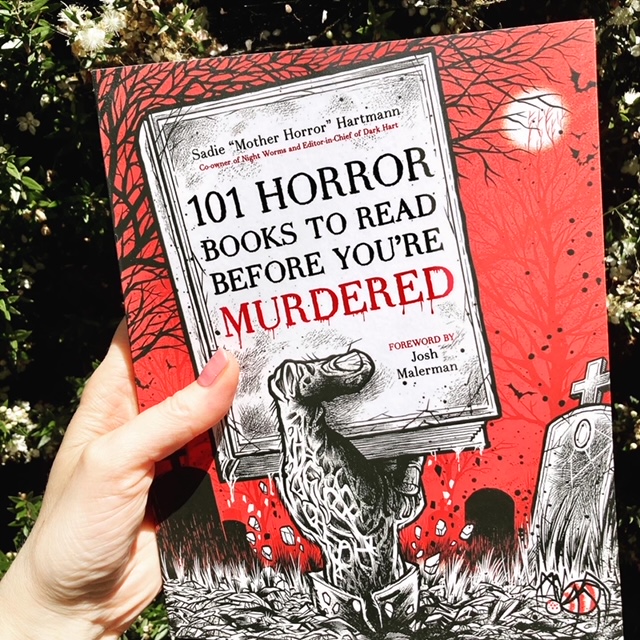
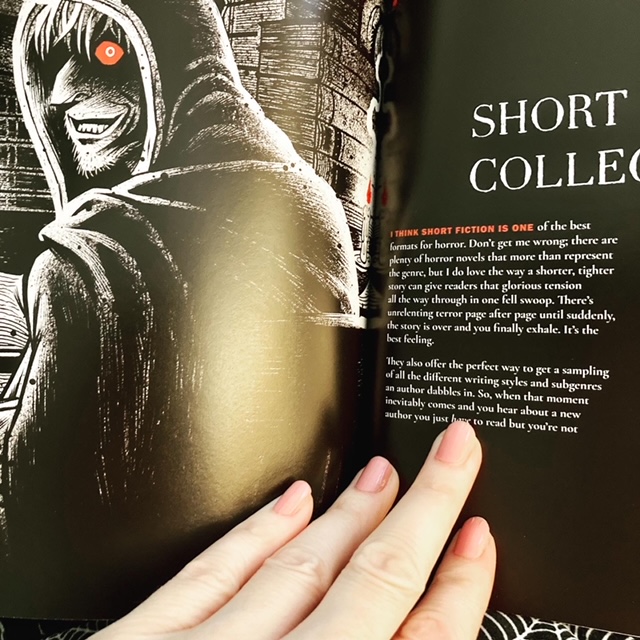
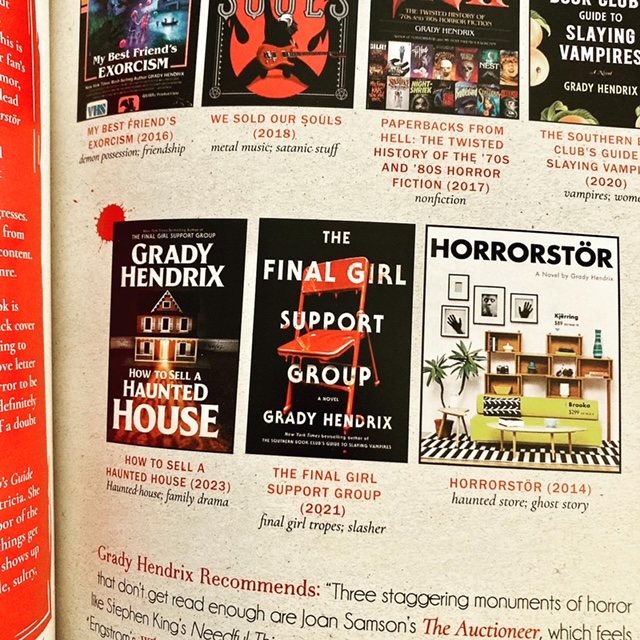
Curious readers and fans of monsters and the macabre, get ready to bulk up your TBR piles! Sadie “Mother Horror” Hartmann has curated the best selection of modern horror books, including plenty of deep cuts. Indulge your heart’s darkest desires to be terrified, unsettled, disgusted, and heartbroken with stories that span everything from paranormal hauntings and creepy death cults to small-town terrors and apocalyptic disasters. Each recommendation includes a full synopsis as well as a quick overview of the book’s themes, style, and tone so you can narrow down your next read at a glance. Featuring a foreword by New York Times bestselling author Josh Malerman and five brand-new essays from rising voices in the genre, this illustrated reader’s guide is perfect for anyone who dares to delve into the dark.
GRADE: A+
REVIEW:
If you’re a horror enthusiast or just beginning to dip your feet into the genre, this book is the ultimate guide for it. I love that Hartmann doesn’t list books from famed horror authors that we all know about (ie. Stephen King, Dean Koontz, Mary Shelley). But rather exalts and showcases newer horror authors, both traditionally published and indies. The book is broken down into sub-genres such as paranormal, human monsters, supernatural – etc., and within those sub-genres are sub-sub-genres such as coming of age, eco horror, body horror – etc. This is useful if you love a certain genre and sub-genre and want to find books in that area, so the organization of the guide itself is functional and easy. I also loved how each section highlighted an author and had them leave their personal recommendations of horror books they loved. But what really blew me away (apart from Hartmann’s expertise in the genre) is the beautiful, colorful pages – this is a very aesthetically pleasing book that I dare say could easily be used as a coffee book as well. With this guide in tow, it’s obvious that you’ll never run out of books to read – before the knife strikes!
A truly, comprehensive guide for horror books that will come in handy when you’re looking to read a book and can’t decide what else to read. But if you’re a mood reader such as myself, you can easily select a sub-genre and go to that section of the book and see what’s recommended. One thing is for certain, if you’re a book lover and horror lover, you can’t go wrong with this phenomenal guide.
*Thank you so much to the author and Page Street Publishing for the physical copy of this book in exchange for an honest review!
DID YOU ENJOY WHAT YOU JUST READ? IF YES, THEN SUBSCRIBE TO THE BLOG, GIVE THE POST A LIKE, OR LEAVE A COMMENT! NEW POSTS ARE UP EVERY TUESDAY & THURSDAY!