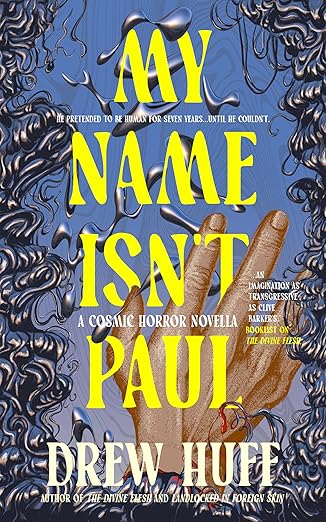
He pretended to be human for seven years. Until he couldn’t.
PLOT SUMMARY:
He’s a traveling salesman named Paul Cattaneo, except he isn’t. He’s a Mirror Person–a hyper-empathetic eldritch abomination. He found the human Paul Cattaneo’s mangled corpse seven years ago and decided to mimic it. It’s just what Mirror People do. Mimic. Absorb. Control.
But breeding season for Mirror People comes around every seven years, inducing a sociopathic state… and Paul’s time is up. Unable to avoid the reality of what he truly is, Paul has a mental breakdown, goes on a cross-country road trip…and runs afoul of something far, far more inhuman and dangerous than himself.
GRADE: B+
REVIEW:
I’ll start by saying this is the first book I’ve read by this author—and I’m not usually drawn to cosmic horror. But the premise was just too compelling to pass up, and I’m so glad I gave it a shot.
The story follows Paul, who has lived for seven years as a human… until his dormant parasite instincts awaken. Suddenly, he’s forced to choose between embracing his true nature or continuing to pretend to be something he’s not. It’s a fascinating, unsettling concept—what does identity mean when your biology tells you you’re something else entirely?
There’s plenty of horror and gore for fans of the genre (which I definitely am), and the writing is sharp and confident. I won’t spoil the plot—this is a short novella, and I really think it’s best experienced with as little context as possible. Going in blind made the experience all the more intense and unpredictable.
After this, I’ll absolutely be checking out Huff’s earlier work and anything she releases next. If you’re into cosmic horror with a sci-fi twist, this is one to put on your list.
*Thank you so much to NetGalley & the publisher for a digital copy of this book in exchange for an honest review!
DID YOU ENJOY WHAT YOU JUST READ? IF YES, THEN SUBSCRIBE TO THE BLOG, GIVE THE POST A LIKE, OR LEAVE A COMMENT! NEW POSTS ARE UP EVERY TUESDAY & THURSDAY!
Let’s be real—there’s just something magical about eating outside. Whether you’re sprawled out on a blanket in the park, chilling at the beach, or setting up camp in your own backyard, a picnic is the ultimate low-key way to enjoy sunshine, food, and friends (or solo time—no shame in that!).
Here’s how to plan the perfect picnic without overthinking it:
🧺 Step 1: Grab Your Blanket and Go
You don’t need a fancy basket or Pinterest-worthy setup (unless you’re into that—then go off!). A big blanket or towel, a tote bag of snacks, and a chilled drink are all you really need. Bonus points for a portable speaker and a shady tree.
🥪 Step 2: Pack the Right Snacks
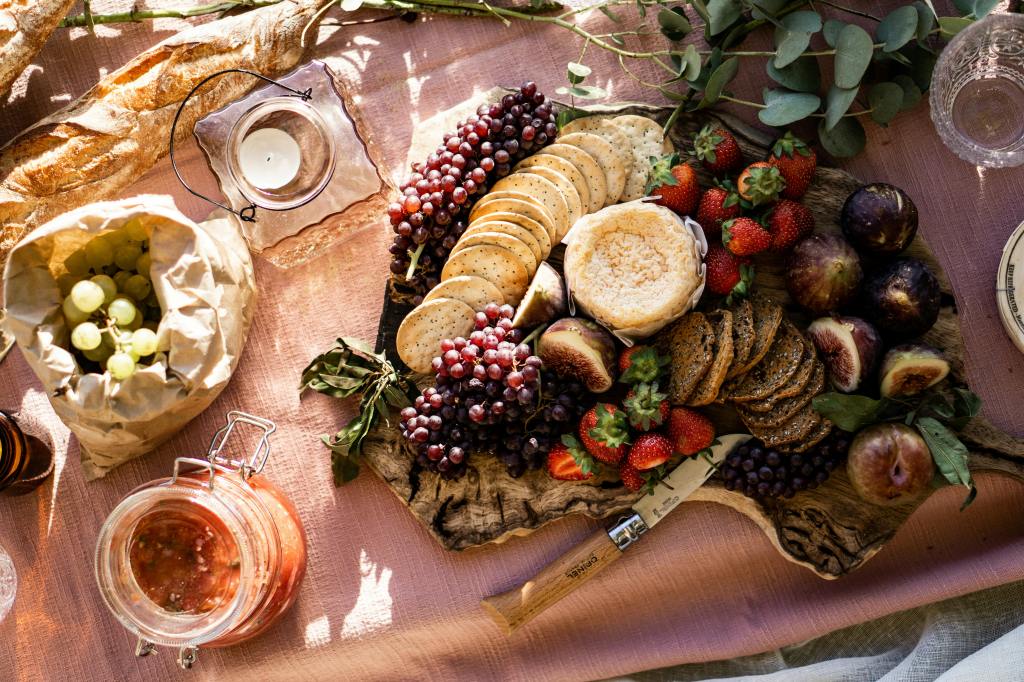
The golden rule of picnic food: keep it simple and not-too-messy. Think finger foods and stuff that doesn’t melt the moment it sees the sun.
Here are some no-fail options:
Sandwiches or wraps (cut them in half—trust us)
Cheese + crackers + grapes = instant fancy
Cut fruit (bonus if it’s watermelon)
Chips, hummus, and all the dippables
Cookies or brownies for that sweet ending
Pro tip: Freeze a few juice boxes or water bottles to keep everything cool—they’ll double as mini ice packs!
🍹 Step 3: Don’t Forget Drinks
Iced tea, lemonade, canned spritzers, or just good ol’ water—bring more than you think you’ll need. Hydration is key, especially when the sun’s doing its thing.
And if you’re feeling fancy? Bring mason jars and make your drinks look way more photogenic than necessary.
🎶 Step 4: Set the Vibe
A portable speaker + a laid-back playlist = picnic bliss. Think chill indie tunes, soft acoustic covers, or beachy classics. Or just let nature do the soundtrack—birdsong is underrated.
🕶️ Step 5: Keep It Chill (Literally and Emotionally)
Sunscreen. Sunglasses. A light sweater for when it gets breezy. Bring what you need to stay comfy, but don’t overpack and stress yourself out. The whole point is to relax and enjoy the moment.
🌼 Bonus Ideas for Extra Fun:
Bring a card game or frisbee
Pack a disposable camera for retro summer vibes
Pick wildflowers (where it’s allowed!)
Just lie back, look at the clouds, and do nothing for a bit
That’s It—You’re Picnicking Like a Pro
At the end of the day, a picnic is really just good food + fresh air + zero hurry. So text a friend, grab your snacks, and claim your spot in the sun. Or don’t text anyone and make it a peaceful picnic-for-one—we love a little solo sunshine time.
Now go outside and romanticize your lunch, you picnic legend. 🌿
DID YOU ENJOY WHAT YOU JUST READ? IF YES, THEN SUBSCRIBE TO THE BLOG, GIVE THE POST A LIKE, OR LEAVE A COMMENT! NEW POSTS ARE UP EVERY TUESDAY & THURSDAY!
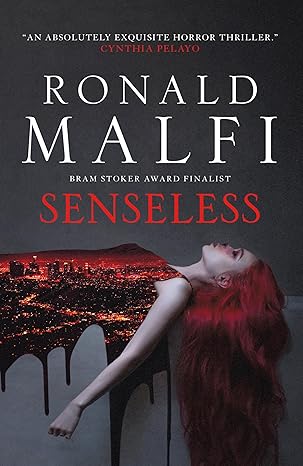
When the mutilated body of a young woman is discovered in the desert on the outskirts of Los Angeles, the detective assigned to the case can’t deny the similarities between this murder and one that occurred a year prior. Media outlets are quick to surmise this is the work of a budding serial killer, but Detective Bill Renney is struggling with an altogether different scenario: a secret that keeps him tethered to the husband of the first victim.
What do you hear…?
Maureen Park, newly engaged to Hollywood producer Greg Dawson, finds her engagement party crashed by the arrival of Landon, Greg’s son. A darkly unsettling young man, Landon invades Maureen’s new existence, and the longer he stays, the more convinced she becomes that he may have something to do with the recent murder in the high desert.
What do you feel…?
Toby Kampen, the self-proclaimed Human Fly, begins an obsession over a woman who is unlike anyone he has ever met. A woman with rattlesnake teeth and a penchant for biting. A woman who has trapped him in her spell. A woman who may or may not be completely human.
GRADE: A
REVIEW:
Senseless was my first Ronald Malfi book, and I was hooked from page one! The story is told through three distinct narratives—Renny, Toby, and Maureen—and the audiobook narrators really brought each of them to life. These storylines don’t intersect until the very end, which keeps the tension building throughout.
Renny is a detective still grieving the loss of his wife, Linda, while investigating two eerily similar murders that happened a year apart. His chapters are steeped in emotional weight and slow-burning suspense. Maureen seems to have it all—she’s engaged to a successful movie producer—but things take a dark turn when she meets her soon-to-be stepson, Landon, whose presence immediately feels off. Then there’s Toby, a troubled man who believes he’s a fly. His descent into obsession is both bizarre and tragic, especially when he becomes fixated on a girl he believes is a vampire.
Each point of view brings its own unique horror: psychological, supernatural, and deeply personal. The mystery of the murders ties them all together in a way that’s both surprising and satisfying.
I really enjoyed this one and will definitely be diving into more of Malfi’s work. If you like eerie, layered horror with strong characters, give Senseless a try!
*Thank you so much to NetGalley & Tantor Media for the audiobook copy of this book in exchange for an honest review!
DID YOU ENJOY WHAT YOU JUST READ? IF YES, THEN SUBSCRIBE TO THE BLOG, GIVE THE POST A LIKE, OR LEAVE A COMMENT! NEW POSTS ARE UP EVERY TUESDAY & THURSDAY!
Summer isn’t just a season—it’s a vibe. It’s the time to slow down, soak up the sunshine, and unapologetically enjoy life. Whether you’re all about beach days, backyard hangs, or just hiding indoors with the AC on blast (no judgment), this is your official reminder to chill out and make the most of the summer glow-up.
Here’s your go-to list for maximum relaxation:
🌊 1. Water = Instant Zen
Whether it’s a pool, lake, beach, or even your shower—water has serious calming powers. Float around, dip your toes in, or sit nearby with a good book and a drink. Bonus points if your drink has a tiny umbrella in it.
🧉 2. Sip Slow
Iced coffee in the morning. Lemonade in the afternoon. Maybe a chilled glass of rosé once the sun starts setting. Summer is about savoring the small stuff. Make your drink, find a sunny (or shady) spot, and just be for a while.
🛏️ 3. Cancel a Plan (Yes, Really)
Sometimes the best way to relax is by not doing anything at all. Say no to that one-too-many barbecue or skip the group hike. If your calendar is stressing you out, you’re doing summer wrong.
📱 4. Unplug for an Hour
We know, it’s hard. But put the phone down for a bit and let your brain breathe. No doomscrolling, no “just checking.” Just you, the outdoors, and maybe a gentle breeze. Feels better already, right?
🌿 5. Make a Summer Chill Playlist
Music changes everything. Throw together your ultimate mix of breezy, beachy, easygoing tracks. Think: acoustic guitars, light beats, and songs that sound like sunshine. Press play and let the vibe take over.
🍦 6. Do Something Childish
Eat a popsicle. Blow bubbles. Run through a sprinkler. Lie in the grass and look at clouds. Summer is the perfect excuse to tap into your inner kid—because honestly, adults need playtime too.
🕶️ Final Thought
This summer, give yourself permission to slow down. You don’t have to do it all or see everyone or conquer the bucket list. Sometimes the best memories come from the laziest days.
So kick your feet up, let the sun kiss your skin (with SPF, of course), and just be. You’ve earned it.
DID YOU ENJOY WHAT YOU JUST READ? IF YES, THEN SUBSCRIBE TO THE BLOG, GIVE THE POST A LIKE, OR LEAVE A COMMENT! NEW POSTS ARE UP EVERY TUESDAY & THURSDAY!
Whether it took days or months or years, I would come for him. And I would savour the moment.
PLOT SUMMARY:
It’s the summer before high school, and Ronny Nguyen finds herself too young for work, too old for cartoons. Her days are spent in a small backyard, dozing off to trashy magazines on a plastic lawn chair. In stark contrast stands her brother Tommy, the pride and joy of their immigrant parents: a popular honor student destined to be the first in the family to attend college. The thought of Tommy leaving for college fills Ronny with dread, as she contemplates the quiet house she will be left alone in with her parents, Me and Ba.
Their parents rarely speak of their past in Vietnam, except through the lens of food. The family’s meals are a tapestry of cultural memory: thick spring rolls with slim and salty nem chua, and steaming bowls of pho tái with thin, delicate slices of blood-red beef. In the aftermath of the war, Me and Ba taught Ronny and Tommy that meat was a dangerous luxury, a symbol of survival that should never be taken for granted.
But when tragedy strikes, Ronny’s world is upended. Her sense of self and her understanding of her family are shattered. A few nights later, at her first high school party, a boy crosses the line, and Ronny is overtaken by a force larger than herself. This newfound power comes with an insatiable hunger for raw meat, a craving that is both a saving grace and a potential destroyer.
GRADE: A+
REVIEW:
This past autumn, a publicist emailed me insisting I had to read What Hunger, saying it was totally up my alley, and even sent me an early ARC. I decided to give it a try—and once I finally picked it up, I devoured it in just two days. I couldn’t believe how spot-on this total stranger was about my reading taste!
Catherine Dang’s What Hunger is a powerful and poignant exploration of identity, family, and the deep emotional struggles that define our lives. Through lyrical prose, Dang crafts a narrative that navigates the complexities of cultural displacement, particularly the immigrant experience, while also diving into personal and societal expectations.
The novel follows Ronny, a young woman torn between her Asian heritage and the pressures of assimilation into a Western society while she’s trying to navigate her grief over the loss of her older brother. Dang’s depiction of hunger—both literal and metaphorical—becomes a central theme. It reflects the protagonist’s yearning for connection, understanding, and acceptance, while also highlighting the pain of not feeling “enough” in any space. It also centers her rage, as she leans into it in ways that we as women don’t always allow ourselves to do at times.
Dang’s writing is striking in its intimacy, offering a raw look at the inner turmoil of its characters. Each chapter feels like peeling back another layer of self-awareness, with Ronny’s desires and fears laid bare for the reader. The narrative unfolds slowly but steadily, building a sense of tension and urgency that keeps you engaged until the last page.
What Hunger is a book that stays with you long after finishing it, its exploration of hunger not just as a physical need, but as an emotional and existential longing, deeply resonating in today’s complex world.
If you love books that explore female rage and grief, then this may be a book that you too will devour as easily as I did.
*Thank you so much to NetGalley & Simon & Schuster for a digital copy of this book in exchange for an honest review!
Short Q & A with Author:
You mentioned that your mother’s cannibal story was the inspiration behind What Hunger. Is the story based on true events or is it more like a folktale?
Originally, I thought the story was an urban legend. My mom first heard the rumors of a Vietnamese refugee-turned-cannibal at her refugee camp in the Philippines. Fleeing Vietnam was incredibly dangerous at the time, so it made sense that people would share wild stories with each other. I figured the tale was a culmination of multiple stories fused together: of people surviving boat wrecks, others washing up onto deserted islands in the Philippines, and other survivors getting returned back to the Vietnamese Communist government. But I assumed the cannibalism part was pure fiction.
But as I was writing What Hunger, I was shocked to find real news reports of cannibalism among Vietnamese boat people. These incidents almost always took place out at sea when survivors were desperately trapped in a boat, deliberately not rescued, and out of resources.
In one 1988 article, The Washington Post reported multiple incidents, including one where 15 people ate the body of a dead refugee. Another incident involved the forced drowning of a man, woman, and 11-year-old child, so the other refugees could eat them.
What’s especially unsettling is what the man implored in his interview: “I am a Christian. I killed this man on the boat to help the living. Personally, I think it’s wrong, but so many people needed to eat.”
In total, five people had been eaten on this boat: two people who’d been killed to be eaten, and three others who had already passed away. Interestingly, the rest of the 52 survivors did not want to talk about their time on the boat.
When people were put in these hopelessly dire situations, they adapted in the most brutal of ways.
I’ve always believed our urban legends are borne out of a hint of truth. Writing What Hunger has completely cemented this belief for me.
I truly loved Ronny and the fact that she wouldn’t simply “get over” what was done to her. I saw her new appetite as a means to view her assaulter as “meat” just like he had viewed her. Is that the theme you were going for?
Your interpretation is a good one! Maybe I’m weird, but I’ve noticed that in American English, our euphemisms involving human genitalia are so often… meaty. The penis is likened to a hotdog “wiener.” A gathering of mostly men is called a “sausage fest.” The act of a man’s masturbation can be violently referred to as “beating his meat.” Then we have some very graphic euphemisms to describe the appearance of vulva, like “meat curtains” or “roast beef.”
When it comes to sexual assault, the victims are routinely viewed as objects of sexual pleasure. It wasn’t hard, then, to use meat as a metaphor for these unfeeling sexual objects. As “meat,” the victims have been “conquered” and prepped to be “consumed” by another. The metaphor is so brutal and animalistic, yet it’s as apt as the violence itself.
But I’m a grim optimist. At the end of the day, we’re all vulnerable sacks of human flesh. If you reduce your fellow human being down to an unfeeling object, then you’re also condemning yourself to be an object. In a warped way, I wanted Ronny’s assaulter to know what it was like to be treated like a piece of “meat”: as something to be consumed and tossed aside. But Ronny takes it quite literally, doesn’t she?
Asian horror seems to tap into a more psychological, almost ancestral aspect of an individual. Do you feel that what occurs in the past generations finds a way to haunt someone in the present?
Absolutely. The concept of “generational trauma” has grown mainstream for a reason. Who hasn’t been a bit scarred by the way their parents raised them? Our parents raised us based on their own experiences and what they knew from their parents. And their parents learned from their parents and so on.
So much of our behaviors, our habits, and our coping mechanisms have been passed down from previous generations. Even when we try to course correct (e.g. refusing to spank our kids), we’re still reacting to what had happened in the past (like previous generations of parents spanking their kids).
Physically, the human body is itself a record of past events. We know of inherited diseases like sickle cell disease and cystic fibrosis getting passed down through generations, but we can also recognize family histories of mental illness and addiction.
I guess I’m fascinated by how these inherited diseases had originated. What had happened to Patient Zero in the family line? Had they simply been born with the disease and passed it on? Had it randomly developed one day and then been passed down among generations?
Or had something traumatic happened—something so traumatic that their own cells had been changed by it, which forever altered the genetic makeup of their descendants?
Though this last idea sounds crazy, there are studies being done on epigenetics, the science of how our environment and behaviors can affect the way our genes work, and whether these epigenetic changes can be inherited. For instance, some pregnant women developed PTSD from being near the collapse of the Twin Towers during 9/11. The babies they delivered were later shown to be smaller than average and had lower cortisol levels. While we can’t say for sure that the babies were directly traumatized by 9/11, there does seem to be a correlation between the mothers’ downswing in health and the poorer health outcomes for their babies.
As the daughter of Vietnamese refugees, I’ve always had a vested interest in generational trauma and how it can manifest itself in a person. I see my own history of anxiety and depression in my relatives, both young and old. But the question remains: are these simply hereditary diseases that have always existed within my family lineage? Or are these illnesses that my ancestors have picked up in response to the trauma around them (like colonialism, war, rape, poverty, etc.)?
I wanted to explore generational trauma in a book one day, but I figured I would write about it when I was older, wiser, and more established in my career. I never thought I’d do so in a book about a teenage cannibal, but here we are!
Female rage is often downplayed or not taken seriously – and I absolutely love how Ronny leans into this rage. Do you think that women have finally reached a moment in their lives where they’re finally leaning into this rage rather than repressing it like in the past?
Hell yes! I think female rage has always lurked in our cultural landscape, but I was never fully cognizant of it until Gillian Flynn’s Gone Girl blew up. I had never seen a female character like Amy Dunne before, a woman who was so wholly unhinged, enraged, and open about it. The character fascinated me as much as she made me uncomfortable.
But more than anything, I felt this weird sense of companionship. It was crazy to hear all these women taking Amy Dunne’s side and arguing that the husband got what he deserved. And it was even crazier to hear women openly talking about how they, too, were pissed off. That cultural moment made me realize that wow, maybe I wasn’t alone for feeling so awfully resentful sometimes. Maybe I wasn’t psychotic. Maybe it was a perfectly normal part of being a woman—walking around with all this pent-up rage that we were told not to express.
As a young creative, I also appreciated how Gillian Flynn had brought such a nasty, vengeful woman character into the mainstream. I think it inspired a lot of female creatives to be more open and honest in their work. Why censor the ugliness of womanhood when we could lean into it instead? And let it inspire us.
Now I think female rage is the norm in our pop culture: books, movies, music, you name it. Women are pissed, and we have the urge to express it, no matter how bloody or nasty or gross it may be.
Are you working on anything new at the moment?
Yes. I don’t want to jinx myself, so that’s all I’ll say!
DID YOU ENJOY WHAT YOU JUST READ? IF YES, THEN SUBSCRIBE TO THE BLOG, GIVE THE POST A LIKE, OR LEAVE A COMMENT! NEW POSTS ARE UP EVERY TUESDAY & THURSDAY!
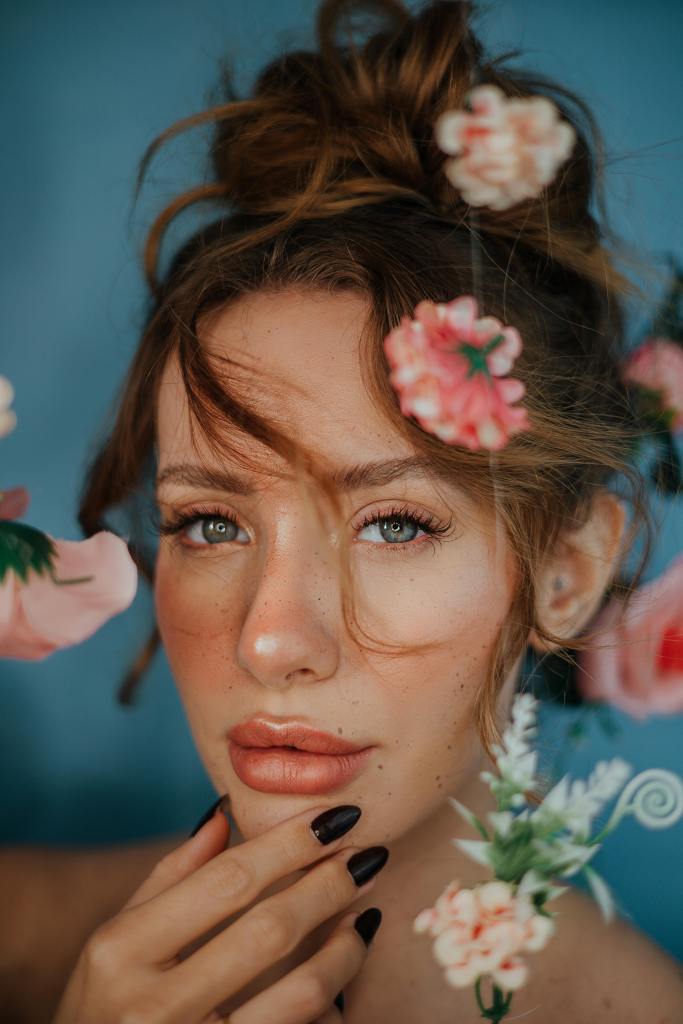
If summer had a signature look this year, it would be Glazed Donut Skin meets Watercolor Eyes. Yep, you heard right—it’s all about looking like a dewy snack who just waltzed out of a dreamy, pastel-filtered daydream.
So what’s the trend?
Ethereal Glow-Up. Think soft, luminous skin, pops of sorbet-colored shadow, and lips that look kissed by fairies. It’s fresh, it’s fun, and it basically screams, “I drink moonlight for breakfast.”
Here’s how to rock it:
Skin: Start with a lightweight glowy base or skin tint. Highlight like you’ve been blessed by the sun herself (liquid highlighter = chef’s kiss).
Eyes: Swipe on a wash of lilac, peach, or baby blue. It’s not about precision—just a dreamy haze of color.
Lips: Go glossy or stained. Bonus points if it looks like you’ve just bitten into a juicy popsicle.
The vibe?
Barely there, but totally there. You’re radiant, mysterious, and possibly mythical.
So go ahead, sparkle like the summer goddess you are. The world’s your dreamy, glowy runway. 💫
🌸 3-Step Routine for the Dreamy Summer Look
1. Glow Like You Mean It – Skin Prep & Tint
Start with a hydrating primer or illuminating moisturizer (hello, glass skin!). Then go in with a skin tint or lightweight foundation that lets your natural skin peek through.
Saie Glowy Super Gel (for that lit-from-within fairy radiance)
2. Watercolor Eyes – Sorbet Washes of Color
Dab on a pastel shadow or cream eyeshadow in lavender, peach, or mint. Use your fingers—messy is chic here. No hard lines, just soft magic.
Try:
ColourPop Super Shock Shadows (affordable + dreamy shades)
Rare Beauty Stay Vulnerable Liquid Eyeshadow (melts into skin)
Huda Beauty Matte & Metal Melted Shadows for a shimmer pop!
3. Popsicle Lips & Glossy Cheeks
Use a lip & cheek tint for that “I’ve been skipping through flower fields” flush. Tap it on your cheeks and lips, then finish with a clear gloss if you want extra juicy vibes.
DID YOU ENJOY WHAT YOU JUST READ? IF YES, THEN SUBSCRIBE TO THE BLOG, GIVE THE POST A LIKE, OR LEAVE A COMMENT! NEW POSTS ARE UP EVERY TUESDAY & THURSDAY!
What has eight arms, two tentacles, and one gnarly appetite? A Vampire Squid.
While enjoying a much-needed cruise vacation, Nora and her friend Tori spend their days downing endless umbrella cocktails and their nights rockin’ out to gnarly bands—mainly Vampire Weekend. The 24-hour buffet is constantly calling their names, but unfortunately, something answers the call—a giant squid with an appetite for cruise passengers. But Nora and Tori have other problems.
Their status as BFFs is hanging on by bikini thread, and this vacay should have given them time to repair it. But no. Of course, an annoying monstrous creature from the depths of the dark ocean just had to rise up to the surface, feast on terrified humans, and ruin their girl bonding time.
Thanks a lot, Captain Sucky Legs.
GRADE: A
REVIEW:
What I love about Nico Bell’s books is how she perfectly balances fun and fear—her stories are packed with creepy thrills and genuinely well-written characters. This one is no exception, and honestly, it’s the ideal summer beach read (though fair warning: it might make you think twice about cruise ships and squids).
Best friends Tori and Nora are living it up on a cruise, jamming to Vampire Weekend, when things take a wild turn—they’re attacked by a giant vampire squid. Yes, really. From there, it’s nonstop action, packed to the gills (pun absolutely intended) with horror, heart, and high-stakes survival.
The friendship at the center of it all keeps you grounded, even when the gore starts flying—and there’s plenty of that too. It’s the kind of gory, scary fun that begs to be made into a movie. I’d be first in line for it!
If you’re looking for a horror story that’s fast-paced, original, and just a blast to read, this one’s a must.
*Thank you so much to the author for a digital copy of this book in exchange for an honest review!
DID YOU ENJOY WHAT YOU JUST READ? IF YES, THEN SUBSCRIBE TO THE BLOG, GIVE THE POST A LIKE, OR LEAVE A COMMENT! NEW POSTS ARE UP EVERY TUESDAY & THURSDAY!
Let’s be real, your makeup bag doesn’t need to be bursting at the seams to be effective. Whether you’re a beauty minimalist or a glam queen on the go, there are a few ride-or-die items every makeup bag must have. Here are the top three that can save the day (and your face):
1. Concealer: Your Tiny Magic Wand
Late night? Surprise breakout? Concealer’s got your back. A creamy, blendable concealer instantly brightens under-eyes, covers blemishes, and smooths out redness—all in seconds.
Pro tip: Pick a shade slightly lighter than your skin tone for under the eyes, and a true match for spot correcting.
2. Mascara: Instant Eye-Opener
If you only have time for one thing, make it mascara. It wakes up your whole face and adds that flirty, fresh energy—no eyeshadow required.
Bonus: A waterproof formula doubles as a lash curler’s best friend and stays put through sweat, tears, and surprise rain.
3. Multi-Use Lip & Cheek Tint: The Glow Getter
A good lip & cheek tint is your secret weapon for looking alive. Dab a bit on your cheeks and lips for a dewy, fresh-faced flush that’s low-effort and high-impact.
Why it’s a win: One product, two jobs, zero clutter.
Final Swipe
You don’t need a full vanity in your purse. With just these three MVPs, you’re ready for whatever your day (or night) throws at you. Less mess, more magic!
Want a version of this post formatted for Instagram or with product recs? Just say the word! 💄✨
DID YOU ENJOY WHAT YOU JUST READ? IF YES, THEN SUBSCRIBE TO THE BLOG, GIVE THE POST A LIKE, OR LEAVE A COMMENT! NEW POSTS ARE UP EVERY TUESDAY & THURSDAY!
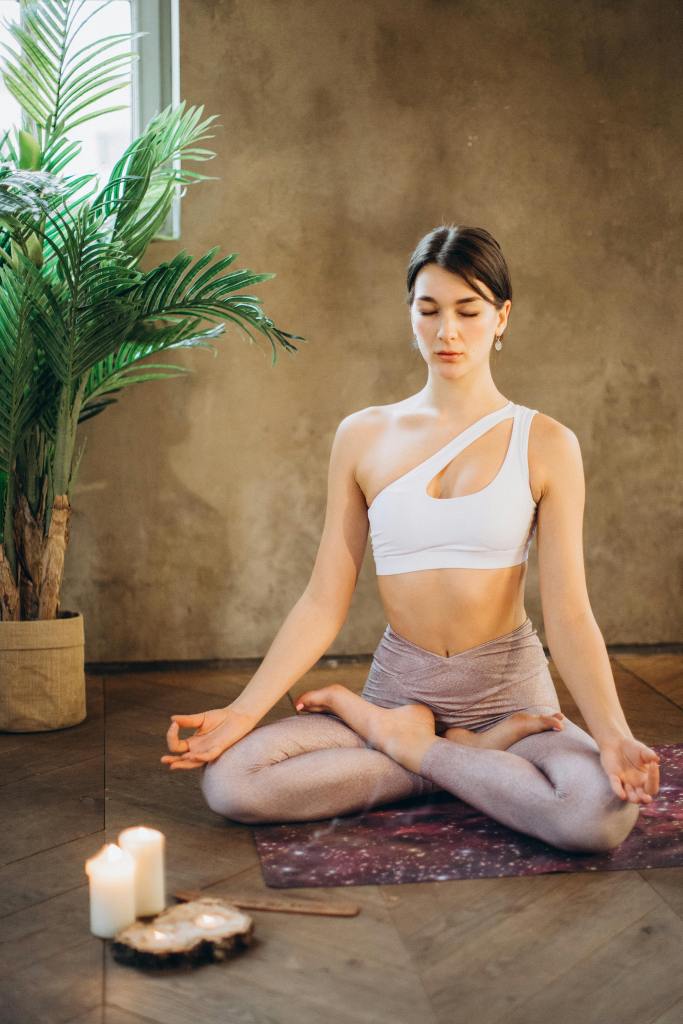
Mindfulness gets a bad rap sometimes, such as you have to sit perfectly still in total silence for hours while your brain screams about laundry. Spoiler alert: You don’t! Mindfulness can be chill, fun, and totally doable, even if you have a wildly overactive brain and a packed schedule.
Here are 5 easy tips to help you tap into the moment—no incense required:
1. Start with Just One Minute
Seriously. One. Minute. You don’t have to meditate on a mountaintop. Just take 60 seconds to close your eyes, breathe in, breathe out, and exist. That’s it. That’s mindfulness. And yes, it still counts even if your dog is barking.
Try this: Breathe in for 4, hold for 4, breathe out for 6. Instant calm.
2. Turn Your Coffee Break into a Mini Ritual ☕
Instead of scrolling while you sip, actually taste your coffee. Smell it. Hold the warm mug. Pretend you’re in a cozy indie movie montage.
Bonus: This works with tea, smoothies, or even reheated leftovers. It’s about being there with your senses.
3. Name 5 Things You Can See Right Now
Wherever you are, pause and look around. Say (or think) five things you can see. Like: “plant, socks, water bottle, weird cloud, slightly judgmental cat.”
Why it works: It grounds you in the present—and gives your racing thoughts something fun to do.
4. Do One Thing… Slowly
We multitask like pros, but mindfulness is all about singletasking (yes, that’s a word now). Brush your teeth like it’s your life’s purpose. Fold laundry like you’re on a spa retreat. Walk like you’re floating.
It feels weird at first. Then it feels amazing.
5. Laugh (Yes, That Counts!)
Mindfulness isn’t all serious monk mode. Laughing at a meme, enjoying a silly moment, or giggling at your own messy bun is 100% being present. Joy is a powerful form of mindfulness—don’t skip it.
Final Thought:
Mindfulness isn’t about becoming some perfectly zen guru. It’s about noticing your life while you’re living it. Even if that means finding peace in the middle of a Ulta aisle. 🛒✨
DID YOU ENJOY WHAT YOU JUST READ? IF YES, THEN SUBSCRIBE TO THE BLOG, GIVE THE POST A LIKE, OR LEAVE A COMMENT! NEW POSTS ARE UP EVERY TUESDAY & THURSDAY!
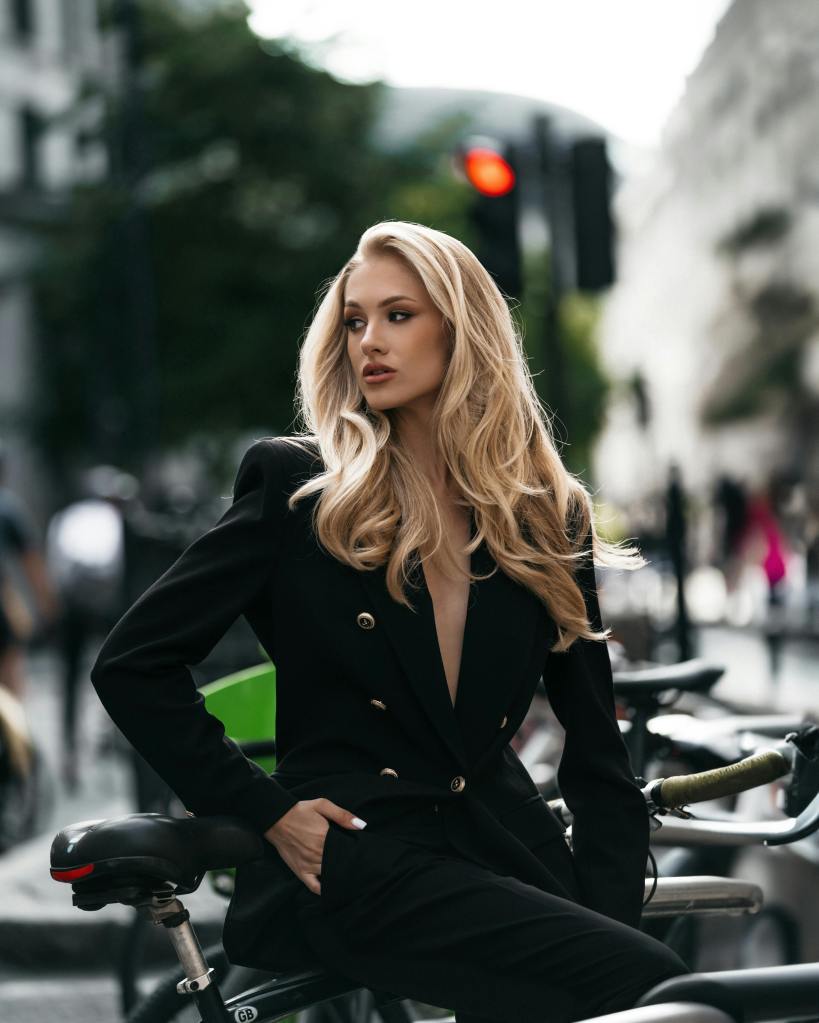
Building a classy wardrobe isn’t about chasing trends—it’s about curating a collection of pieces that exude elegance, versatility, and confidence. Whether you’re attending a formal event, heading to the office, or grabbing brunch, a few timeless staples can carry you through any occasion.
Here are three essential items that belong in every refined wardrobe:
1. The Perfect Blazer
A well-fitted blazer instantly elevates any outfit. Throw it over a T-shirt and jeans for a polished casual look, or pair it with tailored trousers for a power outfit. Look for a blazer in a neutral color like black, navy, or beige that flatters your shape and can be styled up or down.
Why it’s essential: It blends structure with sophistication and makes layering effortless year-round.
2. Classic Tailored Trousers
Tailored pants are the quiet powerhouse of a classy wardrobe. They add polish to any look without trying too hard. Go for high-quality fabrics and a flattering cut—high-waisted, straight-leg, or wide-leg depending on your body type and personal style.
Style tip: Stick with colors like black, grey, or camel for maximum versatility.
3. A Little Black Dress (LBD)
It’s iconic for a reason. The Little Black Dress is the ultimate go-to piece for dinners, weddings, work functions, and impromptu nights out. Choose a silhouette that suits your figure—something you feel both comfortable and confident in.
Make it your own: Accessorize with statement jewelry, a bold clutch, or a pair of standout heels to take it from simple to stunning.
Final Touch
The key to a classy wardrobe isn’t having more, it’s having better. Focus on quality, fit, and timeless design. With just these three pieces, you can build countless looks that feel effortless and refined.
DID YOU ENJOY WHAT YOU JUST READ? IF YES, THEN SUBSCRIBE TO THE BLOG, GIVE THE POST A LIKE, OR LEAVE A COMMENT! NEW POSTS ARE UP EVERY TUESDAY & THURSDAY!








 The Inkblotters