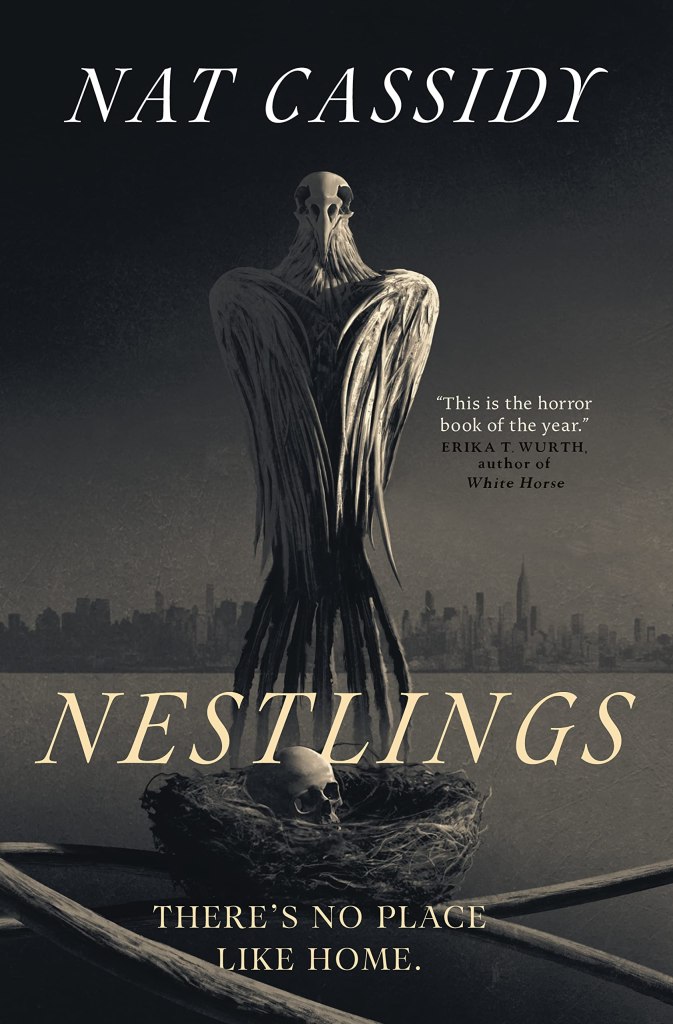
Ana and Reid need a break. The horrifically complicated birth of their first child has left Ana paralyzed, bitter, and struggling―with mobility, with her relationship with Reid, with resentment for her baby. Reid dismisses disturbing events and Ana’s deep unease and paranoia, but he can’t explain the needle-like bite marks on their baby.
GRADE: B+
REVIEW:
Right off the bat, you get Rosemary’s Baby vibes from the very first chapter – but if you have read Riley Sager’s Lock Every Door, then you’ll also feel like the gargoyles are vaguely familiar (although here they have a bigger role).
Ana and Reid with their baby Charlie, win some kind of apartment lottery and happen to get one at one of the most luxurious buildings in Manhattan – however there’s a catch 22, as the building is rumored to have brought upon much bad luck to the tenants that live there. The building is wrapped in mystery as not many books are written about it, safe for one that Reid finds in a used book store that he quickly becomes obsessed with.
The novel is gripping, chilling, and with a very unexpected ending (although I do love that Cassidy went down the route he did). Nestlings captures you with a claustrophobic clutch and doesn’t let go until you reach the very end. My only tiny gripe with the novel is that between the major reveal and the end, it kinda began to move slower, but I kept on reading because I wanted to know how it would end for these characters.
This a must-read if you love creepy horror, verging on the terrifying. The images are really dark, and at times downright sickening – which I loved, so if you’re into that sort of horror you will love this too.
*Thank you so much to NetGalley and Tor Nightfire for the digital copy of this book in exchange for an honest review!
DID YOU ENJOY WHAT YOU JUST READ? IF YES, THEN SUBSCRIBE TO THE BLOG, GIVE THE POST A LIKE, OR LEAVE A COMMENT! NEW POSTS ARE UP EVERY TUESDAY & THURSDAY!
If spending time with your family begins to feel like a drag, then suggest a movie to watch and have everyone settle down to a terrifying horror movie that takes place during Thanksgiving cause sometimes the holidays are just downright scary!
KRISTY (2014)
Violent thugs terrorize a young woman (Haley Bennett) who’s alone on a college campus for Thanksgiving weekend. Ashley Greene plays a chilling pierced villain. Think “Home Alone” but with a lot more violence and gore.
PILGRIM (2019)
A woman invites Pilgrim reenactors to her family’s Thanksgiving celebration in an effort to remind them of their privilege and help them bond with one another.
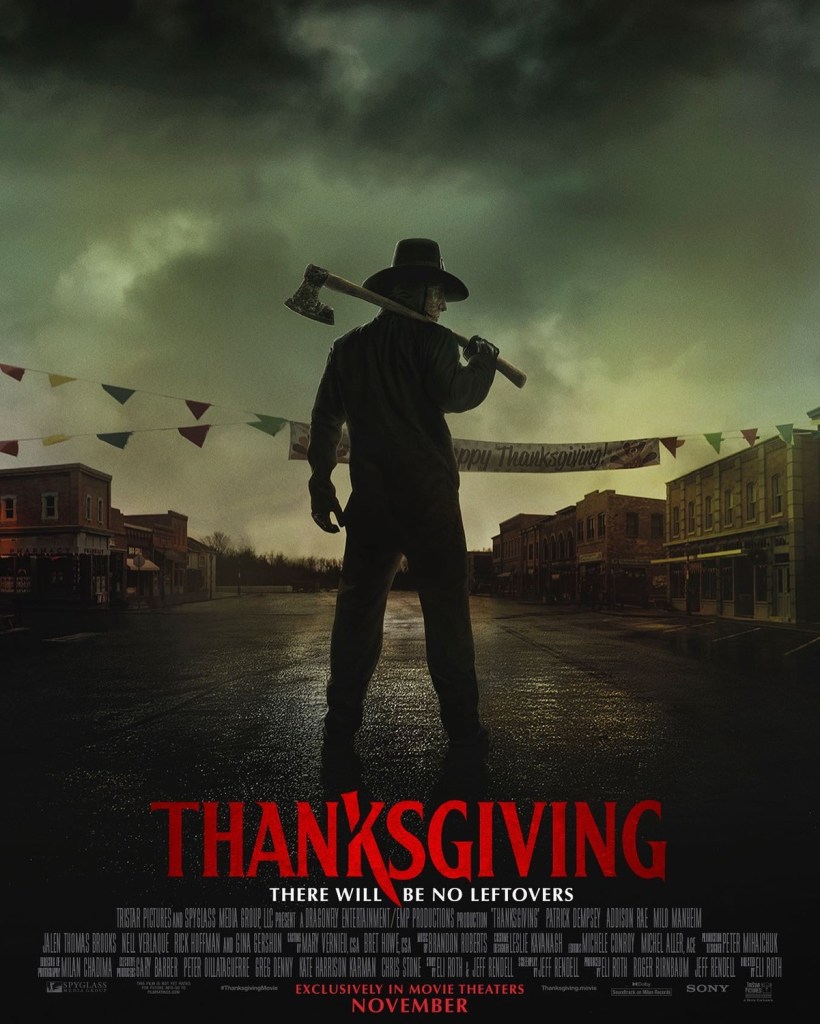
THANKSGIVING (2023)
For many years this was only a fake trailer shown in Quentin Tarantino’s and Robert Rodriguez’s 2007 double feature, Grindhouse. Finally, sixteen years later we get an actual movie by Eli Roth inspired by that trailer. An axe-wielding maniac terrorizes residents of Plymouth, Mass., after a Black Friday riot ends in tragedy. Picking off victims one by one, the seemingly random revenge killings soon become part of a larger, sinister plan.
DID YOU ENJOY WHAT YOU JUST READ? IF YES, THEN SUBSCRIBE TO THE BLOG, GIVE THE POST A LIKE, OR LEAVE A COMMENT! NEW POSTS ARE UP EVERY TUESDAY & THURSDAY!
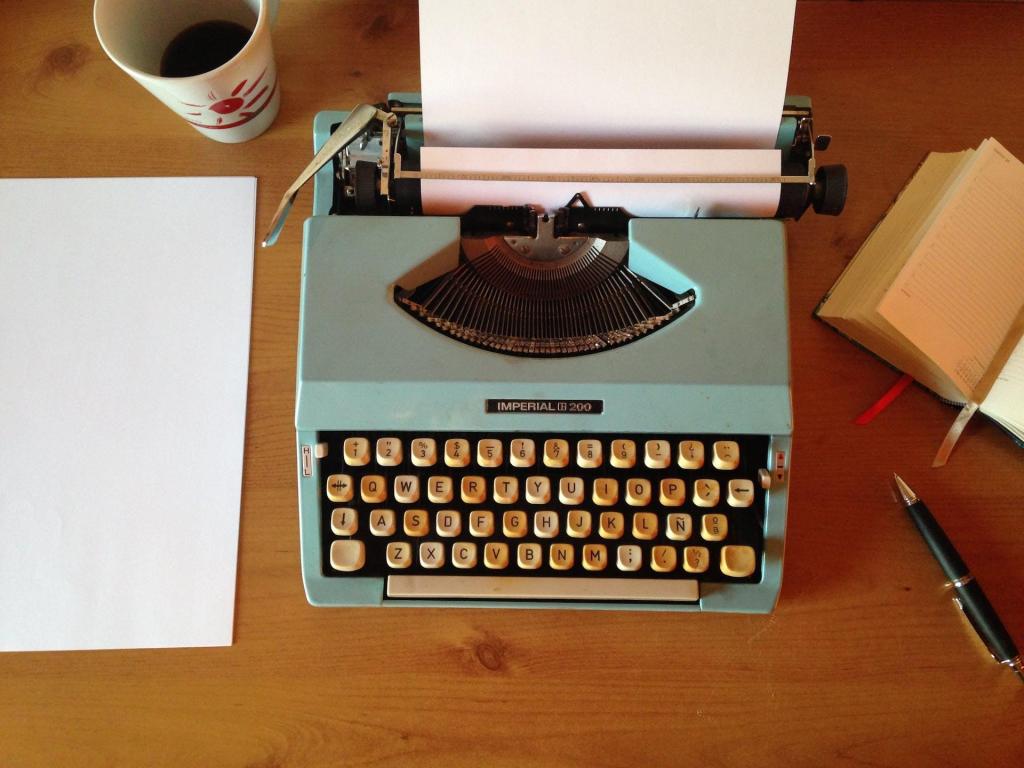
As a professional writer, you need a virtual presence. Whether you’re a freelance writer and editor who needs to promote your services, or a fiction author who wants readers to be able to easily find your books online, your business website serves important purposes. If you need inspiration for website content, you can browse The Inkblotters! Plus, here’s how to optimize your business website, from providing referral incentives to fixing up any broken links.
Offer Customer Referral Incentives
Providing referral incentives through your website can be a powerful way to drive new business. You can put up a call-to-action or pop-up window to alert visitors to these referral incentives. For instance, if a customer refers a specific number of people to your business, you could give them a gift card in exchange for their support.
By using this digital gift card API, you’ll be able to automate the process of sending money, prepaid cards, or gift cards to referring customers. You can also use a tool like this to submit
charitable donations in your customers’ names. Additionally, this tool will allow you to customize payments in alignment with your personal branding scheme and messaging.
Fix Broken Links
Clicking on broken links can be very frustrating for potential customers who visit your website! In the long run, having lots of broken links on your site can result in lost business. However, you might not know how to code or fix broken web pages. If you need pointers, you can find plenty of coding-related resources online to follow along with.
Improve Your SEO Strategy
If your customers can’t find your website, how can they patronize you? To improve your search engine optimization strategy, Search Engine Journal recommends checking each page’s loading speed, deleting any duplicate content, and adding target keywords to title tags, subheadings, image tags, video captions, meta descriptions, body content, and internal links.
Create Engaging Blog Content
Yes, you already spend a lot of your time writing – but it doesn’t hurt to add a new blog post to your own site on a weekly basis. Blogging for your business is a form of content marketing that allows you to cover relevant topics for your readers while creating more content that will show up in search results. You can repurpose quotes from these blog posts to share on social media to get more mileage out of your content.
Publish Clear Pricing
If you provide any sort of freelance writing, editing, or proofreading services, it’s a smart idea to add your rates to your website. Ashley Gainer states that doing so will help you attract clients whose budgets are aligned with your prices, so you’ll spend less time filtering out clients who can’t afford your services.
Keep Your Portfolio Current
Maybe you already have a portfolio section on your website, but it’s been a while since you added any of your most recent work. Take the time to update your portfolio every couple of months to show potential clients that you’re actively working in your niche and developing your skills.
If you’re a prolific writer, it can be hard to decide what to add! Think about what would be most relevant to your clients. For instance, if you write for technology companies, adding human interest pieces to your portfolio may not be necessary.
No matter your writing niche, your website functions as your primary digital destination for your readers or clients. Ensuring that your website is informative and easy to navigate is key. With these tips, you’ll be ready to update broken links, enhance your approach to SEO, offer referral incentives for visitors, and more!
Want to pick up more lifestyle tips for writers? Turn to The Inkblotters! Browse our blog today for book reviews, writing advice, and more.
Guest blog post by Stephanie Haywood, read her previous guest blog post HERE and HERE or visit her website: MY LIFE BOOST.
DID YOU ENJOY WHAT YOU JUST READ? IF YES, THEN SUBSCRIBE TO THE BLOG, GIVE THE POST A LIKE, OR LEAVE A COMMENT! NEW POSTS ARE UP EVERY TUESDAY & THURSDAY!
More specifically, she’d had one (or three) too many the night before. So instead of falling asleep on her bed, she was lying on the couch with a paperback book as a makeshift pillow. Her legs were tucked up in the fetal position inside her billowy dress. And as she licked her lips, she tasted vodka and fried chicken, which she didn’t remember drinking or eating.
She attempted to open her eyes, but her lashes stuck together from the makeup she’d forgotten to remove the night before. With the help of her index finger and thumb, she managed to peel one lid open. White-hot summer light poured in through the arched living-room window and her mint green walls, a color she’d specifically chosen for its soothing properties, were mockingly chipper.
But even more unsettling was the book on the coffee table directly in front of her, Whisked Away. Sophie’s first published book. She closed her one good eye and wished she’d never opened it.
Her mom had always dreamed about Sophie filling an entire bookshelf with all her titles, the years of working multiple day jobs while tinkering on romance books finally worth the struggle. But, as it turned out, Whisked Away would be Sophie’s one and only book. Had she known she’d be a one-hit wonder, she wouldn’t have ordered the little placard for her writing desk: Ask Me about My Tropes.
The worst part was that she had sold a follow-up book—or, at least, a pitch plus the first three chapters—but she hadn’t been able to finish The Love Drought (a title so tragically similar to her own personal problems that it made her cringe). She’d been given multiple extensions but missed all of them. And, per her contract, her publisher had the right to terminate their deal if those deadlines weren’t met. But no matter how many drafts she started, Sophie couldn’t find her way to the happily ever after that all romance books promised and that she loved.
The phone call with her agent started with We need to talk… and ended with You have six weeks to finish this book or your contract, plus the advance, will be taken back.
She’d spent most of that advance, though, along with the royalty checks that grew smaller and smaller as interest in her last book waned. She needed money from turning in the next book if she wanted to continue paying for things like food or a place to stay.
She should’ve seen the implosion coming. Her horoscope had warned that the entire month of June would be bad for important communication. But the damage was done: Sophie was a romance author with writer’s block, and in six weeks’ time, she’d lose her publishing deal.
So she’d done the only thing she knew would make her feel better: called Poppy. And her best friend had suggested a night out at their favorite downtown karaoke bar to drown away the loud whir of failure.
She cautiously sat up, then settled her feet into the woven jute rug. Her legs were as firm as Jell-O when she stood. Still, she managed to make it to the hallway mirror, where she saw that her normally side-swept curtain bangs had morphed into Medusa, snakelike tendrils across her forehead, and she had more flakes on her face than her pet goldfish had in his bowl.
She cringed. Rain Boots. Her goldfish was twelve years old and the longest relationship she’d ever had. She planted her hand on the wall for support and shuffled over to her bedroom where a large glass fishbowl sat on her bedside table. Rain Boots swam in the exact middle and blinked at Sophie with large accusatory eyes.
“I’m sorry, honey,” Sophie croaked out. “I know we have our bedtime routine, but Mommy got horribly drunk.”
She tapped the glass with her index finger and waited for a response, but none came. Eventually the silence broke when her doorbell loudly ding-donged and caused her to jump in surprise. The next, and bigger, surprise came when she made her way to the front door and saw her landlord waiting on the porch.
Dash Montrose wasn’t a tall man, but he had presence. Part of that was because he always seemed to be fidgeting—tapping his fingers, shifting his feet, or pacing slightly—but also, he had thick arms with swirling, inky-black tattoos.
It’s not that Sophie had stared at those arms in prior instances but…well, yeah, she probably had.
Still, her first instinct was to hide behind the couch because what the hell was Dash doing there? She and Dash lived next door to each other, but they were not close. In fact, Dash hardly ever acknowledged her existence. He lived in the large house tucked behind her bungalow, but he was always walking away in some kind of a hurry. If she waved, he only ever nodded back. She didn’t think he was intentionally being a jerk, but he clearly had no interest in interacting with her. They hadn’t spoken actual words to each other in at least a few months. She Venmoed him the rent, and sometimes he left a thumbs-up in response. That was the extent of it.
But there he was, in jeans and a T-shirt. What could he want? Did he somehow know her funds were about to run out and he was preemptively evicting her? Sophie avoided confrontation at all costs, but she couldn’t run away from him, not when his face was pressed against the window of her door and he was peering directly at her. She clutched her arms across her chest, extremely aware that she was still dressed in her clothes from the night before, as she made her way to him.
When she opened the door, she was hit not only with the heat from the high sun above but by the sight of Dash’s wet hair slicked around his face. Water trickled down his neck and splotched his faded shirt, like he’d come straight over from a shower. Which meant a few minutes prior he’d been totally naked, covered in soap and water and…
“Hey, uh, whoa.” His voice cut through Sophie’s thoughts. When she glanced up, Dash gave her an uneasy expression, then gestured down the length of her. “What happened…”
She never left the house without a minimum of tinted moisturizer, but of course Dash came on the one day where she closely resembled a Madame Tussauds wax statue melting in the sun. Sophie gently swiped her index finger under her eye, and it came back coated in black liner. Excellent.
“Vodka happened,” she muttered.
She rubbed the liner between her fingers. Something was wrong. Mercury must’ve been in retrograde. If thirteen-year old Sophie had known that she would be renting a place from Dash Montrose—former teen heartthrob movie star turned still hunky landlord—and he was seeing her hungover…she’d be even more embarrassed than she already was. And she’d probably also be delighted. Because Sophie had maaaybe had a photo of him from a magazine cover on her wall when she was growing up. His film Happy Now? was her all-time favorite movie.
She absolutely did not have a crush on adult Dash, though. Well, he was undeniably hot. No point in glossing over that thick, dirty-blond hair, the dimple in his chin, or any of the other tatted-up details. But he was Poppy’s brother and so off-limits that Sophie had built a wall around Dash in her mind. Though bits of the wall appeared to crumble at the sight of his strong jaw and the dark circles under his eyes that made him all the more mysterious to her.
“Poppy asked me to come check on you. She said you weren’t answering your phone.” He glanced behind her, as if searching for a potential thief holding her cell hostage.
“My Poppy?” Sophie had worked at Poppy’s spa, Glow, for years—one of the many day jobs she’d had before quitting to write full-time. Though, now that she had endless writer’s block, she might have to beg for her old job back.
“She’s my sister, so she’s technically our Poppy.” His hands landed in the pockets of his jeans.
Sophie looked behind her to where the phone usually was, and blessedly, while she’d been drunk enough to use a book as a pillow, she’d been just sober enough to plug in her phone. She rubbed at one of her throbbing temples and walked over to her desk, grabbed her phone, then held down the power button and watched the white icon flash back.
As she waited for the phone to boot up, she walked back toward Dash.
“Okay, she wants me to tell you that there’s a video of you going viral?” Dash gestured to his phone, which made his forearm flex and Sophie’s eyes widen in response.
She tried to process what he’d said. She needed an intense boost of caffeine—maybe a matcha—to be able to comprehend the words coming out of his mouth. “A video?”
“I don’t know, she said you needed to see it. And that I needed to make sure you saw it.” He shrugged, but the small motion lifted the edge of his shirt up just enough for Sophie to catch a glimpse of his boxers.
Sophie didn’t want to be impolite—Dash was Poppy’s older brother, after all—but what was she supposed to do? She couldn’t so much as look at a candle shop without rushing in to buy one. Dash was the male equivalent of fresh beeswax. She was definitely staring.
Just then, her phone erupted in a series of pings, vibrations, and what sounded like one deafening goose honk. If she owned pearls, she’d be clutching the hell out of them. The screen filled with notifications—emails, texts, missed calls, and push notifications from Instagram—but she pulled up Poppy’s text conversation first.
Soph, are you up?
It’s 10. You never sleep this late.
I’m at work, ARE YOU OK
I’m sending Dash over.
YOU’RE NOT DEAD! YIPPEE!
OK, here’s the vid. Don’t freak out!
Dash’s phone pinged too, he looked down, then sighed. “Did you get it?” He sounded a little irritated.
Sophie frowned at the blurry thumbnail of a woman, but clicked the link, which sent her to the TikTok app. Then, almost immediately, she saw herself reflected on the screen. The video was taken at the karaoke bar, and Sophie was the main event. She stood onstage as the undeniable background music to Elton John’s “Tiny Dancer” played. She had requested that song, hadn’t she? The small pieces of her lost-memory puzzle began to click into place.
Only, in the video, she was sobbing, with tears running down her cheeks, as she gazed wild-eyed into the crowd. Poppy ran onto the stage and attempted to coax Sophie off, but Sophie grabbed the mic and shouted, “I’ve never been in love, okay?!” Her voice so angry and vehement that she appeared to be deranged. The person holding the phone zoomed in at that exact moment to capture Sophie’s grimace as she shrieked out, “Love isn’t real!” Then Poppy yanked the mic out of Sophie’s hand and dropped it for her. End of video.
“Stop, stop, stop!” The words screeched out of her as she furiously poked the screen to try and delete the video. Then she remembered this was not her video—someone else had uploaded it. Eventually, her eyes drifted down to the caption, which read Relatable! The video had over two hundred thousand views and thirty thousand likes.
“Oh my holy hot hell.” She was a writer but could not think of any other words in that moment. Her mind raced at the thought of hundreds of thousands of people watching her have a public meltdown and liking it.
Normally, Sophie was an optimist, but after the last twenty-four hours, she was beginning to understand the appeal of pessimism. Her hand instinctively went to her chest and her fingers tap-tap-tapped at her pacemaker—something she always did to steady herself—as she scrolled through the comments and saw that not one but multiple people had recognized her.
Sophie Lyon is FUN
Sophie Lyon is secretly unhinged and it’s sending me
I hated her book, but I like this?
“Just breathe.” Then Dash’s hand was on her back, steady and warm, which momentarily distracted her, but not for long.
The heat outside had intensified to Palm Springs–level boiling and caused Sophie to break out in either hives or a rash. She furiously clawed at her throat with her free hand. She walked away from Dash and down the porch steps. Her bare feet hit the cool blades of grass in her yard, and when she looked up, the iconic Hollywood sign perched in the Santa Monica Mountains shined pearly white in the distance. Seeing those letters from her yard every morning used to make her feel closer to the success she so deeply craved, but now she felt buried under the weight of its implied expectations.
She stumbled, and Dash was next to her within seconds, holding her steady. He grabbed her elbow with one hand, and the other wrapped around her waist to cup her hip. His skin was warm against her, even through her dress. Her stomach flipped, probably from the lingering alcohol. “Sophie, you really need to sit. You look like you’re about to faint—”
The sound of her phone pinging cut him off. And when she looked down, a familiar name flashed across the screen. Carla. Sophie stopped scratching her throat. Her ex. The woman who had single-handedly led her on for close to a year. A year in which Sophie could feel herself beginning to fall head over heels, and then… Carla had ended it and dragged their relationship to the trash. Sophie stared at Carla’s name, and the text underneath, which read Saw the video… As in her ex had seen the video of Sophie having a full-on meltdown.
It was at this moment that she tilted her head back, let the punishing sun burn her eyes, and shouted as loudly as she physically could. When she eventually stopped screaming, her head felt light. The edges of her vision blurred with the realization that she had nothing left, her life was over, and she was completely mortified.
“Seriously, Sophie? My ears are ringing.”
Sophie was so focused on her own humiliation that she must’ve forgotten that Dash was right there.
“Are you on something?” Dash asked.
Sophie frowned. No, she was not on something. She may have been braless, hungover, and hanging by a thread emotionally, but what kind of an accusation was that?
And even if she were on ayahuasca and beginning to see rainbow caticorns encircling her feet—which sounded great, actually—what she did with her body was absolutely none of his business. She paid her rent on time. This was her place. He was the one who’d come bounding over, all wet and wearing a too-tight shirt, and now he had the nerve to suggest she was the one out of line?
She would tell Dash that he needed to leave. But when she opened her mouth to say as much, she felt the bile rise in her throat. Her eyes bulged wide as she closed her mouth and held back something akin to a burp. Dash clocked her panic, and his eyes narrowed. She shook her head, but there was no use. She was definitely going to hurl all over her high-school celebrity crush. And without even being able to call out a warning, she projectile-vomited all over Dash.
DID YOU ENJOY WHAT YOU JUST READ? IF YES, THEN SUBSCRIBE TO THE BLOG, GIVE THE POST A LIKE, OR LEAVE A COMMENT! NEW POSTS ARE UP EVERY TUESDAY & THURSDAY!
Active Ingredients: Hyaluronic acid and Hydromanil.
Verdict: It’s no secret that I absolutely love this brand and for good reason. Rodial’s products are amazing and work to address any skin concerns you may have. I use this cream at night and wake up the following morning to ultra-hydrated and glowy skin. Not only that, the hyaluronic acid helps plump up and eliminate any fine lines. But other than the results, what I simply adore about this cream is that it feels so nourishing and comforting when you apply it. It’s almost like being hugged by the fluffiest teddy. This cream is thick but doesn’t clog pores, in fact, I have oily skin and this cream works beautifully for it. So I can recommend this cream for basically any skin type and for any of your skin needs.
DID YOU ENJOY WHAT YOU JUST READ? IF YES, THEN SUBSCRIBE TO THE BLOG, GIVE THE POST A LIKE, OR LEAVE A COMMENT! NEW POSTS ARE UP EVERY TUESDAY & THURSDAY!
I hit the brakes, my car fishtailing on the slippery road. I come to a stop just inches from the car before me.
Ah, the hazards of winter in Michigan and Detroit drivers who think snow is a reason to hit the gas.
I cock my head and see an accident just a few cars in front of me. A man is out of his car, screaming into the window of the car he hit.
Merry Christmas!
I take a breath, sip my coffee—which miraculously didn’t spill—hit my blinker and wait to merge into the next lane.
That’s when I notice it: the abandoned house I drive by every day to work.
There are many abandoned homes in many forgotten neighborhoods in this proud city whose shoulders were slumped by the mortgage crisis, layoffs in the auto industry and never-ending
winters that used to be as brutal and mind-numbing as a Detroit Lions football season. Neighborhoods stand like ghost towns, and, in winter, they look even sadder, the grass dead, the green gone, broken glass shimmering in the sun before the snow arrives to cover their remains.
This particular home is a three-story redbrick beauty that looks like a castle. The windows are broken, the walls are collapsing and yet the wooden staircase—visible to the world— remains intact. I slow down just enough every day to admire the finials, worn and shining from the hands that have polished them over the years.
There is a line of shattered windows just above the ground, and as you pass by, you catch a glimmer of red in the basement. Coming the opposite way, you swear you can see a man smiling.
I stopped years ago to investigate. I parked, careful to avoid nails, and wound my way in high heels through the weeds to the broken window. I knelt and peeked into the basement.
Santa!
A plastic molded Santa smiled at me. It was a vintage mold—like the one my grandparents centered in the middle of a wreath on their front door every year—of a cheery Santa with red cheeks, blue eyes, green gloves, holding a candy cane tied in a golden bow.
I scanned the basement. Boxes were still stacked everywhere.
Tubs were marked Christmas!
In the corner of the basement sat a sign overrun with cobwebs that read Santa’s Toy Shop!
December 1975
“They’re here! They’re here!”
My voice echoed through my grandparents’ house. I ran to the front door, grabbed the first catalog, which seemed to weigh nearly as much as I did, and tottered down the steep basement stairs. Back up I went to retrieve the next one from Mr. Haley, the postman, who looked exactly like Captain Kangaroo.
“Don’t move!” I said, disappearing and returning moments later.
Then back down the stairs I scrambled once again.
Mr. Haley laughed when I returned the final time, out of breath.
“Last one,” he said. “Oh, and a bunch of Christmas cards for your grandmother.”
I bent over, panting, as if I’d just done wind sprints on the track.
“Tired?” he asked.
I shook my head. “No! Think of what Santa carries! Not to mention what you carry every day!”
“You got me there,” he said. “Here’s the cards. I’ll see you tomorrow. Merry Christmas!”
I watched him trudge through the freshly fallen snow, just enough to dust the world in white. If there’s one thing we never had to worry about in our town of Frankenmuth, it was a white Christmas. My dad said it was one of the gifts of living in a Christmas wonderland.
“Merry Christmas, Mr. Haley!” I yelled, my breath coming out in puffs.
I shut the door, tossed the cards on the telephone desk sitting in the foyer and hightailed it back down to the basement.
I looked at the catalogs where I’d set them on the shag carpet and ran around them in a happy circle doing a little jig.
I turned on the electric fireplace. It was so cool, fake brick, and it just faded into the Z-BRICK walls. The flames seemed
to dance, even though they weren’t real.
I went over to the card table where my grandparents played games—bridge, canasta, hearts—and I grabbed my marker from a cup.
The red one.
The one I used every year.
The one Santa would recognize.
I took a seat on the orange shag and arranged the catalogs in a semicircle around me: the Christmas catalogs from JCPenney and Monkey Wards, and my favorite, the Sears Wish Book.
The catalogs were heavy and thick, big as the Buick my grandpa drove. They were brand-new and all mine. I began to f lip through the crisp pages, turning quickly to the ones that showed all the toys, clothes and games I wanted for Christmas.
I was lost for hours in the pages, dreaming, hoping, wishing. “Yes, yes, yes!” I said, my marker in constant motion.
“Are you using a red marker so Santa will see?”
I looked up, and my dad was standing over me. He was tall, hair as fair as mine. He had just gotten off work. He was an accountant at a car dealership, and he never seemed happy when he got home from work.
Until he came down to my grandparents’ basement.
“Of course!” I said. “Finn gets green. I use red!”
“So what do you want Santa to bring you this year?”
I patted the carpet, and my dad took a seat next to me. I began showing him all the things I’d marked in the wish catalogs.
“I want this eight-room dollhouse, and, oh! this Shaun Cassidy phono with sing-along microphone and this battery-operated sewing machine! It’s the first ever like this!” I stopped,
took a deep breath and continued, “And this dress, and this Raggedy Ann doll, but—” I stopped again, flipping through pages as quickly as I could “—more than anything I want this
game called Simon. It’s computer controlled, Daddy! It’s like Simon Says, and you have to be really fast, and…”
“Slow down,” he said, rubbing my back. “And what about your brother?”
“What about him?”
“What does he want?”
“He’ll want all the stupid stuff boys like,” I said. “Stars Wars figurines, an erector set, a Nerf rocket and probably a drum set.”
My father winced at the last suggestion.
“Maybe a scooter instead,” my dad suggested. “What do you think?”
“Good idea, Daddy.” I placed my hands over my ears.
He laughed and stood up.
“Hey?” I asked. “What do you want for Christmas?”
My dad headed over to the workshop he had on the other side of the basement. We lived in a small ranch house on the other side of town that didn’t have a basement, much less any extra room. My grandparents let my father convert this space a few years ago so he could pursue a second career and his true passion: Christmas.
“You know what I want,” he said with a smile.
My dad picked up a sign and turned it my way. It was a handcarved wooden sign that read Frohe Weihnachten! Frankenmuth is a Bavarian town filled with all things German: a wooden bridge flowing over a charming river, a glockenspiel that—on the hour—played the Westminster chimes followed by an entire show complete with dancing figurines,
a cheese haus and competing chicken-and-noodle restaurants. I was named Henrietta, my father Jakob, my brother, Finn. Only my mother, Debbie, escaped the German name game with the
very American moniker.
“What’s this mean, Henri?” my dad asked.
“Merry Christmas,” I said.
“And what do I want?”
“Christmas all year long.”
“Exactly,” he said. “Just like you. Except as a grown-up.” He looked at his sign. “That’s my Christmas wish.”
For a long time, everyone thought this was just a hobby of my father’s, sort of like other dads tinkered on car engines, went fishing or coached baseball. For an even longer time, people thought my dad was nuts.
Why would a man spend all of his time creating Christmas signs in July, or designing ornaments in March?
They didn’t know my dad.
They didn’t how serious he was, that he often worked until three in the morning from October through December and countless weekends the rest of the year.
“You have a good job, Jakob,” friends would tell him. “Don’t ruin your life over some silly notion.”
But my mom and grandparents believed in him just as much as I believed in Santa.
I watched my father work. As he did, he began to whistle Christmas tunes.
The world was finally catching up with my father’s dream.
He was now creating window displays for two of the biggest stores in town: Shepherd Woolen Mill and Koch’s Country Store.
DID YOU ENJOY WHAT YOU JUST READ? IF YES, THEN SUBSCRIBE TO THE BLOG, GIVE THE POST A LIKE, OR LEAVE A COMMENT! NEW POSTS ARE UP EVERY TUESDAY & THURSDAY!
In New York City near the southwest corner of 63rd Street and Madison Avenue, there is a restaurant called Stella’s and when everything started, I was sitting in one of its coveted lime-green velvet booths.
It was coming on ten at night, and I was drinking a lemongrass daiquiri. In all my years on the planet up to that point, I’d never touched lemongrass or daiquiris. Until that summer. That summer it seemed like it’s all I drank.
“Should I get you ladies started on a new one?” asked our waiter.
Our waiter was named Tommy, and he was a fortysomething Italian guy with slicked back hair who had the vaguely menacing solemn look of a Sopranos extra. But intimidating demeanor aside, he was always exceptionally nice to us. And when I say us, I mean my work cubicle mate, Priscilla Hutton, who was sitting across from me.
Priscilla and Tommy were actually old pals as she had been partying here at Stella’s since her Birch Wathen Lenox private high school days.
I did some high school partying myself back in my small town in Kentucky. Just never at a place that had nine-thousand-dollar bottles of champagne on the menu and a VIP room described in New York magazine as “Hollywood East.”
“The answer to that is yes, Tommy,” Priscilla said. “My friend and I need two fresh jolts stat. If that’s okay with you, Faye.”
Sometimes I wonder about that question. I wonder about what would have happened if I’d gone back to my apartment instead of accepting.
Or even more importantly, about what wouldn’t have.
“I’m game if you are,” I said, smiling.
The second drink order surprised me. We usually had only one polite drink at the end of the week here, down the street from our job, and then parted ways.
It was part of our unspoken deal. I hooked up Priscilla by handling all of our incredibly high-pressure work stuff, and Priscilla hooked me up by letting me hang out with her a little.
Even though I was totally carrying her, it was a good deal on both ends because Priscilla was gorgeous and rich and knew everyone in New York. She’d actually been in society pages like Avenue magazine ever since high school, each time tan and perfect in an effortlessly stylish outfit that she just threw on after a day spent surfing or skiing or at the spa.
Priscilla was also one of those people who had that voice, that eastern establishment rich person voice, that some call Transatlantic or Boston Brahmin or Locust Valley lockjaw. Not a ton of it, not a pretentious amount, just a sophisticated hint, an elegant tinge, just enough.
It made her sound like a young Lauren Bacall or Bette Davis or someone. I loved just listening to her. It made you feel a little special just to hear her confide in you, as if only for a few moments, you were in the privileged people club, too.
I really didn’t even know why Priscilla had applied for, let alone accepted, our summer internship. It was extremely hard work, and she was kind of a ditz, so why not just take the Instagram influencer route? I often wondered.
I think it had something to do with her father’s business, some defense contractor aerospace company in Connecticut that made airplane parts. Maybe she needed some finance experience to become an executive there? Not that she had told me any of this, but I did have internet access.
She even pretended to be my friend. She shared fashion advice with me, which was a sorely needed lesson. And she also told me all these incredible stories about her days in prep school and Yale and Palm Beach and the Hamptons.
At least at the office. When she was in the mood.
“But another?” I said as Tommy left. “That’s okay, Priscilla. I know you have things to do. I should be going.”
“No, not yet. I owe you big time, Kemosabe. If you hadn’t remembered to recheck the Westland account for me before it went to the treasury team, that Aiken would have dragged me up the stairs of the boiler room by the scruff of my neck.”
It was true. She had screwed up big time. One of our biggest hedge fund clients wanted $130 million wired into their Cayman account, but Priscilla had boneheadedly put in the account numbers of a completely different fund instead. Getting a number wrong here and there wasn’t a problem. Sending money into another fund’s account was. If it had gone through, the money could have instantly disappeared without a trace with no way to unwind it, and our client could have been out $130 million.
“Oh, that,” I said. “Don’t mention it. Anytime. I was looking for something to do anyway.”
That’s when Priscilla looked at me, and we both completely lost it.
Oh, we laughed then all right. Practically until the lemongrass came from our nostrils.
Looking for something to do, I thought, shaking my aching head.
That was a phrase I used way back in the normal life I led before I accepted the summer internship at the venerated Wall Street private investment bank, Greene Brothers Hale, nearly three months before.
Our musty-smelling windowless basement office a few blocks down Madison Avenue really did look like a boiler room or maybe something out of a Dickens poorhouse. Only with computers and phones on our cheap desks instead of dusty ledger books.
And out of these electronic torture devices, all day—for pretty much twelve hours straight from eighty-seven different pissed-off, stressed-out directions at once—came numbers.
The stress and anger directed our way was due to the fact that the numbers represented money. Profoundly massive amounts of money from hedge funds or institutional investors or just really, really rich people. This money either needed to be placed into our bank’s fat cat VIP client accounts or taken out of them and sent other places, places like the Cayman Islands or Switzerland.
You’d think this given task was simple enough like we were mere bank tellers, just moving around much larger sums.
But you would be wrong.
Each incoming or outgoing bank transfer had to be placed in its proper slot. Each one processed through a verification process wrapped in an amount of red tape to make your eyes bleed. Emails with these numbers had to go to the proper people for due diligence verifications. All in the proper order. Yesterday. Or else.
It was the volume of the orders. It was staggering. The air traffic controllers out at Kennedy airport had less to juggle.
Or maybe it was the unhinged wrath of the psychopathic traders and other finance people on the upper floors of our building who kept calling down to see if the transfers had cleared.
Where the hell was the money? they wanted to know. What the hell was wrong with us? Did they actually have to f-ing come down there?
Every morning when I sat down and looked at my newly filled inbox of waiting orders, I thought about the Greek hero, Sisyphus, cursed to eternally roll his rock up that hill.
In envy.
Was he a summer Wall Street intern, too? I would wonder.
And did I mention all of this labor and misery was being extracted from me gratis?
That was the kicker. Since it was an unpaid internship, we were only doing it for the possibility of maybe getting a full-time entry level job as a junior investment analyst.
My skin was being flayed for free.
As I sat there that Friday, attempting to cool my smoking brain with rum and lemongrass syrup, I couldn’t help feeling like I’d been duped.
Because I thought I was going to be a swashbuckling Wall Street pirate.
Instead, I’d been shanghaied and thrown into the slave galley to row.
DID YOU ENJOY WHAT YOU JUST READ? IF YES, THEN SUBSCRIBE TO THE BLOG, GIVE THE POST A LIKE, OR LEAVE A COMMENT! NEW POSTS ARE UP EVERY TUESDAY & THURSDAY!
The best day of someone’s life is always the worst day of somebody else’s. This is especially true at a wedding—even more so when you’re separated.
Since her college graduation, Athena had been a bridesmaid in seventeen weddings. Twenty, if you count being in the house party, which Athena never did since it was the same as making it onto the junior varsity team, a consolation prize, an afterthought. Not bad, but not good enough for the big time.
For most of her twenties, she’d done the whole hog, Katherine Heigl, 27 Dresses. An overpriced and cheaply made gown for every wedding she’s been in, except for the one right after she came out, where the bride insisted Athena wear a tux so that the bride could showcase her acceptance and allyship to the one lesbian she’d ever known.
Now, at thirty-three—her Jesus year, as her mother so constantly reminds her—Athena drives down a Floridian highway full of billboards advertising Heaven and Hell to be a bridesmaid in her eighteenth wedding. Her longtime family friend, Daisy, is getting married in Watercolor, Florida, a sprawling beachside resort with large, spaced-out, two-story vacation homes, each painted in a distinct pastel color, like, as the name suggests, a watercolor palette. The wedding party had made their mantra for the weekend: Best Wedding Ever in the History of Weddings.
Athena knew that, for her, this could never be true. The best wedding Athena had been in was her own. To Sydnee. The great light of her life.
It was nothing like the other weddings, with their churches and their pomp and circumstance. It was small and full of lights that twinkled from tree branches and wrapped around columns on the back porch of Athena’s parents’ house. They didn’t need a priest, they had their best friend, Deacon, marry them, and he recited Dickinson instead of Second Corinthians, and they danced on the grass in bare feet until the neighbors complained about the noise. There was no prayer, but they still felt blessed.
It was the happiest day of Athena’s life.
Now, after six years, they are divorcing. The papers are due in the mail next week. They have been separated for eight months, and soon it will be official.
Divorce does not suit Athena. She’s been too busy burying herself in work to do anything about it. It’s as if she believes that sorting through the fragments of Emily Dickinson’s envelope poems in her tiny, dimly lit cubicle at the University of Houston can help heal her heartbreak without her ever having to face it straight on.
There’s always a snag, though, some little reminder of Sydnee, who never particularly liked literature. She did, however, love Athena and how much she loved Dickinson, so she had a few favorite poems of her own: Split the Lark—
and you’ll find the Music—was a much-loved line between the two of them.
“I like the way it sounds,” Sydnee explained. “It’s weird. Twisted.”
“Unnecessary bloodshed, uncanny music,” Athena said after they first moved into their house in Montrose when they settled down in Houston, a few months before their marriage. Athena was organizing her books and flipping through the pages of the poet’s collection. “I don’t think I’ll ever get tired of her.”
“And me?” Sydnee rested her head in her hand, her hair swaying to one side, a curtain of darkness.
“Maybe after seven lifetimes, I’ll start to get bored,” Athena said, and Sydnee smiled, and they came together like Athena thought they would continue to do for the rest of their lives.
When she comes across the line, or anything similar (I split the dew—But took the morn), her heart cleaves, an open wound. She tries to hide from it, but it always finds her eventually. Not even her most sacred pleasures are safe from the pain of separation.
As Athena drives, she imagines her mother would tell her to snap out of the past and keep her eyes peeled on the present. It’s your Jesus year, Thene, she could almost hear her mother saying through a jaw tensed with superstition. Her mother is obsessed with the concept and terrified of it, too. Thirty-three was Jesus’s age when he was crucified, betrayed by his friends, strung up for all the world to see. It feels like a warning to her. Nothing good can come from thirty-three. And your Jesus year? her mother would say. It’s trying to kill you.
Athena grips the steering wheel tight, closing her eyes for a moment, exhaling, before jolting back into awareness as she swerves slightly into the other lane.
Not today, Jesus year.
A gulp of coffee. A turned-up stereo. Athena slaps her cheek and drives on. In the rearview mirror, the horizon blares bright and blue with the high noon sun doing its best to heat up the unseasonably chilly November day. If the cold stays at bay, it’s going to be a beautiful weekend for a wedding.
After half an hour of nothing but pine trees and billboards, Athena finally exits the highway, passes the Publix, and finds herself in the strange, beautiful, pristine, idyllic world of Watercolor, Florida.
Athena and her brother used to join Daisy’s family on their weeklong trips to the resort during the summers in middle school and high school. It hasn’t changed much since then. It’s expanded, but otherwise remains timeless. People cruise down the paved roads in their three-row golf carts or beach cruiser bikes with baskets on the front, going from their homes, to the Publix down the road and to the beach club across the highway. The sidewalks are manicured and lined with pine trees and magnolias, the needles and leaves of which are finely collected on the sides of the paved walkways, never a twig out of place, giving the residents and guests a taste of nature without all the messiness it brings.
Back then, Athena loved the sun-soaked days at the beach, salt water settling into her hair, making it coarse and curly and wild. They spent summer nights riding up and down the streets on their bikes, going on ice cream and soda runs until their stomachs got sick. Life was simple then. Athena had been happiest here, after days spent diving into the crashing waves, riding their force toward the shore, her belly scraping the shallow sand once the wave died out and deposited her back where she belonged.
It’s November now. Too cold for waves, and she’s too old to ride them, anyway. Her back might tweak or her knee might shift in the tide at the wrong enough angle, leaving her sore for weeks. The world had seemed so open when she was young. She realized now the scope was much smaller. Caution cursed her every step because she had known consequences and understood they could come when you least expected it.
Athena’s father used to say that age gave you double vision. You see the world both as it is and as it was before. It’s like your friend says, he’d say, always referring to Emily Dickinson in this way, “the past is such a curious creature!”
She wonders what her father would think now. About Daisy’s wedding, about her own divorce. He’s been dead three years, and still, every day, she wonders what he’d say. Three years of questions. Three years without answers.
Athena blinks away the thought as she turns off the 30A highway into the massive, sprawling beach resort, circling past the bustling beach club before finally finding the towering town house where Daisy and the other bridesmaids will spend the night after the rehearsal dinner and then spend tomorrow getting ready for the wedding. It’s blindingly white, exactly like the row of townhomes it stands beside, with two decks that overlook the white sand beach and emerald coast of the Gulf of Mexico. Behind it, the midafternoon waves swell and crash onto the coast, the sun starting to sparkle in the water. All nature, no artifice.
Once she cuts the engine, Athena slowly gets out of the car, relishing her last moments of silence before the chaos of the wedding begins. The air is thick with humidity. She savors the smell of salt air and pine needles, happy to have the sun on her cheeks. She’s spent so many hours inside her office and classroom these past eight months. She hadn’t realized how much she missed the world—the natural, reviving tonic of fresh air and warmth.
“There she is,” a voice calls from the front door. “The divorcée.”
Deacon steps out from the house, an enormous grin stretched across his face. Tall, lean, and shirtless as always, he leans against the doorframe, two cups of coffee in his hands, his board shorts sagging slightly. He sets the coffees down and tugs up his shorts before walking over to Athena, his arms outstretched. His blond hair sticks up straight at the back, like he’s just woken up from a nap, and he traces the now faint and faded scars underneath his pecs, a habit he’d kept up for over a decade since he got them. Athena embraces her best friend, burying her face in his chest, the tufts of blond chest hair tickling her cheek.
“So,” Deacon says, pulling her away from him so that he can look at her. “How is the divorcée?”
“I told you that’s not funny yet.” Athena smiles despite herself.
“I guess I’ll keep doing it until it is,” Deacon says as he takes her arm in his. “Come on. I’ll show you to your designated chambers.”
They walk through the house, steering clear of the rest of the bridesmaids for the time being, and make their way to Athena’s room, which has one tiny twin bed.
“Doesn’t seem like Daisy has any faith that you’ll be hooking up at this wedding,” Deacon says, gesturing to the bed.
“What else is new.” Athena sets her bag down at the foot of the bed before taking the hot cup of coffee from Deacon. It’s strong, with a hint of vanilla and cinnamon. “What are the other dudes doing?”
“Getting ready for the rehearsal dinner.” Deacon checks his watch. “Still got a few hours, but Chad wants to experiment with gel in his hair. Doesn’t want to take a chance in case it’s terrible—which it will be—and he has to start over.”
“At least he’s thinking ahead,” Athena says. She pulls out her suit for the dinner and tugs at her messy bun. “Wish I could just gel this mess. My hair is driving me bonkers.”
“Shave it off,” Deacon says, digging through Athena’s bag. He removes a pair of her white sneakers and tries them on. “Can I borrow these tonight?”
“I can’t shave it, I have an egg-shaped head, we’ve discussed this,” Athena says. “And no, I’m wearing them.”
“More like a bowling pin.”
“Any cone-shaped object will do.” Athena points at the bridesmaid dress she will wear tomorrow. The lavender silk will hug every curve and constrict her breathing so badly she worries it will induce a semi—panic attack. “Wish Daisy would have let us choose our dresses.”
“She’s an influencer, Athena,” Deacon says, running the fabric of the dress through his hands. “The only thing that matters are the pictures, tagging her designer sponsor and making sure that everyone seems the same, and by same, I of course mean not quite as good as Daisy.”
“So I’m getting punished because she has half a million followers she needs to impress?”
“Dude, you’re going to look good, a real heartbreaker.” Deacon walks around in Athena’s sneakers, checking them in the mirror. “I’ll catcall you when you walk down the aisle if that makes you feel better.”
“Exactly what I need at all times, a mobile fan club, thank you very much for understanding.” Athena points at the sneakers and gestures toward her suit, trying to get him to take them off. “What about you? You getting ready with us tomorrow?”
“Bride’s orders.” Deacon nods as he takes off the shoes and puts them under Athena’s suit. “She wants me by her side every step of the way. Until the actual wedding. A guy standing with the bridesmaids would ruin the aesthetic. At this wedding, gender is very much a binary.”
“Why push boundaries when you could just reinforce them, right?” Athena says.
“Well, she’ll have plenty of pictures to post for all the trans awareness, appreciation, whatever-the-fuck hashtag weeks they come up with.”
“Gotta feed the followers.”
“Name of the game.” Deacon rubs his forearm slowly, tracing the tips of his fingers over his bluebonnet tattoo. “Talked to Sydnee recently? We’ll see her tomorrow. At the wedding.”
A jolt rushes through Athena. It happens every time she hears her name. When they first started dating, she’d get a similar flood of electricity. It is still a marvel: the dread, excitement, giddy joy contained in one name. The thought of her face is instinctual. The dark hair, curly when left untouched, hanging just above her shoulders. Her easy smile, her eyes, green unless in sunlight, when they transformed into an almost translucent blue. Her hands were always in motion, when she talked and when she was silent, where they’d move from the back of her neck to the front of it, fiddling with the crucifix necklace she wore every day, a reminder of her family and the Catholicism of her youth. She called it a bad habit, but Athena had always known that the comfort of home could take many forms.
“We’ve talked a bit,” Athena says, trying to play it cool. “You know lesbians and their exes. Always staying best friends.”
“Don’t bullshit a bullshitter.” Deacon opens his mouth to say more, but hesitates, tugging on the thin wisps of hair at the end of his chin instead. “I gotta shave or Daisy will kill me.”
“What is it?” A flush of panic heats through her. She’d dreaded this possibility so much it almost felt prescient, like she could sense Sydnee’s shifting heart, moving on from her to someone else without having seen her since she asked for the divorce. “She’s dating. Her. Isn’t she?”
“I thought you weren’t on social media anymore.”
“I knew it,” Athena says, kicking herself for talking through lawyers instead of staying in the loop. There is no dignity in silence. Knowing is always better than being blindsided. “I knew it was more than just sex.”
“I don’t think it’ll last…” Deacon trails off. He bites his lower lip. “It’s hard.”
“Staying faithful shouldn’t be hard.”
“I mean for me.” He clears his throat, his voice dropping in the hollow sort of way that means he’s telling the truth. “Y’all are both my friends…”
“Let’s just not talk about it,” Athena says quickly, going back to her suitcase and unpacking her pajamas. She gets up and puts them in the mahogany chest in the corner, her back to Deacon.
Athena is not willing to listen to other people talk about how her divorce has affected them. It is her pain, her isolation. She doesn’t want to be miserable, but she’s settled into her misery in such a way that it’s now become a part of her. Every step she takes is steeped in the stuff. No one can top her in terms of agony. Her father is dead. Her wife left her. There is nothing else that matters.
Deacon clears his throat. She senses his frustration, but does nothing to ease it. It’s not his fault that her marriage ended. Outside of her mom and brother, Deacon is the only person she’s willingly let into her life during this period of upheaval. He’s shown up for her. During their weekly meetups at their favorite pub, he chomps on fries as she regales him with all the reasons she should have seen the divorce coming. He never complains. He rarely talks about himself. He sits, and he listens, and Athena does nothing to change that. She does wonder, sometimes, when she’s alone and she can’t sleep, why he doesn’t stop her, why he always sits and takes it, all her anger, and all her frustration, and all of her grief. It’s a purgatory with an open exit that he never seems to take.
“Put down the coffee,” Deacon says before Athena can reflect further. “And get your tennis shoes.”
“What?” She puts her suitcase under the bed and clutches her coffee closer, not ready to leave so shortly after her arrival.
“We’re going for a run.”
“The rehearsal dinner’s in a few hours.”
“Just a quick one.” He fishes through Athena’s bag to find her running shoes and throws them at her. “Come on. Lace up. We need it.”
DID YOU ENJOY WHAT YOU JUST READ? IF YES, THEN SUBSCRIBE TO THE BLOG, GIVE THE POST A LIKE, OR LEAVE A COMMENT! NEW POSTS ARE UP EVERY TUESDAY & THURSDAY!
In the lands of Bethel, where the Prophet’s word is law, Immanuelle Moore’s very existence is blasphemy. Her mother’s union with an outsider of a different race cast her once-proud family into disgrace, so Immanuelle does her best to worship the Father, follow Holy Protocol, and lead a life of submission, devotion, and absolute conformity, like all the other women in the settlement.
But a mishap lures her into the forbidden Darkwood surrounding Bethel, where the first prophet once chased and killed four powerful witches. Their spirits are still lurking there, and they bestow a gift on Immanuelle: the journal of her dead mother, who Immanuelle is shocked to learn once sought sanctuary in the wood.
Fascinated by the secrets in the diary, Immanuelle finds herself struggling to understand how her mother could have consorted with the witches. But when she begins to learn grim truths about the Church and its history, she realizes the true threat to Bethel is its own darkness. And she starts to understand that if Bethel is to change, it must begin with her.
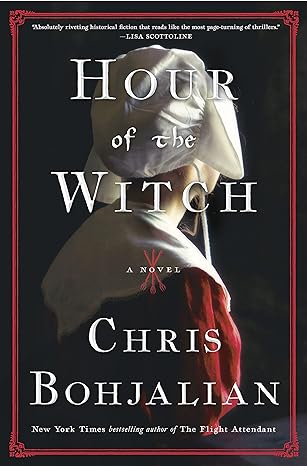
HOUR OF THE WITCH BY CHRIS BOHJALIAN
Boston, 1662. Mary Deerfield is twenty-four-years-old. Her skin is porcelain, her eyes delft blue, and in England she might have had many suitors. But here in the New World, amid this community of saints, Mary is the second wife of Thomas Deerfield, a man as cruel as he is powerful. When Thomas, prone to drunken rage, drives a three-tined fork into the back of Mary’s hand, she resolves that she must divorce him to save her life.
But in a world where every neighbor is watching for signs of the devil, a woman like Mary—a woman who harbors secret desires and finds it difficult to tolerate the brazen hypocrisy of so many men in the colony—soon becomes herself the object of suspicion and rumor. When tainted objects are discovered buried in Mary’s garden, when a boy she has treated with herbs and simples dies, and when their servant girl runs screaming in fright from her home, Mary must fight to not only escape her marriage, but also the gallows.
SLEWFOOT: A TALE OF BEWITCHERY BY BROM
Connecticut, 1666: An ancient spirit awakens in a dark wood. The wildfolk call him Father, slayer, protector.
The colonists call him Slewfoot, demon, devil.
To Abitha, a recently widowed outcast, alone and vulnerable in her pious village, he is the only one she can turn to for help.
Together, they ignite a battle between pagan and Puritan – one that threatens to destroy the entire village, leaving nothing but ashes and bloodshed in their wake.
DID YOU ENJOY WHAT YOU JUST READ? IF YES, THEN SUBSCRIBE TO THE BLOG, GIVE THE POST A LIKE, OR LEAVE A COMMENT! NEW POSTS ARE UP EVERY TUESDAY & THURSDAY!
Check out The Inkblotters for more posts like this, on everything from skincare to healthy living!
In an extroverted world, introverts are often drawn to quiet, solitary careers, such as writing. As an introvert who is happy spending plenty of time alone, especially one who works remotely as a writer, it can be easy to neglect self-care. Plus, introverts tend to struggle with overthinking, perfectionism, and a reluctance to seek help, all of which can lead to overwork, burnout, and chronic stress. In this article, we’ll discuss how you can strike a harmonious balance between nurturing your body and mind and harnessing your unique creative strengths as a writer!
Pursue Fulfilling Career Goals
Setting career goals is a great way to give your mental health a boost. According to Positive Psychology, goal-setting can help you align your focus and promote a sense of self-mastery. If you’d like to take your writing career further, think about how you can use your skills in other
positions. For example, you could work in education as a creative writing teacher. Keep in mind that this might mean going back to school and getting a bachelors od education. Online universities can be a great option for introverts! Look for accredited online schools that offer bachelor’s education degrees at competitive tuition rates.
When it comes to hunting for your next job, be prepared to step out of your comfort zone. You’ll interact with several people during your job search. Writing a cover letter is a great way to break the ice and increase your chances of landing an interview. To write an engaging cover letter, be sure to research the company you’re applying to and mention any connections you have.
Avoid Unhealthy Coping Behaviors
Due to their contemplative nature, introverts are prone to stress. Introverts also tend to face more anticipatory anxiety, which means your stress response is constantly firing. While alcohol can offer temporary relief from stress and anxiety, this coping behavior can have long-term negative effects and even increase your anxiety levels over time. If you’re struggling to cut back on drinking, consider finding treatment help nearby. Choose a rehab center that offers the type of treatment you need. If cost is an issue, look for facilities that offer free treatment services through government health programs.
Embrace Self-Compassion
Introverts are highly self-reflective. While this introspection can fuel your creativity, it can also lead to you to become overly self-critical. Introverts frequently set exceptionally high standards for themselves and can be relentless in their pursuit of perfection. This self-imposed pressure can result in feelings of inadequacy and anxiety. Embracing self-compassion is crucial! Psychology Today suggests looking for reasons to be proud of your introversion. Leaning into your strengths, such as your creativity, listening skills, and outside-the-box thinking can help you be more forgiving of your perceived flaws.
Set Boundaries
Setting boundaries is of utmost importance if you’re an introvert, as this allows you to safeguard your alone time and recharge when needed. Without clear boundaries, you may find yourself overextending, both in your social life and your professional life as a writer. This can lead to burnout and a decline in the quality of your work. Establish limits with friends, family members, and even your freelance clients to preserve your energy and communicate your needs to others. This process can also be incredibly empowering and provide a boost to your confidence!
Introverted or extroverted, self-care should be at the top of everyone’s priority list. Introverts, in particular, need regular self-care to manage the overwhelm of existing in a world that values extroversion. By pursuing your career goals through online education, seeking help for negative coping behaviors like drinking, and learning how to forgive yourself and advocate for your needs, you can nurture your creativity as a writer while forging a path to greater well-being.
Guest blog post by Stephanie Haywood, read her previous guest blog post HERE and HERE or visit her website: MY LIFE BOOST.
DID YOU ENJOY WHAT YOU JUST READ? IF YES, THEN SUBSCRIBE TO THE BLOG, GIVE THE POST A LIKE, OR LEAVE A COMMENT! NEW POSTS ARE UP EVERY TUESDAY & THURSDAY!












 The Inkblotters