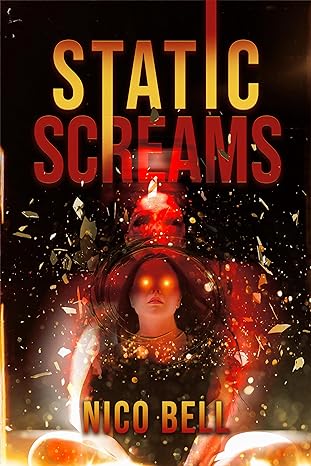
Carmen Franco’s untethered mind twists reality into a nightmare filled with relentless hallucinations.
Her greatest desire is a peaceful life, but despite countless doctors and swallowing a pharmacy’s worth of pills, she can’t escape her disturbing delusions brought forth from a past tragedy.
Enter Dr. Barbara MacDonald, a brilliant psychologist proposing an innovative and experimental treatment program. Barbara ignites a flicker of hope, but Carmen quickly realizes the doctor’s motives aren’t exactly pure. Carmen holds the key to the one thing Barbara covets most in the world, and the determined psychologist intends to obtain it by any means necessary.
Now, Carmen races against the clock to save herself as madness and deception converge. Will she unravel Barbara’s menacing motives before time runs out or will Carmen fall prey to the dark abyss pulling her in?
GRADE: A
REVIEW:
I love it when horror books can blend sci-fi elements so seamlessly. I often get turned off by plain sci-fi because sometimes it gets too technical, but I love it when it’s fused with paranormal elements and this was done so masterfully. Carmen has scary hallucinations and the plot supercharges the moment Dr. MacDonald enters the scene. This novella was reminiscent of Stephen King’s Carrie and Firestarter in some ways, and I really liked that a lot. If you enjoy grief horror, this book will be right up your alley. I don’t want to talk too much about the plot because I don’t want to inadvertently spoil the fun for a reader. But I totally recommend this book if you’re a fan of twisty endings and love a superb mashup of horror and sci-fi with a female-driven cast. Bell always manages to infuse a new slant on familiar tropes and upends them in very distinct and remarkable ways.
*Thank you so much to the author for the physical copy of this book in exchange for an honest review!
DID YOU ENJOY WHAT YOU JUST READ? IF YES, THEN SUBSCRIBE TO THE BLOG, GIVE THE POST A LIKE, OR LEAVE A COMMENT! NEW POSTS ARE UP EVERY TUESDAY & THURSDAY!
The Babadook meets The Blair Witch Project in this chilling contemporary horror novel about confronting trauma. When fake spiritualist Brigit returns home to investigate the disappearance of two teenagers, the case eerily echoes her own sister’s death sixteen years earlier.
This chilling tale of siblings, the emotional toll of the places you once called home, and the necessity of confronting and moving beyond past trauma brings together the psychological horror of The Babadook with the found footage and supernatural eeriness of The Blair Witch Project.
Brigit Weylan’s older sister, Emma, is dead. Sixteen years ago, Emma walked into the woods in their small hometown of Ellis Creek and slit her wrists. She was troubled, people said—moody and erratic in the weeks leading up to her death, convinced that there was a monster in Ellis Creek, and had even attempted to burn down the copse of trees where she later took her life. Marked by the tragedy, Brigit left and never once looked back. Now, Brigit and her cameraman Ian travel around the country, investigating paranormal activity (and faking the results), posting their escapades on YouTube in the hopes that a network will pick up their show. The last thing she expects is a call from an Ellis Creek area code with a job offer—and payout—the two cannot refuse.
When Brigit and Ian arrive in Ellis Creek, they’re thrust in the middle of an investigation: two teenagers are missing, and the trail is growing colder with each passing day. It’s immediately apparent that Brigit and Ian are out of their depth; their talents lie in faking hauntings, not locating lost kids. Except for the fact that, in the weeks leading up to their disappearance, the teens had been dreaming about Emma—Emma in the woods where she died, ringed with trees and waiting for them. As Brigit and Ian are drawn further into the investigation, convinced that this could be the big case to make their show go viral, the parallels to Emma’s death become undeniable. But Brigit is worried she’s gone too far this time, and that the weight of being back in Ellis Creek, overwhelmed by memories of Emma, will break her…if it hasn’t already. Because Brigit can’t explain what’s happening to her: trees appearing in her bedroom in the middle of the night, something with a very familiar laugh watching her out in the darkness, and Emma’s voice on her phone, reminding Brigit to finish what they started.
More and more, it looks like Emma was right: there is a monster in Ellis Creek, and it’s waited a long time for Brigit Weylan to come home.
DID YOU ENJOY WHAT YOU JUST READ? IF YES, THEN SUBSCRIBE TO THE BLOG, GIVE THE POST A LIKE, OR LEAVE A COMMENT! NEW POSTS ARE UP EVERY TUESDAY & THURSDAY!
The human heart is deep and dark with many chambers. Things hide down there.
PLOT SUMMARY:
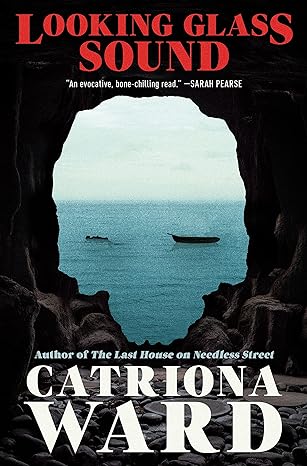
In a cottage overlooking the windswept Maine coast, Wilder Harlow has begun the last book he will ever write.
It is the story about the sun-drenched summer days of his youth in Whistler Bay, and the blood-stained path of the killer that stalked his small vacation town. About the terrible secret he and his companions, Nat and Harper, discovered entombed in the coves off the bay. And how the pact they swore that day echoed down the decades, forever shaping their lives.
But the more Wilder writes, the less he trusts himself and his memory. He starts to see things that can’t be real – notes hidden in the cabin, from an old friend now dead; a woman with dark hair drowning in the icy waters below, calling for help; entire chapters he doesn’t recall typing, appearing overnight. Who, or what, is haunting Wilder?
No longer able to trust his own eyes, Wilder begins to fear that this will not only be his last book, but the last thing he ever does.
GRADE: A
REVIEW:
This novel is absolutely twisty and I love it! I don’t want to delve too much into the plot because I don’t want to spoil the fun for anyone else. But the novel begins with Wilder, who goes to spend a summer in his dead uncle’s home with his parents and there he meets two other teens his age, Harper and Nathaniel. They become instant friends and vow to see each other every summer thereafter. But their lives become upended when a man known as “The Dagger Man” is finally discovered by the police, in ways that the group of friends never thought possible.
I’ve read previous Ward novels and I’ve loved them all. I rushed through this novel in two days, unable to put it down – I had to know what was going on! If you love coming of age, mysteries, and twists upon twists, then this novel is for you!
*Thank you so much to NetGalley and Tor Nightfire for the digital copy of this book in exchange for an honest review!
DID YOU ENJOY WHAT YOU JUST READ? IF YES, THEN SUBSCRIBE TO THE BLOG, GIVE THE POST A LIKE, OR LEAVE A COMMENT! NEW POSTS ARE UP EVERY TUESDAY & THURSDAY!
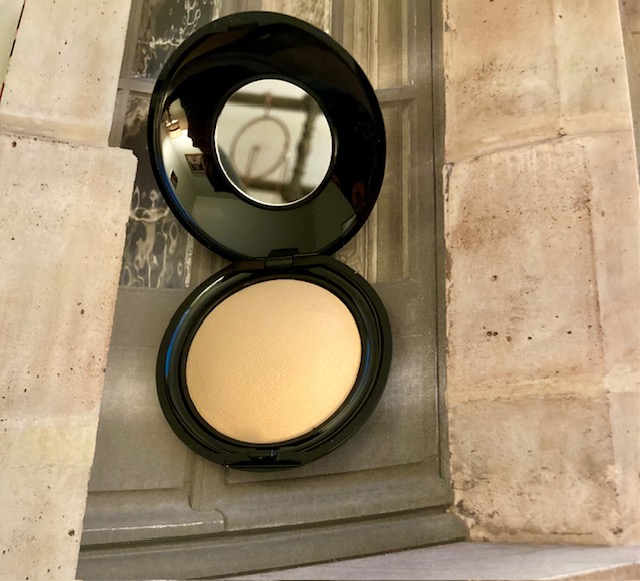
What It Is: A blurring under-eye powder with a brightening, soft-focus finish.
What It Does: Blurs fine lines and helps set concealer.
Verdict: Seeing that I have hereditary dark circles, using concealer has always been a must for me. What that means is that I’ve tried every concealer, eye cream, and powders one can possibly imagine to find the best one that doesn’t look cakey, doesn’t look dry, and that can pass off as skin. As far as concealers go my go-to favourites have been Glossier Stretch Concealer and Tarte Shape Tape. I usually use both at the same time targeting different areas on my eye. Setting the concealer has always been an issue even when you have the best powder, it can still look cakey. So I was thrilled to try out this setting powder specifically made for the under-eye area. This product is fantastic! It doesn’t dry out the eye area, but at the same time still manages to blur the concealer in a way that makes it seem like it’s your actual skin! I absolutely love this (I had high hopes since I truly love Pat McGrath Labs products in general). Some may find this a little pricey, but if you’re only using it for the under-eye (you honestly only need one sweep with the kabuki brush) it’s bound to last a very long time. I recommend this if you need to conceal dark circles, want to brighten the area without making it look cakey and dry, or blur fine lines.
DID YOU ENJOY WHAT YOU JUST READ? IF YES, THEN SUBSCRIBE TO THE BLOG, GIVE THE POST A LIKE, OR LEAVE A COMMENT! NEW POSTS ARE UP EVERY TUESDAY & THURSDAY!
Sunny Lee is on the top of the world. She’s one third of Sweet Cadence, the hottest up-and-coming teen pop group, alongside her new BFFs, Candie and Mina. The three are inseparable as they ride their way to the top of the charts, even as Candie and Sunny fight to resist the growing spark between them. But when a shocking scandal breaks, the group is suddenly torn apart. Then the unthinkable – Mina dies tragically right before Sunny and Candie’s eyes. And Sunny suspects the dark and otherworldly secrets she and Candie were keeping may have had something to do with it . . .
NOW:
For the past two years, Sunny has spent her days longing for her former life and her nights wondering just what caused Mina’s death. So when she discovers that Candie is attending a new K-pop workshop right in her hometown, Sunny has no choice but to follow her there. Candie might be chasing stardom again, but Sunny is only after one thing: answers.
At the workshop, the lines between nightmare and reality start to blur as Sunny is haunted by ghostly visions and her competitors’ bodies turn up bizarrely maimed and mutilated. To survive the twisted carnage, Sunny will have to expose the ugly truth behind the workshop’s spotlights and the sinister forces swirling around Candie. Stitched with cutting commentary on the ugly side of stardom and impossible beauty standards, Linda Cheng’s mind-bending thriller will have readers screaming and swooning for more.
GRADE: A
REVIEW:
Wow! This was one wild ride. The prologue started off with a bang, it was mysterious, devastating and utterly hooked me into the story. I really loved the characters Sunny, Candie, and Mina. So even when it was a little slow, it wasn’t boring. I liked getting to know more about the K-pop music industry and what it takes to become a pop star. The book took some very crazy turns that I wasn’t expecting but that I absolutely loved. This was a mixture of horror and sapphic romance. This was a mixture of so many things: folklore, cults, celebrity worship, and beauty obsession. I couldn’t stop reading because I was so invested in finding out what was happening (so many twists and secrets!). For horror fans, some truly gruesome, unsettling scenes would make for a very twisted horror movie. I really enjoyed reading this book and loved the main character Sunny a lot, even though she wasn’t necessarily always good and sometimes made poor choices, but it’s what made her more human to me.
I recommend this book to those who love sapphic horror novels, and although it is marketed as a YA, I feel like it can be a fun read even for adults.
*Thank you so much to NetGalley and Roaring Book Press for the digital copy of this book in exchange for an honest review!
DID YOU ENJOY WHAT YOU JUST READ? IF YES, THEN SUBSCRIBE TO THE BLOG, GIVE THE POST A LIKE, OR LEAVE A COMMENT! NEW POSTS ARE UP EVERY TUESDAY & THURSDAY!
The mountain had existed long before there had been anyone around to name it, pushed up by the inevitable forces that made the Appalachian Range millions of years ago. Hulking, it stood with a peculiar formation at its apex, two peaks like a pair of horns, giving the mountain its eventual name of Devil’s Peak. The coal mine inside was abandoned long ago.
On the southern side of Devil’s Peak was the town of Wesley Falls, where there were no remnants of the mine except for the overgrown paths crisscrossing up to two entrances, ineffectually boarded up, partially hidden but available to anyone looking hard enough. Down the western side were the steeper paths, far more overgrown with vegetation, leading down to the abandoned town of Evansville. That side of the mountain and beyond grew strange because of the coal fire that had been burning underground for almost a century. The Bureau of Mines had managed to contain the fire to the western side of the mountain so that only Evansville suffered. Only Evansville had bouts of noxious gases, open cracks of brimstone in the roads, residents complaining of hot basements and well water. Over time they left town, leaving behind a ghost.
Unlike its unfortunate neighbor, Wesley Falls had avoided the mine fire and transitioned from a coal-mining town to something not unlike Pennsylvania suburbia. It was the sort of town where one of the billboards outside the Golden Praise megachurch proclaimed, “Wesley Falls: the BEST place to raise a family!” and most adults agreed with that assessment. The sort of place where the city council had voted against a bid to allow a McDonalds to open, arguing that it would “lead to the deterioration of the character of Wesley Falls.” This had less to do with concerns about childhood obesity or dense traffic than it did a desire to keep the town trapped in amber. The sort of town where the sheriff was the son of the previous sheriff.
Jia Kwon, stepping off a train at the station some miles away from Wesley Falls, looked around the crowded station for that son—the sheriff—now in his thirties, though she had trouble picturing this. Sheriff Zachary Springsteen had an air of formality that she couldn’t match up with the image of the boy she knew from high school, whom everyone called Blub. He was an inoffensive, nondescript kid who delivered papers via his clackety bike, who then grew to be the generic teen who stood in the back row of yearbook pictures. She had always been friendly with him, but never quite friends, starting from when she had transferred from St. Francis to the Wesley Falls public school system and Blub sat next to her in homeroom.
Was the fact that she had chosen to keep in contact with this not-quite-friend after she moved away from Wesley Falls an accident? No—she knew that now. Blub had been the perfect person to report back town news over the years because he never suspected her interest was anything more than curiosity. Their exchanges over the years had been just enough for him to feel comfortable, or compelled enough, to make the phone call that had brought her here.
Jia paused to put her phone in her purse, pretending she did not notice any stares. No one looked twice at her in Philly, but here she stood out as the only Asian, drawing even more attention to herself because she had dyed her hair a shade of silvery gray with hints of lavender in it. It would only be worse when she got into town, but even as a kid she had been so used to being stared at that she just exaggerated her strangeness, opting for bright clothes rather than trying to blend in.
“Jia?” said an uncertain voice.
She turned her head and instantly recognized Blub, who stood with the gawky awkwardness of someone uncomfortable with his own height. “Blub!” she exclaimed, coming closer. She embraced him, her head only coming up to his midchest. “You’ve grown two feet!”
He shoved his hands into his pockets, smiling. “Want to ask me if I play basketball?” Their smiles felt hollow, she realized, because of the strangeness of the situation and everything they weren’t saying. “I appreciate you taking the time to come out here. I know you’re probably busy but…” He led her to his patrol car. “Sorry, you’ll have to ride in the back.”
“It’s no problem,” she murmured, surprised to see that he had brought someone along for the ride.
“This is Deputy Sheriff Henry,” Blub said, turning the car on. A smaller man whom she did not recognize half turned and nodded at her curtly, though Jia could see him looking at her in the rearview mirror as they pulled away from the station. What on earth had Blub told him?
That once, in one of their email exchanges, when he complained about having to repair his roof, she made a joke about which team to bet on for the Super Bowl, and he did, and she had been right? That she had one too many stock tips that turned out to be good? That she inexplicably sent him a “You okay?” email at 8:16 a.m. on September eleventh, thirty minutes before American Airlines Flight 11 crashed into the North Tower of the World Trade Center? There had been enough incidents as strange as these that when he called her last year asking for help, it felt like something clicking into place. Something that was supposed to happen. Over the years, she had started to feel comfortable with that clicking feeling, rather than being afraid of it. Last winter he had called her saying that Jane Merrick was missing from the old-folks home—she was prone to running— and she was outside in the freezing weather in only a nightgown, and they were worried about her. He did not say why he was asking her, a person who hadn’t lived in Wesley Falls for two decades, a person who neither knew nor liked Jane Merrick. She told him to look in the barn on the Dandriges’ property without providing an explanation of how she knew. She knew because she saw it. She knew because sometimes she could call up things when she wanted to, though not all the time, but this was still significantly better than when she was a kid and she couldn’t control when the visions hit her, or stop them, or even understand them.
And now, in the peak of summer heat, he had called again, saying that there was a missing person, could she help, friends were worried. She did not ask who because she felt something like the deepest note on a double bass vibrating, reverberating through her body. She saw herself walking, her white maxi dress—the one she was wearing right now—catching on brambles as she maneuvered her way down the overgrown path to the ghost town.
She had to go back to Wesley Falls. It was time.
“You all went to school together?” Deputy Sheriff Henry said when they pulled onto the highway.
“Yeah,” she said. “We didn’t overlap with you, did we?” Henry shook his head. “Blub and I go way back,” she said, meeting Blub’s eyes in the rearview mirror.
“I’ll never get over the fact that people call you Blub,” Henry remarked. “How’d you get that name anyway? Were you chubby or something?”
“I don’t think there’s an origin story,” Blub said, looking like he wanted the subject to change.
“I remember!” Jia exclaimed. “It’s when you threw up in fourth grade.” She leaned forward, pressing against the grate that divided the car, addressing Henry directly. “It was during homeroom. He threw up on his pile of books. I remember because it was clear and ran down the sides like pancake syrup.”
Henry laughed and Blub flushed. “Jia, you can’t remember that because you weren’t there. You were at St. Francis in grade school!”
She stopped laughing abruptly. “I could have sworn I remember that happening!”
“Sometimes when enough people tell you a story, you start to remember it like you were there,” Henry mused.
Sometimes, Jia thought. But there were other people who could see things that had happened or would happen, even if they weren’t there.
As they drove down the highway and drew closer to Wesley Falls, the mood shifted to an anxious silence. Jia checked her phone for anything work related. She ran a small solar panel company called Green Solutions with her two best friends, both hyper-competent, both probably picking up on Jia’s strange tone when she said she had to go back home for a short trip. They probably thought that it had to do with the settling of her mother’s estate, and Jia, even though she was uncomfortable with lying, allowed them to believe this. When her mother had died, Jia had come to Wesley Falls to liquidate everything in The Gem Shop and sell the store itself to the least annoying bidder: a fifty-something-year-old former teacher who wanted to open a bakery. A significant part of the decision had been not that her baked items were good—they were—but something about her aggressive combinations of spices had seemed witchy, and, most importantly, she did not attend Golden Praise. Jia’s mother, Su-Jin, would have approved.
And now, with Blub turning off the highway, her heart felt torn in different directions. Wesley Falls wasn’t home, but it was, because it was where most of her memories of Su-Jin lived. As the car moved it felt as if they traveled through an invisible veil, something that felt uncomfortable in a way she could not put into words anyone else would understand, but was familiar and, she knew, strange. Strange like how she was strange.
But then it came: the feeling that arose every time she had gone home to visit her mother—the feeling that she shouldn’t be here. Except this time, it was worse. They had just arrived in Wesley Falls, passing Wiley’s Bar, which was on the outskirts of town. It was frequented by truckers stopping for a cheap burger and beer.
“That place is still here?” she murmured.
“They got karaoke now,” Blub offered.
“Please kill me,” Jia responded, trying to sound light. Blub laughed, then turned onto Throckmartin Lane. The street hadn’t changed in twenty years: it still housed Greenbriar Park, which everyone called “The Good Park,” and the larger homes where the wealthier families lived. Built before McMansions had hit this part of Pennsylvania, the houses differed in their architecture—some colonial, some farmhouse—but were all similar with their immaculate lawns, American flags, and WESLEY FALLS FOOTBALL signs.
Blub slowed to a stop, making eye contact with her in the rearview mirror. He was waiting for directions.
She gestured for him to turn onto Main Street, that old, curved road with the bottom half of the C drawn out like a jaw that had dropped wide open—it was impossible to drive anywhere in Wesley Falls without driving on Main Street at some point. They passed the police station, then the row of shops. Some of the mom-and-pop stores that lined Main Street had changed, but Wesley Falls still didn’t have a Target, a chain grocery store, or a reasonable place to buy clothes. Indeed, the best place to raise a family was apparently a place where you had to drive ten miles to the mall to get many of the things people wanted. She gazed at the bakery that used to be The Gem Shop. Spade’s Hardware was still there—her mother had had a grudging friendship with the owners. The candy shop had changed ownership but it was still a candy shop. They drove along the north side of town, by the lake and the Neskaseet River—called Chicken River by locals because of its proximity to and usage by the chicken processing plant at the north edge of town.
Wesley Falls and Evansville had both popped up in the 1800s, their economies at first built entirely around the Wesley coal mine, which resided inside Devil’s Peak. No matter how many times well-meaning adults attempted to close off the entrance of the mine, which had been abandoned in the 1930s when the coal ran out, high school kids always found their way in. Drawn to the allure of ghost stories, rumors that if you found the right path you could find the mine fire in Evansville, and the inevitable urban legends about the Heart.
Jia pointed and Blub turned onto the unpaved road that crossed the Neskaseet and wound up the side of Devil’s Peak to Evansville. From this elevation, she could see the entire tiny, abandoned town. The simple, squared-off eight shape of the town’s few roads, the dilapidated strip of larger buildings at the center, then the rectangles of homes, all identical because they had been provided by the mining company.
The road came to an end, trees and shrubbery blocking their passage. Blub put the car in Park, turning to face Jia. “Can’t drive farther.”
“Then we walk,” she said. She led the way, ignoring the looks from both men as she freed herself from prickly branches that caught onto her dress. Blub used his nightstick to whack away a tangle of vegetation, then Jia found a path that led down to the town.
It smelled like sulfur with a hint of cigar. Jia picked her way gingerly down the main road, which was buckled and cracked in places, then turned a corner behind the old church and stopped. There was someone in the road wearing a bright fuchsia shirt. She could only see the top half of the figure’s body. The lower part, from the stomach down, was trapped inside the road in what looked like a fresh sinkhole.
Jia knew without looking. Some part of her had known from the moment Blub called her. He needed help finding a missing person, but he hadn’t said who. This was the thing that had pulled her back, made her feel an insistent anxiety for the past few months.
Blub and Henry were running to the body, the latter yelling. When Jia finally approached, Blub was trying to get a pulse. She watched the two men huddle over the body, Henry almost making an attempt to pull her from the chasm before Blub stopped him. This could be a crime scene.
Blub sat back on his haunches. The fuchsia T-shirt was soaked with last night’s rain. Her blond hair was pulled into a ponytail, tendrils stuck to the sides of her face. That face. Familiar but different. She’s still so pretty, Jia thought. Her mouth was open and a scratch stood out livid on her pale cheek. Her eyes were closed.
“It’s her,” Blub stated.
“Maddy Wesley,” Henry said, disturbed and awed.
“You knew that Maddy was the missing person? You didn’t tell me,” Jia said, trying to keep her voice stable.
Blub remained crouched, his elbows on his knees with his hands dangling down. “Didn’t think I needed to,” he stated, his voice devoid of the warmth it had had while in the car. He didn’t look at her as he examined the scene, and it occurred to Jia that he was actually the sheriff. Not Blub, the kid who threw up on his pile of books, but an actual agent of the law.
Jia edged backward, fearful that the road could break under her.
“You know her?” Henry asked.
His gaze made her self-conscious. Jia had never been a good liar. Much of the lying she had done that summer so many years ago had been by omission. She was working on a project. She was hanging out with Padma. These things had been true, but misleading.
“She was in our year,” Jia managed. “We all went to high school together.”
Blub’s eyes went from the body to Jia. “You weren’t friends, though, were you?” Maddy ran with the popular crowd, the Golden Praise crowd. Jia had been the opposite of that.
DID YOU ENJOY WHAT YOU JUST READ? IF YES, THEN SUBSCRIBE TO THE BLOG, GIVE THE POST A LIKE, OR LEAVE A COMMENT! NEW POSTS ARE UP EVERY TUESDAY & THURSDAY!
She blinked in surprise, wondering if this too, was the voice of some ghost….
PLOT SUMMARY:
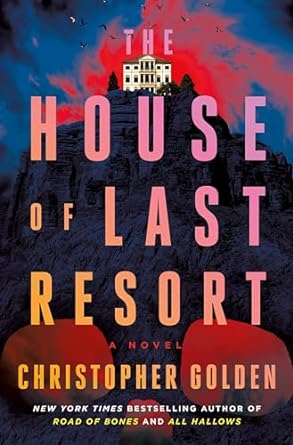
Across Italy, there are many half-empty towns, nearly abandoned by those who migrate to the coast or to cities. The beautiful, crumbling hilltop town of Becchina is among them, but its mayor has taken drastic measures to rebuild—selling abandoned homes to anyone in the world for a single Euro, as long as the buyer promises to live there for at least five years.
It’s a no-brainer for American couple Tommy and Kate Puglisi. Both work remotely, and Becchina is the home of Tommy’s grandparents, his closest living relatives. It feels like a romantic adventure, an opportunity the young couple would be crazy not to seize. But from the moment they move in, they both feel a shadow has fallen on them. Tommy’s grandmother is furious, even a little frightened, when she realizes which house they’ve bought.
There are rooms in an annex at the back of the house that they didn’t know were there. The place makes strange noises at night, locked doors are suddenly open, and when they go to a family gathering, they’re certain people are whispering about them, and about their house, which one neighbor refers to as The House of Last Resort. Soon, they learn that the home was owned for generations by the Church, but the real secret, and the true dread, is unlocked when they finally learn what the priests were doing in this house for all those long years…and how many people died in the strange chapel inside. While down in the catacombs beneath Becchina…something stirs.
GRADE: C-
REVIEW:
I was looking forward to reading this book as I was a huge fan of the author’s book The Road of Bones, although I must admit since this novel took place in Sicily (where I’m from) I was a bit hesitant as I didn’t enjoy the inaccuracies in Diavola (another horror book set in Italy). The premise of this novel is very intriguing, an American couple Tommy and Kate leave the United States for Sicily after they purchase one of those one euro homes with the promise of rebuilding the old home. But the couple doesn’t know that their home was owned by the Catholic church which would send their worse cases of demonic possession there.
Now, all that sounds very thrilling and scary. However, the execution wasn’t so. First of all, the couple Tommy and Kate are highly unlikable and entitled. They move to Sicily but instead of trying to befriend the local community, they’re only interested in becoming friends with other foreigners known as the imports and trying to convince their friends in the United States to leave Boston and follow them to a ghost town that doesn’t offer much in regards to economic growth or resources. Not to mention, that they suddenly decide the town has to pay to get their catacombs up to safety norms because they want to attract tourists to Becchina. This is highly improbable, as a dying town wouldn’t have the resources to do that. We never know what jobs these two people have that they can easily work from home, but for them to think that their friends could easily move across the globe just to keep them company is absurd.
Another con is that so much of this book is telling. Not much actually happens in the book until the very end. Not to mention that the author thinks Sicily is like California having earthquakes every three seconds (this isn’t true, yes Sicily gets earthquakes but they’re rare and when they do occur they’re bad). I do give the author props for having done some research in regards to how Sicilians are and the typical foods they have, but anytime the author has Italian characters use Italian, the grammar is incorrect in some cases. Note to authors, if you or your editorial team cannot ensure that something in a foreign language is correct, maybe don’t use it.
This book might appeal to those who want to read horror taking place in other places other than the U.S. But if you’re looking for a genuine possession or haunted house story, this straddles both but ultimately doesn’t explore either very well.
*Thank you so much to NetGalley and St. Martin’s Press for the digital copy of this book in exchange for an honest review!
DID YOU ENJOY WHAT YOU JUST READ? IF YES, THEN SUBSCRIBE TO THE BLOG, GIVE THE POST A LIKE, OR LEAVE A COMMENT! NEW POSTS ARE UP EVERY TUESDAY & THURSDAY!
This is a collection of short stories by some very talented writers that explore all the themes of love gone wrong, whether it’s romantic love, sibling love, or friendships – there’s a story for everyone.
Lollipop is in love with her classmate Stella Morris. But love for her is difficult as her family is a coven of witches that maintain themselves by making delicious gummy candies using a very particular ingredient (not for the squeamish).
When Spencer Torres becomes possessed by Dever, her life as she knows it upends. But it’s difficult for her to wish to get rid of the demon when he’s cunning, alluring, and the only one who wants to truly help her find out what happened to her last summer.
DID YOU ENJOY WHAT YOU JUST READ? IF YES, THEN SUBSCRIBE TO THE BLOG, GIVE THE POST A LIKE, OR LEAVE A COMMENT! NEW POSTS ARE UP EVERY TUESDAY & THURSDAY!
It is the twilight of Europe’s bloody bacchanals, of murder and feasting without end. In the nineteenth century, a vampire arrives from Europe to the coast of Buenos Aires and, for the second time in her life, watches as villages transform into a cosmopolitan city, one that will soon be ravaged by yellow fever. She must adapt, intermingle with humans, and be discreet.
In present-day Buenos Aires, a woman finds herself at an impasse as she grapples with her mother’s terminal illness and her own relationship with motherhood. When she first encounters the vampire in a cemetery, something ignites within the two women—and they cross a threshold from which there’s no turning back.
GRADE: A-
REVIEW:
This novel is set up in two portions. In the first half, we follow a vampire (whose name we truly never know, apart from the one she uses for a brief while – Maria) and see her journey from the old world to the new (specifically Buenos Aires). I enjoyed reading about the vampire and how she tried to survive in an ever-changing and evolving world, one that she didn’t really understand or get accustomed to.
The second half of the novel takes place in present time Buenos Aires and it’s about a woman, Alma, who has to deal with the grief of her mother’s sickness and the dissolution of her marriage. Obviously, at one point the protagonist of the second portion of the book comes in contact with the vampire from the first half of the novel.
This novel was well written but it was marketed as a literary vampire romance, and well, I’m not sure if that’s entirely accurate because the romance part comes so very late in the novel, and when it does it rushes full speed. I guess I was expecting more of a slow burn (or at least it occurred earlier in the book).
Overall, I did enjoy the book and enjoyed the vampire character a lot. But if you’re looking for a romantic vampire book I’m not sure if this one exactly fits the bill as one might expect. If you wish to read a character study about a vampire and a woman dealing with grief, then this will be up your alley.
*Thank you so much to NetGalley and Dutton (Penguin Books) for the digital copy of this book in exchange for an honest review!
DID YOU ENJOY WHAT YOU JUST READ? IF YES, THEN SUBSCRIBE TO THE BLOG, GIVE THE POST A LIKE, OR LEAVE A COMMENT! NEW POSTS ARE UP EVERY TUESDAY & THURSDAY!
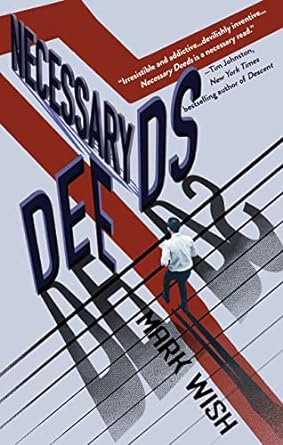
ABOUT NECESSARY DEEDS: Matt Connell, a formerly successful literary agent who’ s been in prison for four years for a crime of passion— homicide by strangulation after learning his wife slept with a friend— receives an early release from Sing Sing to join an FBI undercover investigation of multiple murders in Manhattan. Killings continue to mount as Matt does his best to calm his “ Ferrari brain” — a condition in which his mind accelerates wildly into negative thoughts and worst-case scenarios— even as he falls in love with a suspect, then discovers disturbing truths about his past and hers. When he finds his own life in danger, can he stand up for the Bureau’ s heralded principles of Fidelity, Bravery, and Integrity? Not to mention genuine love?
ABOUT MARK WISH: Mark Wish’s previous novels have been praised by Daniel Woodrell, Delia Ephron, Salman Rushdie, Rebecca Makkai, Ben Fountain, Anne Serling, the Chicago Tribune, and the Los Angeles Times. His short fiction has won a Pushcart Prize and appeared in more than 125 print venues including BEST AMERICAN SHORT STORIES. A renowned book doctor for thirty years, he now edits and publishes COOLEST AMERICAN STORIES, whose inaugural volume went to a third printing.
“What makes Necessary Deeds so irresistible and addictive is that it’s a devilishly inventive murder mystery presented in the finest of sentences and filtered through a mind wonderfully beset at every turn by the dark truths of human desire, ambition, envy, and jealousy—but most of all by love itself. If Mark Wish’s life imitates his art, his gift for storytelling might just get him
murdered. But not before his next book deal, please. In any case, Necessary Deeds is a necessary read.”
—TIM JOHNSTON, New York Times bestselling author of Descent
“By turns tense and tender, Mark Wish’s Necessary Deeds delivers a high-stakes noir and a taut tale of jealousy, murder, and redemption.”
—LAURA MCHUGH, internationally bestselling author of The Weight of Blood
“Necessary Deeds is a tight, tense thriller that explores some of the darkest, twistiest workings of the human mind. Mark Wish asks the question: Who can you trust if you can’t trust yourself?”
— LOU BERNEY, winner of Edgar, Hammet, Anthony, Dagger, and ALA Awards, author of November Road
“Mark Wish’s Necessary Deeds hits the sweet spot: sly, sharp, and satirical. Highly entertaining!”
—ALAN ORLOFF, Anthony, Agatha, Derringer, and two-time Thriller Award Winning author
“Smart and gripping, nuanced and wryly observed, Necessary Deeds is unputdownable, and Wish is clearly a writer at the top of his game. A phenomenal thriller that will leave you breathless.”
—TISH COHEN, author of The Summer We Lost Her
“Bursting at the seams with voice and tension, Mark Wish’s Necessary Deeds reads like the literary lovechild of Bellow, Chandler and Robert Bolaño. This is a literary page-turner, full of life and poetry. A novel to be devoured, then savored.”
—DANIEL TORDAY, two-time winner of the National Jewish Book Award, author of The Last Flight of Poxl West
“In Necessary Deeds’ Matt Connell, Mark Wish has created a diabolically compelling anti-hero—a literary agent with both romance and murder in his heart. As soon as I read the first few lines of this novel, I was all the way in—Wish portrays the high-stakes New York City literary world and the conflicted soul of Connell with humor, pathos, and supreme suspense.”
—Grace Paley Prize Winner CHRISTINE SNEED, author of Little Known Facts
“Smart, exceptionally told, and a pleasure to read, this mystery by Mark Wish is complemented by dialogue brimming with emotional insights, whether about the foreboding passion between a man and a woman, or the rage of a wounded husband. Necessary Deeds is the kind of book you read in a rush but remember long after.’
—E. A. AYMAR, bestselling author of No Home for Killers
“I was hooked by the first sentence—one of the best I’ve read—and followed Mark Wish’s tale on and on. Wish knows how to tell a story, and in Necessary Deeds, he has given us a varied, surprising, and irresistibly engaging one.”
—Pulitzer Prize winner TIM PAGE, author of Parallel Play
“Necessary Deeds is a captivating, spiraling story that doesn’t let up off the throttle. When it was over, I found myself wanting—no, needing—that speed again. Wish has created a stunning narrative with so much drive and power. Any reader would love this.”
—PEN Award winner MORGAN TALTY, national bestselling author of Night of the Living Rez
“Necessary Deeds is a rarity: A murder mystery that keeps you guessing until the very end, and most important, is a lot of fun. Mark Wish has written a witty page-turner that’s necessary reading.”
—LELAND CHEUK, author of No Good Very Bad Asian
“Mark Wish’s Necessary Deeds is a deliciously gleeful send-up of the New York literary world, a wildly satirical removal of the veil over High Art. Most notably, it’s a genuine whodunnit: Who is murdering the Talented Writers in the city (with their outsized advances)? Intertwined throughout is a noir love story and humor, but also a clear-eyed gaze at what has happened to notions of Integrity, Literature…and Fame. The twist at the end took me by surprise while making perfect wicked sense.”
—Drue Heinz Literature Prize winner KATHERINE VAZ, author of Fado and Other Stories
DID YOU ENJOY WHAT YOU JUST READ? IF YES, THEN SUBSCRIBE TO THE BLOG, GIVE THE POST A LIKE, OR LEAVE A COMMENT! NEW POSTS ARE UP EVERY TUESDAY & THURSDAY!









 The Inkblotters