Many writers dream of scaling their freelancing ventures into full-fledged businesses. Making this leap requires not just a shift in mindset but also a methodical approach to transforming a personal brand into an operational enterprise. This article from The Inkblotters outlines a strategic framework to guide writers through the complexities of evolving from freelancers to business owners, providing a structured pathway to success without detailing the operational specifics.
Craft Your Blueprint
When you decide to scale up your freelance operations into a business, writing a clear and structured business plan is your first step. This document will serve as your roadmap, detailing your business goals, strategies, and financial forecasts. A well-crafted business plan helps you navigate the journey ahead with confidence and precision, ensuring that you have considered all critical aspects of your new business venture. Make sure to tailor your business plan to reflect both your immediate and long-term objectives.
Legal Groundwork
It’s crucial to understand the legal requirements involved in operating a business. Research and obtain any necessary permits and licenses specific to your business activities. This compliance not only protects you from potential fines and legal issues but also enhances your credibility in the industry. Being proactive about legal compliance can streamline your business operations and reduce unnecessary stress.
The LLC Advantage
Establishing a Limited Liability Company (LLC) is crucial for writers looking to professionalize their freelance endeavors. An LLC safeguards personal assets from business-related debts and legal judgments, providing a crucial layer of security. It also grants operational flexibility and potential tax advantages that can significantly benefit a business’s financial health. For those considering an LLC in California with ZenBusiness, this service streamlines the setup process, making it easier to focus on growing your business.
Marketing Mastery
Developing a dedicated marketing plan is as important as your initial business plan. A targeted marketing strategy enables you to reach and engage with your intended audience effectively. This plan should outline your marketing goals, the strategies to achieve them, and the metrics for measuring success. Whether it’s through social media, email campaigns, or traditional advertising, a solid marketing plan guides your efforts to promote your services. Always adapt and evolve your marketing strategies to align with changing market trends and customer preferences.
Build Bridges
Networking is a powerful tool for any business owner. Building professional relationships can lead to new opportunities, partnerships, and avenues for growth, says Jamie Johnson Writes. Attend industry conferences, participate in writing workshops, and engage on professional social media platforms to connect with peers and influencers who can support your business journey. Remember, the relationships you build today can turn into tomorrow’s business opportunities.
Resume Refresh
Transitioning into a business owner necessitates keeping your resume current to reflect new skills, experiences, and milestones. Updating this vital document ensures you present the most accurate and compelling picture of your professional evolution. If your resume is a PDF, choosing an effective PDF editor is crucial, as it allows for straightforward modifications. Simply upload your resume to the editor, adjust as needed, and download the updated version ready for distribution.
Secure Your Business
Investing in the right insurance coverage is essential to protect your business from unforeseen events. This coverage can range from professional liability insurance to property and health insurance, depending on your specific business needs. Ensuring that you’re adequately insured is not just a precaution—it’s a smart business practice. Regularly reviewing and adjusting your insurance coverage ensures that it continues to meet your business’s changing needs.
Transitioning from a freelance writer to a business owner marks a pivotal chapter in a writer’s career. It demands diligence, foresight, and a commitment to growth and professionalism. By following a systematic approach to business planning, legal structuring, and market engagement, writers can successfully navigate this transformation, setting the stage for a sustainable and prosperous business venture.
Guest blog post by Stephanie Haywood, read her previous guest blog post HERE and HERE or visit her website: MY LIFE BOOST.
DID YOU ENJOY WHAT YOU JUST READ? IF YES, THEN SUBSCRIBE TO THE BLOG, GIVE THE POST A LIKE, OR LEAVE A COMMENT! NEW POSTS ARE UP EVERY TUESDAY & THURSDAY!
The recycling truck kicked up pieces of cardboard and dust as it drove off. Soda cans and bottle caps that had fallen off the back tumbled along the ground. Danhui’s hands became sticky as she picked up the trash and put it in the sack.
After she cleaned up the recycling, she broomed the dust into a metal dustpan, dumped it into a trash bag, and headed up to the third floor. She could hear the baby’s cries from the bottom of the stairs.
“Hyonae-ssi, are you there? Hyonae-ssi? Sounds like Darim’s crying?”
She heard rustling as the crying settled, then the front door swung open. Exhausted, her eyes bloodshot, Jo Hyonae came outside holding Darim. She looked as desperate as a trembling drop of water clinging to the faucet. “Yes, what is it?” Hyonae’s voice was hoarse.
“Were you sleeping all this time? You don’t look like you got any rest!” “What’s going on so early in the morning?”
“Oh, Hyonae-ssi! You sent Sangnak-ssi down by himself the other day when we were all meeting the new family, and you haven’t shown your face since. It’s not early, everyone’s gone off to work and it’s already nine! I thought I told you the recycling truck comes at eight on Mondays.”
Hyonae shifted Darim to her other arm and scratched her tousled head. “I had to pull an allnighter again. I’m happy to take it on next time.”
This woman was the complete opposite of the new tenant Euno, who had come out to see if he could help when he heard the truck. Even though his family was still unpacking and settling in, Euno had come anyway and hovered about, asking if there was anything he could do, while Danhui and Gyowon waved him off, declining any assistance. What Danhui did want, although she refrained from asking, was for him to go pound on Hyonae’s door and wake her up. All this time Danhui had nodded and smiled sympathetically when Hyonae claimed to be too worn out from work to offer a hand; though she knew it wasn’t that big of a deal, Danhui had been waiting for a chance to have a serious talk with that self-centered Hyonae to make sure her neighbor knew she couldn’t walk all over her.
“Now you’re making me feel like I’m in the wrong here,” Danhui protested. “I’m not trying to imply that the work is hard. The workers collecting the recyclables are the ones doing the heavy lifting, and all we need to do is gather everything in one place so things don’t go flying around everywhere.”
“Right, that’s why I’m saying I can be the one to handle it next time.”
Danhui wanted to believe that Hyonae wasn’t purposely shirking her duties, but irresponsibility and laziness seemed something of a second nature to Hyonae. Even if Hyonae herself didn’t care, it was exhausting for the rest of them to have to deal with her.
“You know that’s not the issue. Doing communal work together is what makes it meaningful. Like I said before, if someone does it on their own this week and someone else handles it on their own the next week, it gets tricky and the system falls apart. Even if we made a schedule of whose turn it is to do what, there are always going to be times when we can’t follow it. That’s why everyone needs to come out and do this together. We can be flexible when someone has an unavoidable conflict. But if you can’t do the bare minimum, how will we be able to live together in harmony?”
This was when Darim, whose lips had been trembling during Danhui’s speech, burst into tears again, and Hyonae took that opportunity to cut her neighbor off. “Well, I need to nurse her right now.”
Danhui let out a sigh as she glanced over Hyonae’s slender shoulders into her apartment—the rumpled baby blankets, an open bag of sliced bread, toys strewn across the floor, clothes thrown every which way. “Sure. Text me later once Darim’s asleep. I’ll stop by for a second and we can finish talking.”
Danhui headed back downstairs, telling herself she shouldn’t be irritated by Hyonae, who, as always, had merely given a curt nod to put an end to their conversation.
It wasn’t a shock that Hyonae was exhausted—Danhui herself had experienced this fatigue when her two boys were younger, and she wouldn’t have been able to survive those years if the people around her hadn’t been unconditionally accommodating and considerate. You could try your best but not make it out of the apartment on time. Sometimes, no matter how hard you tried to wake up, it felt truly impossible to pry a single eye open, even with a wailing child beside you. Raising children was all about dragging yourself forward. Despite all your maternal love and inner strength, you’d still find yourself marooned from time to time, and you had no choice but to continue on until your last breath.
Those feelings were normal, but she couldn’t help but be annoyed. Whenever childcare obligations kept Danhui from upholding her side of the communal bargain (like the time she missed a general meeting at her boys’ day care center), she would apologize in a manner appropriate to the magnitude of her act. She would personally deliver a handwritten note—I’m sorry I missed the meeting, my son was sick again—with a fruit basket or a cake box. Then she would bow in apology at the next opportunity and work twice as hard whenever a small task came her way. Even if the others were put out before, they would end up doing her a favor when she needed something; they might push her turn back or let her go first.
Long before they moved here, back when Jeongmok was a baby, Jaegang had been away on a business trip and the recycling had piled up for three weeks in the utility room of their tiny twenty-four-pyeong apartment. Of course it did; since the baby’s arrival, they had started buying and using more and more personal hygiene products, and all of them had come packaged in plastic. Recycling days were once a week like at most apartment buildings in Seoul, and the residents were supposed to bring their recyclables out between six in the evening on Thursday and five thirty the following morning when the recycling truck arrived. But Jaegang had come home late after work the first week, then returned drunk off his feet from a work dinner the following week, and then had gone overseas for business the third week.
She had opened the door to the utility room to discover Styrofoam dishes and plastic recyclables piled around the large overflowing polypropylene tote bag in which they carried recycling downstairs; the plastic refuse blocked the path to the washing machine, barring her from entry. If someone were to see the utility room, they would assume she was a hoarder, the kind you saw on the news, or an alcoholic who neglected her child, and she was made miserable by this thought; it felt as though everything she had done earlier in her marriage to live a more environmentally friendly life, which of course had taken attention and effort, had gone down the drain.
Deciding to handle this problem herself instead of waiting for Jaegang to get home, she carefully slipped sleeping Jeongmok in his baby carrier. She should have done this from the get-go, but she had been trying not to expose Jeongmok to the freezing winter wind, which they’d confront on the seven-minute walk down the long corridor to the elevator and out the front doors to the trash and recycling area. Danhui went out with the bag filled with cardboard boxes and plastic. As she made the second trip with the baby on her back—after all, she only had two hands—other residents and the security guard spotted her and rushed over to help. She gratefully accepted their kindness, though she hadn’t brought Jeongmok to evoke sympathy, but rather because of all the tragedies she heard about on the news, stories of a child falling or suffocating to death during the brief moments their mom washed the dishes or ran to the supermarket just across the street. By her third trip, the security guard and the residents who had been breaking down her boxes and stacking them offered to come up to her apartment to help bring the rest down.
She had, of course, bowed in gratitude, and later, once she had her wits about her, she found out which units the kind neighbors lived in and brought gifts of tteok and fruit for them and the security guard. After that, her neighbors were naturally happy to help out. This was just one of the many ways a young mother could pay back the inevitable debt she racked up among her neighbors; you just had to show your gratitude.
But Hyonae didn’t bother doing any of that. It wasn’t that she was incapable; she just didn’t care. As an example, a salesperson hawking red ginseng or health supplements might offer a regular customer a bottle of vitamins for free, and, if that customer had any sense, they would kindly refuse after the first time, appreciating the thought behind the gesture. But Hyonae never even gave out copies of the picture books she illustrated. She claimed to be embarrassed because they weren’t published by a well-known company, and said they were sold as a box set and therefore hard for her to give out only the one she illustrated; still, if she handed out a few books to the neighbors, whose children were all around the same age, she could easily generate some goodwill by showing everyone what kind of work she did and help them understand why she couldn’t fully participate in their day-to-day schedule, but she didn’t put in any effort. Relationships were like joints that creaked without fluid between them, and Danhui’s biggest complaint was that the same people always felt the resulting pain and discomfort. She wasn’t annoyed by the fact that she wasn’t on the receiving end of niceties; she sincerely believed that these small acts were the bare minimum when you lived in an apartment building.
Even if you weren’t a people person, all you had to do was merely say the right things at the right time. Reflecting on her experience raising two kids, Danhui felt that a mother had to constantly say “sorry” and “thank you” even if she had done nothing wrong. All Hyonae had to do was add just one more sentence; just now, after saying, “I had to pull an allnighter again,” she could have easily added, I’m so sorry. Again, it wasn’t that Danhui wanted Hyonae to prostrate herself, it was just that these were the skills— or rather, the basic courtesy—of maintaining relationships. Intellectually she knew she should forgive Hyonae’s disorganized disposition and not judge her based on her line of work, but her lack of social skills was obvious, sitting as she did in her room, working on projects alone.
Two days ago, Sangnak had emphasized that Hyonae had fallen asleep after meeting a deadline, which was why she couldn’t come to the welcome party for the new family. He had even brought Darim to the backyard on his own to allow Hyonae to rest. But here she was, up all night again despite her husband’s support. Was she drawing all the pictures in the world, all by herself? Danhui had gone upstairs merely to tell her that they should try to work more effectively together, and Hyonae had cut her off, saying she’d just handle the recycling by herself the next time. Not only was it incredibly unclear when exactly this next time would be, but this disorganized approach would also render a turn-taking system useless and confusing. Maybe someone might think Hyonae was being ostracized over the trivial issue of recycling…
But it wasn’t trivial.
Trivial things weren’t so trivial when they piled up, not a corn on the sole of a foot or dust heaped on a forgotten shelf. Danhui just wanted Hyonae to understand this.
DID YOU ENJOY WHAT YOU JUST READ? IF YES, THEN SUBSCRIBE TO THE BLOG, GIVE THE POST A LIKE, OR LEAVE A COMMENT! NEW POSTS ARE UP EVERY TUESDAY & THURSDAY!
I am a ghost in the room tonight. A shadow no one will notice, exactly as it should be. Guests arrive, flowing toward the heat and hum of the glass atrium at the back of the bookshop. Turning my back to them, I retreat farther into the deserted aisles of Anthropology, reach for a slim volume, inhale the flutter of air as my thumb zips through the pages. I wait for that aroma, dry and sweet, biscuits and sawdust to work its usual magic, a sensory hit that never fails to reassure me. Until now. Books used to be an escape. A window to another world that for a short time might alter me in some unfathomable way. But I’ve been too close to them, seen how they can taint and twist the truth.
I slip into the atrium packed with a hundred or so more guests. It is easy enough to lose myself here, hovering at the back behind a pillar. I’ve been paid to melt away into the ether, but I doubt they’ll be looking out for me.
So why risk coming along at all, what will it solve? His book is displayed on a table next to me in a tower of carefully spiraled spines, a DNA strand to show every angle. On top a hardback copy is perched upright, his name embossed across the front in glossy black. I imagine teasing out the bottom copy, watching them topple to the floor. The cover is luxuriant, creamy, a lily in one corner. It could be a bereavement card.
In a way, it is. Loss in fifty shades of vanilla. In those pages resides a version of his wife, Eva, much-loved, much-missed, much-constructed, packaged up for public consumption. The other ghost in the room tonight.
It is his back I see first as he walks through the crowd. Briefly he turns around and from my vantage point I watch him, this stranger who only three months ago I thought I knew so well. He pauses to chat to someone, draws his fingers through the back of his hair, letting his hand rest at the nape of his neck, something I know he does when he’s tired or anxious. He looks a little older this evening, a little grayer, a scattering of salt at his temples, a silvery haze of stubble at his jawbone. I see now, or is it wishful thinking, how the past few months have punished him too. He is leaner perhaps, his face more angular. His brow bones protrude a little, lending him an almost hawkish glare.
From my vantage point, I spy an attentive young woman as she approaches him, offering up an open copy of the memoir, the shadow of a smile as they connect. Even from here I can see she is transfixed, caught up in whatever he is telling her, that way he has diverted the conversation and channeling it elsewhere.
He pauses, bites his lip, and I see something new in his expression, a tentativeness perhaps as he excuses himself from the guest, disappears into his public persona. Slowly he climbs the spiral staircase to a gallery that circles the room and by the time he’s at the top, he has become Dr. Nate Reid, any shade of hesitation vanished.
Priya, his editor, is already there, smiling down at the crowd. Everything about her is sharp and precise, the cut of her pale silk dress cinched at the waist, the razored line of her dark glossy bob tucked neatly behind each ear. She taps her ring against a champagne flute and the clamor subsides.
“Hello, everyone. Thanks so much for coming tonight. I’d like to start by saying what a privilege and an honour it has been working on this book.” She turns and raises her glass to him, her hand touching his arm.
“Nate’s instinct for storytelling is rare and inspiring. Many of us are used to hearing about Dr. Reid as a distinguished neuroscientist and TV personality, so it has been even more impressive to discover his gift for personal writing, his unflinching honesty and extraordinary ability to let the reader in.”
As she hands it over to him, there’s a peal of applause. Unflinching honesty? Here’s to fantasy fiction.
He clears his throat and steps toward the balcony edge. “I’d like to return Priya’s compliment and say how deeply satisfying it has been collaborating with her.” He touches her hand. “One silver lining in my journey is that it has brought me here tonight. To be here with so many friends who have given me their unstinting support. In a strange sort of way, it’s like Eva’s last gift to me. I feel very loved.”
He falters, falls silent for a moment.
Priya passes him a glass of water and there is a tingling anticipation as the silence stretches.
“When I started this book, I was overwhelmed. My first thought was, why would anyone do this? Then I realized here is a golden opportunity. My chance to help others in a similar situation. There are more of us around than you’d think.” He looks down at us, as if seeking out other grief-stricken souls in the crowd. “No one can really bear the truth that every minute of our life hangs by a thread. However much we think we can script our own existence and try to ensure nothing bad can ever happen to us, it does and it will.”
His index finger silently strikes the iron balcony rail, in sync with the rhythm of his words. “To each and every one of us. Tonight, tomorrow, at some point. Of course, that’s why memoirs about grief are so popular. They’re a window to a world that one day we’ll all inhabit, if we haven’t already. It’s only a matter of time.” He grips a copy of the book, raising it up.
“Eva was an extraordinary person, someone who radiated optimism, a hunger for life. As many of you are aware, she was best known as a sculptor, her work was widely regarded. She also made headlines around the world when I first diagnosed her with a rare medical condition, congenital analgesia, the inability to experience pain. But pain is nature’s alarm system helping to protect us, or as C.S. Lewis once put it, ‘God’s megaphone to rouse a deaf world.’ The value of pain is only evident when you see its absence. Which was why Eva was the most fearless person I ever knew, but the most vulnerable too.”
Guests lean in, heads tilt and crane. One woman tucks loose hair behind her ear in the hope of catching more. That voice. Gentle, well-spoken. Articulate and low. Gravel and smoke. He’s lectured around the world, been interviewed by the New York Times and doorstepped by the Sun. As his reputation grows, his words became quieter, loaded with a particular power.
A waitress passes with a tray of champagne and reluctantly I shake my head. It’s been five months since I touched a drink. Five months since that night at Algos House. Now I can’t help wondering if everything would have turned out quite as it did if I’d kept a clear head the whole time. I sip on a flute of orange juice, watch as he effortlessly ramps up his performance.
“I wanted to examine how you carry on after something like this, how to accept the horror of it. To come back home one evening and discover, in an instant, that my wife had died. How do you begin to make sense of it?”
How indeed.
“Death is the great leveler, even for those who appear to be invincible.” He pauses, eyes shining. “Because it shows us who we really are, and reveals how much we truly love the person we have lost. Here’s to Eva. Tonight is for you.”
He raises his glass as a tide of rapturous applause swells. It takes a moment or two, as the clapping subsides, to identify another noise in the crowd. A shriek. Like a contagion it spreads through the room, palpable and urgent.
“Murderer! We know what you did!”
I swallow hard. There are ripples of movement close to the door, security staff swarm, a scuffle ensues. “Justice for my sister!” she shouts, saying something else inaudible before she is bundled outside and removed from the event, leaving the crowd murmuring in her wake. I know I should leave but I’m frozen to the spot.
Back up at the gallery, Priya steps steadily in front of him. “Well, I guess grief affects us all in different ways,” she says. “And hopefully Nate’s book will offer comfort and understanding to anyone who’s suffered great loss. As a publisher, I couldn’t ask for more. Nate’s on his way down now to sign copies so do buy one and see what all the fuss is about.”
He appears, unphased, unflustered, his enigmatic reserve intact. There is nothing like the fury of a scorned woman to add intrigue, allure even. Priya knows this, so does he. Scandal swirls around him, somehow raising his stock rather than dimming it. I watch as he works the room.
“Well, that was all highly entertaining, wasn’t it?” says a woman next to me, her breath ripe with wine and crisps. “Who was she?”
“I’m not sure,” I lie. “Eva’s sister, I guess?”
“Ah, the disgruntled sibling desperate for the true story to be told. Delicious.” She regards me for a moment and there’s a flicker of recognition in her eyes.
She seems familiar, but I can’t quite place her. “Maybe a bit misery memoir for my liking,” she says, her tone conspiratorial. “But a great idea. Whoever got him to do it was completely on the money. Even more so if the sister doesn’t like it. I’m Jane. Jane Burton by the way. Mail On Sunday. And you?”
I should have known; the over-highlighted hair and green quilt jacket are a giveaway. She swooshes the bubbles around her mouth and studies me as if I’m a puzzle to be solved. There’s that familiar glint in her eyes that I have grown to recognize down the years, a precise and very familiar brand of curiosity, watching from the sidelines, prying, insinuating, picking away. It’s part of the job, until it becomes part of you.
“So you’re covering the book,” I ask.
“Yes, we ran first serial last Sunday. Triumph over tragedy, the usual.” She shrugs lightly. “Still, if you cry, you buy, they say.” She smiles briefly, moves in a little closer so I can see a smear of fuchsia lipstick on her front tooth. I’m repelled by something in her that feels too close to home. I shudder slightly, step away from her, but she inches closer, as if we’re both coconspirators.
“Good-looking, isn’t he? In that rather obvious way.” She crooks her head to one side, her eyes slide over him.
“I guess, I hadn’t really noticed.”
“What a horrible thing to happen. I don’t think you ever get over something like that, do you?”
“I hear he’s doing pretty well.”
“I wonder if he wrote it all himself?” Her steady look unnerves me. “A lot of them get help these days, don’t they?”
“I wouldn’t know. If they choose to have a ghostwriter, it’s usually kept a secret.” A flush prickles my neck and spreads upward.
I make my excuses and head for the exit, via Memoir & Autobiography for old time’s sake. The siren-call of those glittering lives on display spilling all—fame, grief, misery and addiction. “Read all about me, me, me,” they seem to echo, screaming for attention. I walk to the end of the aisle and stop in my tracks. There he is with Priya, standing just yards away.
Something in me deflates, and I know that it’s all over. He talks quietly, rapidly, and Priya nods in affirmation, her head dipped.
They carry on, deep in conversation. As I walk briskly past them toward the door, he looks up and our eyes lock. Priya reaches for his arm, but he pushes her away, starts toward me as I turn to the exit.
“Wait,” he shouts after me. But I don’t turn back. I have spent too long under his skin and now it’s time to burrow out. I won’t be another acolyte like Priya. I don’t deserve Eva’s fate.
I take off my heels, stuff them into my bag and start to run. Away from him. Still, I hear his voice, urgent and cracked, calling my name. I turn a corner and break into a sprint, my bare soles slap the cold wet pavement. Keep going, I tell myself, my breath ragged, my lungs burning. Only two questions keep circling.
DID YOU ENJOY WHAT YOU JUST READ? IF YES, THEN SUBSCRIBE TO THE BLOG, GIVE THE POST A LIKE, OR LEAVE A COMMENT! NEW POSTS ARE UP EVERY TUESDAY & THURSDAY!
Sometimes the end of everything sneaks up on you when you least expect it.
I read that once, in a Gloria Diamond novel. Only she was referring to an asteroid. For me, the end came as a 32 DD red lace bra.
It happened on a rare rainy day in LA, two months after my thirty-third birthday. Two days after my mother had died.
She had collapsed quite suddenly in her garden, my mother. And forty-eight hours later, I found myself numb and standing in the open doorway of my walk-in closet in my underwear. I knew I needed something to wear to the funeral home to discuss arrangements, but I couldn’t figure out how to step inside the closet and choose what that should be. Young woman with newly dead mother. It was a role I didn’t yet understand and didn’t want. I stared at all my clothes blindly, as if I’d never seen any of them before.
“How about this?” Jase stepped around me, walked into the closet and pulled out a hanger with a simple black shift dress. Was it mine? I had no memory of buying it. The tags were still on.
“She hated black,” I reminded him. My mother had been in love with color, from the pink azaleas in her garden to the color-splattered abstract art she made in her studio to the bright orange plates she’d serve us brunch on each Sunday.
Jase raised his eyebrows, and I took the dress from him, ripped off the tags and quickly slipped into it. I glanced at myself in the floor-length mirror. The dress was shapeless, and I looked pale and powerless.
Jase walked up behind me and hugged me, whispering one more apology over not being able to accompany me this morning. His shooting schedule was intense. The director would get mad if he called out last minute.
“It’s fine,” I told him, again. Work was work. And he had fought so hard to get this far. It wasn’t like I could be mad he hadn’t planned ahead. No one could’ve expected my healthy fifty-eight-year-old mother to collapse in her azaleas when shooting schedules had been made. I’d just wrapped shooting on a supporting role in an indie film, so luckily my schedule this week was clear. My mother always had impeccable timing.
“Are you sure?” Jase released the words slowly, tickling my ear with his breath. When I nodded, he spun me around, planted a gentle kiss on my forehead. He took a step back, nodded approvingly as he glanced over the blah black dress, then flashed what I knew by then was his TV-doctor sexy grin. The smile was an apology, or a promise, or maybe by then it was more like a tic. Since he’d taken on the role of heart surgeon/ heartthrob on the überpopular Seattle Med last year, my boyfriend’s face had become familiar to every woman in America. But it had come to feel strangely unfamiliar to me.
“I’ll be okay,” I heard myself saying. And in spite of everything, I was still a good actress. I sold it.
“I know,” he said easily. Then he shouted after me as I walked out: “Call me if you need anything, though.”
“I won’t,” I yelled back.
But it turned out, I did need something.
Halfway to Pasadena on the 10, I realized I hadn’t grabbed my wallet, and I called Jase to see if he had time before the shoot to drop it off, or if he could at least text me a picture of my credit card so I had the number to pay. But Jase didn’t pick up, and if he’d already left for his shoot, he’d be no help.
I sighed and got off the next exit on the freeway to circle back. I knew I would be late for the appointment now; my mother had abhorred lateness and, more, she had never understood what she termed my spaciness—a lifetime of forgotten wallets and missing socks. But then it hit me, she would never know about this. A dead woman couldn’t get angry. And suddenly I had to pull off to the side of the on-ramp because I couldn’t see the road through my tears.
By the time I made it back to our apartment again, my face was puffy from crying, and I clutched a crumpled tissue in my hand as I unlocked the door. I was blowing my nose as I walked inside, so I almost didn’t notice that random red bra strewn across the floor until my foot caught on it in my path to the bedroom.
And even then, I disentangled it from my foot, picked it up and tossed it aside. I couldn’t process what it was, why it was there. I kept on walking like an idiot to my bedroom; all I knew in that moment was that my wallet was still sitting on my dresser. I opened my bedroom door and suddenly everything—and nothing—made sense. Jase was lying on our bed completely naked, a blonde woman with too-bronze skin, also completely naked, straddling on top of him.
“Jase?” I ran toward the bed and said his name like I was in some stupid movie of the week, and I was too naive to understand what was happening. What had been happening, right in front of me.
The naked woman turned at the sound of my voice and then I recognized her: Celeste Templeton, Jase’s gorgeous twenty-two-year-old Seattle Med costar.
I had this weird moment after she turned where I was nearly eye level with her breasts, and I found myself wondering if they were real. They couldn’t be. No one had authentic breasts that large and that perfectly symmetrical. Did they?
“Shit, Melly. It’s not what you think,” Jase said. But he didn’t move right away, and neither did she. Until she finally shifted off him to grab a blanket and I noticed her breasts barely moved. Definitely fake. I was trapped inside some awful cliché, and all I wanted to do was run. I had to get out.
“I forgot my wallet,” I finally heard myself saying, my voice coming from somewhere far away, above me, apart from me, the way it did when I auditioned for a role. I grabbed my wallet from the dresser and tore out of the room, then out of our apartment.
Just as I stepped outside, it started to rain. It had been raining on and off all week, and rain had been forecasted for today too. But I stood there, letting the water wash over me because, of course, I’d forgotten my umbrella too. And there was no way I was going back inside for it now.
Water flattened my curls and ran down my face, pelted my arms and soaked my ugly dress. My skin felt both numb and raw at once. But I stood there, in the rain, as the understanding hit me, that everything I was and everything I thought I knew, suddenly it was gone, just like that.
DID YOU ENJOY WHAT YOU JUST READ? IF YES, THEN SUBSCRIBE TO THE BLOG, GIVE THE POST A LIKE, OR LEAVE A COMMENT! NEW POSTS ARE UP EVERY TUESDAY & THURSDAY!
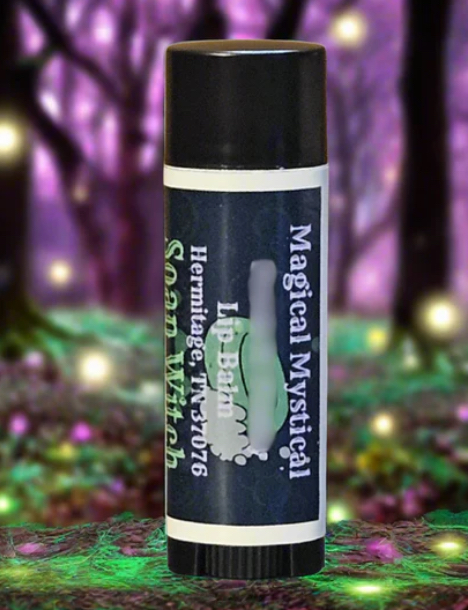
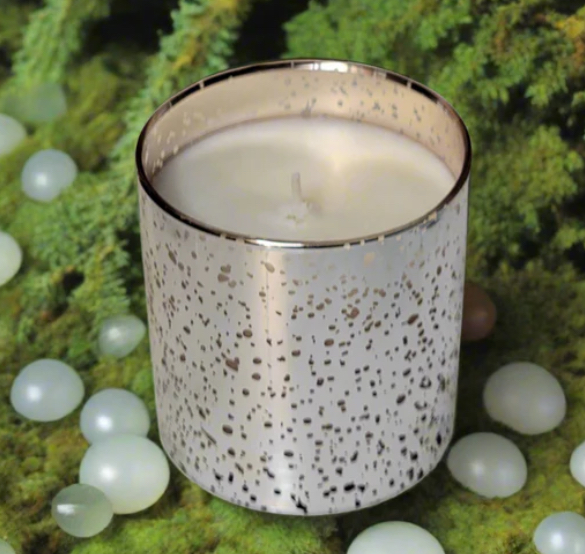
All throughout this holiday season I’m going to be sharing female Black owned shops you can check out for your holiday shopping. This particular shop has a one stop shop for Hair Care, Lip Care, Candles, Skin Care, and Digital Downloads. If you love whimsical witchy items, then this is the perfect site for you or someone you love that is into these things!
The price points are rather reasonable for handmade and quality made products, from lip balms retailing $4 to luxurious candles retailing at $32. Not to mention there are so many hair care options and body butters. The collection for each item is so vast that there’s scents galore for everyone.
DID YOU ENJOY WHAT YOU JUST READ? IF YES, THEN SUBSCRIBE TO THE BLOG, GIVE THE POST A LIKE, OR LEAVE A COMMENT! NEW POSTS ARE UP EVERY TUESDAY & THURSDAY!
“The taint is upon you. You can run, but never hide. Evil will find you.”
PLOT SUMMARY:
Aspiring musician Ruby Tucker has had enough of her small rural town and dysfunctional family. But a falling out with her best friend and bandmate has killed her dreams of escaping and making it big in the Atlanta punk scene.
While helping her eccentric neighbor organize his religious artifacts, an ancient ring clamps down on her finger—possessing her with the spirit of a blood-thirsty demon. There’s no exorcizing it unless hundreds of people chant a spell to set Ruby free. And what’s worse, the ring is a beacon for evil, drawing an unimaginably wicked mob straight to Ruby, hungry for her flesh.
If Ruby can get her band back together, she has a shot at salvation. It’s time for her to face the music and put her whole soul into a song—one powerful enough to raise some Hell.
GRADE: A
REVIEW:
This was such a fun read! By fun I mean that it was adventurous (there was a road trip) and filled with awesome friendships and some incredibly scary scenes! Ruby is looking after an older gentleman when she gets caught up in the occult. The older gentleman is posed with trying to destroy a ring that causes people to be possessed by an evil entity, but when looking through the old man’s artifacts one day, Ruby becomes intrigued by a ring and the moment she puts it on, she can no longer remove it.
The only person who can help her is in Atlanta, which coincidentally is also where her best friend moved to a year ago – so Ruby decides to go. In between all of this, she is possessed but also trying to not give in to the evil that’s starting to brew in her.
And if that wasn’t enough, a serial killer is also on their trail – wanting to kill Ruby because he’s grown fixated with her.
I loved how the book explored the importance and power of music and how sometimes punk rock can truly save your soul.
This was a fast paced novel told in various POV, but my favorite was Ruby’s. She was the beating heart of this novel and as much as the novel dealt with some truly dark things, I did love the comic reliefs portions of the book too. Read this if you’re into Jewish Mysticism, occult, and a new take on possession.
*Thank you so much to NetGalley and Tor Nightfire for the digital copy of this book in exchange for an honest review!
DID YOU ENJOY WHAT YOU JUST READ? IF YES, THEN SUBSCRIBE TO THE BLOG, GIVE THE POST A LIKE, OR LEAVE A COMMENT! NEW POSTS ARE UP EVERY TUESDAY & THURSDAY!
The holiday season is coming up and it’s never too early to think about what gifts you’re going to give your loved ones (or if you simply want to indulge in some retail therapy for yourself!). Throughout the month of November & December I will exclusively share Black Women Owned shops – here are three that are bound to become a favorite in no time.
This web shop offers jewelry for all price ranges and tastes. Not to mention that it has very cute home décor such as prints, candles, and soap. The candles come with inspiring quotes on the packaging that is bound to put one in better spirits, while the soaps look incredibly pretty for a very affordable price of $10 and made with natural ingredients such as olive oil, shea butter, and coconut oil.
This Etsy shop is filled with delicious fragrances and body oils for a very affordable price. You can choose from yummy scents like Strawberry Milk, Vanilla Fluff, and Salted Butterscotch. A definite alternative to Bath & Body Works scents that smell just as yummy and made with natural ingredients.
Satisfiction is a bi-monthly book box that includes science fiction and fantasy books written by BIPOC authors paired with pampering items to go along with the reading experience. If you love books or you have a book lover in your life, this is the perfect gift for them!
Instagram: @satisfictionbox
Photos taken from Instagram.
DID YOU ENJOY WHAT YOU JUST READ? IF YES, THEN SUBSCRIBE TO THE BLOG, GIVE THE POST A LIKE, OR LEAVE A COMMENT! NEW POSTS ARE UP EVERY TUESDAY & THURSDAY!
Ivory’s life changes irrevocably when she discovers the body of Cabrina Brite on the sands of Cape Morning, along with a mysterious poem. How did she die, and why does it seem she was trying to swim to Ghost Cat Island, the center of so many local mysteries?
Desperate to uncover the answers surrounding Cabrina’s death, and haunted by her discovery, Ivory begins to see the pale ghost of Cabrina, only to shake it off as a mere hallucination. But Ivory is not alone. Cabrina’s closest friends have also seen a similar apparition, and as they toy with occult possibilities, they begin to unravel the truth behind Cabrina’s death.
Because Cape Morning isn’t a ghost town, but a town filled with ghosts, and Ivory is about to discover just what happens when you let one in.
GRADE: A-
REVIEW:
This isn’t your typical vampire novel – Piper brings new lore and a fresh take to the undead and I’m here for it. It’s visceral and raw as it explores the theme of identity. Cape Morning is a small island with not many residents. Tourists flock the island during the summer months, but in the winter the island is less populated. Ivory is a trans woman who lives by the sea, and one morning after swimming sees the body of Cabrina Brite. She soon finds herself enthralled by the mystery of what exactly happened to Cabrina and what caused her to die. The mystery is well done and what kept my interest throughout the novel. I really liked the chapters from Cabrina’s diary. Ivory pushes herself to the brink, endangering herself at times in order to seek out the truth. Then there’s Cabrina’s friends, who, grief-stricken will do anything to find out the mystery that surrounds her death too, even if it means tinkering with the occult.
There’s brutal violence, but told in a way that almost comes across as poetic. I loved how the vampires in this novel were linked to cats and the island Ghost Cat Island. This is a new vibrant take on the vampire lore, and if you love Gothic literature, the gothic vibes are at an all time high in this one. The pages are filled with a brimming rage – but will also break your heart in unexpected ways. A must-read if you love well-rounded characters, diverse horror, atmospheric horror, and can’t get enough of vampires.
*Thank you so much to NetGalley and Titan Books for the digital copy of this book in exchange for an honest review!
DID YOU ENJOY WHAT YOU JUST READ? IF YES, THEN SUBSCRIBE TO THE BLOG, GIVE THE POST A LIKE, OR LEAVE A COMMENT! NEW POSTS ARE UP EVERY TUESDAY & THURSDAY!
In a world where innovation is critical to success, creativity plays a vital role in personal growth and professional progress. However, even the most inventive individuals can experience periods where inspiration fades, making it challenging to find new ideas. When this happens, the methods that once drove your creativity might start to feel limiting, prompting a need for fresh approaches. Fortunately, there are effective ways to reignite that creative energy. This article offers practical strategies, from rethinking your work environment to trying new experiences, aimed at revitalizing your creativity and helping you reach new levels of inspiration.
Transform Your Workspace into a Creative Hub
Creating a collaborative environment can significantly boost your team’s creativity and productivity. Designing a workspace with flexible layouts and modular furniture allows everyone to adapt the area to their specific needs. This adaptability encourages both solo work and group collaboration. Integrating natural light and greenery can also enhance creativity and overall wellness. Seamlessly incorporating digital tools for communication and planning ensures that your team can share ideas effectively, making the most of physical and virtual spaces.
Begin Your Day with Analog Inspiration
Starting your day away from screens can do wonders for your creative thinking. Dedicating morning time to analog activities like reading or journaling gives your mind the freedom to explore ideas without digital distractions. This practice enhances focus, lowers stress, and prepares you to tackle daily challenges with a fresh perspective. Establishing a tech-free morning routine can lead to creative breakthroughs and a more productive day.
Leap into Creativity with a Career Shift
Sometimes, a career change can provide the creative boost you need. Consider the benefits of a computer science degree online, which allows you to acquire new skills in IT and programming while maintaining your current job. This flexibility lets you apply new knowledge immediately, enhancing your expertise and career prospects. Embracing this dual engagement equips you to tackle modern challenges creatively and effectively.
Dance Your Way to Enhanced Creativity and Awareness
Dance offers a unique blend of physical exercise and artistic expression, which can rejuvenate both your mind and body. Whether you’re drawn to the grace of ballet or the energy of salsa, dancing connects your movements to your emotions, heightening body awareness and mood. Exploring various dance styles can reduce stress and boost cognitive performance, enriching your creative spirit through movement.
Fuel Imagination with Daily Reading Adventures
Allocating time each day for reading can significantly enhance your imagination. Engaging with literature allows your mind to visualize worlds and characters, fostering creative thinking and empathy. This daily habit improves language skills and mental agility, equipping you to solve complex problems with innovative solutions. Even a short, focused reading session can transform your imagination and open new possibilities. Visit The Inkblotters for ideas on your next read!
Discover Fresh Ideas at Cultural Festivals
Attending cultural festivals is a fantastic way to experience diverse artistic expressions. Events like local music or film festivals offer unique insights into different perspectives, inspiring new creative endeavors. By engaging with various cultural outputs, you return home with fresh ideas and renewed inspiration that enrich your personal and professional life, broadening your worldview and sparking creative reinvigoration.
Creativity is the vibrant thread that weaves new patterns into the fabrics of our experiences. By daring to shift paradigms and embrace the unfamiliar, you open doors to infinite possibilities where innovation flourishes. Let this journey be a canvas for rediscovery, where each brushstroke marks a glorious intersection between ambition and imagination. Trust in the transformative power of creativity to sculpt your path, knowing that you forge a legacy of brilliance, resilience, and boundless potential with every step.
Discover captivating book excerpts and spotlights at The Inkblotters, and immerse yourself in a world where stories come to life!
Guest blog post by Stephanie Haywood, read her previous guest blog post HERE and HERE or visit her website: MY LIFE BOOST.
DID YOU ENJOY WHAT YOU JUST READ? IF YES, THEN SUBSCRIBE TO THE BLOG, GIVE THE POST A LIKE, OR LEAVE A COMMENT! NEW POSTS ARE UP EVERY TUESDAY & THURSDAY!
Nothing is what it seems when a twisted one-night stand spirals into a serial killer’s vicious murder spree.
This movie is phenomenally dark and chaotically twisty. And Kyle confirms himself as the Horror King. Go in blind and enjoy the crazy ride!
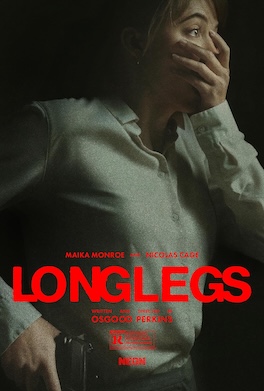
Long Legs
FBI Agent Lee Harker is assigned to an unsolved serial killer case that takes an unexpected turn, revealing evidence of the occult. Harker discovers a personal connection to the killer and must stop him before he strikes again.
Oz Perkins may be one of my recent fave directors. Every movie of his has been a major hit for the horror genre, and with Long Legs you get the bonus of Nickolas Cage and Horror Queen Maika Monroe.
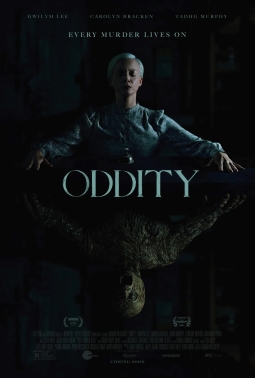
Oddity
After the brutal murder of her twin sister, Darcy goes after those responsible by using haunted items as her tools for revenge.
For a shoestring budget, this movie packs a brutal punch and has the best jumpscare in a long time. You may want to check out Damia McCarthy’s previous film Caveat.
DID YOU ENJOY WHAT YOU JUST READ? IF YES, THEN SUBSCRIBE TO THE BLOG, GIVE THE POST A LIKE, OR LEAVE A COMMENT! NEW POSTS ARE UP EVERY TUESDAY & THURSDAY!










 The Inkblotters